Healing Our Planet: A Comprehensive Guide to Habitat Restoration
The natural world, a tapestry of intricate ecosystems, faces unprecedented challenges. From sprawling urban development to the impacts of climate change, habitats across the globe are under immense pressure. Yet, amidst these concerns, a powerful solution emerges: habitat restoration. This vital practice is not merely about planting a few trees; it is a science driven endeavor to reverse ecological damage, breathe new life into degraded landscapes, and foster a healthier, more resilient planet for all.
Understanding the Foundations: What is Habitat Restoration?
At its core, habitat restoration is the process of assisting the recovery of an ecosystem that has been degraded, damaged, or destroyed. The ultimate goal is to return an area to its historical trajectory, aiming for a self-sustaining system that resembles its original state in terms of species composition, structure, and ecological function. This often involves a deep understanding of historical ecology, the specific needs of native flora and fauna, and the complex interactions within an ecosystem.
It is important to distinguish habitat restoration from similar, yet distinct, ecological practices. While all aim to improve environmental conditions, their objectives and outcomes can vary significantly.
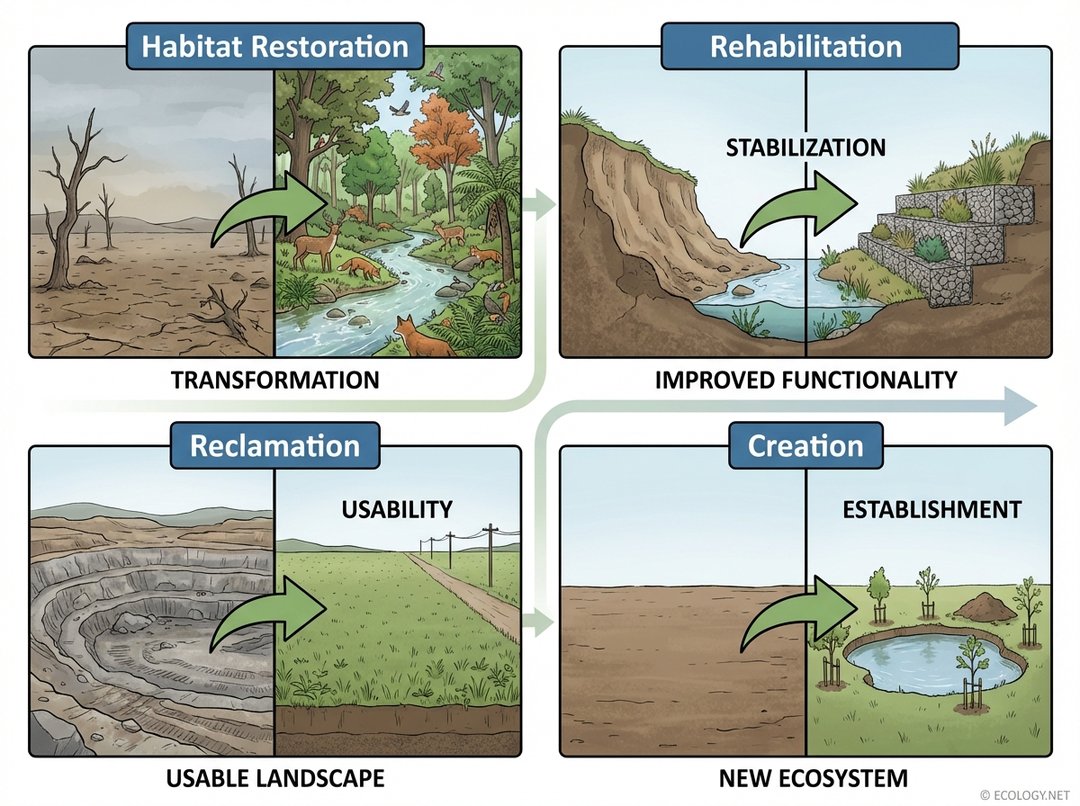
This image visually clarifies the distinctions between ‘Habitat Restoration’, ‘Rehabilitation’, ‘Reclamation’, and ‘Creation’ as explained in this section, making a complex conceptual difference easy to grasp.
- Habitat Restoration: This is the most ambitious approach, striving to return an ecosystem to its original, pre-disturbance state, including its full biodiversity and ecological processes. For example, transforming a clear-cut forest back into a mature, biodiverse native woodland with its original species.
- Rehabilitation: This focuses on improving a degraded site’s functionality and ecosystem services, but not necessarily to its original state. It aims for a stable and productive ecosystem. An example might be stabilizing an eroded riverbank with some native vegetation and structural elements to prevent further soil loss and improve water quality, without fully recreating a pristine riparian zone.
- Reclamation: Often associated with industrial sites like mines, reclamation aims to make a site safe, stable, and non-polluting, often by covering it with soil and planting a uniform cover of grass or hardy plants. The primary goal is land stabilization and safety, not necessarily ecological complexity or biodiversity. A barren mining site covered with a layer of soil and sparse, uniform grass is a typical outcome.
- Creation: This involves establishing a new ecosystem on a site where one did not previously exist, or where the original ecosystem is entirely lost and cannot be recovered. Building a new wetland on a former agricultural field is an example of habitat creation.
True habitat restoration is a long-term commitment, often requiring decades of effort and careful management to achieve its full potential. It is a testament to humanity’s capacity to heal the wounds inflicted upon the natural world.
Why Restore Habitats? The Imperative for Action
The reasons for engaging in habitat restoration are as vast and interconnected as the ecosystems themselves. Healthy habitats are not just beautiful; they are fundamental to the well-being of all life on Earth, including human societies. Restoring them provides a multitude of critical benefits.

This image illustrates the ‘Why Restore Habitats?’ section, providing a compelling visual representation of the essential services and intrinsic value that healthy ecosystems provide, such as clean air and water, pollination, carbon sequestration, and flood control.
Biodiversity Conservation
One of the most immediate and profound benefits of habitat restoration is the protection and enhancement of biodiversity. By restoring degraded areas, we provide crucial refuge and breeding grounds for endangered species, helping to prevent extinctions and maintain the genetic diversity essential for ecosystem resilience. For instance, restoring native grasslands can bring back populations of ground-nesting birds and vital insect pollinators.
Essential Ecosystem Services
Healthy ecosystems provide invaluable services that are often taken for granted. These “ecosystem services” are the life support systems of our planet:
- Clean Air and Water: Forests act as natural air filters, absorbing pollutants and producing oxygen. Wetlands and riparian zones filter contaminants from water, improving its quality before it reaches our rivers and oceans. Restoring these areas directly enhances these purification processes.
- Pollination: Many of the world’s food crops rely on pollinators like bees, butterflies, and other insects. Restoring wildflower meadows and native plant communities provides essential habitat and food sources for these crucial species, directly supporting agricultural productivity.
- Climate Regulation: Forests and healthy soils are significant carbon sinks, absorbing vast amounts of carbon dioxide from the atmosphere. Reforestation and wetland restoration projects play a critical role in mitigating climate change by sequestering carbon.
- Flood Control and Erosion Prevention: Wetlands, healthy riparian vegetation, and coastal mangroves act as natural buffers, absorbing excess water during storms and preventing soil erosion. Restoring these natural defenses can significantly reduce the impact of floods and protect infrastructure.
- Soil Health: Healthy ecosystems contribute to fertile soils, which are vital for agriculture and supporting diverse plant life. Restoration efforts often focus on improving soil structure and nutrient cycling.
Economic and Social Benefits
Beyond ecological advantages, habitat restoration yields significant economic and social returns. Restored natural areas can boost ecotourism, create green jobs in conservation and land management, and provide opportunities for outdoor recreation, enhancing community well-being and connection to nature. Furthermore, the intrinsic beauty and cultural significance of healthy landscapes contribute to human mental and spiritual health.
The Restoration Process: A Step-by-Step Approach
Habitat restoration is not a haphazard undertaking; it is a systematic, science-based process that typically involves three distinct yet interconnected phases. Each phase requires careful planning, execution, and ongoing commitment to ensure long-term success.
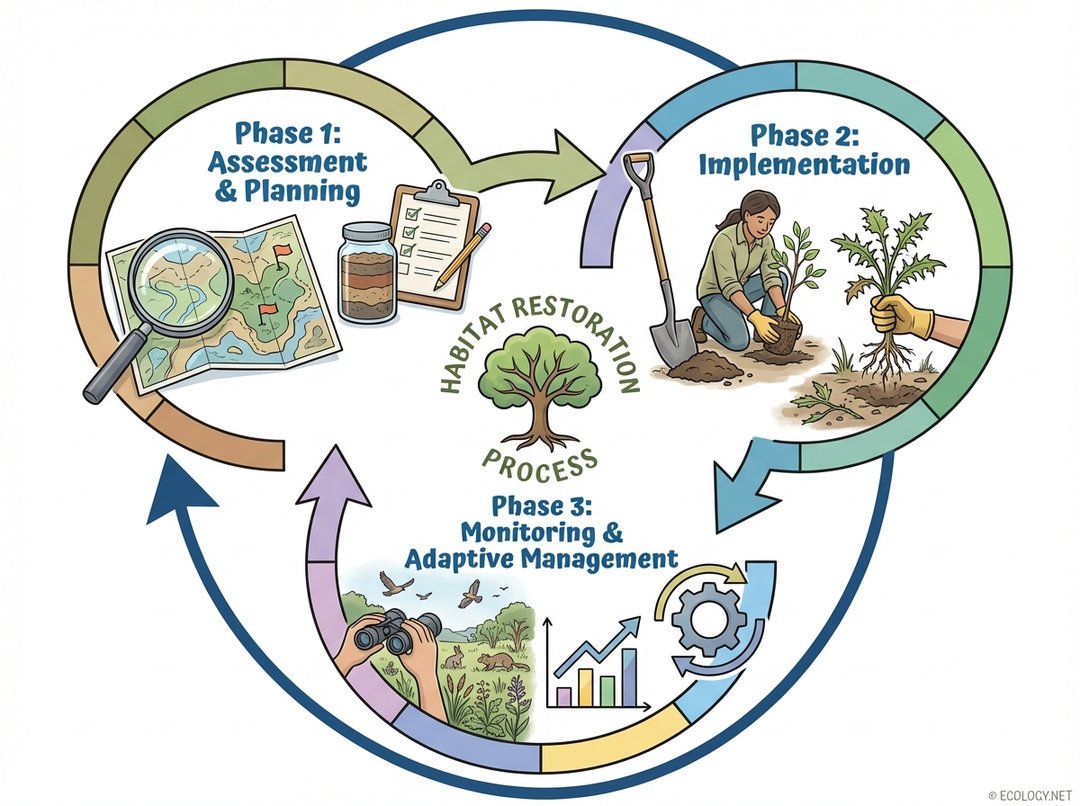
This image visually outlines the ‘The Restoration Process: A Step-by-Step Approach’ section, making the sequential and iterative nature of assessment, implementation, and monitoring easy to understand for the reader.
Phase 1: Assessment & Planning
This foundational phase is crucial for defining the project’s scope, goals, and methods. It involves a thorough understanding of the site’s past, present, and desired future state.
- Site Analysis: Comprehensive surveys are conducted to understand current ecological conditions, including soil composition, hydrology, existing flora and fauna, and the presence of invasive species.
- Historical Ecology: Research into the site’s historical conditions helps establish a baseline for what a healthy, functioning ecosystem would have looked like prior to degradation. This might involve examining old maps, historical records, or pollen samples.
- Goal Setting: Clear, measurable, achievable, relevant, and time-bound (SMART) goals are established. These goals guide all subsequent actions and define what success will look like. For example, “re-establish a self-sustaining population of a specific native fish species within five years.”
- Stakeholder Engagement: Involving local communities, landowners, indigenous groups, and government agencies is vital for garnering support, sharing knowledge, and ensuring the project aligns with broader societal needs.
- Restoration Plan Development: A detailed plan is created, outlining specific actions, timelines, budgets, and responsibilities. This plan often includes strategies for invasive species control, native plant propagation, hydrological modifications, and wildlife reintroduction.
Phase 2: Implementation
This is where the physical work of restoration takes place, putting the meticulously developed plan into action. It often involves a combination of ecological engineering and hands-on conservation efforts.
- Invasive Species Removal: Non-native species that outcompete native plants and disrupt ecosystems are often the first target. This can involve manual removal, mechanical methods, or targeted herbicide application, always with careful consideration for native species. For example, removing invasive kudzu vines to allow native trees to thrive.
- Native Species Reintroduction: Planting native trees, shrubs, grasses, and wildflowers is a cornerstone of many restoration projects. This often involves sourcing local genotypes to maintain genetic integrity. Reintroducing native fish or amphibian species to a restored wetland is another common practice.
- Hydrological Restoration: Alterations to water flow, such as removing dams, re-meandering straightened rivers, or restoring natural wetland drainage patterns, are often critical for re-establishing ecological processes.
- Soil Amendment: Improving soil health through techniques like adding organic matter, mycorrhizal fungi, or specific nutrients can be essential for supporting new plant growth.
- Structural Enhancements: Creating features like log jams in rivers for fish habitat, rock piles for reptiles, or snags (dead standing trees) for cavity-nesting birds can provide immediate benefits for wildlife.
Phase 3: Monitoring & Adaptive Management
Restoration is not a “set it and forget it” process. Ongoing evaluation and flexibility are key to long-term success.
- Monitoring: Regular data collection is essential to track progress against the established goals. This can involve surveying plant survival rates, wildlife populations, water quality parameters, soil health indicators, and the presence of invasive species.
- Data Analysis and Reporting: Collected data is analyzed to understand what is working well and what challenges remain. Regular reports inform stakeholders and the wider community about the project’s status.
- Adaptive Management: Based on monitoring results, the restoration plan is adjusted as needed. If a particular planting strategy is not yielding desired results, for example, a different approach might be adopted. This iterative process allows projects to respond to unforeseen challenges and optimize outcomes.
- Long-Term Maintenance: Even after initial goals are met, some level of ongoing maintenance, such as invasive species control or replanting, may be necessary to ensure the ecosystem remains healthy and resilient.
Common Challenges and Innovative Solutions
While the promise of habitat restoration is immense, practitioners often face significant hurdles. Understanding these challenges and developing innovative solutions is crucial for scaling up restoration efforts globally.
Challenges
- Funding Constraints: Restoration projects can be expensive, requiring significant investment in labor, materials, and long-term monitoring. Securing consistent funding remains a major challenge.
- Land Availability and Ownership: Finding suitable land for large-scale restoration, especially in densely populated areas, can be difficult. Complex land ownership patterns can also complicate project implementation.
- Public Perception and Engagement: Gaining public support and active participation is vital, but sometimes challenging due to lack of awareness or competing land use interests.
- Invasive Species: The persistent threat of invasive species can undermine restoration efforts, requiring continuous management and vigilance.
- Climate Change: A changing climate introduces uncertainty, making it harder to predict future conditions and select species that will thrive in the long term.
- Ecological Complexity: Ecosystems are incredibly complex, and fully understanding all the interactions and historical conditions can be difficult, leading to unexpected outcomes.
Innovative Solutions
- Diverse Funding Models: Exploring public-private partnerships, carbon credit markets, philanthropic grants, and even crowdfunding can diversify funding sources.
- Policy and Legislation: Stronger environmental policies, incentives for landowners, and clear regulatory frameworks can facilitate restoration projects.
- Community Science and Education: Engaging volunteers in monitoring and implementation not only reduces costs but also builds public awareness and stewardship. Educational programs can foster a deeper appreciation for restoration.
- Technological Advancements: Remote sensing, drone technology, GIS mapping, and advanced genetic analysis can improve assessment, monitoring, and the precision of restoration interventions. For example, drones can be used for seed dispersal in remote areas.
- Ecological Engineering: Developing novel techniques to accelerate natural processes, such as bioengineering for erosion control or creating artificial reefs for marine habitat, can enhance efficiency.
- Adaptive Management Frameworks: Embracing flexibility and learning from experience, as outlined in Phase 3, is paramount for navigating the uncertainties of restoration.
Success Stories and Inspiring Examples
Across the globe, countless examples demonstrate the power and potential of habitat restoration. These projects, large and small, offer hope and practical lessons for future endeavors.
- Forest Restoration in the Atlantic Forest, Brazil: Efforts to reforest degraded areas of the Atlantic Forest, a biodiversity hotspot, have involved planting millions of native trees. These projects are not only restoring critical habitat for jaguars, monkeys, and countless bird species but also improving water quality and carbon sequestration.
- Wetland Revival in the Florida Everglades, USA: One of the largest ecosystem restoration projects in the world, the Everglades restoration aims to re-establish the natural flow of water through this vast wetland system. This is crucial for the survival of iconic species like the Florida panther and American alligator, and for providing freshwater to millions of people.
- River Restoration in the Elwha River, USA: The removal of two large dams on the Elwha River allowed salmon populations to return to their ancestral spawning grounds for the first time in a century. This project demonstrated the dramatic recovery of an entire river ecosystem, from fish to riparian vegetation.
- Urban Greening in Singapore: Despite being a highly urbanized city-state, Singapore has invested heavily in creating green spaces, including rooftop gardens, vertical farms, and park connectors. These initiatives enhance biodiversity, improve air quality, and provide vital recreational areas for residents.
- Coral Reef Restoration in the Philippines: Communities are actively involved in planting coral fragments on degraded reefs, often damaged by destructive fishing practices. These efforts are slowly bringing back vibrant marine ecosystems, supporting local fisheries and tourism.
These examples underscore that with dedication, scientific understanding, and community involvement, even severely damaged ecosystems can be brought back from the brink.
The Future of Habitat Restoration: A Collective Endeavor
As the global community grapples with environmental challenges, habitat restoration stands out as a powerful, tangible solution. It is a testament to the resilience of nature and humanity’s capacity for positive change. The future of our planet hinges on our ability to not only protect remaining pristine habitats but also to actively heal those that have been damaged.
This endeavor requires a collective commitment from governments, industries, scientists, local communities, and individuals. By investing in restoration, supporting conservation initiatives, and making conscious choices in our daily lives, we can all contribute to a future where healthy, thriving ecosystems are the norm, not the exception. The journey of healing our planet is long, but with every restored forest, every re-meandered river, and every revitalized wetland, we take a crucial step towards a more sustainable and biodiverse world.