The natural world is a tapestry woven with countless species, each playing a unique role in the intricate dance of life. Yet, beneath the surface of this vibrant diversity lies a profound and accelerating crisis: extinction risk. This concept refers to the probability of a species disappearing from Earth forever. While extinction is a natural process that has shaped life on our planet for billions of years, the current rate is alarmingly high, driven predominantly by human activities. Understanding extinction risk is not merely an academic exercise; it is crucial for safeguarding the biodiversity that underpins all life, including our own.
For millennia, species have naturally come and gone, a testament to evolution and environmental change. However, the modern era has ushered in what many scientists call the “sixth mass extinction event,” characterized by a rate of species loss far exceeding natural background levels. This rapid decline poses a severe threat to ecosystem stability, human well-being, and the very fabric of life on Earth.
The Global Barometer: Understanding the IUCN Red List Categories
To systematically assess and communicate the extinction risk of species, conservation scientists rely on a standardized framework. The most widely recognized and respected of these is the IUCN Red List of Threatened Species, developed by the International Union for Conservation of Nature. This comprehensive system evaluates species based on criteria such as population size, rate of decline, geographic distribution, and population fragmentation, assigning them to one of nine distinct categories.
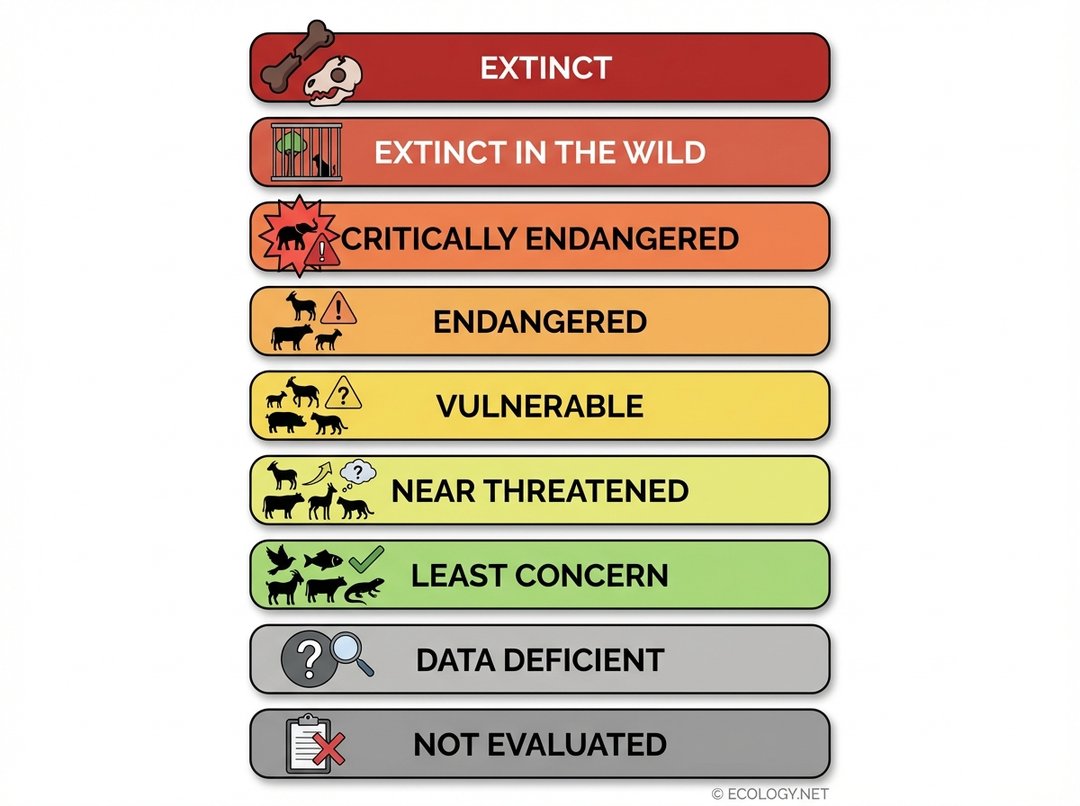
The IUCN Red List provides a critical snapshot of the health of global biodiversity, guiding conservation efforts and policy decisions worldwide. Here is a breakdown of its categories:
- Extinct (EX): A species is considered extinct when there is no reasonable doubt that the last individual has died. A classic example is the Dodo, a flightless bird from Mauritius, last seen in the late 17th century.
- Extinct in the Wild (EW): These species survive only in captivity or as naturalized populations well outside their historic range. The Scimitar Oryx, once found across North Africa, now exists primarily in managed herds in zoos and private reserves.
- Critically Endangered (CR): Facing an extremely high risk of extinction in the wild. Species like the Amur Leopard, with only dozens remaining in the wild, exemplify this dire category.
- Endangered (EN): Facing a very high risk of extinction in the wild. The Giant Panda, despite conservation successes, remains endangered due to habitat loss and fragmentation.
- Vulnerable (VU): Facing a high risk of extinction in the wild. The African Elephant, while still numerous in some areas, faces significant threats from poaching and habitat encroachment.
- Near Threatened (NT): Species that are close to qualifying for a threatened category or are likely to qualify in the near future. The Emperor Penguin, for instance, is listed as Near Threatened due to projected population declines linked to climate change.
- Least Concern (LC): These species are widespread and abundant, with no immediate threat of extinction. Humans, pigeons, and many common insects fall into this category.
- Data Deficient (DD): There is insufficient information to make a direct, or indirect, assessment of their risk of extinction. This highlights a critical need for more research.
- Not Evaluated (NE): Species that have not yet been assessed against the Red List criteria. Millions of species, particularly insects and marine invertebrates, remain in this category.
Major Drivers of Extinction Risk: A Multifaceted Threat
The accelerated rate of species loss is not random; it is largely attributable to a handful of pervasive human-driven factors. These drivers often interact in complex ways, amplifying their individual impacts and pushing species further towards the brink.
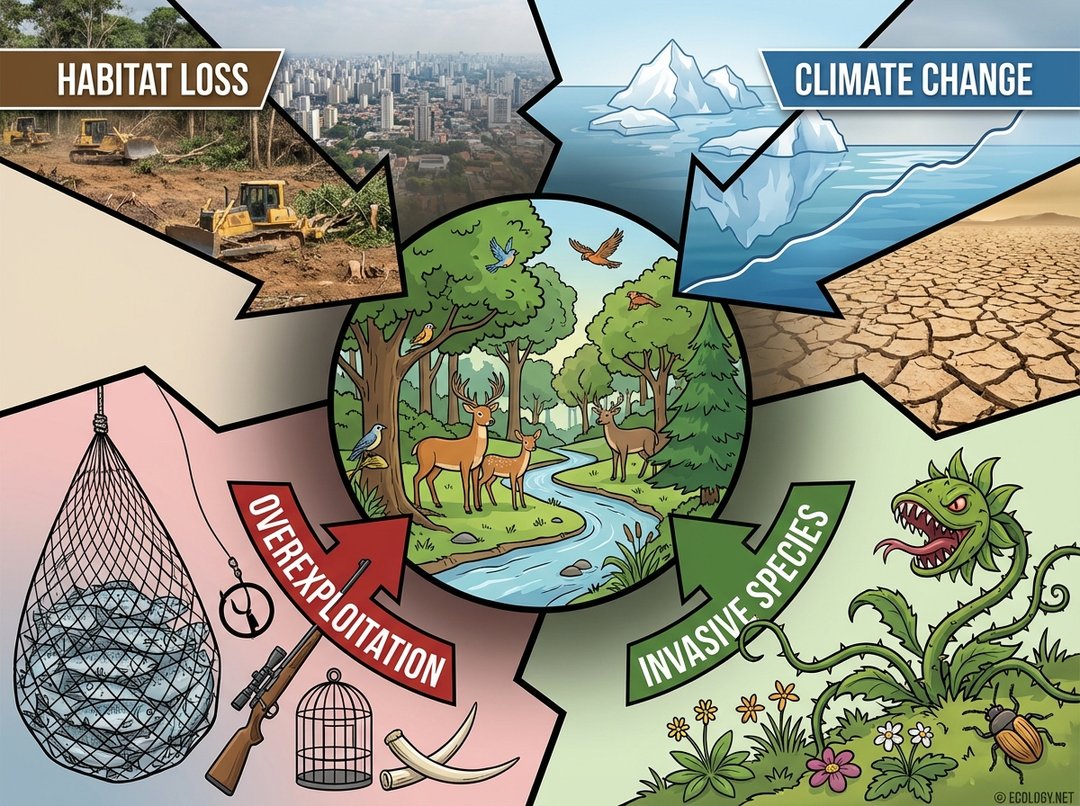
Understanding these primary threats is essential for developing effective conservation strategies:
Habitat Loss and Degradation
This is arguably the single greatest threat to biodiversity. As human populations expand and resource consumption increases, natural habitats are converted for agriculture, urban development, infrastructure, and resource extraction. Forests are cleared, wetlands are drained, grasslands are plowed, and oceans are polluted. This not only reduces the physical space available for species but also fragments remaining habitats, isolating populations and making them more vulnerable to other threats. For example, the deforestation of the Amazon rainforest directly impacts countless species, from jaguars to countless insect species, by destroying their homes and food sources.
Climate Change
The alteration of global climate patterns due to human emissions of greenhouse gases is profoundly impacting ecosystems worldwide. Rising temperatures, altered precipitation patterns, more frequent extreme weather events, and ocean acidification are forcing species to adapt, migrate, or face extinction. Coral reefs, for instance, are highly sensitive to ocean temperature increases, leading to widespread coral bleaching events that devastate these vital marine ecosystems and the species that depend on them. Polar bears face a direct threat as their sea ice hunting grounds melt, making it harder for them to find food.
Overexploitation
This refers to the harvesting of species from the wild at rates faster than their populations can recover. This can take many forms, including unsustainable hunting, fishing, logging, and the illegal wildlife trade. The demand for exotic pets, traditional medicines, and luxury goods drives the poaching of animals like rhinos for their horns and pangolins for their scales. Commercial fishing, particularly with destructive methods, has led to the collapse of many fish stocks, impacting marine food webs and the livelihoods of coastal communities.
Invasive Species
When non-native species are introduced to new ecosystems, either intentionally or accidentally, they can outcompete native species for resources, prey upon them, introduce diseases, or alter habitats. Islands are particularly vulnerable to invasive species due to their isolated ecosystems and native species that have evolved without strong defenses against new predators or competitors. For example, the introduction of brown tree snakes to Guam led to the extinction of several native bird species, dramatically altering the island’s ecology.
The Far-Reaching Consequences of Extinction
The loss of a single species can have ripple effects throughout an ecosystem, sometimes leading to a cascade of further extinctions. Every species plays a role, from pollinators ensuring crop yields to decomposers recycling nutrients. When these roles are lost, the entire system can become destabilized.
- Ecological Impacts: Extinction can disrupt food webs, reduce ecosystem resilience to disturbances, and impair essential ecosystem services like water purification, soil formation, and climate regulation. The loss of a keystone species, such as a top predator, can lead to overpopulation of its prey, which in turn can decimate plant communities.
- Economic Impacts: Many industries, including agriculture, fisheries, forestry, and pharmaceuticals, rely directly on biodiversity. The loss of wild relatives of crops, for instance, diminishes the genetic diversity needed to breed disease-resistant or climate-resilient varieties. Ecotourism, a significant economic driver in many regions, also suffers from declining wildlife populations.
- Ethical and Cultural Impacts: Beyond their utilitarian value, species hold intrinsic value and are often deeply intertwined with human cultures, traditions, and spiritual beliefs. The disappearance of a unique species represents an irreversible loss of natural heritage and a profound ethical failure to protect the planet’s living treasures.
Conservation in Action: Protecting Our Shared Future
Despite the daunting challenges, dedicated conservation efforts are making a difference. From international agreements to local community initiatives, a wide array of strategies are being employed to mitigate extinction risk and restore biodiversity.
- Protected Areas: Establishing national parks, wildlife reserves, and marine protected areas safeguards critical habitats and provides safe havens for threatened species.
- Species-Specific Conservation: Programs focusing on individual critically endangered species, often involving captive breeding, reintroduction programs, and anti-poaching efforts, have brought species like the California Condor back from the brink.
- Policy and Legislation: International treaties, such as the Convention on Biological Diversity (CBD) and CITES (Convention on International Trade in Endangered Species of Wild Fauna and Flora), aim to regulate trade and promote conservation globally. National laws protect endangered species and their habitats.
- Restoration Ecology: Efforts to restore degraded ecosystems, such as reforestation, wetland restoration, and coral reef rehabilitation, help rebuild habitats and support recovering populations.
- Public Awareness and Education: Engaging the public in conservation through education fosters a deeper understanding of biodiversity’s importance and encourages sustainable practices.
Individuals also have a vital role to play. Simple actions, such as making conscious consumer choices, reducing energy consumption, supporting sustainable agriculture, and advocating for conservation policies, collectively contribute to a healthier planet. Volunteering for local conservation projects or supporting reputable conservation organizations can also have a significant impact.
A Call to Action for Biodiversity
Extinction risk is a complex issue, but it is not insurmountable. By understanding the categories of threat, recognizing the drivers of species loss, and supporting robust conservation initiatives, humanity can shift the trajectory from decline to recovery. The future of countless species, and indeed our own, depends on the collective commitment to protect the rich and irreplaceable biodiversity of Earth. Every effort, no matter how small, contributes to the grand endeavor of preserving life’s magnificent tapestry for generations to come.