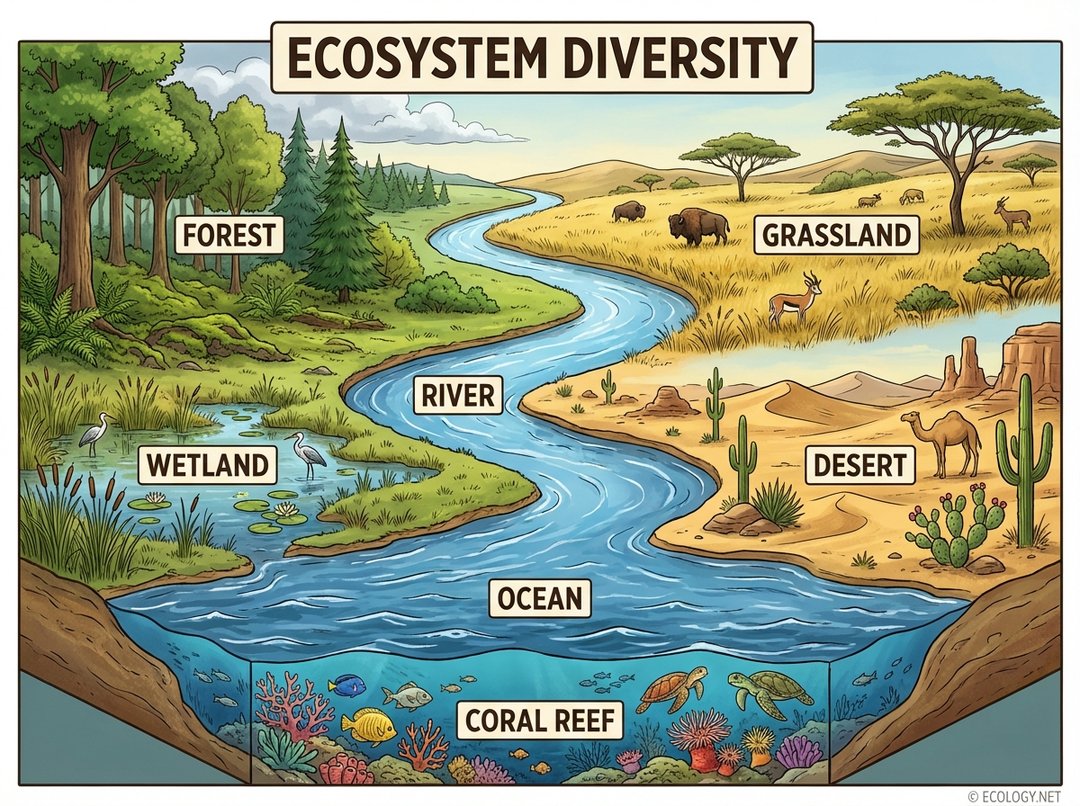
Imagine Earth not as a single, uniform sphere, but as a magnificent, intricate tapestry woven from countless threads of life and environment. This vivid image captures the essence of ecosystem diversity, a fundamental concept in ecology that describes the variety of distinct habitats, communities, and ecological processes found across our planet. From the towering canopies of ancient rainforests to the silent depths of the ocean, each unique environment plays a vital role in the grand symphony of nature.
Ecosystem diversity is more than just a scientific term; it is the very foundation of planetary health and human well-being. It encompasses the vast array of ecosystems, such as forests, grasslands, deserts, wetlands, rivers, and oceans, each with its own characteristic species, physical conditions, and ecological interactions. Understanding this diversity is crucial for appreciating the complexity of life on Earth and for guiding our efforts to protect it.
What is Ecosystem Diversity? A World of Habitats
At its core, an ecosystem is a community of living organisms interacting with their non-living environment. Ecosystem diversity, therefore, refers to the variety of these ecosystems within a given region or across the entire globe. Think of it as the different types of natural landscapes you might encounter on a journey around the world.
Consider the stark contrast between a sun-baked desert and a lush, humid rainforest. These are two vastly different ecosystems, each supporting a unique collection of plants and animals adapted to its specific conditions. The desert, with its sparse vegetation and specialized creatures like cacti and fennec foxes, thrives on minimal water. The rainforest, conversely, bursts with an unparalleled abundance of life, from towering trees to countless insect species, all sustained by ample rainfall and warm temperatures.
Other examples of distinct ecosystems include:
- Forests: Ranging from boreal forests in cold climates to temperate deciduous forests and tropical rainforests, these are characterized by dense tree cover and support a wide array of wildlife.
- Grasslands: Expansive areas dominated by grasses, such as the African savannas or North American prairies, home to grazing animals and their predators.
- Wetlands: Areas saturated with water, like marshes, swamps, and bogs, which are crucial for water filtration and provide habitat for migratory birds and amphibians.
- Rivers and Lakes: Freshwater aquatic ecosystems that support fish, insects, and riparian vegetation.
- Oceans and Coral Reefs: Vast marine environments, with coral reefs being particularly biodiverse hotspots, teeming with fish, invertebrates, and algae.
The beauty of ecosystem diversity lies in this rich tapestry of environments, each contributing its unique thread to the global ecological fabric.
The Indispensable Value: Why Ecosystem Diversity Matters
The variety of ecosystems is not merely aesthetically pleasing; it is absolutely critical for the functioning of the planet and for human survival. Diverse ecosystems provide what are known as “ecosystem services,” the many benefits that nature provides to people. Without these services, life as we know it would be impossible.
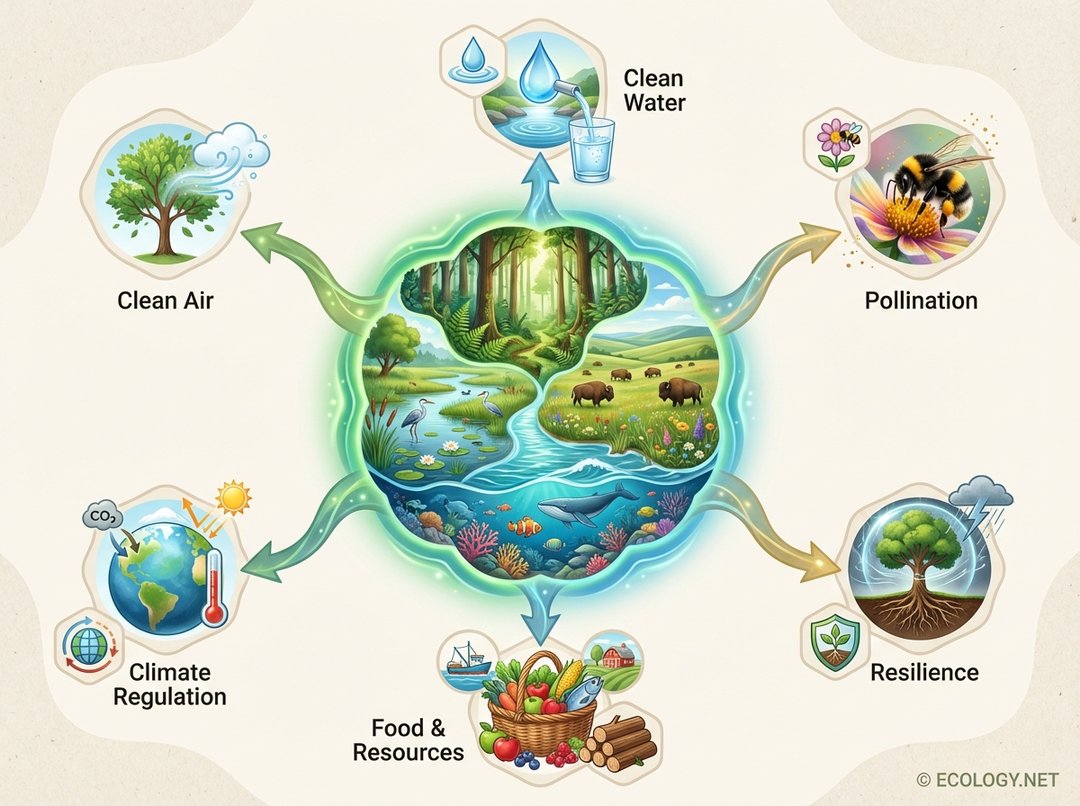
Ecosystem Services: Nature’s Gifts
- Clean Air: Forests and other plant-rich ecosystems act as the Earth’s lungs, absorbing carbon dioxide and releasing oxygen, purifying the air we breathe. For instance, a mature forest can absorb tons of carbon dioxide annually, mitigating air pollution.
- Clean Water: Wetlands, forests, and healthy soil act as natural filters, removing pollutants and regulating water flow. A pristine watershed, for example, can provide a city with clean drinking water without extensive artificial treatment.
- Pollination: Insects, birds, and bats, often residing in diverse terrestrial ecosystems, pollinate a vast majority of the world’s food crops, ensuring agricultural productivity. Without pollinators, many fruits, vegetables, and nuts would not exist.
- Climate Regulation: Ecosystems, particularly forests and oceans, play a crucial role in regulating global climate by absorbing and storing carbon. Mangrove forests, for instance, are highly effective carbon sinks and protect coastlines from storms.
- Food and Resources: Diverse ecosystems provide us with food, timber, medicines, and raw materials. Fisheries in healthy marine ecosystems provide protein for billions, while forests yield wood for construction and paper.
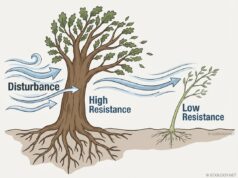
- Resilience: A diverse array of ecosystems makes the planet more resilient to disturbances like climate change, disease outbreaks, or natural disasters. If one ecosystem is damaged, others can continue to provide essential services, or even help in the recovery process. For example, a diverse agricultural landscape with multiple crop varieties is less susceptible to widespread failure from a single pest or disease.
The loss of ecosystem diversity weakens these natural systems, making them less capable of providing these essential services, ultimately impacting human health, economies, and overall planetary stability.
The Dynamics of Change: Factors Influencing Ecosystem Diversity
Ecosystem diversity is not static; it is constantly shaped by a complex interplay of natural processes and, increasingly, by human activities. Understanding these drivers is key to effective conservation.
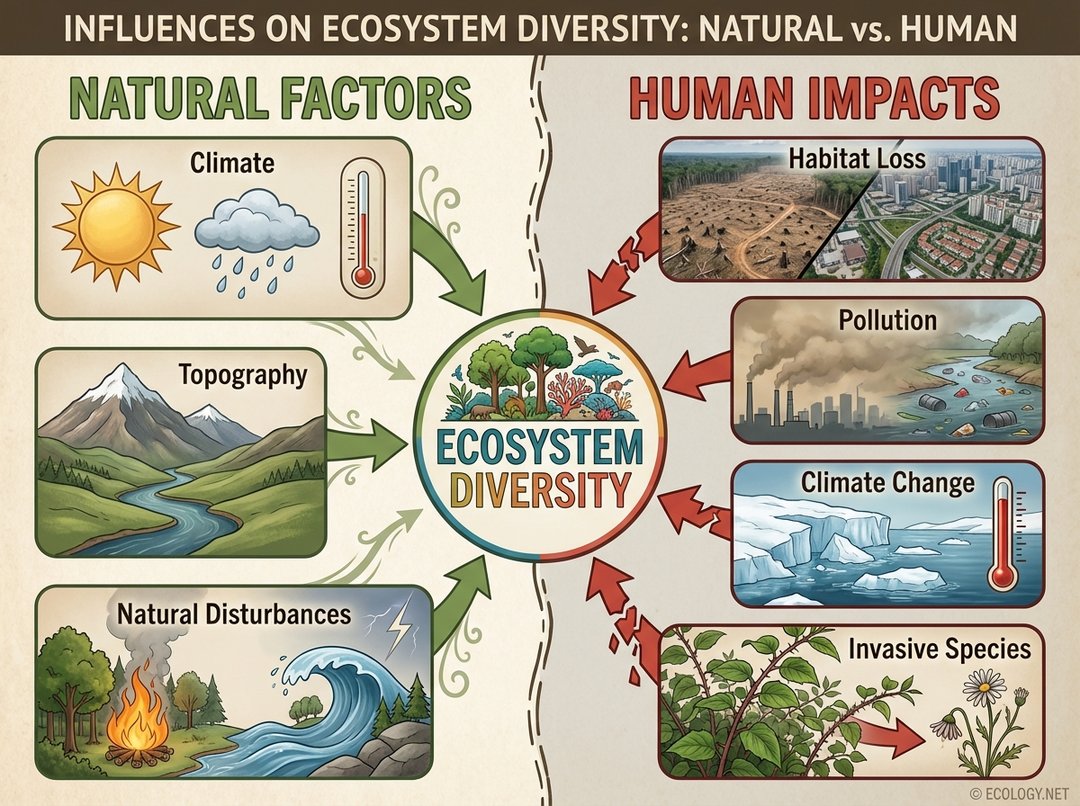
Natural Factors
For millennia, natural forces have sculpted the Earth’s diverse landscapes:
- Climate: Temperature, rainfall, and seasonal variations are primary determinants of ecosystem types. Tropical climates foster rainforests, while arid conditions create deserts.
- Topography: The physical features of the land, such as mountains, valleys, and elevation, influence local climates, soil types, and water availability, leading to distinct ecosystems. For example, different vegetation zones often occur at varying altitudes on a mountain.
- Natural Disturbances: Events like wildfires, floods, volcanic eruptions, and hurricanes can dramatically alter ecosystems, sometimes destroying existing ones but also creating opportunities for new species and successional changes, ultimately contributing to a mosaic of habitats over time.
Human Impacts: The Accelerating Threats
In recent centuries, human activities have become the dominant force shaping, and often diminishing, ecosystem diversity. These impacts are largely responsible for the current global biodiversity crisis:
- Habitat Loss and Fragmentation: This is the single greatest threat. As human populations grow, natural habitats are converted for agriculture, urban development, infrastructure, and resource extraction. For example, vast tracts of rainforest are cleared for cattle ranching or palm oil plantations, destroying unique ecosystems.
- Pollution: The release of harmful substances into the environment degrades ecosystems.
- Air pollution from industrial emissions can harm forests and acidify lakes.
- Water pollution from agricultural runoff (pesticides, fertilizers) or industrial waste can create dead zones in rivers and oceans.
- Plastic pollution chokes marine life and contaminates coastal ecosystems.
- Climate Change: Human-induced global warming is altering temperature and precipitation patterns, leading to more frequent extreme weather events, sea-level rise, and ocean acidification. These changes stress ecosystems, causing species to migrate or disappear, and fundamentally altering ecosystem boundaries. Coral reefs, for instance, are highly vulnerable to rising ocean temperatures, leading to widespread bleaching events.
- Invasive Species: The introduction of non-native species, often accidentally or intentionally by humans, can outcompete native species, disrupt food webs, and alter ecosystem functions. The zebra mussel in the Great Lakes of North America, for example, has drastically altered the aquatic ecosystem.
- Overexploitation: Unsustainable harvesting of natural resources, such as overfishing, excessive logging, or poaching, can deplete populations and degrade entire ecosystems. Depleted fish stocks can collapse marine food webs, impacting other species.
Safeguarding Our Natural Heritage: Protecting Ecosystem Diversity
The challenges to ecosystem diversity are immense, but so too is the potential for positive change. Protecting and restoring these vital natural systems requires a multi-faceted approach involving governments, communities, industries, and individuals.
Strategies for Conservation
- Establishing Protected Areas: National parks, wildlife reserves, and marine protected areas are crucial for safeguarding intact ecosystems and the species within them. These areas provide refuges from human disturbance.
- Ecosystem Restoration: Actively restoring degraded ecosystems, such as replanting forests, re-establishing wetlands, or rehabilitating coral reefs, can help bring back lost diversity and functionality.
- Sustainable Practices: Adopting sustainable agriculture, forestry, and fishing practices reduces the human footprint on natural ecosystems. This includes practices like agroforestry, selective logging, and responsible fishing quotas.
- Policy and Legislation: Strong environmental laws and international agreements are essential to regulate pollution, prevent habitat destruction, and control invasive species.
- Education and Awareness: Informing the public about the importance of ecosystem diversity fosters a sense of responsibility and encourages support for conservation efforts.
- Individual Actions: Every person can contribute by reducing their consumption, supporting sustainable businesses, advocating for conservation, and minimizing their environmental impact.
The future of ecosystem diversity hinges on our collective ability to recognize its intrinsic value and to act decisively to protect it. By understanding the intricate web of life that sustains us, we can work towards a future where both humanity and nature thrive.
Conclusion: A Call for Harmony
Ecosystem diversity is the living testament to Earth’s incredible capacity for life, a complex and beautiful mosaic that provides the very air we breathe, the water we drink, and the food we eat. It is not merely a concept for scientists to study, but a fundamental reality that underpins our existence.
The ongoing loss of this diversity represents a profound threat to the stability of our planet and the well-being of all its inhabitants. However, armed with knowledge and a commitment to stewardship, humanity has the power to reverse these trends. By embracing sustainable practices, supporting conservation initiatives, and fostering a deep respect for the natural world, we can ensure that the vibrant quilt of ecosystem diversity continues to flourish for generations to come, securing a healthier and more resilient future for all.