Unraveling Habitat Loss: The Silent Crisis Threatening Our Planet
Imagine a bustling city suddenly losing its homes, its food sources, and its vital connections. This is the grim reality faced by countless species across the globe due to a phenomenon known as habitat loss. Far more than just a buzzword, habitat loss represents the single greatest threat to biodiversity worldwide, driving species to the brink of extinction and unraveling the intricate web of life that sustains our planet. Understanding this critical issue is the first step towards safeguarding the natural world for future generations.
What is Habitat Loss? The Basics
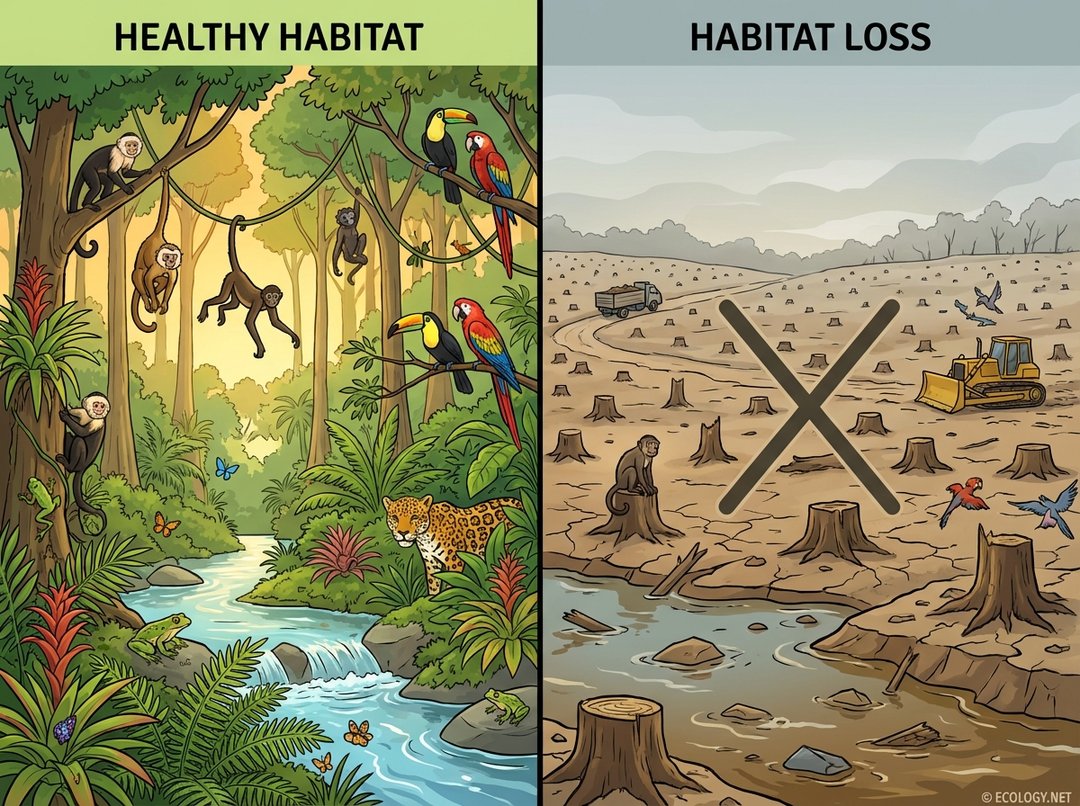
At its core, habitat loss refers to the process by which a natural habitat becomes incapable of supporting its native species. This can manifest in several ways, but the most straightforward is the outright destruction of an ecosystem. When a forest is clear-cut for agriculture, a wetland is drained for development, or a coral reef is destroyed by pollution, the organisms that once called these places home are left without shelter, food, or breeding grounds. The result is a dramatic decline in populations, often leading to local extinctions and, in severe cases, the complete disappearance of a species.
Consider a vibrant rainforest, a biodiversity hotspot teeming with life, from the smallest insects to majestic jaguars. Every plant, every animal, every microorganism plays a role in this complex system. Now, picture that same rainforest reduced to a barren landscape of stumps and polluted waterways. The contrast is stark, illustrating the profound impact of habitat destruction.
Beyond Simple Destruction: Understanding Fragmentation
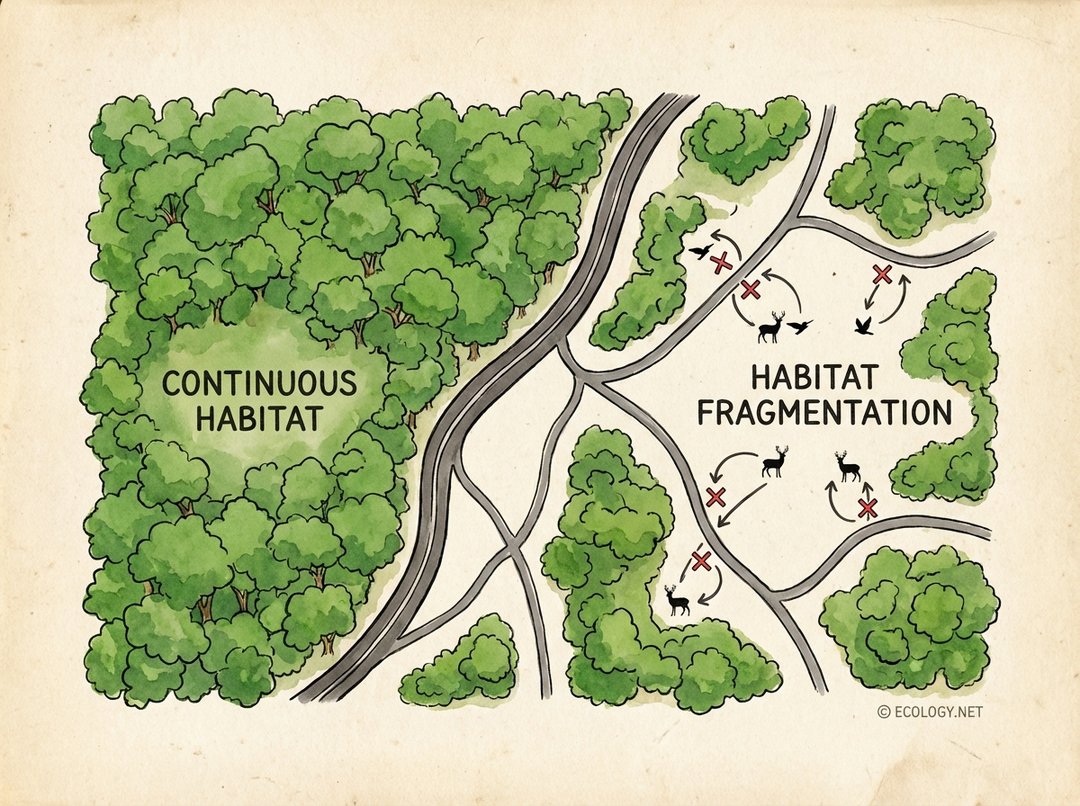
While outright destruction is devastating, habitat loss also takes a more insidious form: habitat fragmentation. This occurs when a large, continuous habitat is broken up into smaller, isolated patches. Think of a vast forest being bisected by a new highway, a railway line, or a sprawling urban development. These human-made barriers act like walls, preventing animals from moving freely between the remaining patches of their habitat.
Fragmentation has several detrimental effects:
- Reduced Area: Smaller patches simply cannot support as many individuals or as much genetic diversity as a large, continuous area.
- Edge Effects: The edges of fragmented habitats are exposed to different conditions, such as increased sunlight, wind, and human disturbance, which can negatively impact species adapted to interior conditions.
- Isolation: Populations in isolated patches become cut off from one another, making it difficult for them to find mates, access diverse food sources, or escape predators. This isolation can lead to inbreeding and reduced genetic resilience.
- Barriers to Movement: Roads, fences, and other infrastructure create dangerous obstacles for migrating animals, leading to increased mortality rates from vehicle collisions or predation.
The visual transformation from a seamless natural expanse to a patchwork of disconnected islands vividly demonstrates how fragmentation can cripple an ecosystem, even if some green spaces remain.
The Dire Consequences: Biodiversity Loss & Extinction
The ultimate and most tragic consequence of habitat loss and fragmentation is the irreversible decline in biodiversity and the extinction of species. Every species plays a unique role in its ecosystem, and when one disappears, the entire system weakens. The loss of a single pollinator, for example, can impact numerous plant species, which in turn affects herbivores, and so on, creating a cascading effect throughout the food web.
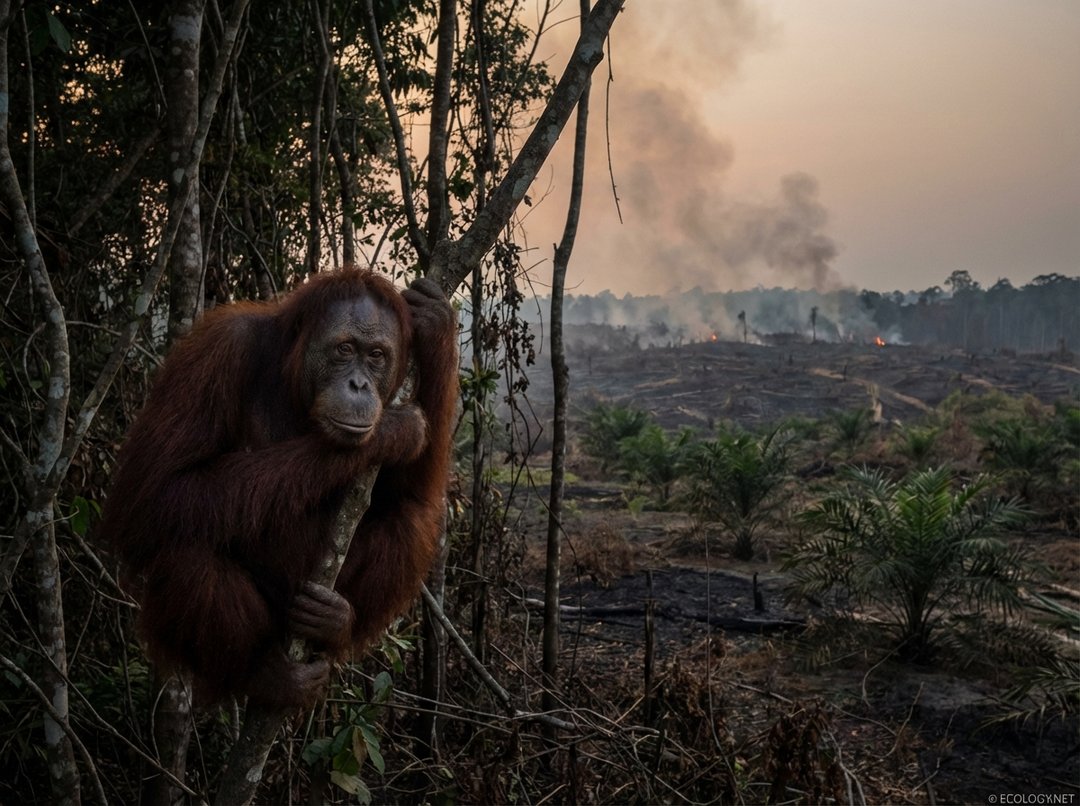
Iconic species like the Sumatran orangutan serve as poignant symbols of this crisis. Their forest homes are rapidly disappearing, replaced by vast oil palm plantations. These intelligent, gentle creatures are left with shrinking islands of trees, struggling to survive in a world that is literally shrinking around them. Their forlorn gaze from a tiny patch of remaining forest, with the smoke of distant fires hinting at further destruction, underscores the urgency of the situation.
Primary Drivers of Habitat Loss
Understanding the “why” behind habitat loss is crucial for addressing it. The drivers are complex and often interconnected, but several stand out as major culprits:
- Agriculture: This is by far the leading cause. Forests are cleared for crop cultivation, grasslands are converted into pastures for livestock, and wetlands are drained to create farmland. The global demand for food, particularly meat and certain cash crops like palm oil and soy, exerts immense pressure on natural habitats.
- Urbanization and Infrastructure Development: As human populations grow, so does the need for housing, roads, railways, airports, and industrial zones. These developments directly consume natural landscapes, paving over vital ecosystems.
- Resource Extraction: Mining operations, logging for timber and paper, and oil and gas exploration often involve extensive land clearing, road building, and pollution, devastating habitats in their wake.
- Pollution: While not always involving direct physical destruction, pollution can render a habitat uninhabitable. Water pollution from industrial runoff or agricultural chemicals can poison aquatic ecosystems. Air pollution can harm forests, and plastic pollution chokes marine life.
- Climate Change: Although often an indirect driver, climate change is increasingly altering habitats. Rising temperatures, changing precipitation patterns, and extreme weather events force species to migrate or adapt, and those that cannot face extinction. Coral reefs, for instance, are highly vulnerable to ocean warming and acidification.
The Ripple Effect: Ecosystem Services at Risk
Habitat loss does not just impact wildlife; it profoundly affects human well-being. Natural ecosystems provide invaluable “ecosystem services” that are essential for our survival and quality of life. When habitats are destroyed, these services are compromised:
- Water Purification: Forests and wetlands act as natural filters, cleaning our water supplies. Their destruction leads to increased water treatment costs and reduced access to clean drinking water.
- Pollination: Many of our food crops rely on wild pollinators like bees and butterflies. Habitat loss for these insects directly threatens agricultural productivity and food security.
- Climate Regulation: Forests absorb vast amounts of carbon dioxide, helping to regulate the global climate. Deforestation releases this stored carbon, exacerbating climate change.
- Soil Health: Healthy ecosystems prevent soil erosion and maintain soil fertility, crucial for agriculture.
- Disease Regulation: Intact ecosystems can help regulate the spread of diseases by maintaining diverse host populations and natural predators.
- Recreation and Cultural Value: Natural spaces provide opportunities for recreation, tourism, and hold deep cultural and spiritual significance for many communities.
Mitigation and Conservation Strategies
Addressing habitat loss requires a multi-faceted approach involving governments, organizations, communities, and individuals. Hope lies in concerted conservation efforts:
- Protected Areas: Establishing national parks, wildlife reserves, and marine protected areas safeguards critical habitats from human exploitation.
- Habitat Restoration: Reforestation, wetland restoration, and coral reef regeneration projects aim to rebuild degraded ecosystems, often with remarkable success.
- Sustainable Land Use: Promoting sustainable agriculture, responsible forestry, and eco-friendly urban planning can minimize environmental impact. This includes practices like agroforestry, organic farming, and green infrastructure.
- Policy and Legislation: Strong environmental laws, international agreements, and enforcement mechanisms are vital to prevent illegal logging, poaching, and destructive development.
- Individual Actions: Every person can contribute by making conscious choices, such as supporting sustainable products, reducing consumption, minimizing waste, and advocating for conservation.
- Wildlife Corridors: Creating corridors between fragmented habitat patches allows animals to move safely, mitigating the negative effects of isolation.
Conclusion
Habitat loss is a complex and pervasive environmental challenge, but it is not insurmountable. By understanding its causes, recognizing its profound impacts on both biodiversity and human well-being, and actively supporting conservation initiatives, we can collectively work towards a future where both nature and humanity thrive. The fate of countless species, and indeed our own, hinges on our ability to protect and restore the vital habitats that sustain life on Earth. It is a shared responsibility, and the time to act is now.