Beneath the shimmering surface of the world’s oceans lies a realm of unparalleled beauty, complexity, and vital importance: marine ecosystems. These vast underwater worlds, covering over 70% of our planet, are far more than just bodies of water; they are intricate networks of living organisms interacting with their physical environment, shaping our climate, producing much of the oxygen we breathe, and providing sustenance for countless species, including humans.
From the sunlit shallows teeming with life to the crushing darkness of the abyssal plains, marine ecosystems exhibit an astonishing diversity of habitats and inhabitants. Understanding these systems is not merely an academic pursuit; it is crucial for appreciating the delicate balance of our planet and for safeguarding its future.
The Foundation of Life: Primary Production and the Marine Food Web
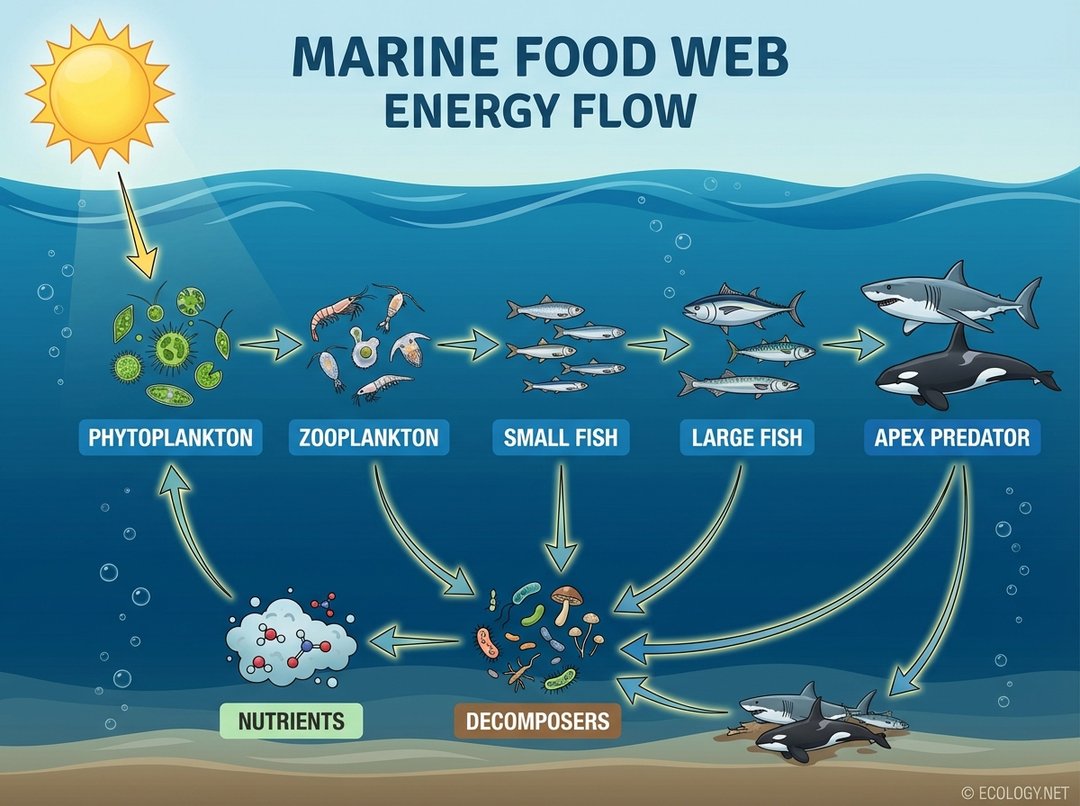
At the heart of every marine ecosystem is a fundamental process known as primary production. Just as plants on land convert sunlight into energy, microscopic organisms in the ocean, primarily phytoplankton, perform photosynthesis. These tiny, often invisible, producers form the base of nearly all marine food webs, converting solar energy into organic matter that fuels the entire ocean.
The flow of energy in the ocean begins with these photosynthetic powerhouses. Phytoplankton are consumed by small zooplankton, which are then eaten by larger invertebrates and small fish. This energy transfer continues up the food chain, from small fish to larger predatory fish, and ultimately to apex predators such such as sharks, orcas, and marine mammals. Each step in this chain represents a transfer of energy, sustaining the incredible biodiversity of marine life. Equally important are the decomposers, such as bacteria and fungi, which break down dead organisms and waste products, returning essential nutrients to the water column to be reused by phytoplankton, thus completing a vital cycle.
Diverse Habitats: A Glimpse into Marine Worlds
Marine ecosystems are incredibly varied, each with its unique characteristics, challenges, and inhabitants. Exploring these diverse habitats reveals the remarkable adaptability of life in the ocean.
Coral Reefs: Underwater Cities
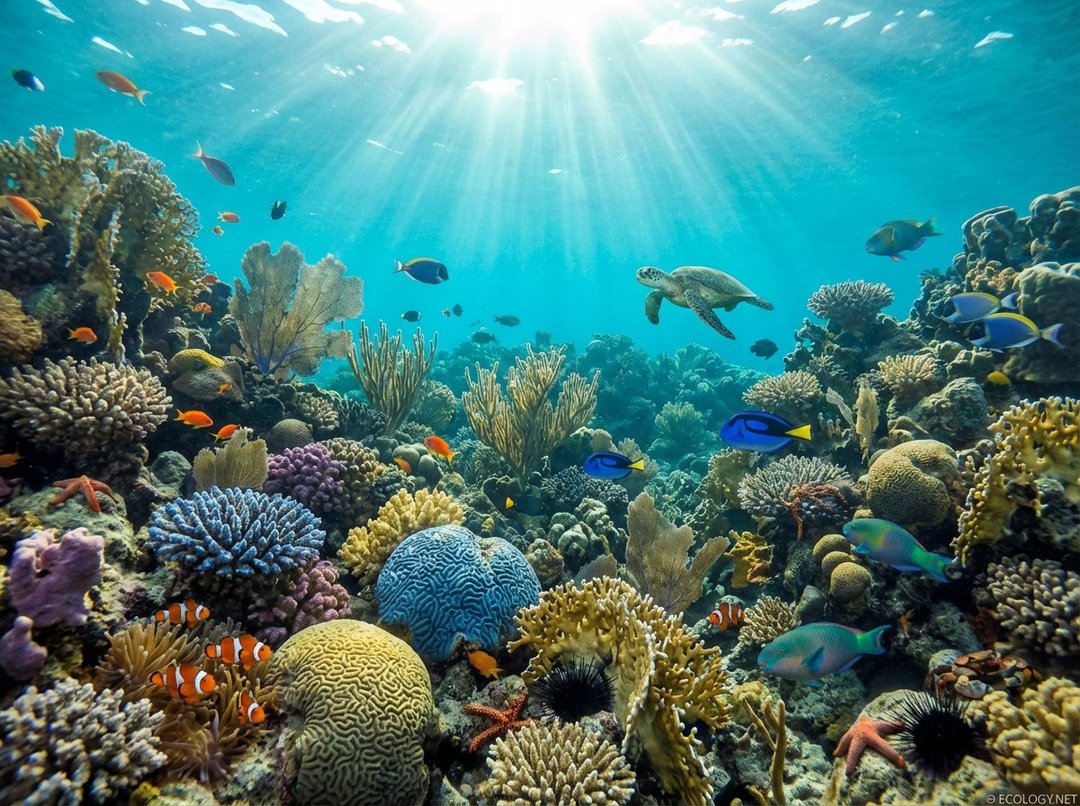
Often referred to as the “rainforests of the sea,” coral reefs are among the most biodiverse ecosystems on Earth. These vibrant underwater cities are built by tiny polyps that secrete calcium carbonate, forming intricate structures over thousands of years. Coral reefs provide shelter, food, and breeding grounds for an estimated 25% of all marine species, despite covering less than 0.1% of the ocean floor.
Within these bustling communities, one can find an explosion of color and life: clownfish darting among anemones, surgeonfish grazing on algae, majestic sea turtles gliding gracefully, and countless invertebrates. The intricate architecture of the corals creates a complex three dimensional habitat, supporting a vast array of life forms and playing a crucial role in coastal protection by buffering shorelines from waves and storms.
Open Ocean: The Blue Frontier
Beyond the coastal zones lies the vast expanse of the open ocean, or pelagic zone, which is the largest marine ecosystem. This seemingly empty blue frontier is home to an incredible array of migratory species adapted to life in the water column. From microscopic plankton to colossal whales, the open ocean supports a complex web of life.
The open ocean is divided into different zones based on depth and light penetration. The sunlit epipelagic zone, extending to about 200 meters, is where most photosynthesis occurs. Below this, the mesopelagic, bathypelagic, and abyssal zones plunge into increasing darkness and pressure, each hosting unique creatures with specialized adaptations, such as bioluminescence, to survive in these extreme conditions.
Estuaries: Where Rivers Meet the Sea
Estuaries are semi enclosed coastal bodies of water where freshwater from rivers mixes with saltwater from the ocean. These dynamic environments are characterized by fluctuating salinity, temperature, and sediment levels. Despite these challenging conditions, estuaries are incredibly productive ecosystems, serving as critical nursery grounds for many marine species, including fish, shellfish, and crustaceans.
Mangrove forests and salt marshes, common features of estuarine ecosystems, provide vital habitats, stabilize shorelines, and filter pollutants from the water. The rich nutrient input from rivers, combined with tidal mixing, creates a fertile environment that supports a diverse array of plant and animal life, making estuaries essential for both marine and terrestrial ecosystems.
Deep Sea: The Abyssal Realm
The deep sea, encompassing the vast majority of the ocean’s volume, is perhaps the least explored and most mysterious marine ecosystem. Characterized by perpetual darkness, immense pressure, and near freezing temperatures, life here might seem impossible. Yet, the deep sea teems with unique and often bizarre creatures that have evolved extraordinary adaptations to thrive in this extreme environment.
Many deep sea organisms rely on chemosynthesis, a process where energy is derived from chemical reactions rather than sunlight, particularly around hydrothermal vents. These vents release superheated, mineral rich water from the Earth’s crust, supporting entire communities of organisms such as giant tube worms, specialized clams, and unique microbes that form the base of these chemosynthetic food webs.
The Engine of Productivity: Upwelling and Nutrient Cycling
While primary production is the foundation of marine life, the availability of nutrients is often the limiting factor for growth in many ocean regions. This is where a crucial process called upwelling plays a pivotal role in boosting marine productivity.
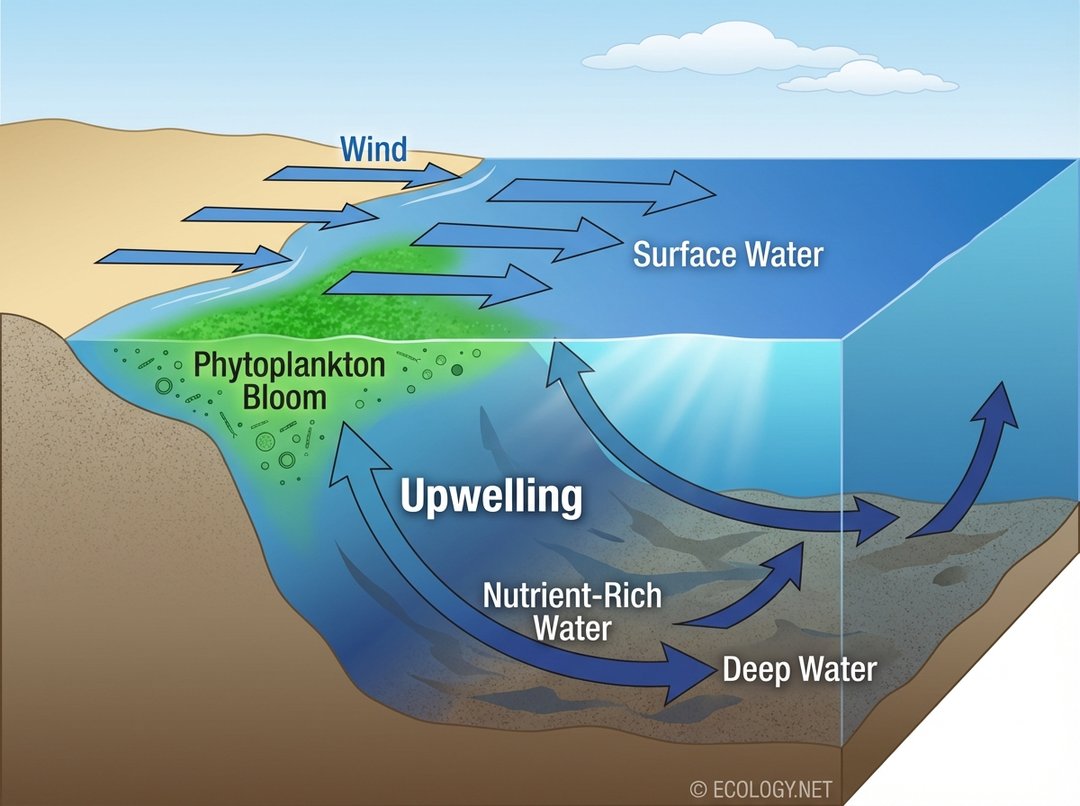
Upwelling occurs when deep, cold, nutrient rich water rises to the surface, replacing warmer, nutrient depleted surface water. This phenomenon is often driven by winds blowing parallel to coastlines, pushing surface water away from the shore. As surface water moves offshore, deeper water from below is drawn upwards to fill the void. This rising water carries with it a wealth of dissolved nutrients, such as nitrates and phosphates, which have accumulated from the decomposition of organic matter in the deep ocean.
When these nutrient rich waters reach the sunlit surface, they fuel massive phytoplankton blooms. These blooms, in turn, support an explosion of zooplankton, fish, and ultimately, larger marine predators. Regions with consistent upwelling, such as the coasts of Peru, California, and parts of Africa, are among the most productive fishing grounds in the world, demonstrating the profound impact of this natural process on marine ecosystems and global food security.
Threats to Marine Ecosystems
Despite their vastness and resilience, marine ecosystems face numerous threats, largely stemming from human activities. Pollution, including plastic waste, chemical runoff, and nutrient overload, degrades habitats and harms marine life. Overfishing depletes fish stocks and disrupts delicate food webs. Climate change poses a significant threat through ocean warming, which causes coral bleaching, and ocean acidification, which impairs the ability of many marine organisms to build shells and skeletons.
Habitat destruction from coastal development, destructive fishing practices, and dredging further diminishes the health and biodiversity of these vital environments. Understanding these challenges is the first step towards implementing effective conservation strategies.
Conclusion
Marine ecosystems are the lifeblood of our planet, providing essential services that sustain all life on Earth. From the microscopic phytoplankton that produce oxygen to the majestic whales that roam the open ocean, every component plays a critical role in maintaining the health and balance of these intricate systems. Their beauty, complexity, and profound influence on our world underscore the urgent need for their protection. By appreciating the wonders of marine life and supporting conservation efforts, we can help ensure that these invaluable underwater worlds continue to thrive for generations to come.