Unveiling the Agroecosystem: Where Nature Meets Agriculture
Imagine a world without farms. It is a stark thought, highlighting humanity’s profound reliance on agriculture. But what exactly is a farm from an ecological perspective? It is far more than just rows of crops or grazing animals. It is a complex, dynamic entity known as an agroecosystem. These are the modified landscapes where humans intentionally manage natural processes to produce food, fiber, and fuel, forming the very backbone of our civilization. Understanding agroecosystems is crucial for appreciating where our food comes from and for navigating the path towards a sustainable future.
What Defines an Agroecosystem?
At its core, an agroecosystem is a specific type of ecosystem that has been deliberately altered and managed by humans for agricultural purposes. Unlike a pristine forest or a wild grassland, an agroecosystem is characterized by a significant degree of human intervention, aiming to optimize the production of specific biological products. This management often leads to a simplification of the natural environment, focusing energy and resources on a select few species.
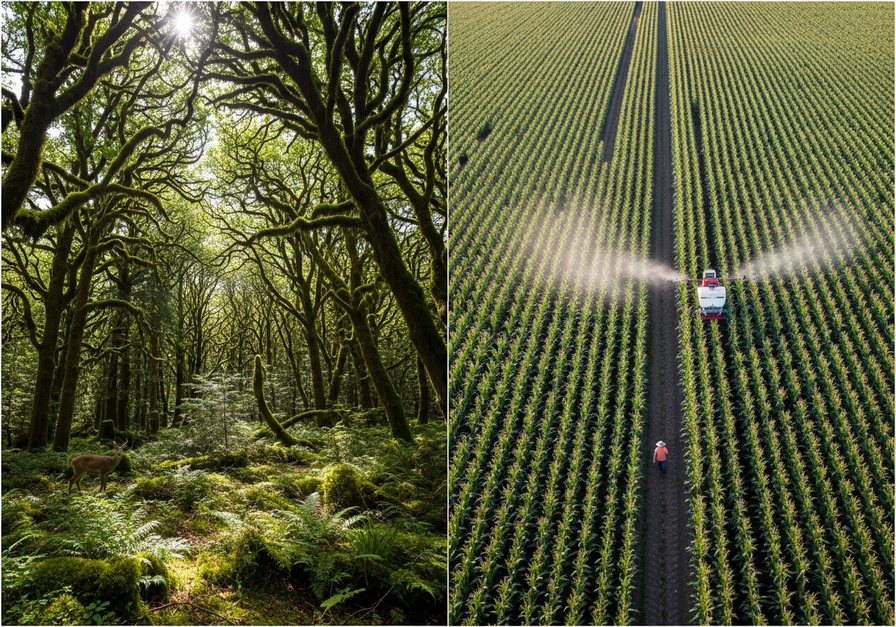
Consider the stark contrast between a vibrant, untouched rainforest teeming with countless species and a vast field of corn stretching to the horizon. The rainforest represents a natural ecosystem, characterized by high biodiversity, complex food webs, and self-regulating processes. The cornfield, on the other hand, is a classic agroecosystem. Its biodiversity is significantly lower, dominated by a single crop species, and its survival and productivity are heavily dependent on human inputs like irrigation, fertilization, and pest control. This fundamental difference in complexity and human influence is a defining feature.
Key Components of an Agroecosystem
Just like any other ecosystem, an agroecosystem is composed of both living (biotic) and non-living (abiotic) elements that interact in intricate ways.
- Biotic Components:
- Crops: The primary focus, such as wheat, corn, rice, vegetables, or fruit trees.
- Livestock: Animals raised for food, fiber, or labor, including cattle, poultry, sheep, and pigs.
- Beneficial Organisms: Insects like pollinators (bees, butterflies) and natural predators (ladybugs, parasitic wasps) that help control pests. Microorganisms in the soil are also vital for nutrient cycling.
- Pests and Pathogens: Weeds, insects, fungi, and bacteria that can harm crops or livestock and reduce yields.
- Humans: Farmers, farm workers, and agricultural scientists who manage and influence the system.
- Abiotic Components:
- Soil: The foundation for plant growth, providing nutrients, water, and physical support.
- Water: Essential for all life processes, supplied by rainfall, irrigation, or groundwater.
- Sunlight: The ultimate energy source for photosynthesis.
- Climate: Temperature, rainfall patterns, humidity, and wind, which dictate what crops can be grown.
- Nutrients: Minerals and organic matter in the soil vital for plant health.
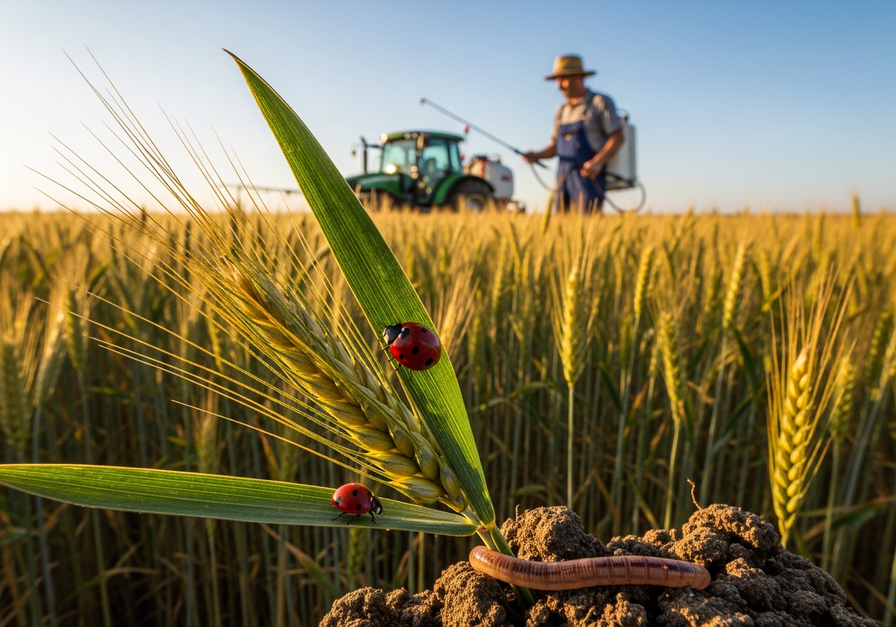
This image beautifully captures the intricate web of life within an agroecosystem. We see the golden wheat, a farmer managing the field, and even the tiny, often overlooked allies like the ladybug and the earthworm, all playing their part in this human-managed natural system.
The Dynamics of Agroecosystems: How They Function
Agroecosystems operate on fundamental ecological principles, albeit with significant human modification. Energy flows from the sun, captured by crops through photosynthesis. This energy then moves through simplified food chains to herbivores (pests, livestock) and eventually to humans. Nutrients, like nitrogen and phosphorus, cycle through the soil, plants, and decomposers. Water moves through the system via rainfall, irrigation, plant uptake, and evaporation.
However, human interventions profoundly alter these natural cycles. For instance:
- Nutrient Cycling: Farmers often add synthetic fertilizers to boost crop growth, supplementing or replacing natural nutrient cycling processes.
- Water Management: Irrigation systems divert water from rivers or groundwater to ensure crops receive adequate moisture, especially in arid regions.
- Pest Control: Pesticides are used to manage insect pests, while herbicides control weeds, altering natural predator-prey relationships and plant competition.
- Biodiversity Management: Monocultures, the practice of growing a single crop species over a large area, drastically reduce biodiversity compared to natural ecosystems.
These interventions are designed to maximize yield and efficiency, but they also introduce ecological trade-offs, which are critical for understanding the broader impacts of agriculture.
Diverse Faces of Agroecosystems: Examples from Around the World
Agroecosystems are incredibly diverse, reflecting different cultures, climates, technologies, and economic systems.
- Monoculture Systems: Large fields dedicated to a single crop, like vast corn or soybean farms in the American Midwest. These are highly efficient for mechanized farming but can be vulnerable to pests and diseases.
- Polyculture Systems: Growing multiple crops together in the same field, such as traditional milpa systems in Mesoamerica that combine corn, beans, and squash. This can enhance biodiversity and nutrient cycling.
- Pastoral Systems: Rangelands where livestock graze, often managed by nomadic or semi-nomadic communities. Examples include Maasai pastoralists in East Africa or sheep farming in Patagonia.
- Agroforestry: Integrating trees and shrubs with crops or livestock. This can provide multiple benefits, including soil conservation, biodiversity enhancement, and additional products like timber or fruit. Coffee plantations often incorporate shade trees, for example.
- Aquaculture: Farming aquatic organisms like fish, shrimp, or seaweed in controlled environments. While not land-based, these are managed ecosystems for food production.
- Urban Farms: Small-scale agricultural operations within cities, including community gardens, rooftop farms, and vertical farms, bringing food production closer to consumers.
Each type presents its own set of ecological interactions, management challenges, and sustainability considerations.
Challenges and Environmental Footprint
While essential for human survival, agroecosystems face significant challenges and can exert considerable pressure on the environment.
- Soil Degradation: Intensive tillage can lead to soil erosion, loss of organic matter, and compaction, reducing fertility and water retention.
- Water Pollution: Runoff from fields carrying excess fertilizers (nitrates, phosphates) and pesticides can contaminate rivers, lakes, and groundwater, harming aquatic life and human health.
- Biodiversity Loss: Habitat destruction for farmland, pesticide use, and monoculture practices contribute to the decline of wild plant and animal species, including beneficial insects.
- Greenhouse Gas Emissions: Agricultural activities, particularly livestock farming (methane from ruminants) and the use of synthetic nitrogen fertilizers (nitrous oxide), are significant contributors to climate change.
- Water Scarcity: Agriculture is a major consumer of freshwater, and unsustainable irrigation practices can deplete aquifers and exacerbate water shortages.
Addressing these challenges is paramount for ensuring long-term food security and environmental health.
Towards Sustainable Agroecosystems: Innovations and Future Directions
The good news is that innovative approaches are emerging to transform agroecosystems into more sustainable and resilient systems. These strategies aim to harness ecological processes more effectively, reduce environmental impact, and enhance productivity.
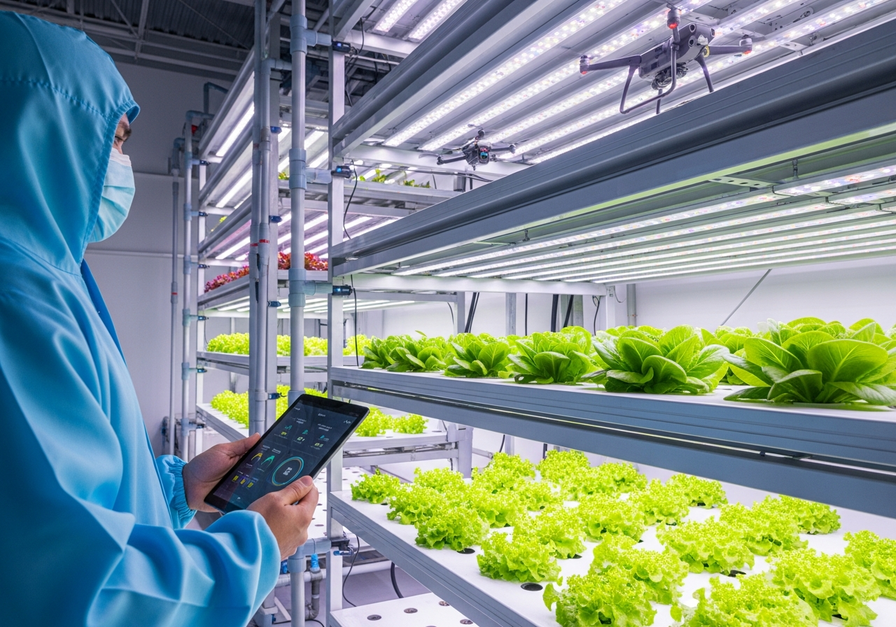
This image of a vertical farm illustrates one such innovation, where technology and ecological principles converge to produce food efficiently in controlled environments.
Key Sustainable Practices and Technologies:
- Precision Agriculture: Using technologies like GPS, sensors, and drones to apply inputs (water, fertilizer, pesticides) precisely where and when they are needed. This minimizes waste and environmental impact.
- Vertical Farming: Growing crops in vertically stacked layers, often indoors, using hydroponics or aeroponics. This saves land, reduces water use, and allows for year-round production in urban areas.
- Agroecology: An approach that applies ecological principles to agricultural systems, emphasizing biodiversity, nutrient cycling, soil health, and social equity. It often involves practices like intercropping, cover cropping, and biological pest control.
- Conservation Agriculture: A set of practices including minimum tillage, permanent soil cover (e.g., cover crops), and crop rotation. These improve soil health, reduce erosion, and enhance water infiltration.
- Integrated Pest Management (IPM): A holistic strategy that combines biological, cultural, physical, and chemical tools to manage pests in an economically sound and environmentally responsible manner.
- Climate-Smart Agriculture: Practices that aim to sustainably increase productivity and incomes, adapt and build resilience to climate change, and reduce greenhouse gas emissions.
- Regenerative Agriculture: A system of farming principles and practices that increases biodiversity, enriches soils, improves watersheds, and enhances ecosystem services.
These advancements represent a shift towards viewing farms not just as production units, but as integral parts of the broader ecosystem, capable of providing both food and ecological benefits.
Conclusion
Agroecosystems are fascinating and vital systems, representing humanity’s ongoing effort to harness nature for sustenance. From the simplest backyard garden to the most technologically advanced vertical farm, they are dynamic interfaces where ecological principles meet human ingenuity. While they present significant environmental challenges, a deeper understanding of their components and functions, coupled with the adoption of innovative and sustainable practices, offers a promising path forward. By nurturing our agroecosystems, we can ensure not only food security for a growing global population but also the health and resilience of the planet for generations to come.