Imagine a magnificent skyscraper, towering into the sky, filled with bustling offices, luxurious apartments, and vibrant shops. We marvel at its intricate design, its functional spaces, and the comfort it provides. But what often goes unnoticed is the bedrock beneath it, the deep, unseen foundation that bears its entire weight and ensures its stability. In the natural world, ecosystems operate on a similar principle. While we readily appreciate the fruits, clean water, and beautiful landscapes they provide, there’s a crucial, often invisible, layer of processes working tirelessly beneath the surface: the supporting services.
These unsung heroes of the natural world are the fundamental ecological processes that enable all other ecosystem services to exist. Without them, the very fabric of life as we know it would unravel. Understanding supporting services is not just for ecologists; it is essential for anyone who breathes air, drinks water, or eats food.
What Exactly Are Supporting Services?
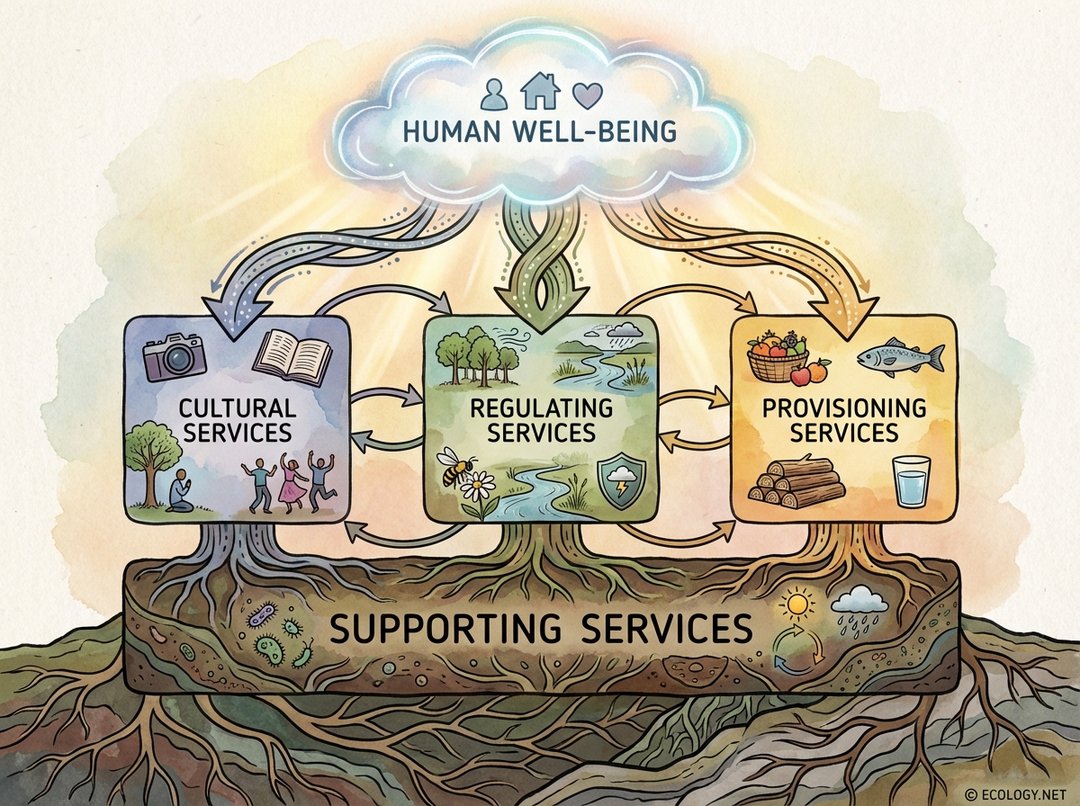
Ecosystem services are broadly categorized into four types: provisioning, regulating, cultural, and supporting. While provisioning services give us tangible products like food and fresh water, regulating services control natural phenomena such as climate and floods, and cultural services offer recreational and spiritual benefits, supporting services are different. They are the bedrock, the essential processes that are necessary for the production of all other ecosystem services.
Unlike the other categories, supporting services do not directly provide benefits to humans in the short term. Instead, they operate over long periods, creating and maintaining the conditions necessary for life on Earth. Think of them as the Earth’s internal machinery, constantly running to keep the planet habitable and productive. They are the ecological infrastructure upon which all other services depend.
Key Types of Supporting Services
To truly grasp the importance of supporting services, it helps to explore some of their most critical manifestations. These processes are fundamental to the health and functioning of every ecosystem.
Nutrient Cycling
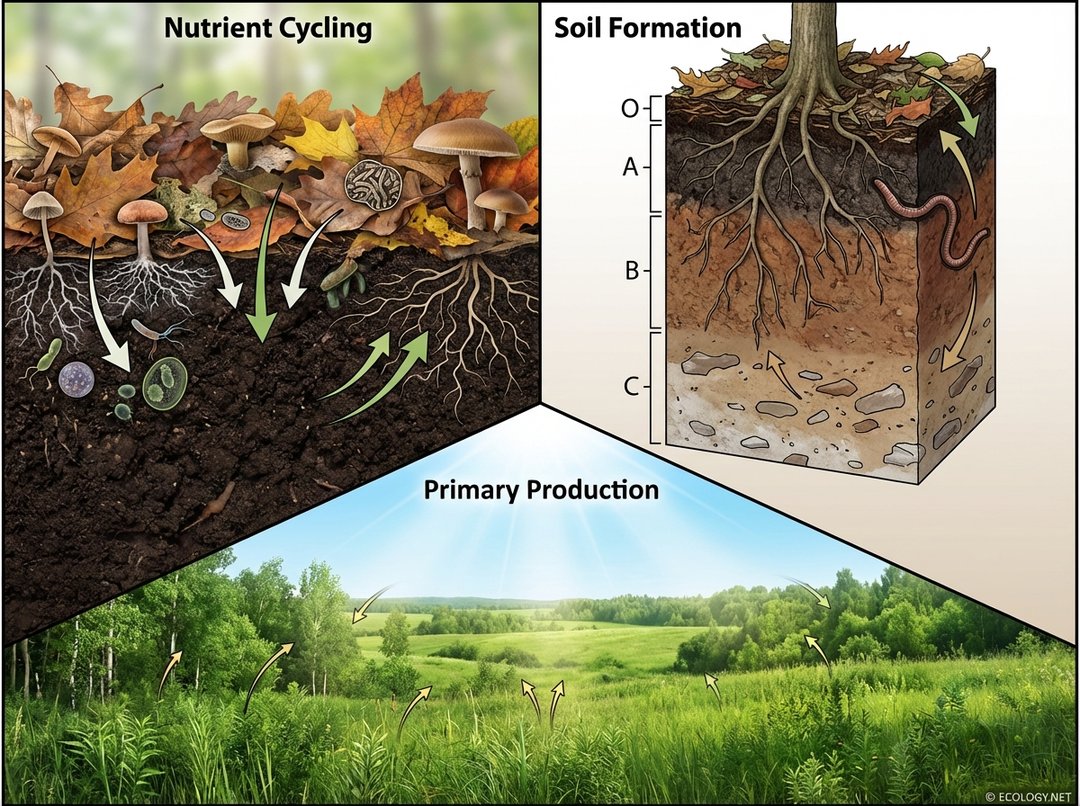
Life on Earth relies on a continuous flow of essential nutrients. Nutrient cycling is the process by which vital elements like nitrogen, phosphorus, and carbon are transferred between living organisms and the physical environment. This includes decomposition, where bacteria and fungi break down dead organic matter, releasing nutrients back into the soil for plants to absorb. Without this constant recycling, nutrients would quickly become locked away, rendering ecosystems barren.
- Carbon Cycle: The movement of carbon through the atmosphere, oceans, soil, and living organisms, crucial for photosynthesis and respiration.
- Nitrogen Cycle: The conversion of atmospheric nitrogen into forms usable by plants, primarily through the action of specialized bacteria.
- Phosphorus Cycle: The slow movement of phosphorus from rocks to soil, water, and living organisms, essential for DNA and energy transfer.
Soil Formation
Soil is far more than just dirt; it is a complex, living medium that is the foundation for most terrestrial life. Soil formation is a slow and intricate process involving the weathering of rocks, the accumulation of organic matter from dead plants and animals, and the activity of countless microorganisms and invertebrates like earthworms. Healthy soil provides physical support for plants, stores water, filters pollutants, and acts as a reservoir for nutrients.
Primary Production
This is arguably the most fundamental supporting service. Primary production is the process by which producers, primarily plants, algae, and some bacteria, convert solar energy into organic matter through photosynthesis. This biomass forms the base of nearly all food webs on Earth. Every animal, from the smallest insect to the largest whale, ultimately depends on primary production for its energy. It also releases the oxygen we breathe into the atmosphere.
Water Cycling (Hydrological Cycle)
The continuous movement of water on, above, and below the surface of the Earth is vital for all life. This cycle involves evaporation, transpiration (water released by plants), condensation, precipitation, and runoff. Ecosystems play a critical role in regulating this cycle. Forests, for instance, influence rainfall patterns and reduce runoff, allowing more water to infiltrate the soil and recharge groundwater. Wetlands act as natural sponges, absorbing excess water and slowly releasing it.
Habitat Provision
While often seen as a direct benefit, the provision of suitable living spaces for a vast array of species is a fundamental supporting service. Healthy ecosystems, from dense forests to vibrant coral reefs, offer the shelter, food, and breeding grounds necessary for biodiversity to thrive. This biodiversity, in turn, underpins the resilience and stability of ecosystems, ensuring a robust foundation for all other services.
The Interconnectedness of Ecosystem Services
The beauty of ecosystem services lies in their intricate web of connections. Supporting services are not isolated; they are the threads that weave together the entire tapestry of life-sustaining processes. Their health directly influences the availability and quality of provisioning, regulating, and cultural services.
Supporting Services and Provisioning Services
Consider the food on our plates. Without robust nutrient cycling and healthy soil formation, agricultural lands would quickly lose their fertility, making it impossible to grow crops. Primary production is the direct source of all plant-based foods and the indirect source of all animal products. Even the timber used for construction relies on the foundational processes that enable trees to grow and thrive.
Supporting Services and Regulating Services
The link here is equally profound. A healthy water cycle, influenced by forests and wetlands, helps regulate local and regional climates, reduces the severity of floods, and ensures a steady supply of fresh water. Diverse habitats, a product of habitat provision, support populations of natural predators that control agricultural pests, thereby regulating outbreaks and reducing the need for chemical interventions.
Supporting Services and Cultural Services
Even our appreciation for nature is rooted in these fundamental processes. A lush forest, a vibrant coral reef, or a pristine river, all of which offer opportunities for recreation, spiritual solace, and aesthetic enjoyment, are products of healthy supporting services. Without the underlying ecological integrity, these landscapes would degrade, diminishing their cultural value.
Why Should We Care? The Consequences of Degradation
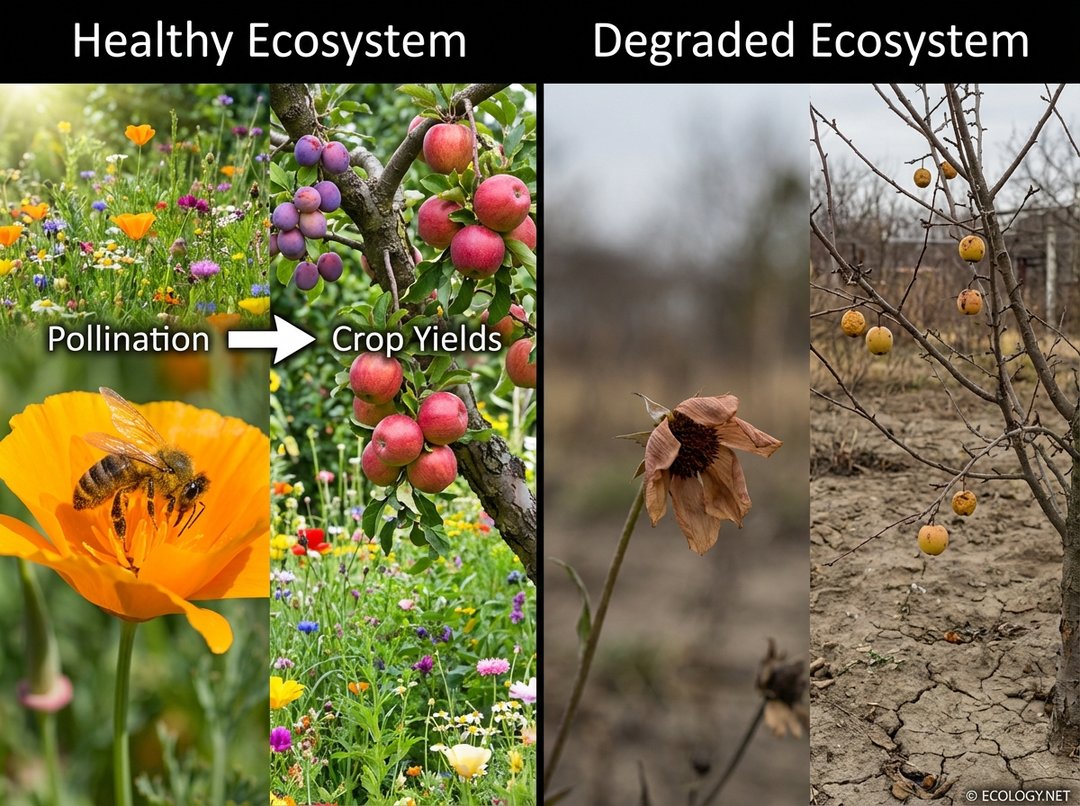
Because supporting services are often out of sight, their degradation can go unnoticed until the consequences become severe and widespread. When these foundational processes falter, the entire ecosystem begins to unravel, leading to cascading effects that impact human well-being.
- Reduced Agricultural Productivity: Soil erosion, nutrient depletion, and loss of pollinators (which depend on habitat provision) directly threaten food security.
- Loss of Biodiversity: Degradation of habitats and disruption of nutrient cycles lead to species extinction, weakening ecosystem resilience and reducing the genetic resources available for future adaptation.
- Increased Vulnerability to Disasters: Impaired water cycling can lead to more severe floods and droughts. Loss of vegetation, which is a product of primary production, exacerbates soil erosion and desertification.
- Economic Costs: The costs associated with replacing or repairing degraded supporting services are enormous. For example, building water purification plants when natural water filtration systems fail, or creating artificial fertilizers when nutrient cycling is disrupted.
“The health of our planet, and by extension, our own well-being, is inextricably linked to the invisible work of supporting ecosystem services. Ignoring them is akin to building a house without a foundation.”
Protecting Our Foundation: Conservation and Sustainable Practices
Recognizing the critical role of supporting services compels us to adopt practices that protect and enhance them. This is not merely an environmental concern; it is an investment in our collective future.
- Sustainable Agriculture: Practices like no-till farming, cover cropping, and crop rotation improve soil health, enhance nutrient cycling, and reduce erosion.
- Forest Conservation and Reforestation: Protecting existing forests and planting new ones helps maintain the water cycle, prevent soil erosion, and provide vital habitats.
- Wetland Restoration: Restoring degraded wetlands can significantly improve water quality, regulate water flow, and provide crucial habitats.
- Pollution Reduction: Minimizing chemical runoff and air pollution prevents the contamination of soils and water bodies, protecting nutrient cycles and primary production.
- Biodiversity Protection: Conserving diverse species ensures the continuation of the complex interactions that drive supporting services, such as the decomposers in nutrient cycling or the soil engineers in soil formation.
- Policy and Public Awareness: Implementing policies that incentivize sustainable land use and educating the public about the value of these services are crucial steps towards their long-term protection.
Conclusion
Supporting services are the silent architects of life on Earth. They are the fundamental ecological processes that work behind the scenes, providing the essential conditions for all other ecosystem services to flourish. From the microscopic world of nutrient cycling to the vast expanse of primary production, these services form the invisible yet indispensable foundation of our planet’s health and, ultimately, human well-being.
By understanding and valuing these foundational processes, we can shift our perspective from merely consuming nature’s bounty to actively stewarding its intricate systems. Protecting supporting services is not just an ecological imperative; it is a profound act of self-preservation, ensuring a resilient and thriving planet for generations to come.