From the smallest bacterium drifting unseen in a drop of water to the towering redwood reaching for the sky, the concept of an “organism” is fundamental to understanding life on Earth. An organism is essentially a self-contained living entity, a biological system capable of carrying out all the processes necessary for life. It is the basic unit of ecology, the individual actor in the grand drama of nature.
The sheer diversity of organisms is staggering, yet they all share common threads that define their existence. Exploring what makes an organism an organism unlocks a deeper appreciation for the intricate web of life that surrounds us.
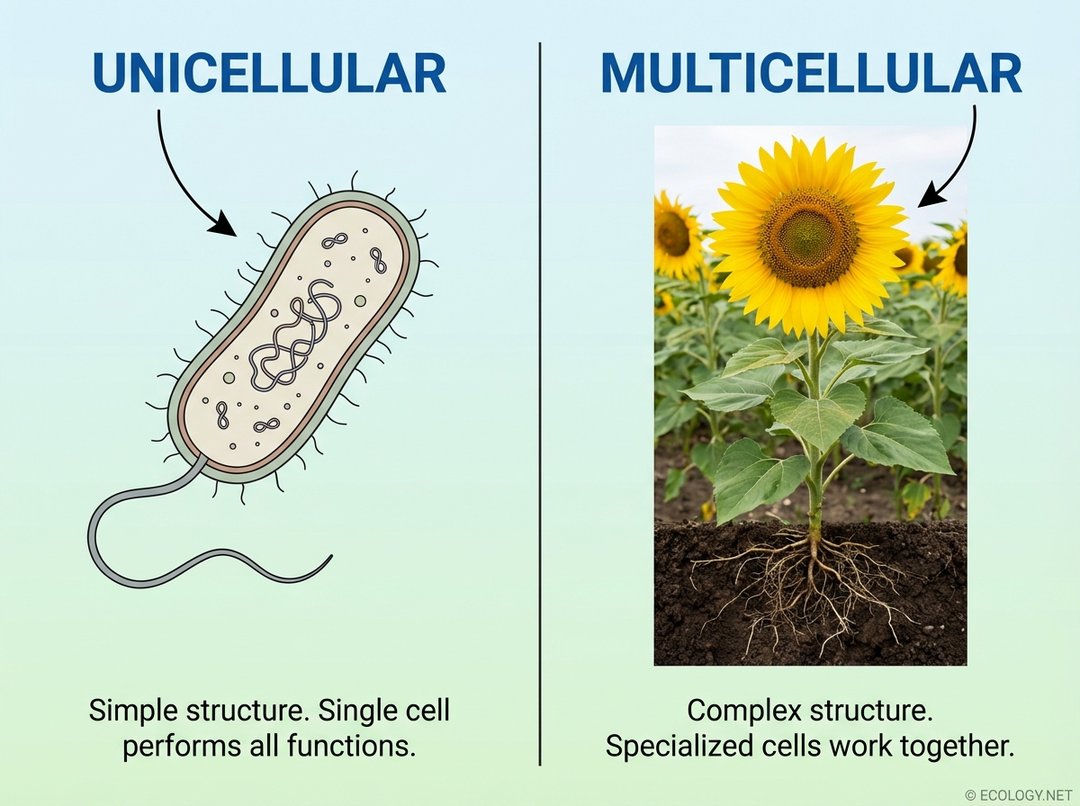
The Fundamental Divide: Unicellular vs. Multicellular
One of the most basic distinctions among organisms lies in their cellular structure. Are they made of one cell or many?
- Unicellular Organisms: These are the simplest forms of life, consisting of a single cell that performs all life functions. Think of bacteria, archaea, and many protists like amoebas or paramecia. Each individual cell is a complete organism, capable of feeding, growing, and reproducing on its own. They are the pioneers of life, having dominated Earth for billions of years before more complex forms emerged.
- Multicellular Organisms: These organisms are composed of many cells working together, often specialized for different tasks. Plants, animals, fungi, and some algae fall into this category. In a multicellular organism, cells cooperate, forming tissues, organs, and organ systems. For instance, a plant has root cells for absorbing water, leaf cells for photosynthesis, and stem cells for support. This division of labor allows for greater complexity, size, and efficiency.
This distinction is a cornerstone of biological understanding, illustrating the vast spectrum of life’s architectural designs.
The Six Defining Characteristics of Life
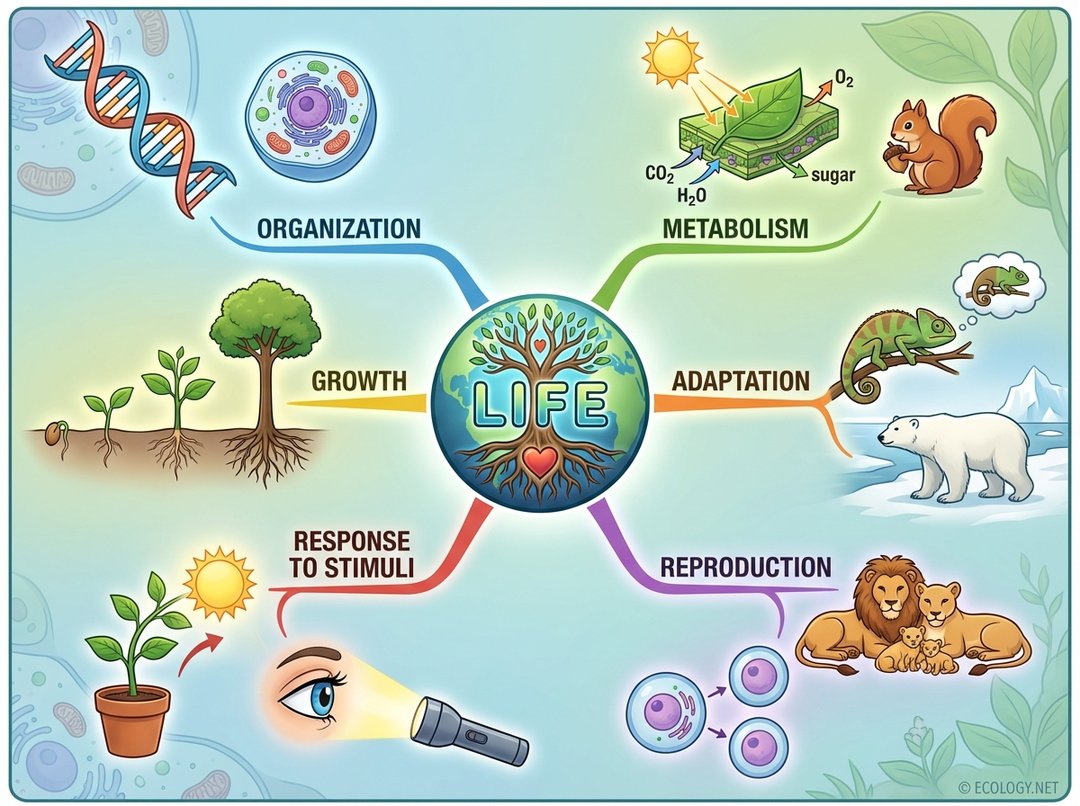
While the variety of organisms is immense, scientists have identified six core characteristics that universally define what it means to be alive. If something exhibits all these traits, it is considered an organism.
1. Organization
All organisms exhibit a high degree of organization, meaning they are structured in a complex and ordered way. From the precise arrangement of molecules within a cell to the intricate systems of a complex animal, this order is crucial. For example, a human body is organized into cells, which form tissues, which form organs, which form organ systems, all working in concert.
2. Metabolism
Metabolism refers to the sum of all chemical reactions that occur within an organism to maintain life. This includes processes like:
- Anabolism: Building complex molecules from simpler ones, such as plants using sunlight to create sugars through photosynthesis.
- Catabolism: Breaking down complex molecules into simpler ones to release energy, like animals digesting food to fuel their activities.
Every organism, from a microscopic yeast to a massive whale, constantly performs metabolic processes to acquire and use energy.
3. Growth and Development
Organisms grow and develop according to specific instructions encoded in their genes. Growth involves an increase in size and often the number of cells. Development involves a series of changes that an organism undergoes during its lifetime, leading to a more complex or specialized state. A tiny acorn develops into a mighty oak tree, and a caterpillar undergoes metamorphosis to become a butterfly, both demonstrating remarkable growth and development.
4. Adaptation
Over generations, populations of organisms evolve adaptations, which are inherited traits that enhance their survival and reproduction in a specific environment. The thick fur of a polar bear helps it survive in arctic conditions, while the long neck of a giraffe allows it to reach high foliage. These adaptations are the result of natural selection acting on genetic variation within a population.
5. Response to Stimuli
Organisms react to changes in their internal or external environment, known as stimuli. This ability to respond is vital for survival. A plant turns its leaves towards sunlight, a deer flees from a predator, and your pupils constrict in bright light. These responses can be immediate and behavioral or slower physiological adjustments.
6. Reproduction
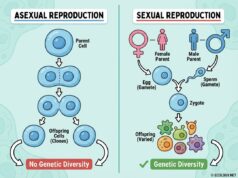
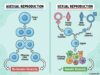
The ability to reproduce is a defining characteristic of life, ensuring the continuation of a species. Organisms pass on their genetic material to offspring, creating new individuals. Reproduction can be:
- Asexual: A single parent produces genetically identical offspring, common in bacteria and some plants.
- Sexual: Two parents contribute genetic material to produce offspring that are genetically diverse, prevalent in most animals and many plants.
Without reproduction, life would cease to exist.
The Organism in its Environment: Levels of Ecological Organization
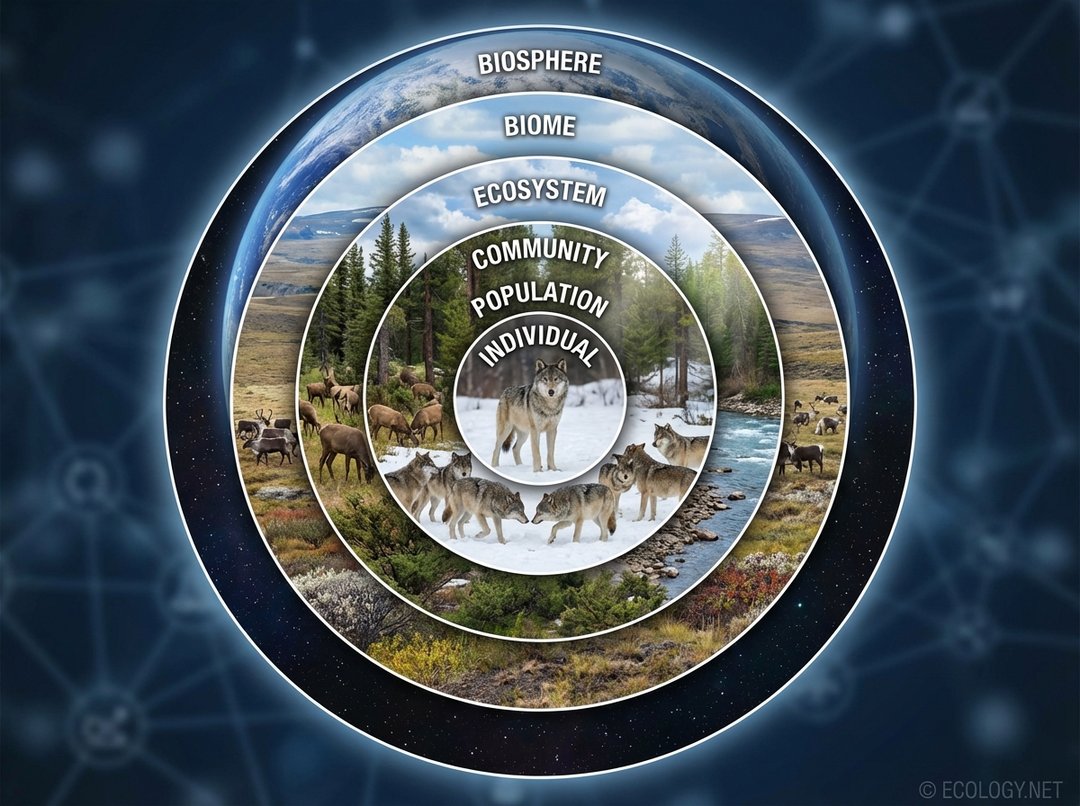
No organism exists in isolation. Every living entity is part of a larger, interconnected system. Ecology studies these relationships, and it organizes life into a hierarchy of increasing complexity, starting with the individual organism.
1. Individual
At the most basic level, we have the individual organism. This is the single wolf, the solitary oak tree, or the lone bacterium. It is the focus of physiological and behavioral studies, examining how it functions and interacts with its immediate surroundings.
2. Population
A population consists of all the individuals of a single species living in a particular area at the same time. For example, all the wolves in a specific forest pack constitute a population. Ecologists study population dynamics, such as birth rates, death rates, migration, and how these factors influence population size and distribution.
3. Community
A community encompasses all the different populations of various species that live and interact in a particular area. This includes all the plants, animals, fungi, and microorganisms. A forest community might include populations of wolves, deer, squirrels, oak trees, ferns, and countless insect species, all interacting through predation, competition, and symbiosis.
4. Ecosystem
An ecosystem includes all the living organisms (the community) in an area, as well as the non-living physical components of the environment (abiotic factors) with which they interact. Abiotic factors include sunlight, water, soil, temperature, and air. A pond ecosystem, for instance, includes the fish, frogs, aquatic plants, and microorganisms, along with the water, rocks, and dissolved oxygen.
5. Biome
A biome is a large-scale ecological unit characterized by its dominant plant forms and climate. Biomes are essentially large regions of the Earth with similar ecosystems. Examples include tropical rainforests, deserts, grasslands, tundras, and oceans. Each biome supports a unique array of organisms adapted to its specific conditions.
6. Biosphere
The biosphere is the highest level of ecological organization, encompassing all the parts of Earth where life exists. This includes the land, water, and atmosphere. It is the sum total of all ecosystems, representing the global ecological system integrating all living beings and their relationships, including their interaction with the elements of the lithosphere, hydrosphere, and atmosphere.
The Interconnectedness of Organisms
Understanding organisms means recognizing their profound interconnectedness. Every organism plays a role, however small, in the intricate balance of life. From the decomposers that recycle nutrients to the predators that regulate prey populations, each contributes to the health and stability of ecosystems.
Consider the delicate dance between a pollinator and a flower. The bee, an individual organism, seeks nectar for energy, while the flower, another individual organism, relies on the bee for reproduction. This interaction, repeated across countless species, sustains entire ecosystems and, ultimately, the biosphere.
The study of organisms is not just about cataloging species; it is about unraveling the fundamental principles that govern life itself. It is about appreciating the elegance of a single cell, the complexity of a forest, and the profound unity that binds all living things on our planet.
Conclusion
The concept of an organism is a gateway to understanding the natural world. From the microscopic to the majestic, every living entity embodies the remarkable characteristics of life: organization, metabolism, growth, adaptation, response, and reproduction. These individual organisms then weave together into populations, communities, ecosystems, biomes, and ultimately, the global biosphere, creating a tapestry of unparalleled complexity and beauty.
By recognizing the fundamental nature of organisms and their place within the grand ecological hierarchy, we gain a deeper appreciation for the delicate balance of life and our own integral role within it. The journey to understand organisms is a journey into the very essence of existence.