Understanding Environmental Impact Assessment: A Blueprint for Sustainable Development
The world is constantly evolving, with new infrastructure, industries, and developments shaping our landscapes. While progress is essential, it often comes with a footprint on our planet. How do we ensure that our pursuit of advancement does not compromise the very environment that sustains us? The answer lies in a powerful tool known as Environmental Impact Assessment, or EIA.
What is Environmental Impact Assessment (EIA)?
Environmental Impact Assessment (EIA) is a systematic process used to identify, predict, evaluate, and mitigate the environmental, social, and economic effects of a proposed project prior to major decisions being taken and commitments made. Think of it as a comprehensive health check for a development project, performed before construction even begins. Its primary goal is to ensure that environmental considerations are integrated into the decision-making process, promoting sustainable development.
Without a proper EIA, projects can inadvertently cause irreversible damage to ecosystems, pollute vital resources, and negatively impact communities. Imagine a new factory built without considering its waste discharge, leading to contaminated rivers and unhealthy air for nearby residents. Or a road cutting through a pristine forest, destroying critical habitats for endangered species. EIA acts as a preventative measure, allowing planners to foresee these potential issues and design solutions before they become costly, or even catastrophic, realities.
It is a proactive approach, shifting the focus from reacting to environmental problems after they occur to preventing them from happening in the first place. This foresight is not just good for the environment; it is also good for business and society, preventing costly clean-ups, legal battles, and public backlash.
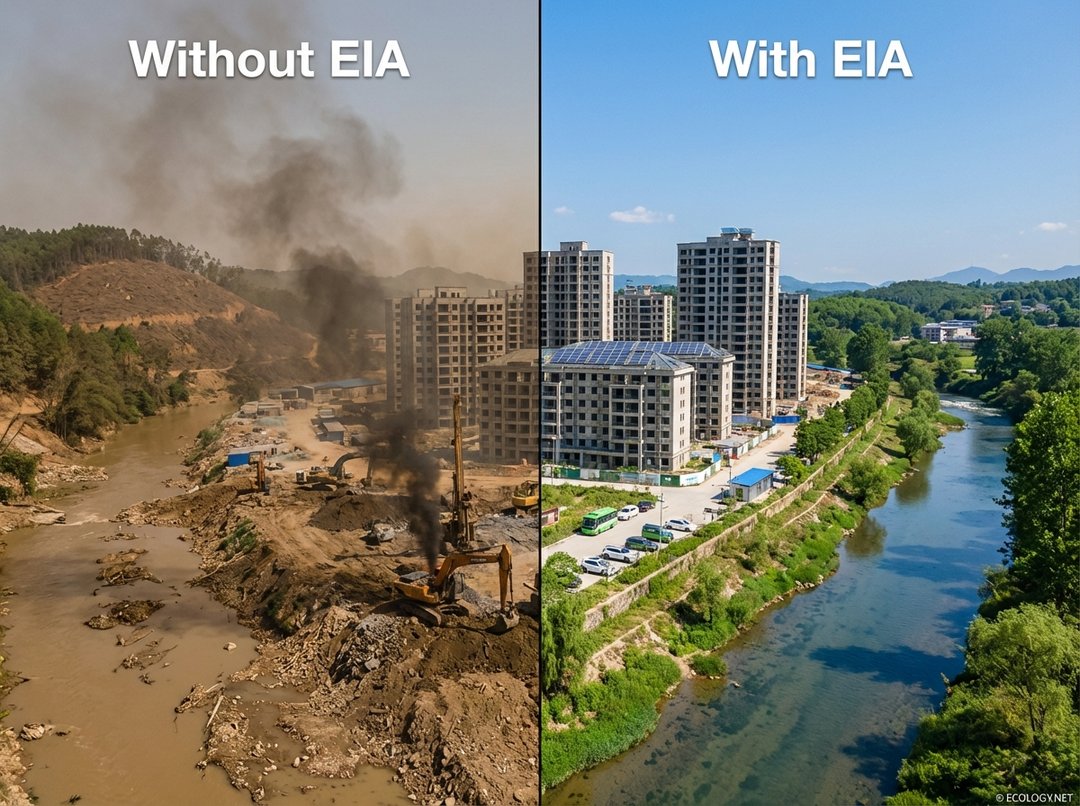
The image above powerfully illustrates the core benefit of EIA – proactive problem identification and mitigation – by contrasting the negative outcomes of unchecked development with the positive, sustainable results achieved through proper environmental assessment, reinforcing the article’s opening premise.
The EIA Process: A Step-by-Step Guide
The Environmental Impact Assessment is not a single event but a structured, multi-stage process designed to thoroughly examine a project’s potential environmental footprint. While specific regulations may vary by country, the core methodology generally follows a series of distinct steps. Understanding these steps is key to appreciating the rigor and comprehensiveness of a well-executed EIA.
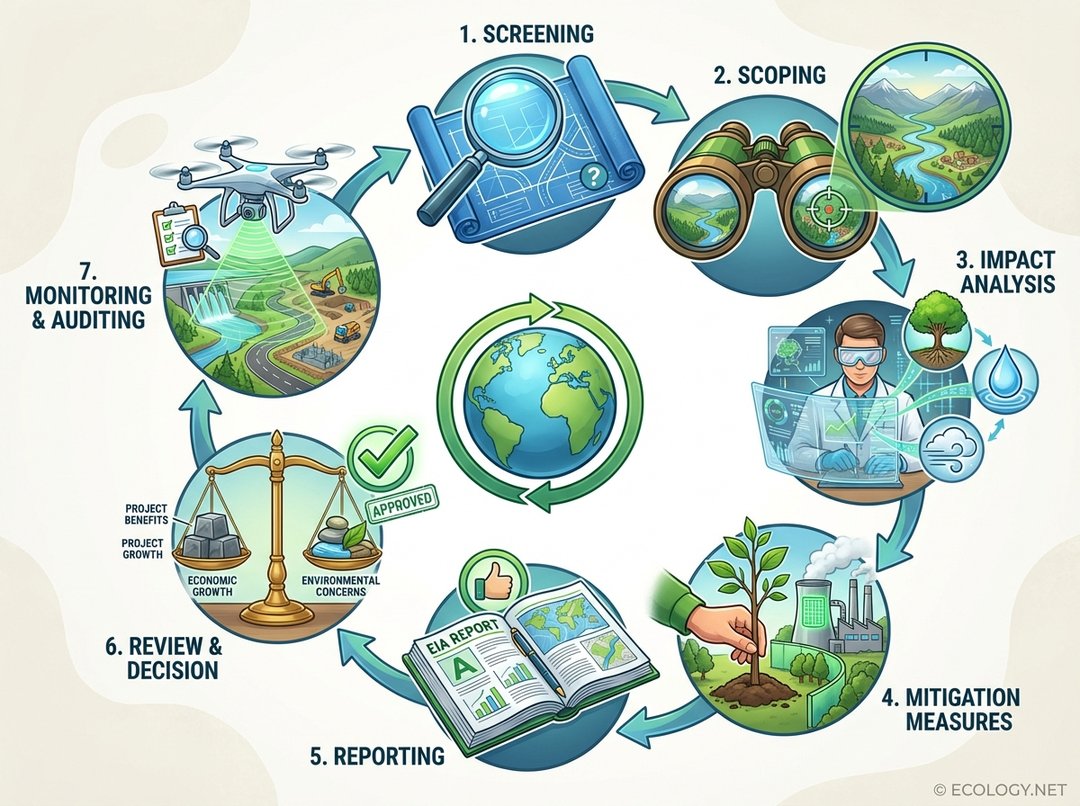
This image visually breaks down the core methodology of EIA, making the complex step-by-step process easy to understand and follow, as detailed below:
- Screening: This initial step determines whether a proposed project requires an EIA at all. It typically involves checking the project against a list of criteria or thresholds. For instance, a small garden shed might not need an EIA, but a large industrial plant or a new highway almost certainly would. The goal is to avoid unnecessary assessments for minor projects while ensuring significant ones are thoroughly reviewed.
- Scoping: Once an EIA is deemed necessary, scoping identifies the key environmental issues and potential impacts that need to be investigated in detail. It defines the boundaries of the assessment, determines the relevant stakeholders to consult, and sets the terms of reference for the EIA study. For example, for a coastal development, scoping might identify marine biodiversity, water quality, and local fishing communities as primary concerns.
- Impact Analysis: This is the heart of the EIA process, where the potential environmental impacts of the project are predicted and evaluated. Experts use various scientific methods, models, and data to assess how the project might affect air, water, soil, biodiversity, noise levels, cultural heritage, and human health. Both positive and negative, direct and indirect, short-term and long-term impacts are considered.
- Mitigation Measures: After identifying potential negative impacts, this step focuses on developing strategies to avoid, reduce, remedy, or compensate for them. Mitigation can involve redesigning parts of the project, implementing pollution control technologies, restoring damaged habitats, or providing compensation to affected communities. For example, if a road project impacts a wetland, mitigation might involve creating a new wetland elsewhere or designing elevated crossings for wildlife.
- Reporting: The findings of the EIA, including the predicted impacts and proposed mitigation measures, are compiled into a comprehensive Environmental Impact Statement (EIS) or report. This document is typically made public, providing transparency and allowing stakeholders to understand the assessment’s conclusions. It serves as the primary communication tool for decision-makers and the public.
- Review & Decision: The EIS is then reviewed by relevant authorities, environmental agencies, and often the public. This review assesses the adequacy and quality of the report and the proposed mitigation measures. Based on this review, a decision is made on whether the project can proceed, with or without conditions, or if it should be rejected. This decision often balances environmental protection with economic and social development goals.
- Monitoring & Auditing: Even after a project is approved and implemented, the EIA process does not end. Monitoring involves tracking the actual environmental impacts of the project during construction and operation to ensure they align with predictions and that mitigation measures are effective. Auditing periodically evaluates the overall performance of the project against environmental commitments and regulatory requirements, allowing for adaptive management and continuous improvement.
Key Ecological Considerations in EIA
When conducting an Environmental Impact Assessment, ecologists and environmental scientists delve into a wide array of ecological factors. The goal is to understand the intricate web of life that could be affected by a proposed development. This comprehensive approach ensures that no critical aspect of the natural world is overlooked.
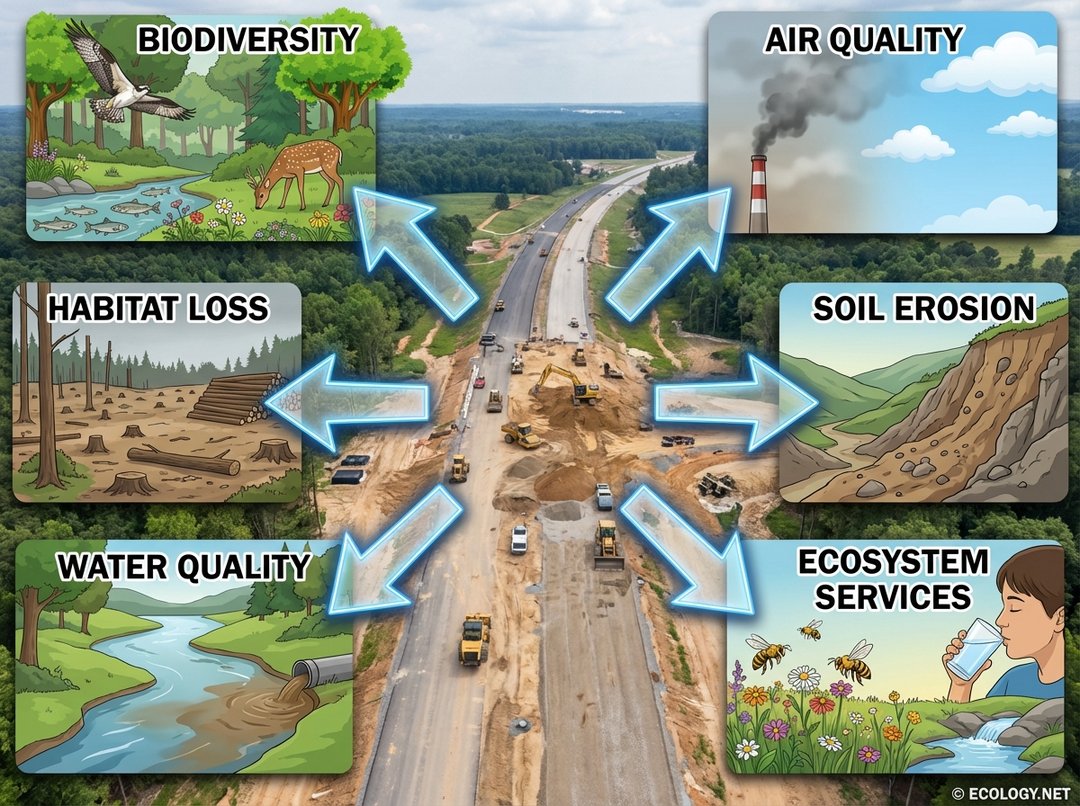
This illustration visually represents the critical ecological factors that are at the heart of any EIA, as discussed below, helping readers grasp the breadth of environmental aspects examined:
- Biodiversity: This is often a primary concern. EIA assesses the potential impact on species richness, genetic diversity, and ecosystem diversity. This includes evaluating effects on rare, endangered, or endemic species, as well as the overall health and variety of plant and animal life in the project area. For example, a new dam might fragment the habitat of a specific fish species, or a logging operation could threaten a unique plant community.
- Habitat Loss and Fragmentation: Development projects frequently involve clearing land, which directly leads to the destruction or degradation of natural habitats. EIA examines how much habitat will be lost, its quality, and its importance for wildlife. It also considers habitat fragmentation, where continuous habitats are broken into smaller, isolated patches, making it harder for species to move, find mates, and access resources.
- Water Quality and Quantity: Projects can significantly impact aquatic environments. EIA investigates potential pollution of rivers, lakes, wetlands, and groundwater from construction runoff, industrial discharges, or agricultural chemicals. It also considers changes in water flow, such as diversions for irrigation or hydroelectric power, which can alter aquatic ecosystems and affect downstream users.
- Air Quality: Industrial facilities, transportation projects, and even large-scale construction can release pollutants into the atmosphere. EIA assesses the potential for increased particulate matter, greenhouse gases, sulfur dioxide, nitrogen oxides, and other harmful substances, and their effects on human health, vegetation, and climate.
- Soil Erosion and Contamination: Land-disturbing activities can lead to soil erosion, reducing soil fertility, silting up waterways, and increasing flood risk. EIA also evaluates the potential for soil contamination from spills, waste disposal, or the use of hazardous materials, which can impact agriculture and ecosystem health.
- Ecosystem Services: Beyond individual components, EIA considers the broader services that ecosystems provide to humanity. These include clean air and water, pollination of crops, regulation of climate, flood control, nutrient cycling, and recreational opportunities. A project might, for instance, destroy a wetland that naturally filters water, thereby increasing the cost of water treatment for a nearby community.
- Landscape and Visual Impact: The aesthetic changes to a landscape are also assessed. This involves evaluating how a new structure, such as a wind farm or a large building, will alter the visual character of an area, especially in places of natural beauty or cultural significance.
- Noise and Vibration: Construction and operational activities can generate significant noise and vibration, impacting wildlife behavior, human comfort, and even structural integrity of nearby buildings. EIA quantifies these potential disturbances and proposes measures to minimize them.
Benefits of a Robust EIA
The value of a thorough Environmental Impact Assessment extends far beyond mere regulatory compliance. It serves as a cornerstone for responsible development, yielding a multitude of benefits for the environment, society, and even the project proponents themselves.
- Enhanced Environmental Protection: At its core, EIA safeguards natural ecosystems, biodiversity, and vital resources. By identifying potential harms early, it allows for the implementation of mitigation measures that prevent pollution, conserve habitats, and protect sensitive areas. This leads to healthier environments and more resilient ecosystems.
- Improved Project Design and Efficiency: EIA encourages developers to think critically about their project’s environmental footprint from the outset. This often leads to innovative design solutions that are not only more environmentally friendly but also more efficient and cost-effective in the long run. For example, choosing a less impactful site or incorporating renewable energy sources can reduce operational costs and regulatory hurdles.
- Reduced Costs and Delays: Addressing environmental issues proactively through EIA can prevent costly mistakes, legal challenges, and project delays down the line. Avoiding environmental damage means avoiding expensive clean-up operations, fines, and potential lawsuits. A well-conducted EIA can streamline the permitting process by demonstrating due diligence.
- Increased Public Participation and Acceptance: EIA processes typically include provisions for public consultation, allowing affected communities and stakeholders to voice their concerns and contribute to the decision-making. This transparency fosters trust, reduces conflict, and can lead to greater public acceptance and support for a project, provided their input is genuinely considered.
- Informed Decision-Making: EIA provides decision-makers with comprehensive, science-based information about a project’s potential impacts. This allows for more balanced and informed choices that weigh environmental, social, and economic factors, leading to more sustainable outcomes.
- Compliance with Regulations and International Standards: Many countries have legal requirements for EIA. Adhering to these regulations through a robust assessment ensures legal compliance, avoids penalties, and can facilitate access to international funding or partnerships that often demand high environmental standards.
- Promotion of Sustainable Development: Ultimately, EIA is a powerful tool for achieving sustainable development. It helps balance the needs of economic growth and social progress with the imperative of environmental protection, ensuring that development meets the needs of the present without compromising the ability of future generations to meet their own needs.
Challenges and Criticisms of EIA
While Environmental Impact Assessment is an invaluable tool, it is not without its challenges and criticisms. Understanding these limitations is crucial for continually improving the process and ensuring its effectiveness.
- Data Limitations and Uncertainty: Predicting future environmental impacts can be complex, especially for long-term or indirect effects. Baseline environmental data might be scarce or outdated, leading to uncertainties in impact predictions. This can make it difficult to accurately assess the full scope of a project’s influence.
- Scope and Boundary Issues: Defining the appropriate geographical and temporal boundaries for an EIA can be challenging. Projects often have cumulative impacts that extend beyond their immediate footprint or interact with other developments, which can be difficult to capture within a single assessment.
- “Greenwashing” and Lack of Independence: There is a risk that EIAs can sometimes be perceived as a mere formality or a tool for “greenwashing,” where projects are made to appear environmentally friendly without genuine commitment. Concerns can arise if the consultants conducting the EIA are perceived to be overly influenced by the project proponent, potentially compromising the objectivity of the assessment.
- Public Participation Effectiveness: While public participation is a cornerstone of EIA, its effectiveness can vary. Barriers such as technical jargon, inconvenient meeting times, or a perception that public input