The Unseen Architects: Exploring the World of Bacteria
In the vast tapestry of life on Earth, some of the most profound and essential threads are woven by organisms too small to see with the naked eye. These microscopic powerhouses are bacteria, ancient life forms that have shaped our planet for billions of years and continue to drive countless processes vital for all other living things. Far from being mere agents of disease, bacteria are the unsung heroes of ecosystems, performing roles that range from recycling nutrients to forming indispensable partnerships with plants and animals.
What Are Bacteria? The Basics
Bacteria are single-celled microorganisms, classified as prokaryotes. This means their cells lack a membrane-bound nucleus and other specialized organelles found in more complex eukaryotic cells. Despite their simplicity, bacteria are incredibly diverse and adaptable, thriving in virtually every environment imaginable, from the deepest oceans to the highest mountains, and even within the bodies of other organisms.
Their fundamental structure, while simple, is highly efficient. A typical bacterium possesses a cell wall for protection and shape, a cell membrane regulating what enters and exits, cytoplasm filling the cell, and genetic material concentrated in a region called the nucleoid. Tiny structures called ribosomes are responsible for protein synthesis, and many bacteria use a whip-like flagellum for movement.
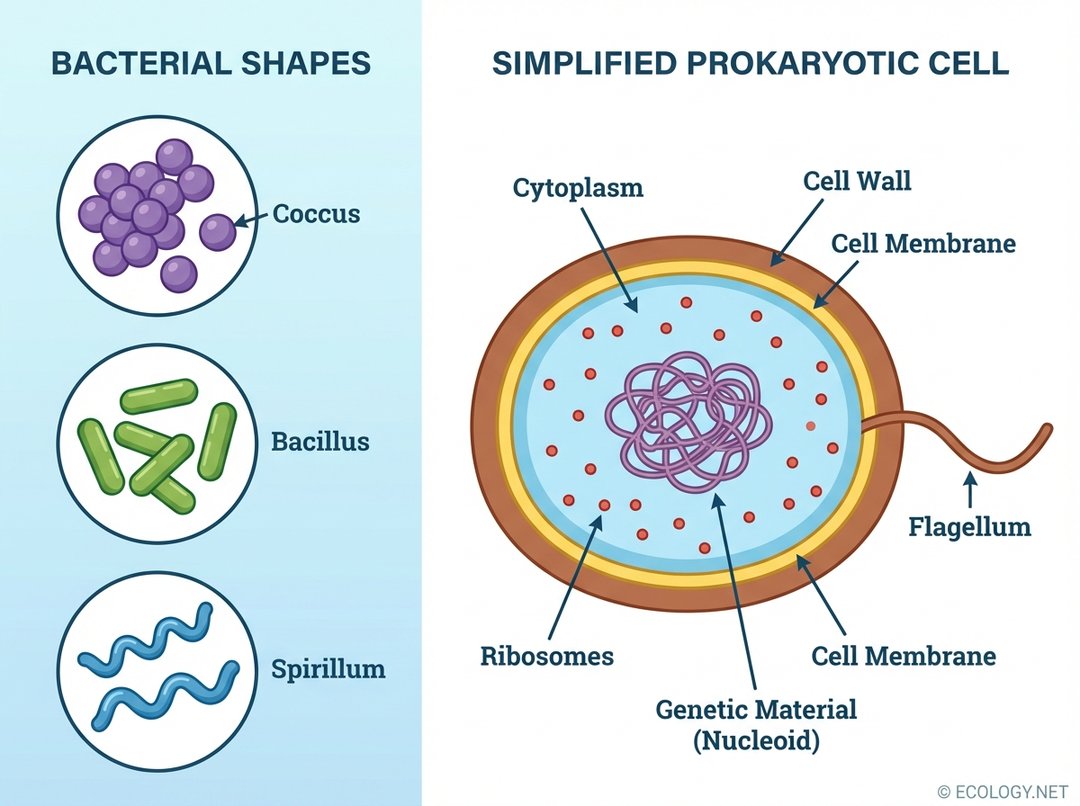
Bacteria exhibit a fascinating array of shapes, which are often used to classify them. The most common forms include:
- Coccus: Spherical or oval-shaped bacteria, such as Staphylococcus.
- Bacillus: Rod-shaped bacteria, exemplified by Escherichia coli.
- Spirillum: Spiral or helical-shaped bacteria, like those causing Lyme disease.
Understanding these basic forms and structures is the first step to appreciating the incredible world of bacteria.
The Unseen Architects: Bacteria’s Ecological Roles
The sheer abundance and metabolic versatility of bacteria make them indispensable to the functioning of every ecosystem on Earth. They are the planet’s primary recyclers, breaking down organic matter and returning vital nutrients to the soil and water, making them available for other life forms. Without bacteria, nutrient cycles would grind to a halt, and life as we know it would cease to exist.
Decomposition and Nutrient Cycling
One of the most critical roles bacteria play is in decomposition. When plants and animals die, bacteria, along with fungi, break down their complex organic compounds into simpler inorganic forms. This process prevents the accumulation of dead organic material and ensures that essential elements are continuously recycled.
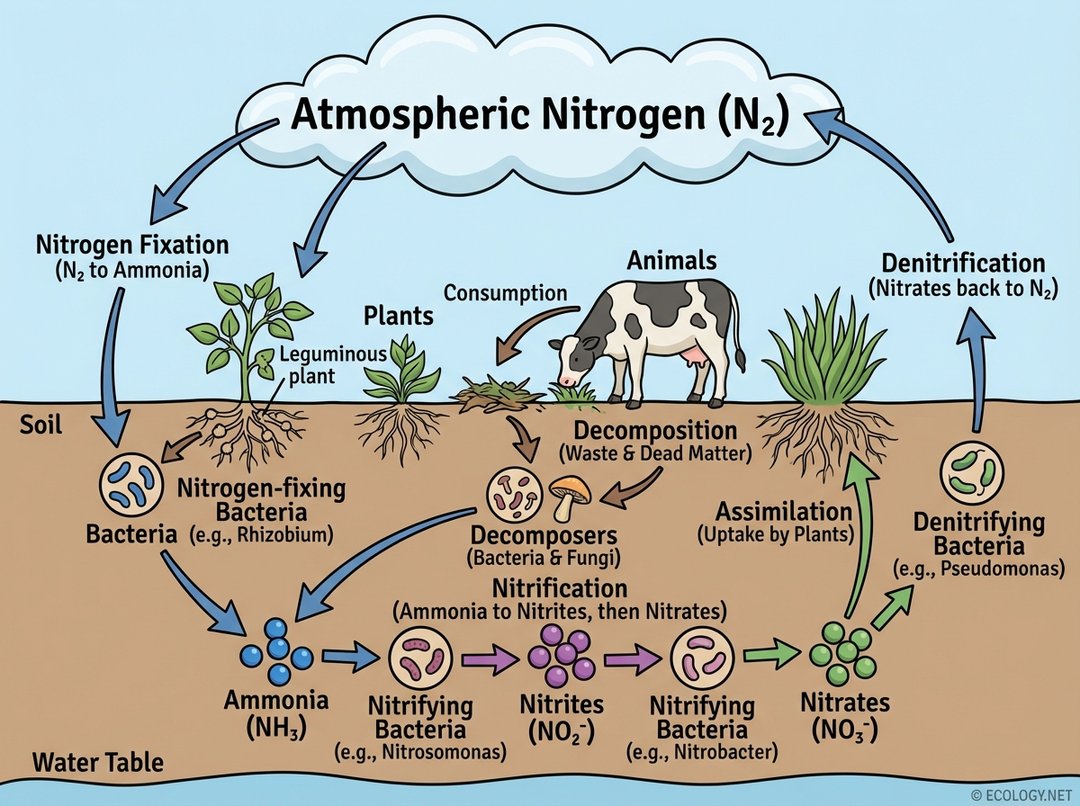
The nitrogen cycle is a prime example of bacterial dominance in nutrient cycling. Nitrogen is a crucial component of proteins and nucleic acids, yet atmospheric nitrogen gas (N2) is unusable by most organisms. Bacteria perform several key transformations in this cycle:
- Nitrogen Fixation: Certain bacteria convert atmospheric N2 into ammonia (NH3), a form that can be incorporated into organic compounds. This is a vital step, making nitrogen available to plants.
- Nitrification: Other bacterial groups convert ammonia into nitrites (NO2-) and then into nitrates (NO3-). Nitrates are the primary form of nitrogen absorbed by plants from the soil.
- Denitrification: A different set of bacteria converts nitrates back into nitrogen gas (N2), releasing it into the atmosphere and completing the cycle.
Beyond nitrogen, bacteria are also crucial players in the carbon, sulfur, and phosphorus cycles, ensuring the continuous flow of these elements through ecosystems. Their metabolic diversity allows them to thrive on a wide range of compounds, making them incredibly efficient at breaking down and transforming matter.
Symbiotic Relationships: Working Together
Bacteria are not just decomposers; they also form intricate and often mutually beneficial relationships with other organisms, a phenomenon known as symbiosis. These partnerships are fundamental to the survival and health of countless species.
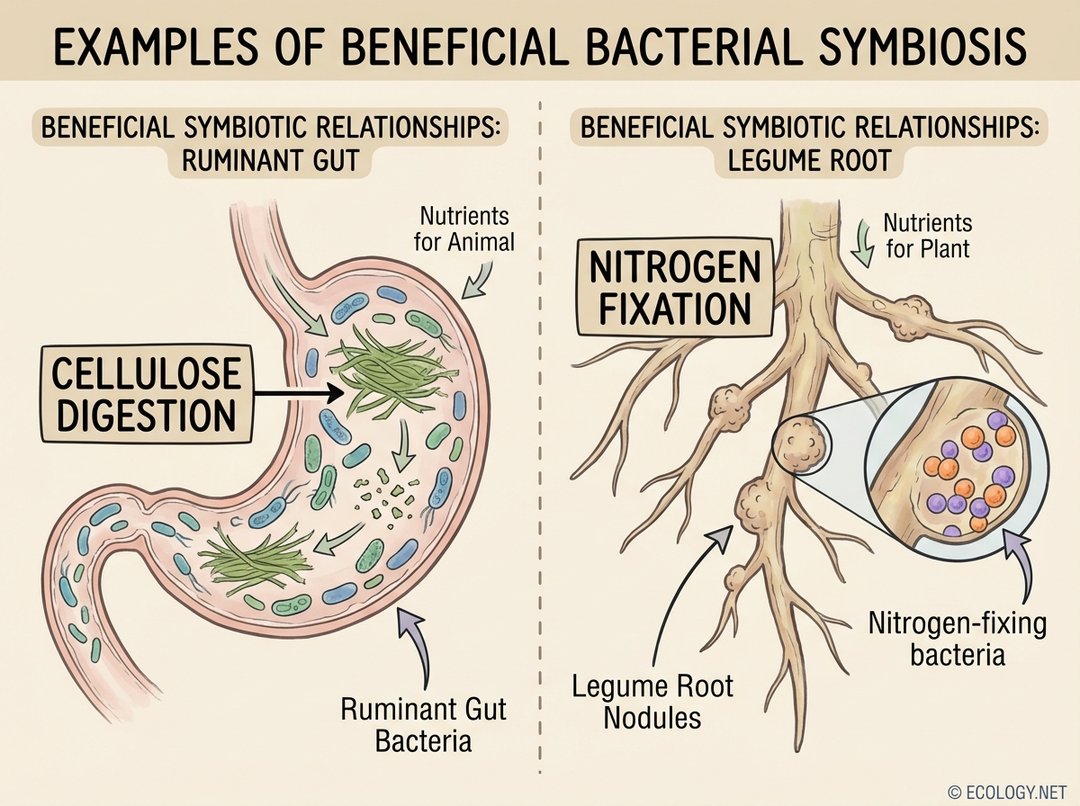
Two prominent examples illustrate the power of bacterial symbiosis:
- Gut Bacteria in Animals: The digestive tracts of many animals, including humans and ruminants like cows and sheep, are teeming with bacteria. These gut microbes break down complex carbohydrates, such as cellulose in plant material, that the host animal cannot digest on its own. In return, the bacteria receive a stable environment and a constant food supply. This cellulose digestion is critical for herbivores to extract nutrients from their fibrous diets.
- Nitrogen-fixing Bacteria in Legumes: Plants in the legume family, such as peas, beans, and clover, form a remarkable partnership with specific nitrogen-fixing bacteria, often from the genus Rhizobium. These bacteria reside in specialized structures on the plant roots called nodules. Within these nodules, the bacteria convert atmospheric nitrogen into ammonia, which the plant then uses to synthesize proteins and other essential molecules. In exchange, the plant provides the bacteria with carbohydrates produced through photosynthesis. This mutualistic relationship enriches the soil with nitrogen, reducing the need for synthetic fertilizers.
Beyond the Basics: Diversity and Adaptability
The world of bacteria extends far beyond the common examples. Their evolutionary history has equipped them with an astonishing array of metabolic capabilities and adaptations, allowing them to colonize virtually every niche on Earth.
Extremophiles: Life at the Edge
Some bacteria are extremophiles, thriving in conditions that would be lethal to most other life forms. These include:
- Thermophiles: Living in extremely hot environments, such as hot springs and hydrothermal vents.
- Psychrophiles: Flourishing in extremely cold conditions, like polar ice caps.
- Halophiles: Tolerating high salt concentrations, found in salt flats and hypersaline lakes.
- Acidophiles and Alkaliphiles: Surviving in highly acidic or alkaline environments, respectively.
These extremophiles often play unique ecological roles in their harsh habitats, contributing to biogeochemical cycles in ways that conventional organisms cannot.
Metabolic Versatility
Bacterial metabolism is incredibly diverse. While some bacteria are photosynthetic, using sunlight to produce energy like plants, many others are chemosynthetic. Chemosynthetic bacteria obtain energy by oxidizing inorganic compounds, such as hydrogen sulfide, ammonia, or iron. This metabolic strategy is particularly important in environments without sunlight, such as deep-sea hydrothermal vents, where chemosynthetic bacteria form the base of entire food webs.
Bacteria in Our Daily Lives
The impact of bacteria extends into numerous aspects of human society, often in beneficial ways:
- Food Production: Bacteria are essential for producing fermented foods like yogurt, cheese, sourdough bread, pickles, and sauerkraut. They convert sugars into lactic acid, alcohol, or other compounds, preserving food and imparting unique flavors.
- Bioremediation: Certain bacteria can break down pollutants, including oil spills, pesticides, and industrial waste. This natural process, known as bioremediation, offers an environmentally friendly approach to cleaning up contaminated sites.
- Medicine and Biotechnology: While some bacteria cause disease, many are crucial in medicine. They are used to produce antibiotics, vaccines, and even insulin. Genetic engineering techniques often employ bacteria as “factories” to produce valuable proteins and compounds.
Conclusion: The Indispensable Microbes
From the fundamental structure of a single cell to their global impact on nutrient cycles and symbiotic relationships, bacteria are undeniably among the most important organisms on our planet. They are the unseen architects, the tireless recyclers, and the essential partners that underpin the very fabric of life. Understanding bacteria is not just a matter of scientific curiosity; it is crucial for comprehending the intricate workings of ecosystems, developing sustainable practices, and appreciating the profound interconnectedness of all living things. The microscopic world of bacteria holds endless wonders and continues to reveal its indispensable role in shaping our world.