In the vast tapestry of life on Earth, every species employs a unique strategy to survive and reproduce. From the smallest bacterium to the largest whale, organisms navigate the challenges of their environment with distinct approaches to growth, reproduction, and survival. Among these fascinating strategies, one stands out for its emphasis on quality over quantity: the K-selected species.
Understanding K-selected species is not just about memorizing biological terms; it is about appreciating the intricate dance between an organism and its environment, revealing profound insights into population dynamics, evolution, and even conservation efforts. Let us embark on a journey to uncover the remarkable world of K-selection.
The Fundamental Divide: K-selected vs. R-selected
To truly grasp what it means to be K-selected, it is helpful to first understand its counterpart: R-selected species. Ecologists categorize life history strategies along a spectrum, with K-selection and R-selection representing two ends of this continuum. This distinction helps us understand how different organisms allocate their energy and resources throughout their lives.
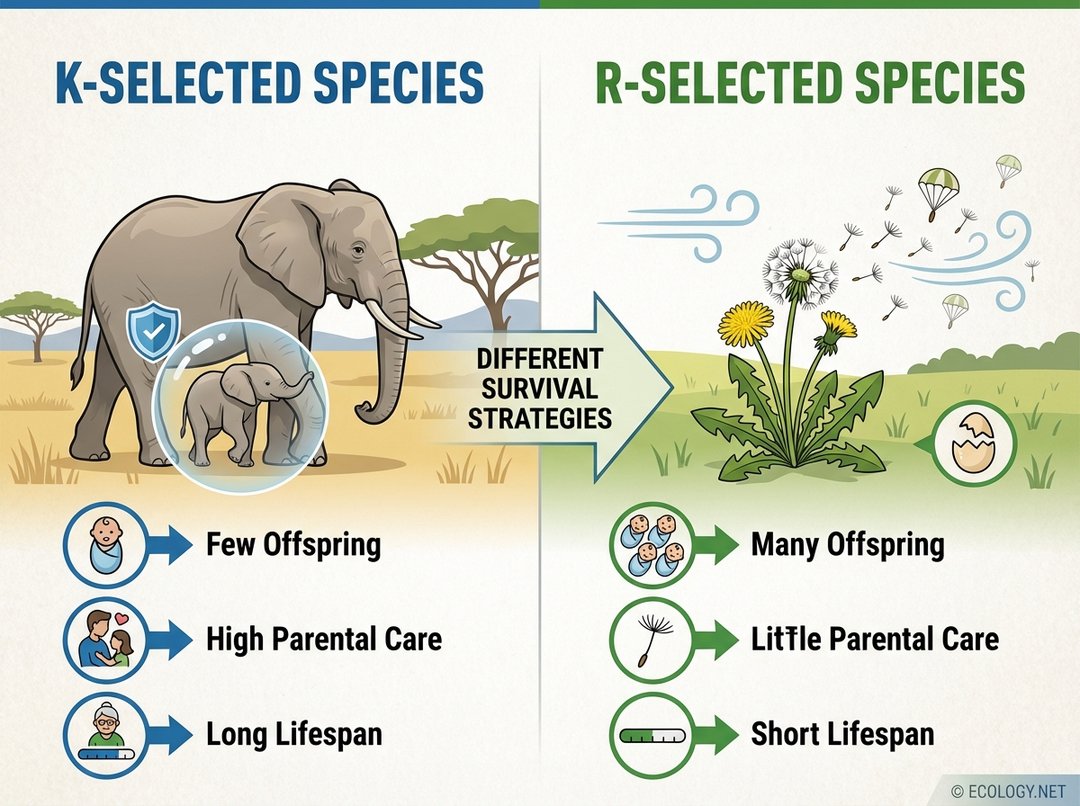
Imagine two very different approaches to ensuring the next generation. One strategy involves producing a massive number of offspring, hoping that a few will survive purely by chance. The other involves investing heavily in a small number of offspring, giving them the best possible chance to thrive. These are the core philosophies behind R-selection and K-selection, respectively.
- R-selected species (e.g., dandelions, mice, insects) are characterized by:
- Many offspring
- Little to no parental care
- Short lifespans
- Rapid maturation
- High mortality rates for offspring
- Thriving in unstable or unpredictable environments
- K-selected species (e.g., elephants, whales, humans) exhibit the opposite traits, focusing on a more measured and resource-intensive approach.
Unpacking the Traits of K-selected Species
K-selected species are named after the term “carrying capacity” (K), which refers to the maximum population size of a biological species that can be sustained indefinitely by a given environment. These species are typically found in stable environments where populations tend to be close to the carrying capacity, leading to intense competition for resources.
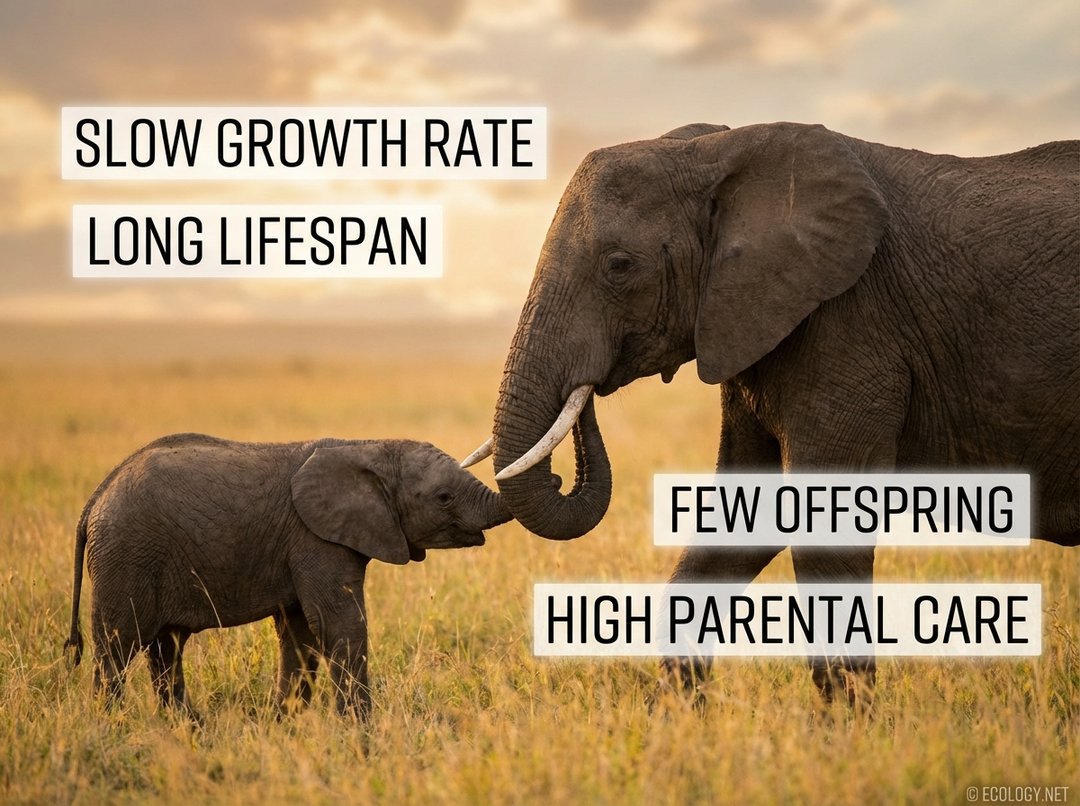
Let us delve into the defining characteristics that make K-selected species so distinctive:
Few Offspring, High Investment
Perhaps the most striking feature of K-selected species is their reproductive strategy. Instead of producing hundreds or thousands of young, they typically have very few offspring over their lifetime. However, each offspring receives an enormous amount of parental investment.
- Example: An elephant mother carries her calf for nearly two years and then cares for it for many more years after birth, teaching it essential survival skills. A human child requires years of care and education before becoming independent. This extensive care significantly increases the chances of survival for each individual offspring.
Long Lifespan and Slow Maturation
K-selected organisms generally live for a long time and take a considerable period to reach sexual maturity. This extended developmental phase allows them to grow larger, learn complex behaviors, and accumulate experience vital for survival in competitive environments.
- Example: A giant tortoise can live for over a century, slowly growing and maturing over decades. Similarly, many large predators like bears or eagles spend years learning hunting techniques from their parents before they are ready to reproduce.
High Parental Care and Complex Social Structures
The intensive parental care seen in K-selected species often extends beyond just providing food and shelter. It frequently involves teaching, protection from predators, and the transmission of cultural knowledge or learned behaviors. This often leads to the development of complex social structures.
- Example: Wolf packs cooperate in hunting and raising pups, with multiple adults contributing to the care of the young. Primate societies, including our own, are characterized by intricate social hierarchies, communication, and long-term bonds that facilitate the raising of offspring.
Large Body Size and Strong Competitive Ability
Many K-selected species tend to be large in size, which can be an advantage in stable, resource-limited environments. Larger size often correlates with fewer predators, better resource acquisition, and greater competitive prowess against other species or individuals.
- Example: Whales, the largest animals on Earth, dominate their marine environments. Redwood trees, towering over other vegetation, outcompete smaller plants for sunlight and resources over centuries.
Where K-selected Species Thrive: Stable Environments
The life history strategy of K-selected species is perfectly adapted for environments that are relatively stable, predictable, and where resources are limited but consistent. In such settings, the ability to outcompete rivals and efficiently utilize resources becomes paramount.
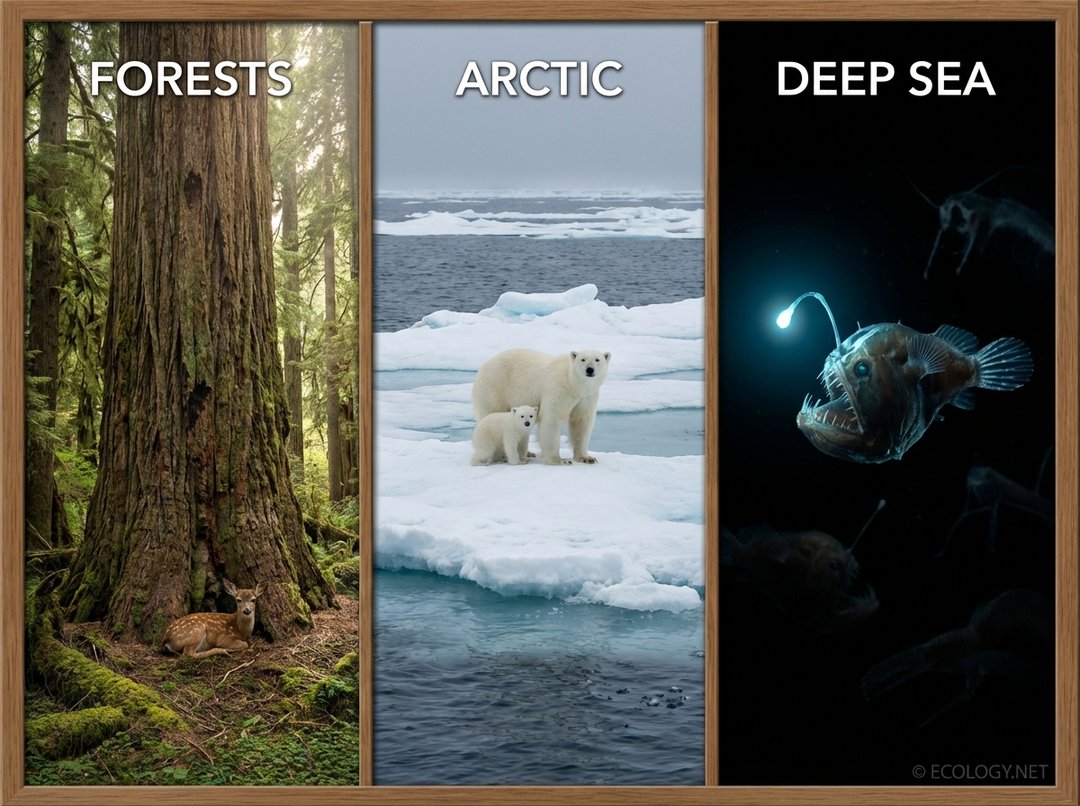
Consider these examples of environments where K-selection is a successful strategy:
- Dense Forests: Old-growth forests, with their stable climate and long-lived trees like redwoods or oaks, are home to many K-selected species. The trees themselves are K-selected, investing heavily in growth and longevity.
- The Arctic and Antarctic: These extreme environments, while harsh, are often stable in their resource availability (e.g., predictable seal populations for polar bears). Animals like polar bears, seals, and whales exhibit K-selected traits to survive and reproduce in these challenging conditions.
- Deep Ocean: The abyssal plains of the deep sea are characterized by extreme pressure, cold, and scarcity of food. Organisms here often grow slowly, live long, and reproduce infrequently, making them K-selected. The anglerfish, for instance, has a specialized strategy for finding mates in a vast, dark environment.
- Tropical Rainforests: While teeming with life, the competition for light and nutrients in mature rainforests is intense. Many large mammals, birds of prey, and long-lived trees in these ecosystems are K-selected.
Ecological Implications and Conservation Challenges
The K-selected strategy, while highly effective in stable conditions, comes with its own set of vulnerabilities, particularly in a rapidly changing world.
Population Dynamics and Carrying Capacity
K-selected populations tend to remain relatively stable, fluctuating around the carrying capacity of their environment. Their slow reproductive rates mean that population growth is gradual, and they are less prone to boom-and-bust cycles seen in R-selected species. However, this also means they are slow to recover from population declines.
Vulnerability to Environmental Change
Because K-selected species are adapted to stable environments and have slow reproductive rates, they are particularly susceptible to sudden environmental changes. Habitat loss, climate change, pollution, and overhunting can devastate their populations, and their slow breeding cycles make recovery a monumental challenge.
The majestic blue whale, a prime example of a K-selected species, was hunted to the brink of extinction. Despite protection efforts, its population recovery is painstakingly slow due to its long lifespan, late sexual maturity, and infrequent breeding.
Conservation Focus
Many of the world’s most endangered species are K-selected. Conservation efforts for these species often require long-term commitments, focusing on habitat protection, anti-poaching measures, and reducing human-wildlife conflict. Understanding their life history strategy is crucial for designing effective conservation plans.
Beyond the Labels: A Spectrum of Life
While the K-selected and R-selected categories provide a useful framework, it is important to remember that most species fall somewhere along a continuum between these two extremes. Few species are purely K-selected or purely R-selected; instead, they exhibit a mix of traits that best suit their specific ecological niche.
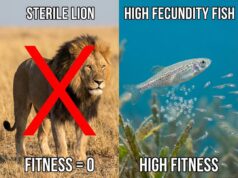
For instance, some fish species produce many eggs (an R-selected trait) but guard them fiercely (a K-selected trait). The beauty of ecology lies in these nuanced adaptations, where evolution constantly fine-tunes strategies for survival and reproduction.
Conclusion: The Enduring Legacy of K-selection
K-selected species represent a triumph of evolutionary strategy, demonstrating that investing deeply in a few, well-cared-for offspring can be just as successful, if not more so, than mass production. From the patient growth of a redwood to the intricate social bonds of an elephant herd, these species embody resilience, longevity, and a profound connection to their stable environments.
As we continue to navigate a world of increasing environmental pressures, understanding the unique vulnerabilities and strengths of K-selected species becomes ever more critical. Their survival is a testament to the delicate balance of ecosystems and a powerful reminder of our responsibility to protect the diverse and ingenious life strategies that enrich our planet.