Understanding Watershed Management: A Holistic Approach to Our Waterways
Imagine a single drop of rain falling on a mountaintop. Where does it go? Does it trickle down a rocky slope, join a small stream, and eventually contribute to a mighty river? Or does it evaporate, soak into the ground, or get absorbed by a thirsty plant? The journey of that single raindrop, and every other drop that falls across a landscape, is governed by a fundamental ecological concept: the watershed.
Watershed management is far more than just managing rivers or lakes. It is a comprehensive strategy that recognizes the interconnectedness of land, water, and all living things within a specific geographical area. It is about understanding how our actions on land directly impact the quality and quantity of water that flows through our communities and ecosystems.
What Exactly is a Watershed?
At its core, a watershed, also known as a drainage basin, is an area of land where all precipitation that falls within its boundaries drains to a common outlet, such as a river, lake, or ocean. Think of it like a giant funnel. The edges of this funnel are defined by high points in the landscape, often mountain ridges or hills, which we call “drainage divides.”
Every stream, river, and lake has a watershed. Even a small puddle in your backyard is part of a larger watershed. When rain or snow falls, it flows downhill, collecting into smaller streams that merge into larger ones, eventually reaching the main water body. This natural system is crucial for delivering water to ecosystems and human populations alike.
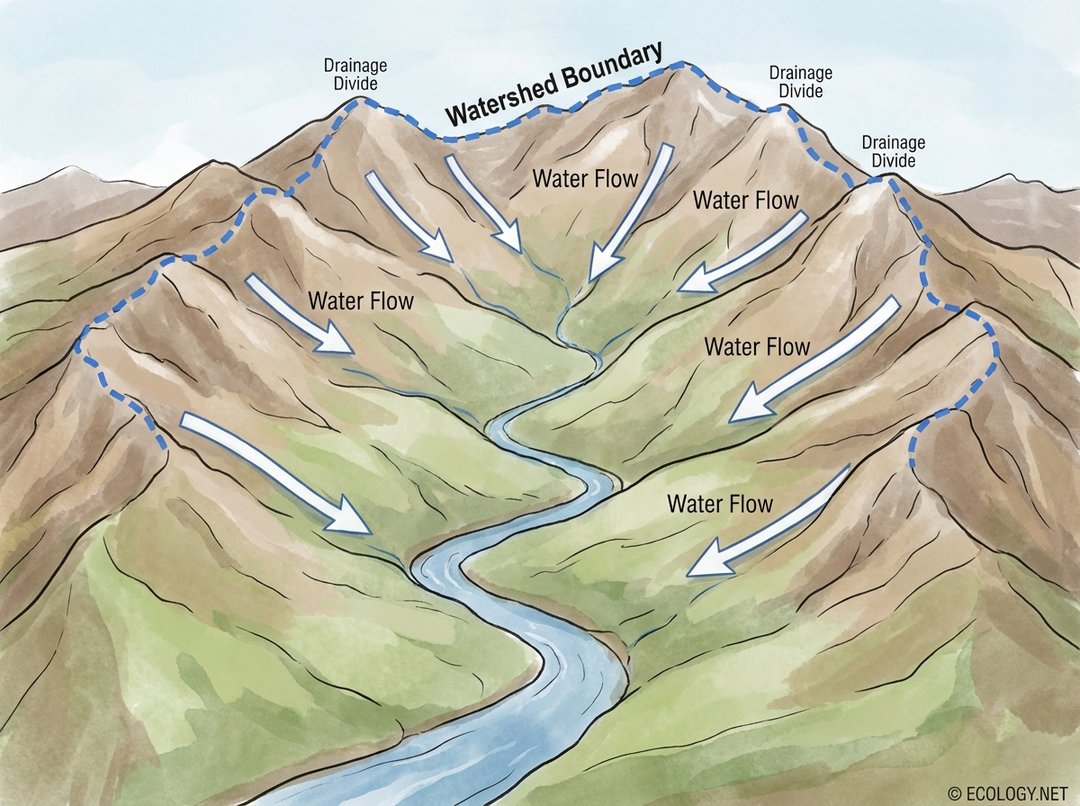
This image visually defines a watershed, illustrating how land topography dictates water drainage to a common outlet, a core concept explained early in the article.
Why is Watershed Management So Important?
The health of a watershed directly impacts the health of everything within it. When a watershed is poorly managed, the consequences can be severe and far-reaching:
- Water Pollution: Runoff from agricultural fields carrying pesticides and fertilizers, industrial discharges, and urban stormwater laden with chemicals and trash can contaminate rivers and groundwater, making water unsafe for drinking, recreation, and wildlife.
- Flooding and Erosion: Deforestation, excessive impervious surfaces (like roads and parking lots), and altered natural drainage patterns can increase the speed and volume of runoff, leading to more frequent and severe floods, as well as soil erosion that silts up waterways.
- Habitat Degradation: Pollution, altered water flow, and habitat destruction along riverbanks can devastate aquatic ecosystems, leading to declines in fish populations, amphibians, and other wildlife.
- Water Scarcity: Over-extraction of water for agriculture, industry, and urban use, combined with climate change impacts, can lead to reduced water availability, especially in arid and semi-arid regions.
Effective watershed management aims to mitigate these problems by taking a holistic, integrated approach that considers all aspects of the watershed, from its highest peaks to its lowest valleys, and all the human activities within it.
Core Principles of Effective Watershed Management
Watershed management is not a one-size-fits-all solution. It requires a deep understanding of local conditions and a collaborative effort. Several key principles guide successful initiatives:
- Holistic Perspective: Recognizing that everything within a watershed is interconnected. Actions upstream affect conditions downstream.
- Community Engagement: Involving local residents, landowners, businesses, and government agencies in planning and implementation. Sustainable solutions often arise from local knowledge and participation.
- Scientific Basis: Using data, research, and monitoring to understand watershed processes, identify problems, and evaluate the effectiveness of management strategies.
- Adaptive Management: Being flexible and willing to adjust strategies based on new information, changing conditions, and monitoring results.
- Sustainability: Aiming for long-term solutions that meet present needs without compromising the ability of future generations to meet their own needs.
Key Practices in Watershed Management
Implementing watershed management involves a diverse array of practices, often tailored to specific challenges and opportunities within a given area. These practices span various sectors, from agriculture and forestry to urban planning and community development.
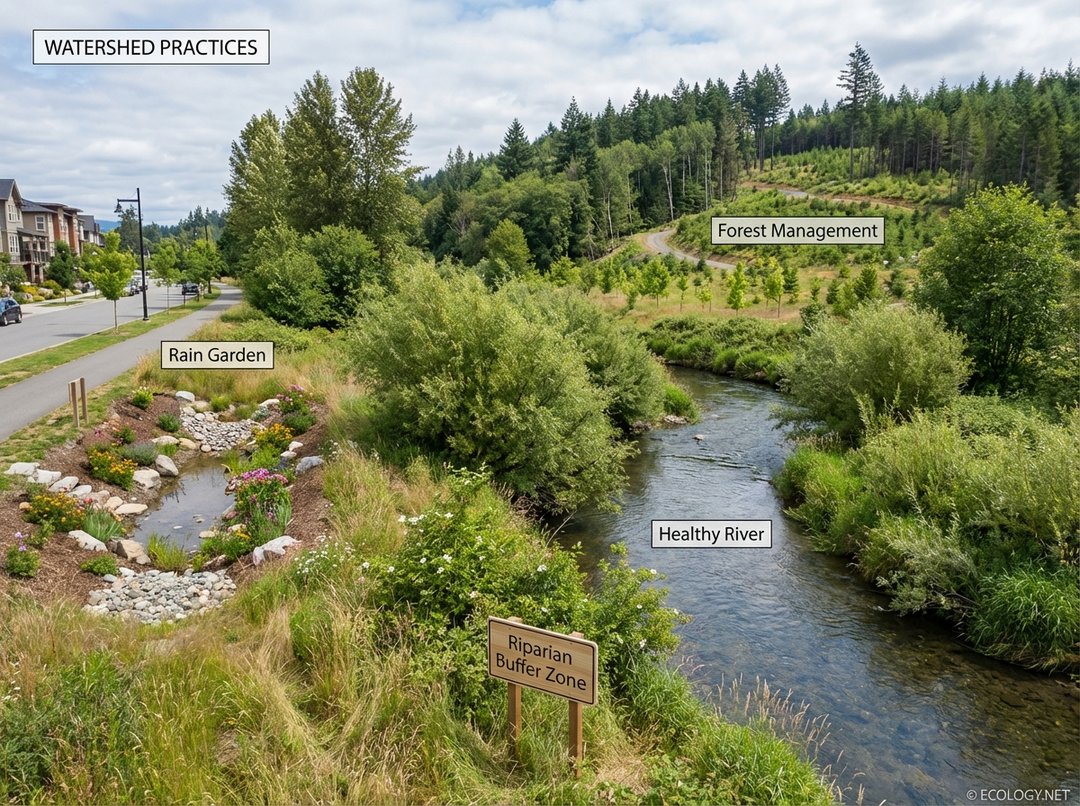
This image provides a visual representation of several practical management techniques discussed in the article, such as forest management, riparian buffers, and urban stormwater solutions, making the abstract concepts tangible.
Protecting and Restoring Riparian Zones
Riparian zones are the vegetated areas along the banks of rivers, streams, and lakes. They are critical for watershed health:
- Filtering Pollutants: The plants and soil in riparian buffers act as natural filters, trapping sediments, nutrients, and pollutants before they reach the water.
- Stabilizing Banks: Plant roots hold soil in place, preventing erosion and reducing sediment runoff into waterways.
- Providing Habitat: These zones offer essential habitat and corridors for a wide variety of wildlife, both aquatic and terrestrial.
- Temperature Regulation: Shade from trees keeps water temperatures cooler, which is vital for many aquatic species like trout.
Restoration efforts often involve planting native trees and shrubs along degraded riverbanks, fencing off areas to prevent livestock access, and removing invasive species.
Sustainable Forest Management
Forests play a crucial role in regulating water cycles. Healthy forests:
- Reduce Runoff: Forest canopies intercept rainfall, and forest soils absorb water, reducing the volume and speed of runoff.
- Prevent Erosion: Tree roots stabilize soil, preventing erosion and landslides, especially on steep slopes.
- Maintain Water Quality: Forests filter pollutants and contribute to clean water supplies.
Sustainable forest management practices include selective logging, reforestation, and preventing large-scale clear-cutting, especially in sensitive headwater areas.
Urban Stormwater Management and Green Infrastructure
In urban areas, impervious surfaces prevent rainwater from soaking into the ground, leading to rapid runoff that can overwhelm storm drains and carry pollutants into waterways. Green infrastructure solutions mimic natural processes to manage stormwater:
- Rain Gardens: Depressions planted with native vegetation that collect and absorb stormwater runoff from roofs and paved areas.
- Permeable Pavements: Porous surfaces that allow water to seep through into the ground, reducing runoff.
- Green Roofs: Vegetated rooftops that absorb rainwater, reduce runoff, and provide insulation.
- Bioswales: Vegetated channels designed to slow and filter stormwater runoff.
Agricultural Best Management Practices (BMPs)
Agriculture is a significant land use in many watersheds. BMPs aim to reduce the environmental impact of farming:
- No-Till Farming: Reduces soil erosion and improves soil health by minimizing disturbance.
- Cover Cropping: Planting non-cash crops between growing seasons to protect soil, reduce erosion, and improve nutrient cycling.
- Nutrient Management: Applying fertilizers precisely when and where they are needed, reducing excess runoff.
- Conservation Buffers: Establishing strips of vegetation along fields to filter runoff before it enters waterways.
Wetland Restoration and Protection
Wetlands are natural sponges that play a vital role in watersheds:
- Flood Control: They absorb and store floodwaters, releasing them slowly.
- Water Filtration: Wetlands naturally filter pollutants and excess nutrients from water.
- Wildlife Habitat: They provide critical habitat for a vast array of plant and animal species.
Protecting existing wetlands and restoring degraded ones are crucial components of watershed management.
The Abundant Benefits of Healthy Watersheds
Investing in watershed management yields a multitude of benefits, often referred to as “ecosystem services,” that support both nature and human well-being.
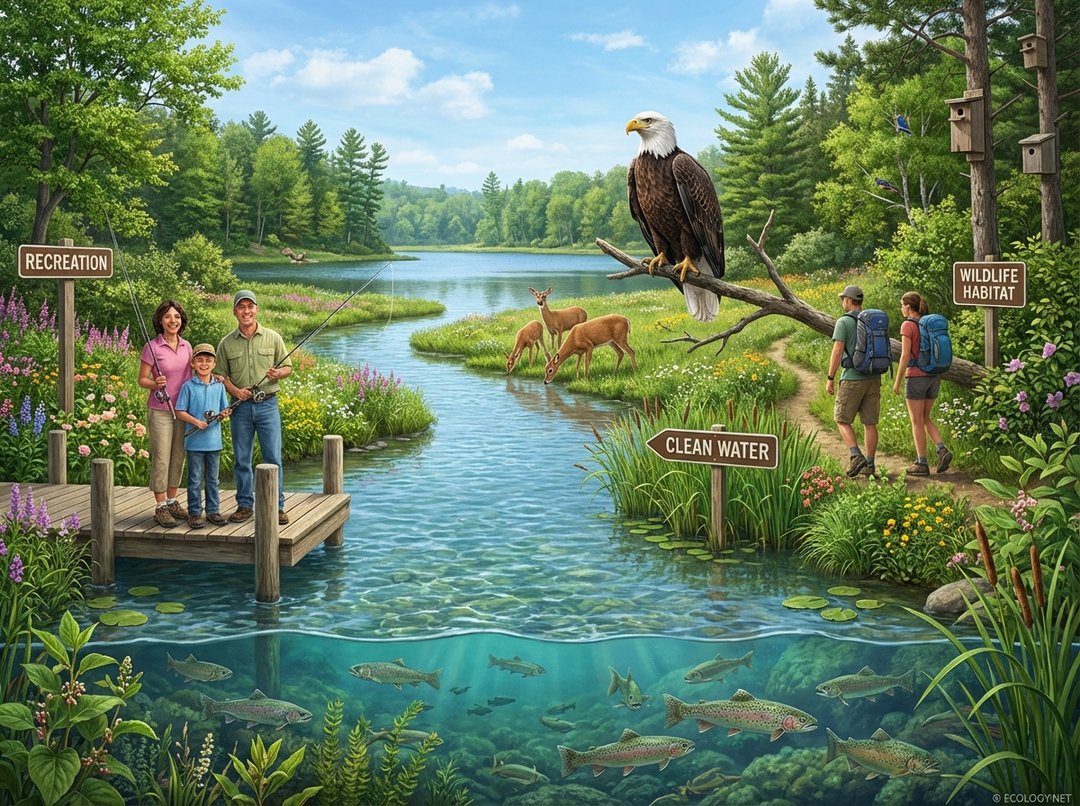
This image illustrates the “ecosystem services” provided by healthy watersheds, such as clean water, wildlife habitat, and recreational opportunities, reinforcing why watershed management is crucial.
- Clean and Abundant Water: Perhaps the most direct benefit, healthy watersheds provide reliable sources of clean drinking water, reducing the need for costly treatment.
- Biodiversity and Wildlife Habitat: Thriving riparian zones, forests, and wetlands support diverse ecosystems, providing homes for fish, birds, mammals, and countless other species.
- Flood and Drought Mitigation: Natural landscapes, especially wetlands and healthy forests, act as natural buffers, absorbing excess water during heavy rains and releasing it slowly during dry periods, thus reducing the severity of both floods and droughts.
- Recreational Opportunities: Clean rivers, lakes, and surrounding natural areas offer opportunities for fishing, swimming, boating, hiking, and wildlife viewing, contributing to local economies and quality of life.
- Climate Resilience: Healthy watersheds are more resilient to the impacts of climate change, such as extreme weather events and altered precipitation patterns. For example, robust forests can sequester carbon, helping to mitigate climate change.
- Economic Benefits: Beyond recreation, healthy watersheds support industries like agriculture, fisheries, and tourism. Reduced water treatment costs and avoided flood damages also represent significant economic savings.
Challenges in Implementing Watershed Management
Despite the clear benefits, watershed management faces several hurdles:
- Conflicting Interests: Different stakeholders within a watershed often have competing priorities, such as agricultural production versus environmental protection, or urban development versus open space preservation.
- Funding and Resources: Implementing comprehensive watershed plans requires substantial financial investment and human resources, which can be challenging to secure.
- Jurisdictional Boundaries: Watersheds often cross multiple political boundaries (counties, states, even countries), making coordinated management complex.
- Climate Change: Shifting weather patterns, increased frequency of extreme events, and altered water availability pose dynamic challenges that require adaptive and forward-thinking strategies.
- Lack of Public Awareness: Many people do not understand what a watershed is or how their daily actions impact it, making community engagement more difficult.
The Role of Community and Collaboration
Overcoming these challenges requires strong collaboration and community involvement. Watershed councils, local government initiatives, and non-profit organizations often play a pivotal role in bringing together diverse groups to work towards common goals. Education and outreach are essential to foster a sense of shared responsibility for the watershed.
By understanding the science, engaging with communities, and implementing practical solutions, we can ensure that our watersheds continue to provide the vital resources and ecological services that sustain life.
A Future of Thriving Watersheds
Watershed management is an ongoing journey, not a destination. It requires continuous learning, adaptation, and a long-term commitment from individuals, communities, and governments. By embracing a holistic perspective and working together, we can protect and restore these vital natural systems, ensuring a future where clean water, healthy ecosystems, and vibrant communities thrive for generations to come. The health of our watersheds is, ultimately, the health of our planet and ourselves.