The Lifeline We Cherish: Understanding and Practicing Water Conservation
Water, the very essence of life, flows through our veins, sustains our ecosystems, and underpins our civilizations. Yet, this seemingly abundant resource is finite and increasingly under threat. Water conservation is not merely a buzzword; it is a critical practice for ensuring a sustainable future for all living things. It involves the careful management and protection of water resources, recognizing their immense value and vulnerability. By understanding how water moves through our world and adopting smart strategies, humanity can safeguard this precious lifeline for generations to come.
The Water Cycle: A Foundation for Conservation
To truly appreciate water conservation, one must first grasp the fundamental process that governs all water on Earth: the natural water cycle. This continuous journey of water through various states and locations is the engine of our planet’s hydrological system.
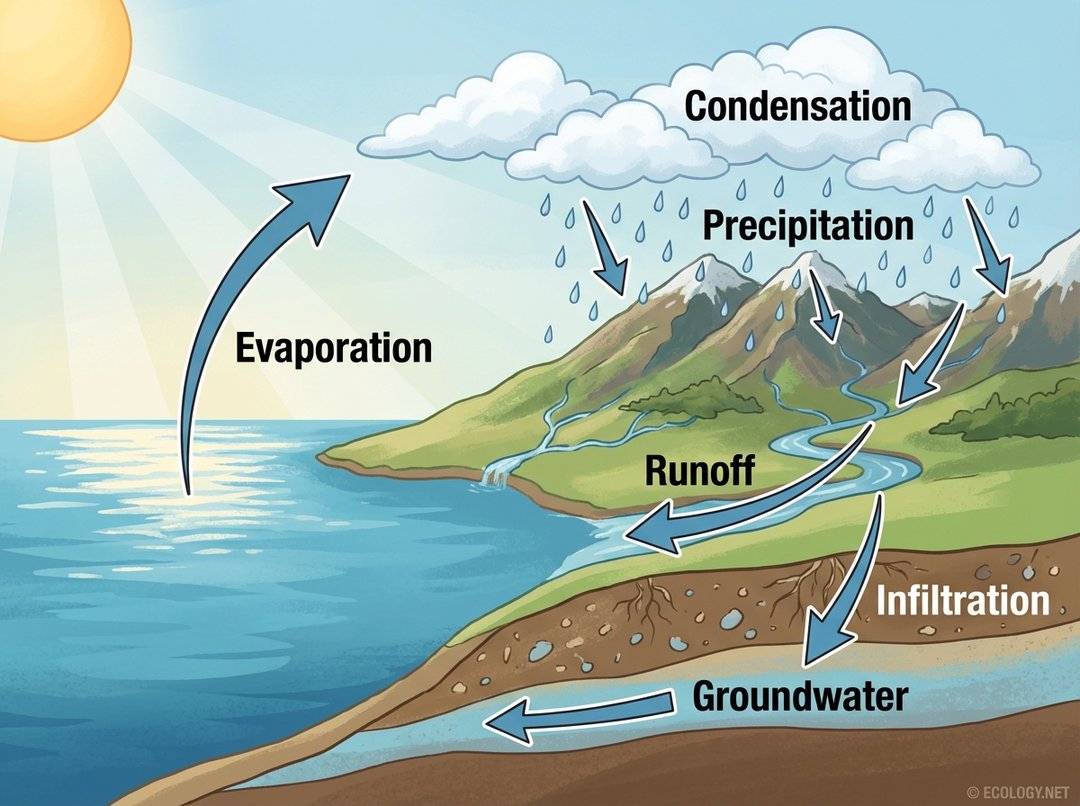
The sun’s energy drives evaporation, transforming liquid water from oceans, lakes, and rivers into vapor that rises into the atmosphere. As this vapor ascends, it cools and condenses, forming clouds. Eventually, this water returns to Earth as precipitation, whether rain, snow, or hail. Upon reaching the land, water can follow several paths: it may flow over the surface as runoff, feeding rivers and streams, or it may infiltrate the ground, replenishing groundwater reserves. This groundwater then slowly moves through the earth, eventually emerging in springs or flowing back into surface water bodies, completing the cycle. Understanding this intricate balance reveals why every drop counts and how human activities can disrupt this delicate natural rhythm.
Why Conserve Water? The Urgent Imperative
The need for water conservation has never been more pressing. While the total amount of water on Earth remains constant, the availability of fresh, usable water is limited and unevenly distributed. Several factors contribute to the escalating urgency:
- Population Growth: A rapidly expanding global population places immense strain on existing water supplies for drinking, sanitation, and food production.
- Climate Change: Shifting weather patterns lead to more frequent and severe droughts in some regions, while others experience intense flooding, disrupting traditional water availability.
- Pollution: Industrial, agricultural, and urban runoff contaminates freshwater sources, rendering them unusable without costly treatment.
- Over-extraction: Pumping groundwater faster than it can be naturally replenished leads to aquifer depletion, land subsidence, and saltwater intrusion in coastal areas.
- Inefficient Use: Outdated infrastructure, wasteful irrigation practices, and lack of awareness contribute to significant water losses.
The consequences of water scarcity are far-reaching, impacting public health, food security, economic stability, and the health of ecosystems. Conserving water is not just about saving a resource; it is about preserving livelihoods and the planet’s ecological integrity.
Local and Individual Strategies: Making a Difference at Home
While the challenges are global, many effective solutions begin at the local and individual level. Every person can contribute significantly to water conservation through conscious choices and practical actions.
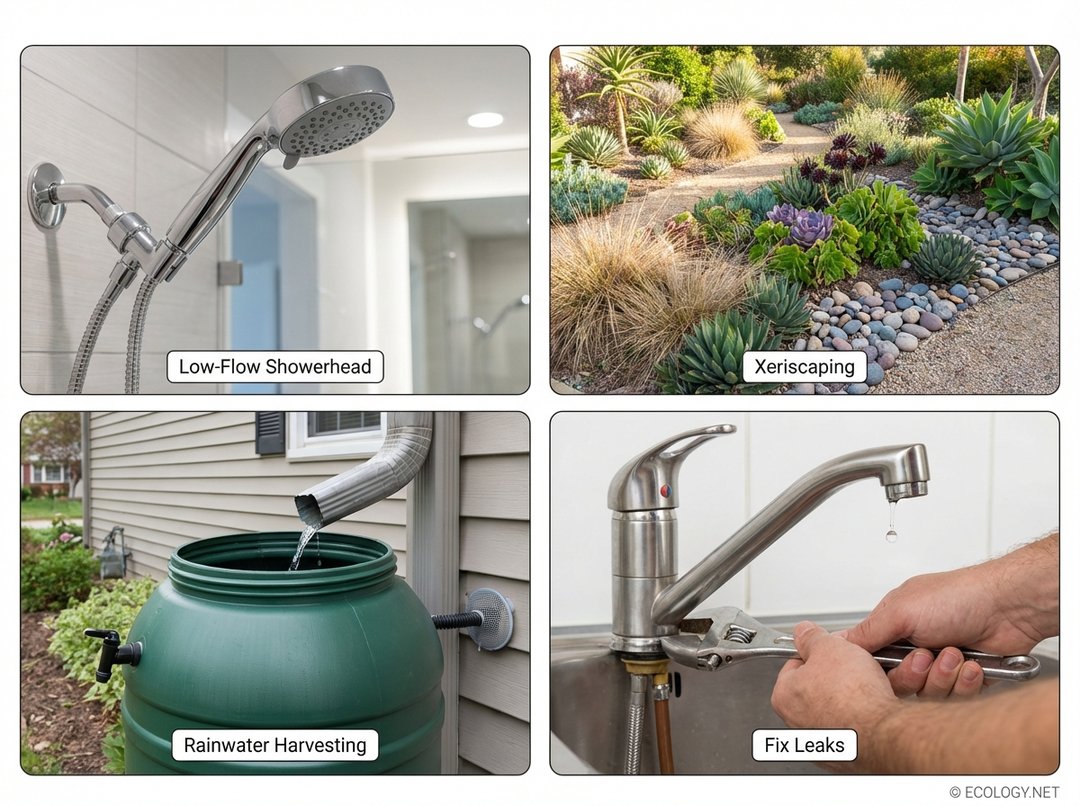
Consider these impactful strategies for your home and garden:
- Fix Leaks Promptly: A single dripping faucet can waste thousands of gallons of water per year. Regularly check for leaks in faucets, toilets, and irrigation systems and repair them immediately.
- Install Water-Efficient Fixtures: Upgrade to low-flow showerheads, toilets, and aerators for faucets. These devices significantly reduce water consumption without compromising performance.
- Practice Water-Wise Landscaping (Xeriscaping): Design your garden with drought-tolerant plants native to your region. Group plants with similar water needs, use mulch to retain soil moisture, and avoid overwatering lawns.
- Harvest Rainwater: Install rain barrels to collect rainwater from your roof. This water can be used for irrigating gardens, washing cars, or other non-potable uses, reducing reliance on municipal supplies.
- Mindful Water Use Indoors:
- Take shorter showers instead of baths.
- Turn off the tap while brushing teeth or shaving.
- Run dishwashers and washing machines only when full.
- Thaw frozen food in the refrigerator overnight instead of under running water.
These simple yet powerful actions, when adopted by many, collectively create a substantial positive impact on water resources.
Beyond the Tap: Industrial and Agricultural Water Conservation
While individual efforts are crucial, significant water savings can also be achieved in larger sectors. Agriculture, for instance, accounts for a substantial portion of global freshwater use. Implementing advanced irrigation techniques is vital:
- Drip Irrigation: Delivers water directly to plant roots, minimizing evaporation and runoff.
- Precision Agriculture: Uses technology to monitor soil moisture and plant needs, applying water only when and where it is required.
- Drought-Resistant Crops: Developing and cultivating crop varieties that require less water.
Industries are also making strides by:
- Recycling and Reusing Water: Treating and reusing process water within facilities.
- Optimizing Manufacturing Processes: Adopting technologies that require less water for production.
- Implementing Water Audits: Identifying areas of high water use and developing strategies for reduction.
These large-scale efforts, combined with individual actions, form a comprehensive approach to water stewardship.
The Role of Wetlands and Forests in Water Conservation
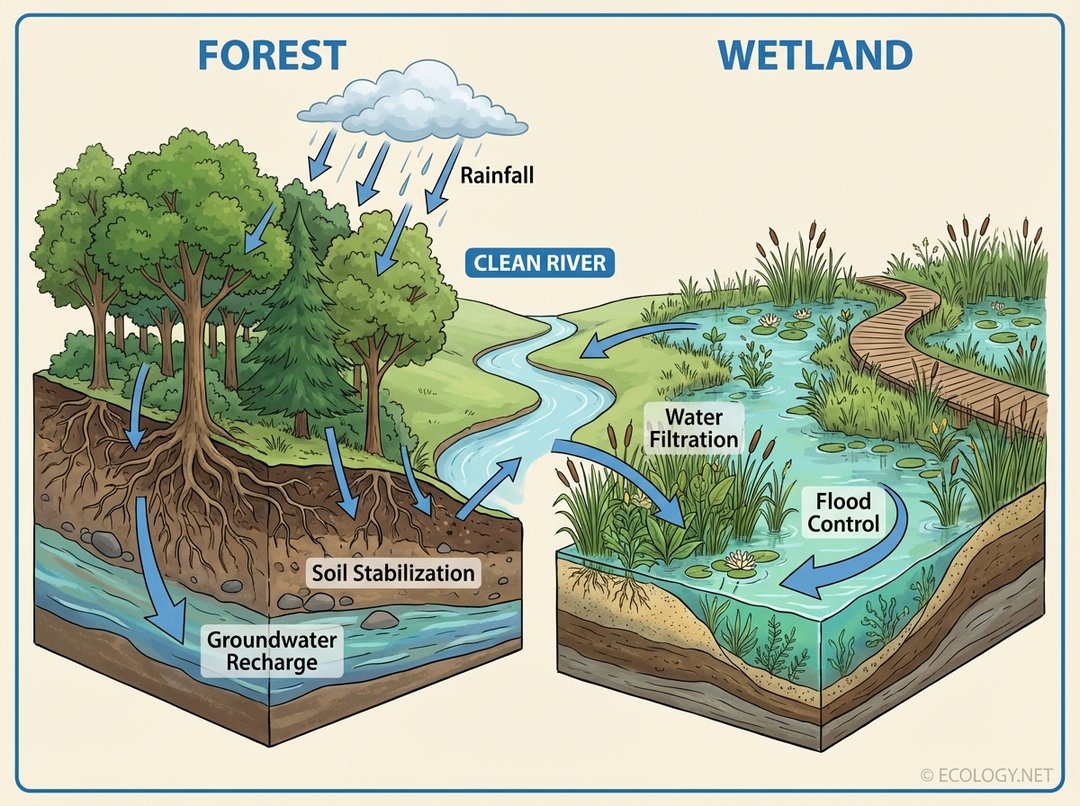
Beyond human-engineered solutions, nature itself provides powerful mechanisms for water conservation. Wetlands and forests are not just beautiful landscapes; they are vital ecological infrastructure that naturally manages and purifies water.
Wetlands: Nature’s Sponges and Filters
Wetlands, including marshes, swamps, and bogs, are incredibly dynamic ecosystems that play multiple roles in the water cycle:
- Water Filtration: As water flows through wetlands, plants and soils naturally filter out pollutants, sediments, and excess nutrients, improving water quality.
- Flood Control: Wetlands act like giant sponges, absorbing excess rainwater and floodwaters, slowly releasing it over time and reducing the impact of floods downstream.
- Groundwater Recharge: Many wetlands are crucial areas where surface water infiltrates the ground, replenishing underground aquifers.
- Habitat Provision: They provide critical habitats for a vast array of plant and animal species, contributing to biodiversity.
Forests: Guardians of the Watershed
Forests, particularly those in mountainous regions, are indispensable for healthy watersheds:
- Groundwater Recharge: Tree roots create channels in the soil, allowing rainwater to infiltrate more easily and recharge groundwater. The forest canopy also intercepts rainfall, reducing the immediate impact on the ground and allowing for slower absorption.
- Soil Stabilization: The extensive root systems of trees bind soil together, preventing erosion and sedimentation in rivers and streams, which helps maintain water quality.
- Evapotranspiration: While trees release water vapor into the atmosphere, they also regulate local climates and contribute to regional rainfall patterns.
- Water Quality Protection: Forests act as natural buffers, filtering pollutants from runoff before they reach water bodies.
Protecting and restoring these natural ecosystems is a cornerstone of effective water conservation, offering sustainable, nature-based solutions to water management challenges.
Policy, Technology, and Future Innovations
Looking ahead, a multi-faceted approach involving policy, technology, and community engagement will be essential for securing our water future. Governments play a crucial role in establishing water-use regulations, implementing fair water pricing, and investing in infrastructure improvements. Technological advancements continue to offer new possibilities:
- Desalination: While energy-intensive, desalination plants can convert seawater into fresh water, offering a solution for water-scarce coastal regions.
- Advanced Wastewater Treatment: Technologies that allow for the safe and efficient reuse of treated wastewater for irrigation, industrial processes, and even potable uses.
- Smart Water Meters: Provide real-time data on water consumption, empowering consumers to manage their use more effectively and helping utilities detect leaks.
- Atmospheric Water Generation: Emerging technologies that extract water vapor directly from the air.
Ultimately, fostering a culture of water stewardship through education and community involvement is paramount. When individuals, communities, industries, and governments work in concert, the vision of a water-secure world becomes attainable.
A Collective Responsibility for a Precious Resource
Water conservation is more than just an environmental issue; it is a matter of economic stability, social equity, and public health. From understanding the intricate dance of the water cycle to adopting simple habits at home, and from implementing large-scale agricultural efficiencies to protecting vital natural ecosystems like wetlands and forests, every action contributes to the larger goal. By recognizing water as a precious, finite resource and embracing a collective responsibility to protect it, humanity can ensure that this lifeline continues to flow for all life on Earth. The future of our planet, and indeed our own species, depends on how wisely we manage every drop.