Unveiling the Hidden World Beneath Our Feet: The Soil Microbiome
Beneath every step we take, within the seemingly inert soil, lies an astonishingly complex and vibrant universe: the soil microbiome. This microscopic metropolis, teeming with life, is far more than just dirt. It is a dynamic ecosystem, a bustling community of countless organisms working tirelessly to sustain life on Earth. Understanding this hidden world is not merely an academic pursuit; it is fundamental to the future of agriculture, environmental health, and even our own well-being.
What Exactly is the Soil Microbiome?
The soil microbiome refers to the collective community of microorganisms that inhabit the soil. These tiny inhabitants include a vast array of life forms, each playing a unique and often indispensable role. Imagine a bustling city where every resident, no matter how small, contributes to the city’s overall function and health. That is precisely what happens beneath the surface.
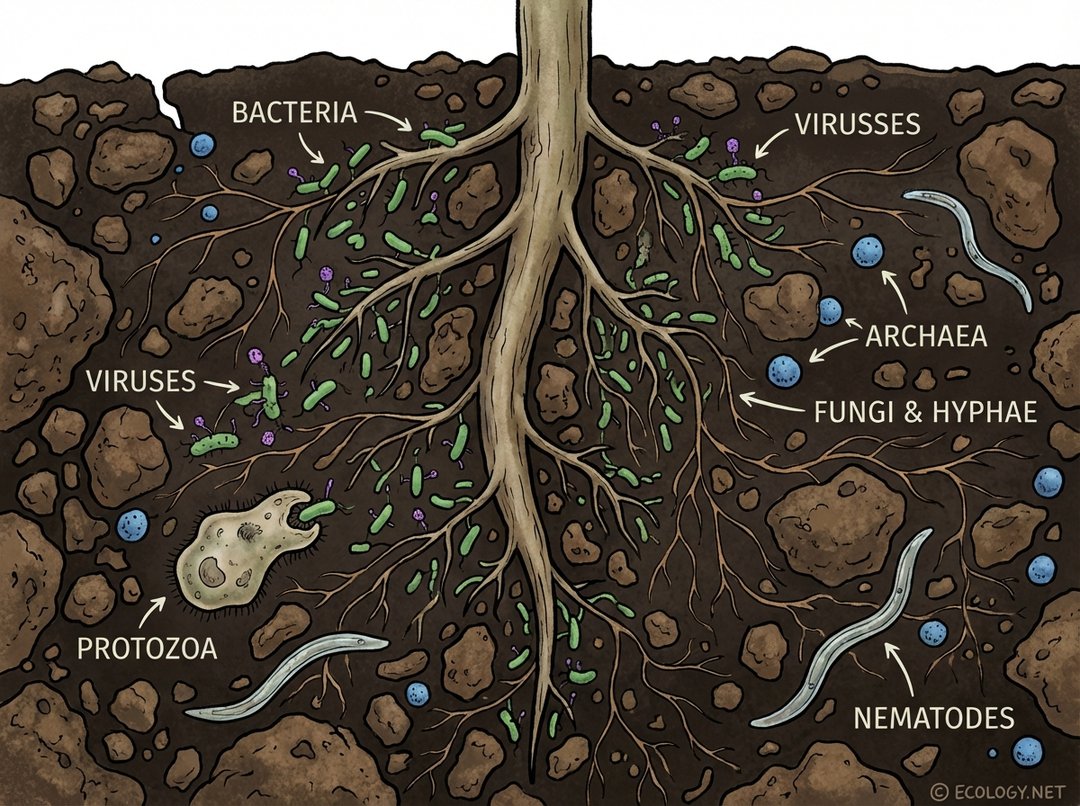
This image visually introduces the reader to the incredible diversity of life forms that constitute the soil microbiome, making the abstract concept of microscopic organisms tangible.
Key Players in the Underground Orchestra
The soil microbiome is composed of an extraordinary diversity of organisms, each with specialized roles. These are the unsung heroes of our planet:
- Bacteria: The most abundant and diverse group, bacteria are the workhorses of the soil. They are involved in countless processes, from decomposing organic matter to cycling essential nutrients like nitrogen and phosphorus. For instance, nitrogen-fixing bacteria convert atmospheric nitrogen into a form plants can use, a process vital for plant growth.
- Fungi: Often forming vast networks of thread-like structures called hyphae, fungi are crucial decomposers. Mycorrhizal fungi, in particular, form symbiotic relationships with plant roots, extending the plant’s reach for water and nutrients in exchange for sugars. Imagine a plant’s root system being dramatically expanded by these fungal partners.
- Archaea: Though less understood than bacteria, archaea are ancient microorganisms thriving in extreme environments and playing significant roles in nutrient cycling, especially in nitrogen and methane metabolism. They are often found in environments where other life forms struggle.
- Protozoa: These single-celled eukaryotes are microscopic predators, primarily feeding on bacteria and other small microbes. By consuming bacteria, protozoa help release nutrients that would otherwise be locked up in bacterial biomass, making them available for plants. Think of them as tiny nutrient recyclers.
- Nematodes: While some nematodes are plant parasites, many are beneficial, feeding on bacteria, fungi, or other nematodes. They contribute to nutrient cycling and help control disease-causing organisms. These microscopic worms are an important part of the soil food web.
- Viruses: Even viruses, often associated with disease, are integral to the soil microbiome. They infect bacteria and other microbes, influencing microbial populations and nutrient turnover. They are the unseen regulators of microbial communities.
Why Does the Soil Microbiome Matter?
The functions performed by these microscopic communities are nothing short of miraculous and are absolutely essential for a healthy planet. Without them, life as we know it would cease to exist.
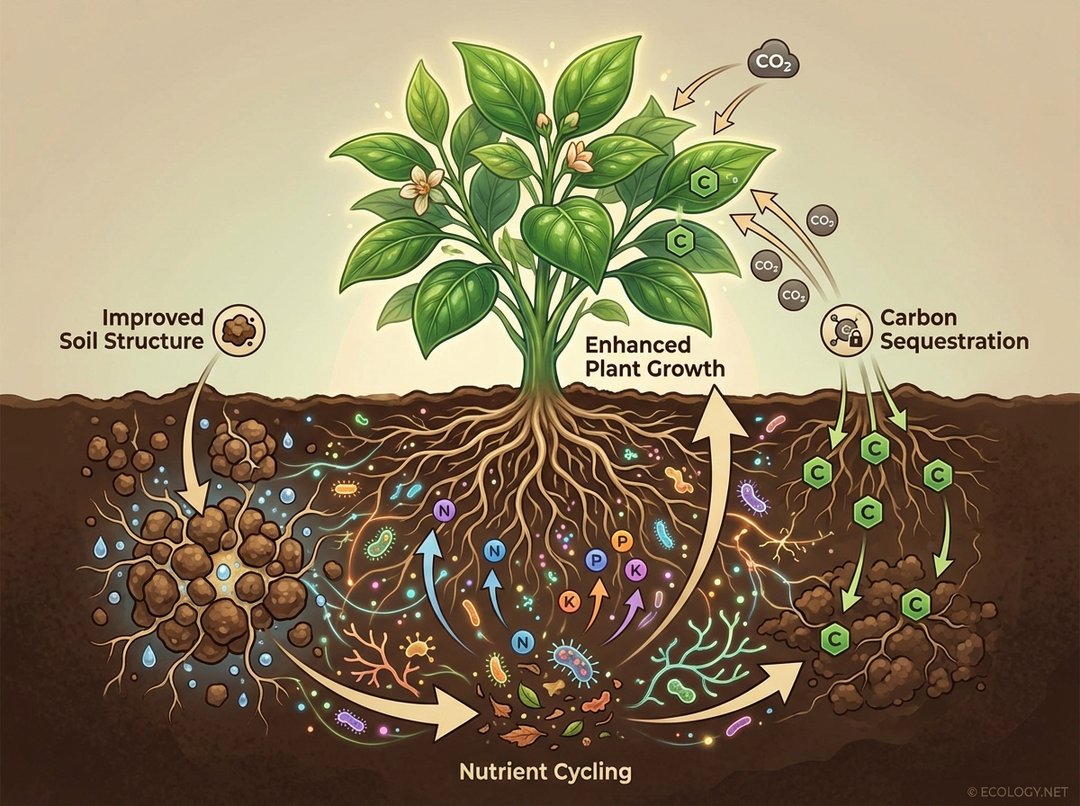
This diagram summarizes the crucial roles the soil microbiome plays, helping readers quickly grasp the practical importance of these microscopic communities.
Crucial Roles for a Thriving Ecosystem:
- Nutrient Cycling: Microbes are the primary drivers of nutrient cycling. They break down organic matter, releasing essential nutrients like nitrogen, phosphorus, and potassium in forms that plants can absorb. Without this microbial activity, nutrients would remain locked up, unavailable for plant growth. For example, bacteria convert atmospheric nitrogen into ammonia, a process called nitrogen fixation, which is vital for plant protein synthesis.
- Enhanced Plant Growth: Many soil microbes directly promote plant growth. They can produce plant hormones, improve nutrient uptake efficiency, and even protect plants from pathogens. Imagine a plant receiving a constant supply of growth-boosting compounds and a robust immune system from its microbial allies.
- Improved Soil Structure: Fungi, with their extensive hyphal networks, and bacteria, by producing sticky substances, help bind soil particles together. This aggregation creates stable soil structure, improving water infiltration, aeration, and reducing erosion. A well-structured soil is like a sponge, holding water and air efficiently.
- Carbon Sequestration: Soil microbes play a critical role in storing carbon in the soil, helping to mitigate climate change. They convert atmospheric carbon dioxide into organic forms that can remain in the soil for decades or even centuries. Healthy soils act as significant carbon sinks.
- Disease Suppression: A diverse and healthy soil microbiome can suppress plant diseases. Beneficial microbes can outcompete pathogens for resources, produce antimicrobial compounds, or induce plant resistance. This natural defense mechanism reduces the need for chemical pesticides.
The Rhizosphere: A Microbial Metropolis at the Root
While microbes are found throughout the soil, there is a particularly fascinating hotspot of microbial activity: the rhizosphere. This is the narrow zone of soil directly influenced by plant roots. It is a bustling metropolis where plants and microbes engage in intense communication and exchange.
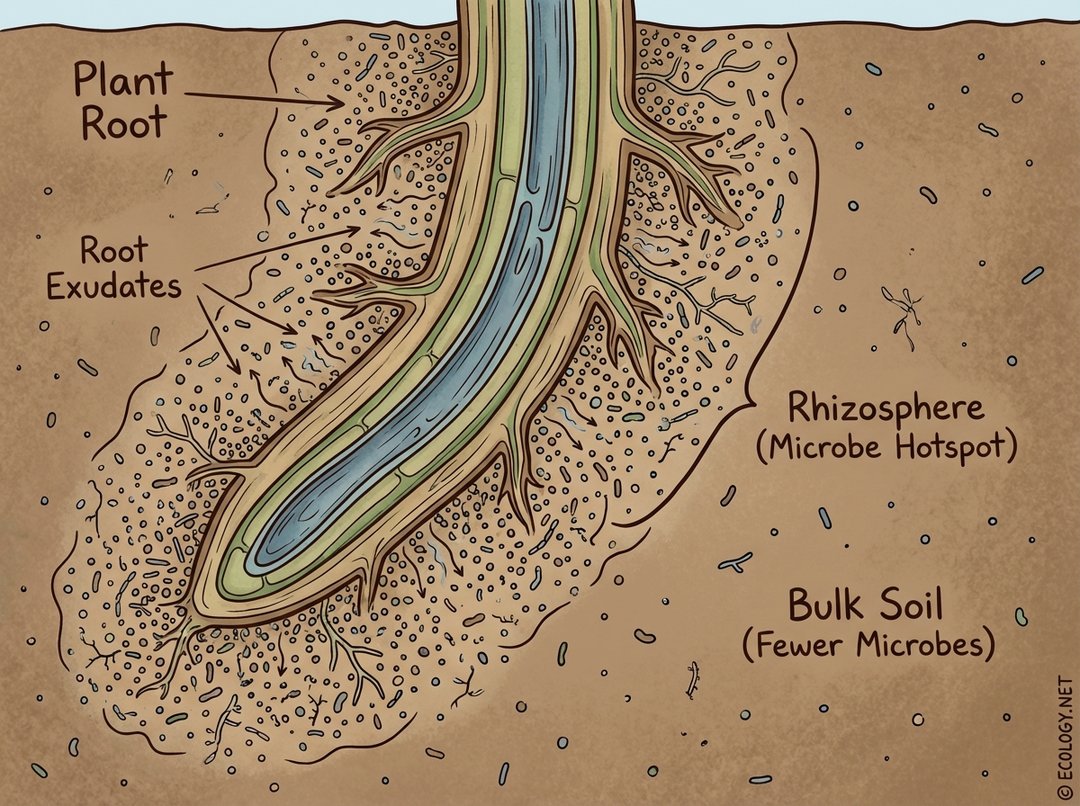
This image visually explains the “Rhizosphere Effect,” by clearly illustrating the concentrated microbial activity around plant roots and the role of root exudates in creating this unique microbial hotspot.
Plants actively shape their rhizosphere by releasing a diverse cocktail of organic compounds, known as “root exudates,” into the soil. These exudates include sugars, amino acids, organic acids, and hormones. Think of root exudates as a plant’s way of inviting and feeding specific microbial partners. In return, these microbes provide a myriad of benefits to the plant, creating a powerful mutualistic relationship. This dynamic interaction is a cornerstone of plant health and productivity.
Factors Influencing the Soil Microbiome
The composition and activity of the soil microbiome are not static; they are constantly shaped by a variety of environmental and anthropogenic factors:
- Soil Type: The physical and chemical properties of soil, such as texture (sand, silt, clay), pH, and nutrient content, profoundly influence which microbes can thrive. For example, acidic soils favor different microbial communities than alkaline soils.
- Climate: Temperature, rainfall patterns, and humidity directly impact microbial growth and activity. Droughts or extreme temperatures can significantly alter microbial populations.
- Plant Species: Different plants release different root exudates, thus attracting and supporting distinct microbial communities in their rhizospheres. A forest floor will have a different microbiome than a grassland.
- Human Activities: Agricultural practices like tillage, pesticide use, and fertilizer application can drastically alter the soil microbiome. Excessive tilling, for instance, can disrupt fungal networks, while certain pesticides can harm beneficial microbes. Conversely, practices like cover cropping and organic farming can foster a healthier, more diverse microbiome.
- Pollution: Contaminants such as heavy metals or industrial chemicals can be toxic to many soil organisms, reducing microbial diversity and function.
Harnessing the Power of the Soil Microbiome
Recognizing the immense importance of the soil microbiome, scientists and practitioners are increasingly exploring ways to harness its power for various applications:
- Sustainable Agriculture: By promoting beneficial soil microbes, farmers can reduce their reliance on synthetic fertilizers and pesticides. Practices like no-till farming, cover cropping, and composting enrich the soil microbiome, leading to healthier plants and more resilient ecosystems. Imagine growing crops with less chemical input, relying instead on nature’s own workforce.
- Bioremediation: Certain microbes have the ability to break down pollutants in the soil, offering a natural and sustainable solution for cleaning up contaminated sites. This biological approach can be more environmentally friendly than traditional chemical methods.
- Climate Change Mitigation: Enhancing the soil’s capacity to sequester carbon through microbial activity is a promising strategy to combat climate change. Healthy soils can lock away vast amounts of carbon, preventing its release into the atmosphere.
- Restoration Ecology: Understanding and manipulating soil microbial communities can aid in the restoration of degraded ecosystems, helping to re-establish plant life and ecological functions.
A Call to Appreciate the Unseen
The soil microbiome is a testament to the intricate beauty and resilience of nature. It is a hidden world of immense complexity and profound importance, silently sustaining the life we see above ground. From cycling nutrients to fighting disease and storing carbon, these microscopic communities perform essential services that are often overlooked. By appreciating and protecting this underground orchestra, we can foster healthier soils, more productive ecosystems, and a more sustainable future for all. The next time you walk across a field or garden, remember the bustling, vital universe thriving just beneath your feet.