The ocean, a vast and enigmatic expanse, has long been a constant in human civilization, shaping coastlines, climates, and cultures. Yet, this constancy is now under threat. The very level of the sea, once a benchmark for stability, is steadily rising, presenting one of the most profound environmental challenges of our era. Understanding sea level rise is not merely an academic exercise; it is crucial for safeguarding our planet’s future and the millions of lives intertwined with coastal environments.
The Unseen Forces: Why Our Oceans Are Swelling
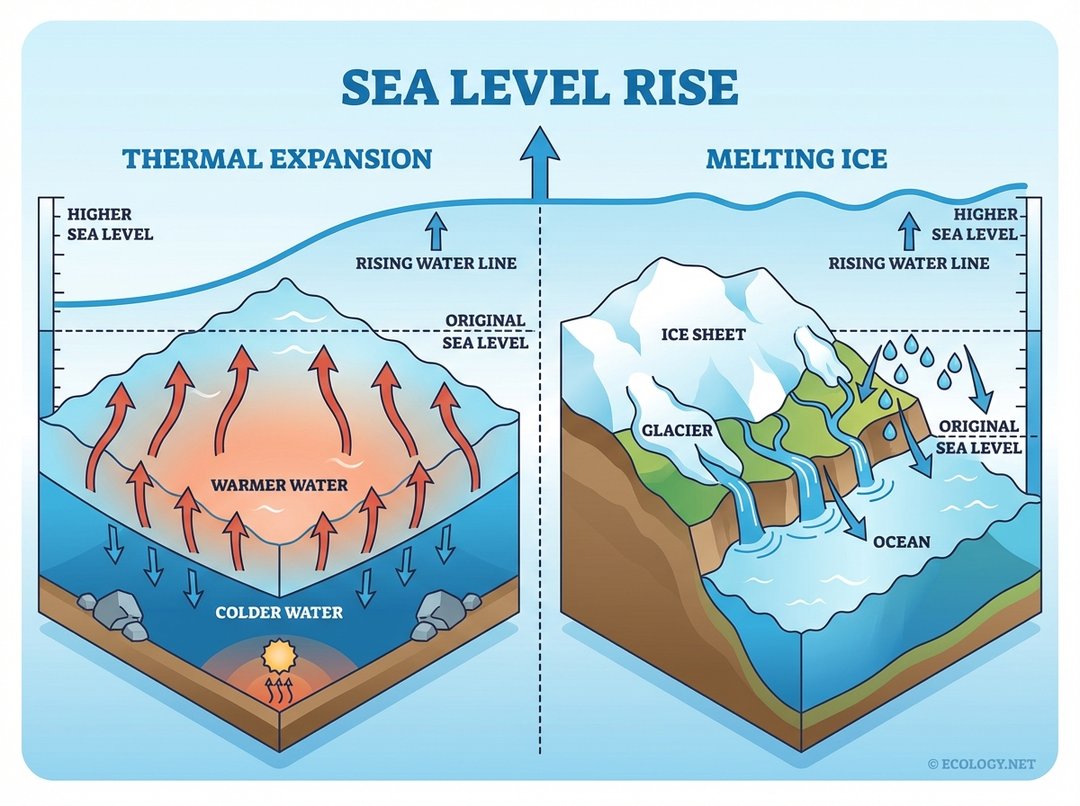
Sea level rise is not a singular phenomenon but the cumulative result of complex planetary processes, primarily driven by a warming climate. Two main mechanisms are responsible for the observed increase in global sea levels:
Thermal Expansion: The Warming Ocean’s Embrace
Just as most materials expand when heated, so too does water. As the Earth’s oceans absorb the vast majority of the excess heat trapped by greenhouse gases, the water itself expands. This thermal expansion might seem negligible on a small scale, but when applied to the immense volume of the world’s oceans, it accounts for a significant portion of global sea level rise. Warmer water takes up more space, pushing the ocean’s surface higher.
Melting Ice: From Glaciers to Gigantic Ice Sheets
The second major contributor is the melting of ice on land. This includes mountain glaciers, which are shrinking at an alarming rate across every continent, and the colossal ice sheets of Greenland and Antarctica. When this land based ice melts, the water flows into the ocean, directly adding to its volume. It is important to distinguish this from melting sea ice, which is already floating and does not significantly contribute to sea level rise, much like an ice cube melting in a glass of water does not cause the water to overflow.
A Cascade of Consequences: Impacts on Land and Life
The implications of a rising sea are far reaching, affecting everything from human infrastructure to delicate ecosystems. The impacts are already being felt globally, and projections indicate they will intensify.
Coastal Flooding and Erosion
One of the most immediate and visible effects is increased coastal flooding. High tides reach further inland, storm surges become more destructive, and even minor weather events can cause significant inundation. This leads to the erosion of beaches, cliffs, and coastal properties, permanently altering shorelines and threatening homes and businesses. Cities like Miami, Jakarta, and Venice are already grappling with chronic flooding issues.
Saltwater Intrusion: A Silent Threat to Freshwater
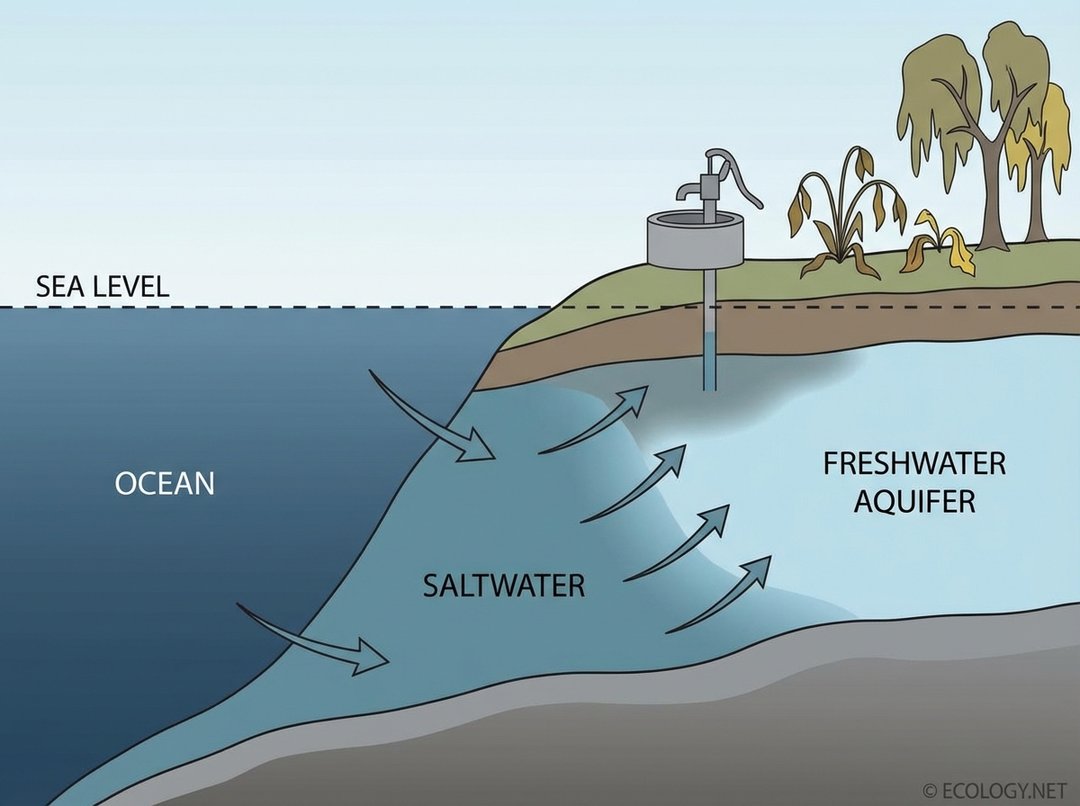
Beyond visible flooding, sea level rise poses a more insidious threat: saltwater intrusion. As sea levels rise, the increased pressure pushes saltwater further into coastal aquifers, which are underground layers of rock or soil that hold freshwater. This contamination renders freshwater wells unusable for drinking, agriculture, and industrial purposes. Many coastal communities rely on these aquifers, and their salinization can lead to severe water scarcity and agricultural decline, impacting food security and public health.
Threats to Vital Ecosystems
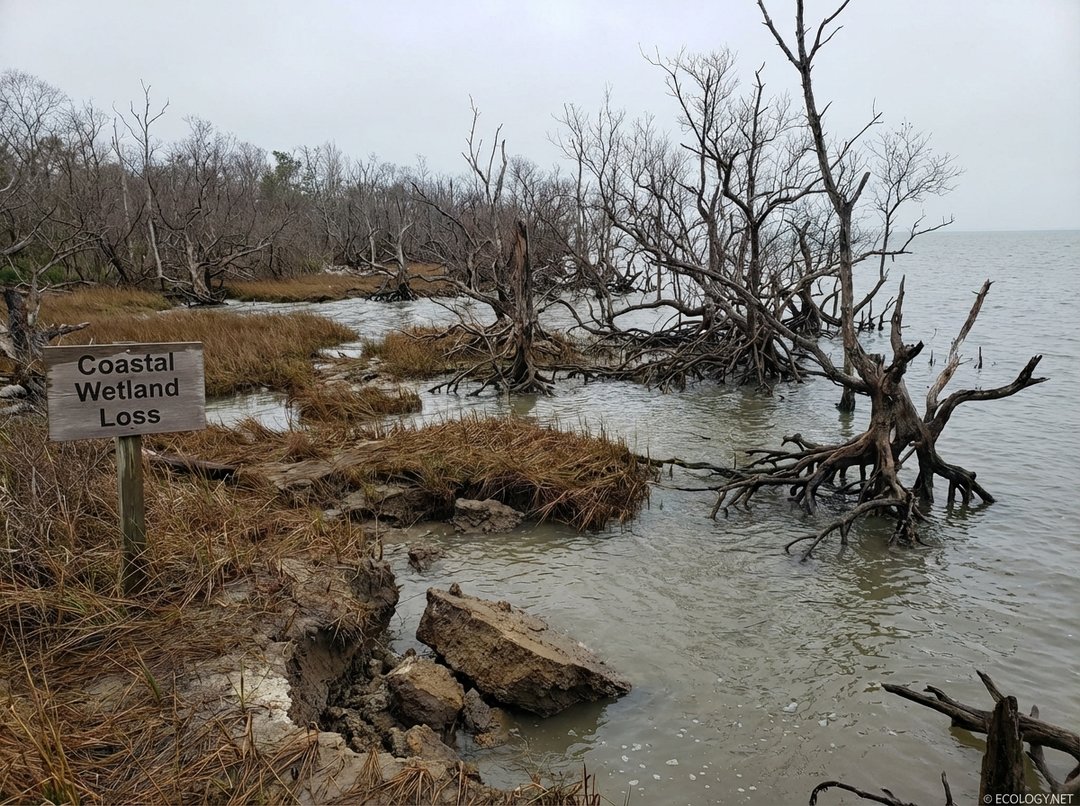
Coastal ecosystems are particularly vulnerable. Wetlands, such as salt marshes and mangrove forests, act as natural buffers against storms and provide critical habitats for countless species. As sea levels rise, these ecosystems can become submerged faster than they can migrate inland, leading to their degradation and loss. This not only diminishes biodiversity but also removes natural protections for coastal communities.
- Mangrove Forests: These unique trees thrive in brackish water but can only tolerate certain levels of inundation. Excessive sea level rise can drown them, leading to widespread die offs.
- Salt Marshes: These grassy wetlands are crucial nurseries for marine life and filter pollutants. Their ability to adapt to rising waters is limited by the speed of the rise and the availability of space to migrate.
- Coral Reefs: While not directly submerged by sea level rise, coral reefs are indirectly affected. Increased ocean temperatures, a driver of sea level rise, cause coral bleaching, and changes in ocean chemistry due to absorbed CO2 make it harder for corals to build their skeletons.
Displacement and Economic Disruption
The cumulative impacts of sea level rise can force human populations to relocate. Coastal communities, including entire island nations, face the prospect of becoming uninhabitable. This displacement can lead to social upheaval, loss of cultural heritage, and significant economic costs associated with rebuilding infrastructure and resettling populations. Industries reliant on coastal resources, such as fisheries and tourism, also suffer immense losses.
Gauging the Tide: Measuring and Projecting the Future
Scientists employ a variety of sophisticated tools to monitor sea level changes and predict future trends:
- Tide Gauges: These instruments, located at ports and coastal stations worldwide, have provided centuries of data on local sea level changes.
- Satellite Altimetry: Since the early 1990s, satellites have continuously measured global sea surface height with remarkable precision, offering a comprehensive view of ocean changes.
- Ice Sheet Monitoring: Satellites also track changes in the mass of ice sheets and glaciers, providing crucial data on their contribution to sea level rise.
Projections for future sea level rise vary depending on greenhouse gas emission scenarios. Under high emission pathways, global mean sea level could rise by several feet by the end of this century, with significant regional variations. These projections inform policy decisions and adaptation strategies for vulnerable areas.
Charting a New Course: Mitigation and Adaptation
Addressing sea level rise requires a dual approach: mitigating its causes and adapting to its inevitable effects.
Mitigation: Reducing the Root Cause
The most fundamental mitigation strategy is to reduce greenhouse gas emissions. This involves a global transition away from fossil fuels to renewable energy sources, improving energy efficiency, and implementing sustainable land use practices. Slowing global warming directly reduces thermal expansion and the melting of ice, thereby slowing the rate of sea level rise.
Adaptation: Living with a Changing Coastline
Even with aggressive mitigation, some degree of sea level rise is unavoidable due to past emissions. Adaptation strategies are therefore essential for protecting coastal communities and ecosystems. These can be broadly categorized:
- Hard Engineering Solutions: These involve building physical structures to defend against the sea.
- Sea Walls and Dikes: Concrete barriers designed to hold back rising waters. While effective locally, they can be expensive and disrupt natural coastal processes.
- Storm Surge Barriers: Large gates that can be closed during storm events to protect vulnerable areas.
- Soft Engineering Solutions: These work with natural processes to enhance coastal resilience.
- Beach Nourishment: Adding sand to eroded beaches to widen them and provide a buffer.
- Mangrove and Wetland Restoration: Replanting and protecting natural coastal ecosystems that absorb wave energy and trap sediment.
- Dune Restoration: Rebuilding and stabilizing sand dunes, which act as natural barriers.
- Managed Retreat: In some cases, the most pragmatic solution may be to strategically relocate communities and infrastructure away from the most vulnerable coastal areas. This involves careful planning and support for affected populations.
- Policy and Planning: Implementing stricter building codes in coastal zones, updating zoning regulations, and developing early warning systems for coastal flooding are crucial for long term resilience.
A Global Challenge, A Shared Responsibility
Sea level rise is a global phenomenon, but its impacts are not evenly distributed. Small island developing states and low lying coastal nations often bear the brunt of the consequences, despite contributing minimally to the greenhouse gas emissions that drive the problem. This raises critical questions of environmental justice and international cooperation. Collaborative efforts, including financial and technological support for vulnerable nations, are vital for fostering equitable and effective responses.
Conclusion: Navigating the Future of Our Coasts
The rising tide of our oceans is a clear signal of profound environmental change. Understanding the science behind sea level rise, its far reaching impacts, and the spectrum of solutions available is paramount. From the microscopic expansion of warming water to the majestic melting of ice sheets, the forces at play are immense. By embracing both ambitious mitigation efforts to curb emissions and innovative adaptation strategies to protect our coasts, humanity can strive to navigate this challenge, safeguarding both our natural heritage and the future of coastal communities around the world. The time for action is now, to ensure that our relationship with the ocean remains one of harmony, not of peril.