The Endless Wellspring: Understanding Renewable Resources
Imagine a world powered not by finite fuels, but by the very breath of our planet, by the ceaseless dance of sunlight and wind, by the deep warmth of the Earth itself. This is the promise and the reality of renewable resources, a cornerstone of sustainable living and a vital answer to humanity’s growing energy demands.
Renewable resources are those natural resources that replenish themselves over relatively short periods, either continuously or through natural cycles. Unlike their finite counterparts, they are not depleted by human use at a rate faster than nature can restore them. This fundamental characteristic makes them indispensable for a long-term, environmentally responsible future.
What Makes a Resource Renewable? The Core Distinction
The defining feature of a renewable resource is its capacity for regeneration. Think of it as a natural income stream that, when managed wisely, can provide indefinitely. This stands in stark contrast to non-renewable resources, which exist in fixed quantities and take millions of years to form, meaning their consumption leads to eventual depletion.
Consider the sun: it shines every day, providing an immense and constant energy source. The wind blows, driven by solar heating and the Earth’s rotation, offering another continuous supply. These natural processes ensure that as we harness these resources, they are simultaneously being renewed.
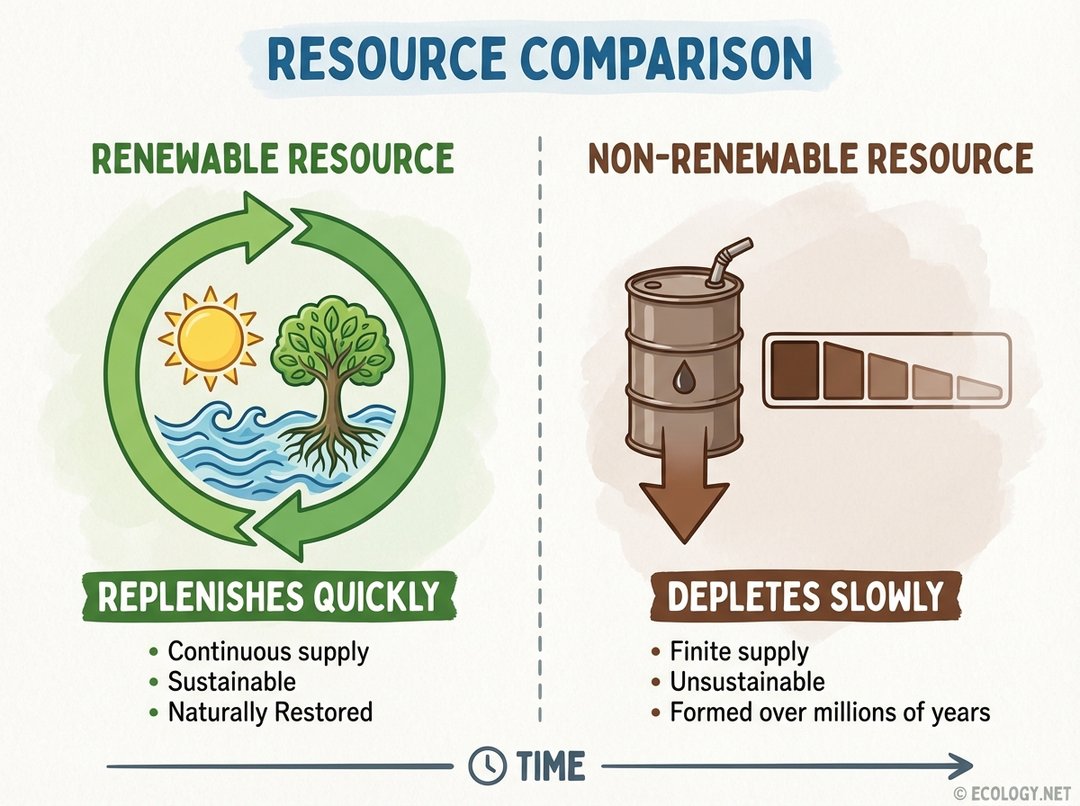
This image visually explains the fundamental difference between renewable and non-renewable resources, a core concept introduced early in the article to define what makes a resource renewable.
The Powerhouses of Nature: Types of Renewable Resources
The diversity of renewable resources is as vast as nature itself, each offering unique advantages and applications.
Solar Energy: Harnessing the Sun’s Bounty
The sun is the ultimate source of nearly all energy on Earth. Solar energy captures this radiant power directly, converting sunlight into electricity using photovoltaic (PV) panels or concentrating it to generate heat for steam turbines. From rooftop panels on homes to vast solar farms in deserts, solar technology is rapidly expanding, providing clean electricity and hot water.
- Photovoltaic (PV) Systems: Directly convert sunlight into electricity using semiconductor materials.
- Concentrated Solar Power (CSP): Uses mirrors to focus sunlight onto a receiver, heating a fluid to produce steam for turbines.
- Passive Solar Design: Utilizes building orientation and materials to maximize solar heating in winter and minimize it in summer.
Wind Energy: Nature’s Invisible Giant
Wind, a product of uneven heating of the Earth’s surface by the sun, is a powerful and abundant resource. Wind turbines capture the kinetic energy of moving air and convert it into electricity. Modern wind farms, both on land and offshore, are increasingly efficient and a significant contributor to global energy grids.
- Onshore Wind Farms: Located on land, often in open plains or coastal areas with consistent wind.
- Offshore Wind Farms: Situated in oceans or large lakes, benefiting from stronger and more consistent winds, though construction and maintenance are more complex.
Hydropower: The Force of Flowing Water
Hydropower harnesses the energy of moving water, typically by building dams that create reservoirs. Water released from these reservoirs flows through turbines, generating electricity. It is one of the oldest and most established forms of renewable energy, providing a reliable and dispatchable power source.
- Conventional Hydroelectric: Large dams creating reservoirs, offering significant power generation and storage capacity.
- Run-of-River Hydroelectric: Diverts a portion of a river’s flow through a turbine without a large reservoir, minimizing environmental impact.
- Pumped-Storage Hydroelectric: Uses excess electricity to pump water uphill to a reservoir, then releases it to generate power when demand is high, acting as a giant battery.
Geothermal Energy: Earth’s Inner Warmth
Deep within the Earth, heat from the planet’s core continuously radiates outwards. Geothermal energy taps into this natural heat, often in regions with volcanic activity or hot springs. It can be used directly for heating and cooling, or to generate electricity by using steam to drive turbines.
- Geothermal Power Plants: Utilize steam or hot water from deep underground to generate electricity.
- Geothermal Heat Pumps: Use the stable temperature of the Earth near the surface to provide efficient heating and cooling for buildings.
Biomass Energy: Life’s Stored Power
Biomass refers to organic matter derived from plants and animals, such as agricultural waste, forest residues, and dedicated energy crops. This material stores solar energy through photosynthesis and can be converted into various forms of energy, including electricity, heat, and biofuels.
- Biofuels: Ethanol from corn or sugarcane, and biodiesel from vegetable oils, used in transportation.
- Biopower: Burning biomass directly to generate electricity or heat.
- Biogas: Produced from the anaerobic digestion of organic waste, used for electricity generation or heating.
Why Go Renewable? A Multitude of Benefits
The shift towards renewable resources is driven by a compelling array of advantages that extend far beyond simply generating electricity.
Environmental Stewardship
Perhaps the most widely recognized benefit is the dramatic reduction in environmental impact. Renewable energy sources produce little to no greenhouse gas emissions during operation, directly combating climate change. They also reduce air and water pollution associated with fossil fuel extraction and combustion, leading to cleaner air and healthier ecosystems.
“Embracing renewable resources is not just an energy choice, it is a commitment to preserving the delicate balance of our planet for generations to come.”
Economic Prosperity
Investing in renewables stimulates economic growth by creating new jobs in manufacturing, installation, and maintenance. It also reduces reliance on volatile global fossil fuel markets, leading to more stable energy prices. Many renewable technologies, once installed, have very low operating costs, providing long-term savings.
Energy Security and Independence
By utilizing domestic natural resources like sun, wind, and water, nations can reduce their dependence on imported fuels. This enhances energy security, making countries less vulnerable to geopolitical instability and supply chain disruptions.
Navigating the Challenges: Intermittency and Integration
While the benefits are clear, renewable resources also present unique challenges, particularly concerning their variable nature and integration into existing infrastructure.
The Intermittency Puzzle
Many renewable sources, such as solar and wind, are intermittent. The sun does not shine at night, and the wind does not always blow. This variability means that their output does not always align with electricity demand, posing a challenge for grid stability and reliability.
Energy Storage Solutions
Addressing intermittency is crucial, and energy storage is a key part of the solution. Technologies like batteries, pumped-hydro storage, and even advanced thermal storage systems can store excess energy generated during periods of high production and release it when demand is high or renewable output is low.
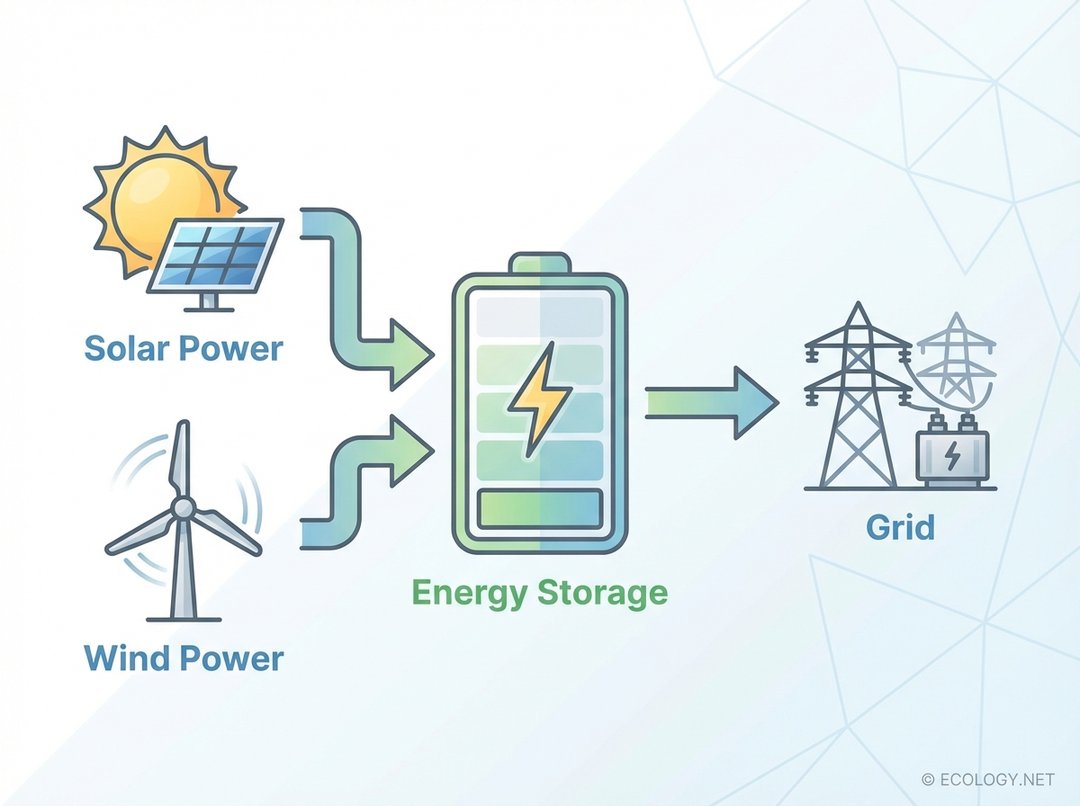
This image illustrates the solution to the challenge of intermittency in renewable energy, a key nuance discussed in the article and a focus for future development in ‘Intermittency and Storage’ and ‘Energy Storage Solutions’.
Grid Modernization
Integrating a high percentage of renewable energy requires a smarter, more flexible electricity grid. This involves advanced sensors, digital controls, and communication technologies to manage the flow of power efficiently, balance supply and demand, and ensure reliability.
The Horizon Ahead: Innovations and the Future of Renewables
The field of renewable energy is dynamic, with continuous innovation driving down costs and improving efficiency. Breakthroughs in materials science are leading to more efficient solar cells and lighter, stronger wind turbine blades. Advances in battery technology are making energy storage more affordable and scalable. Furthermore, emerging technologies like tidal and wave energy hold immense potential for future development.
Policy support, international cooperation, and public awareness are also critical in accelerating the transition to a fully renewable energy system. As societies increasingly recognize the urgency of climate action and the economic opportunities presented by green technologies, the future of renewable resources looks brighter than ever.
Conclusion: Powering a Sustainable Tomorrow
Renewable resources represent more than just an alternative energy source; they embody a paradigm shift towards a sustainable relationship with our planet. By harnessing the inexhaustible power of nature, we can mitigate environmental damage, foster economic growth, and ensure a secure energy future for generations to come. The journey is ongoing, but with continued innovation and collective commitment, a world powered by clean, renewable energy is not just a dream, it is an achievable reality.