Unveiling the Miniature Worlds: A Deep Dive into Microhabitats
The vastness of Earth’s ecosystems often captures our imagination, from sprawling rainforests to expansive oceans. Yet, true ecological richness often hides in plain sight, within miniature worlds teeming with life and unique conditions. These are microhabitats, small scale environments that play an outsized role in supporting biodiversity and shaping the natural world. Understanding them allows us to appreciate the intricate tapestry of life, even in the most unassuming corners.
Imagine a grand forest, a sweeping panorama of towering trees and dappled sunlight. While this forest is a single, large habitat, it is not uniform. Within its boundaries exist countless smaller, distinct environments, each with its own unique set of rules and inhabitants. A tiny patch of moss on a rock, the damp underside of a fallen leaf, or the sheltered crevice of a tree bark are all examples of these hidden realms. These are microhabitats, and they are everywhere.
What Exactly is a Microhabitat?
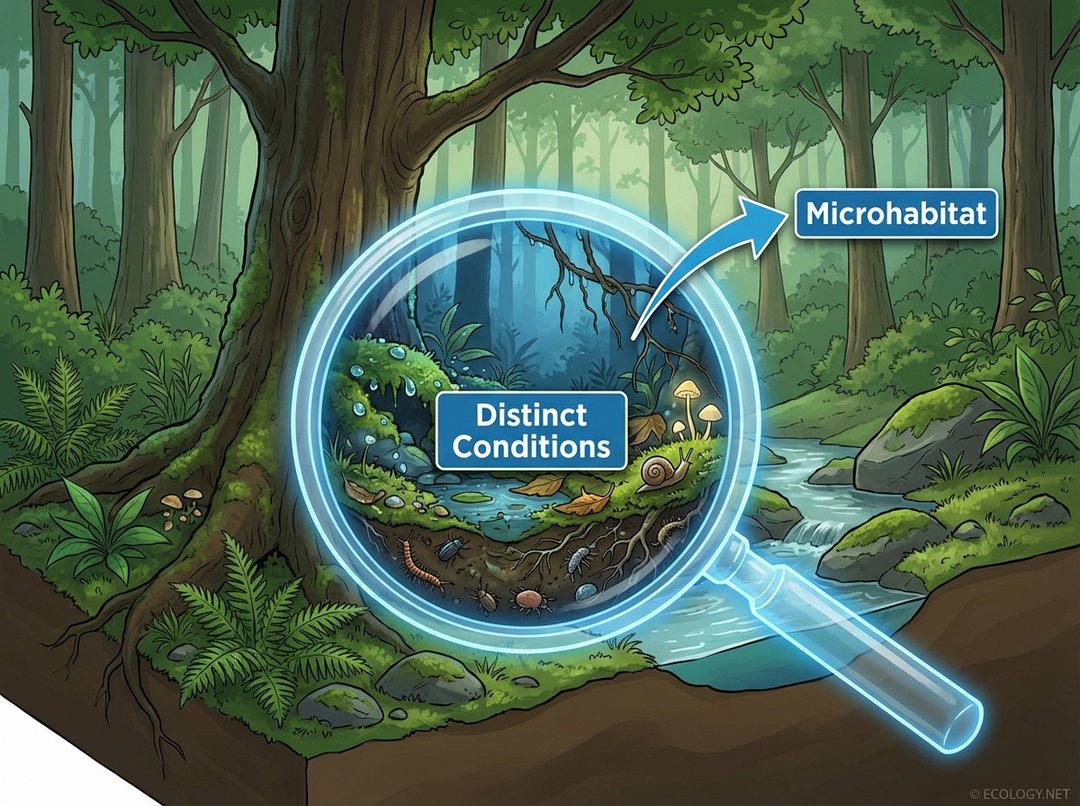
At its core, a microhabitat is a small, localized environment within a larger ecosystem that possesses distinct physical and chemical conditions. These conditions differ significantly from the surrounding general habitat, creating a unique niche for specific organisms. The key distinction lies in scale and environmental variation. While a forest is a habitat, the space under a particular log within that forest is a microhabitat.
Think of it as zooming in on a map. The continent is a macrohabitat, the country is a habitat, the city is a local habitat, and a specific park bench in that city could be a microhabitat for a particular insect or plant. These miniature worlds offer refuge, resources, and specific conditions that larger, more uniform environments cannot provide.
Everyday Wonders: Where to Find Microhabitats
Microhabitats are not exotic phenomena found only in remote wilderness. They are ubiquitous, existing all around us, often overlooked in our daily lives. Once you start looking, you will find them everywhere.
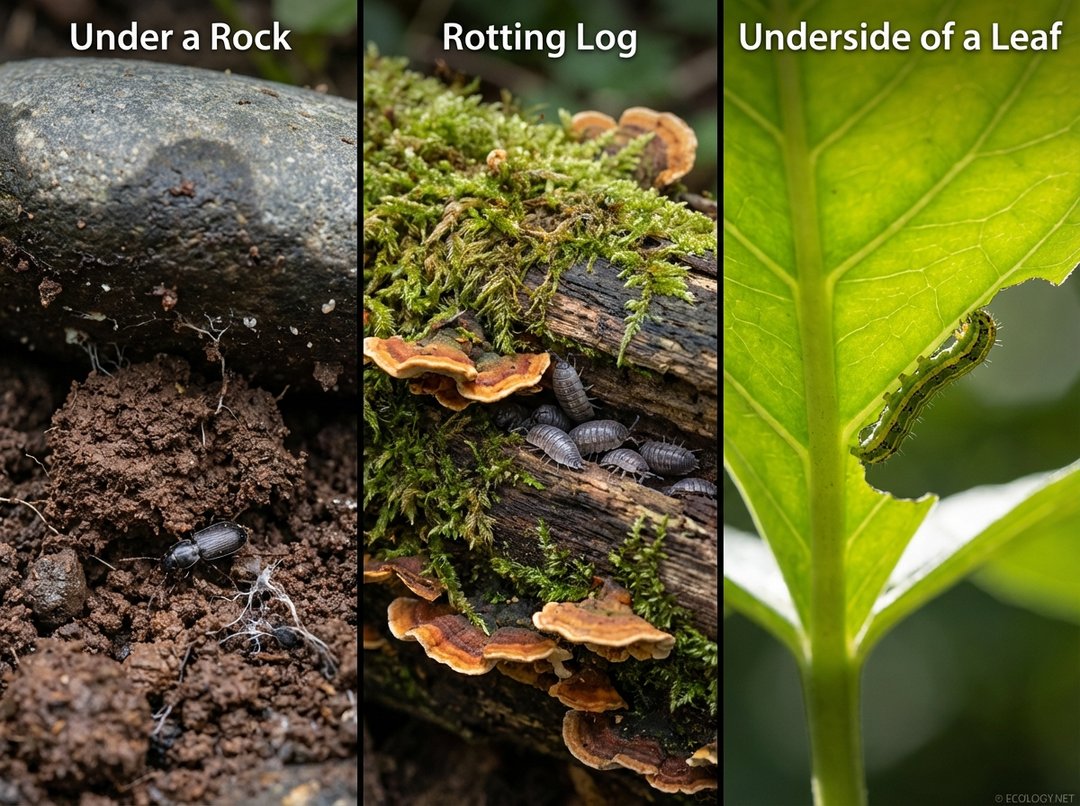
- Under a Rock: Lift a stone in your garden or a park, and you might uncover a damp, cool space. This microhabitat provides shelter from predators, consistent moisture, and stable temperatures for creatures like woodlice, millipedes, and various insects.
- Rotting Logs: A fallen tree trunk is a bustling metropolis for decomposers. As wood decays, it creates pockets of moisture, provides food, and offers shelter for fungi, bacteria, beetles, termites, and salamanders. The inside of a log can be significantly different from its exterior.
- Underside of a Leaf: The sheltered underside of a leaf offers protection from direct sunlight, wind, and rain. It is a preferred spot for aphids, caterpillars, and spider mites, which feed on the leaf tissue while remaining hidden.
- Tree Bark Crevices: The rough, textured bark of trees provides countless nooks and crannies. These tiny spaces trap moisture, offer shade, and serve as homes for lichens, mosses, small spiders, and insect larvae.
- Puddles and Tire Ruts: Even temporary water bodies can be microhabitats. A rainwater puddle can host mosquito larvae, tadpoles, and microscopic organisms for its brief existence.
- Soil Pores: The spaces between soil particles are a complex network of microhabitats for bacteria, fungi, nematodes, and other invertebrates, each adapted to specific moisture and oxygen levels.
The Architects of Miniature Worlds: Factors Defining a Microhabitat
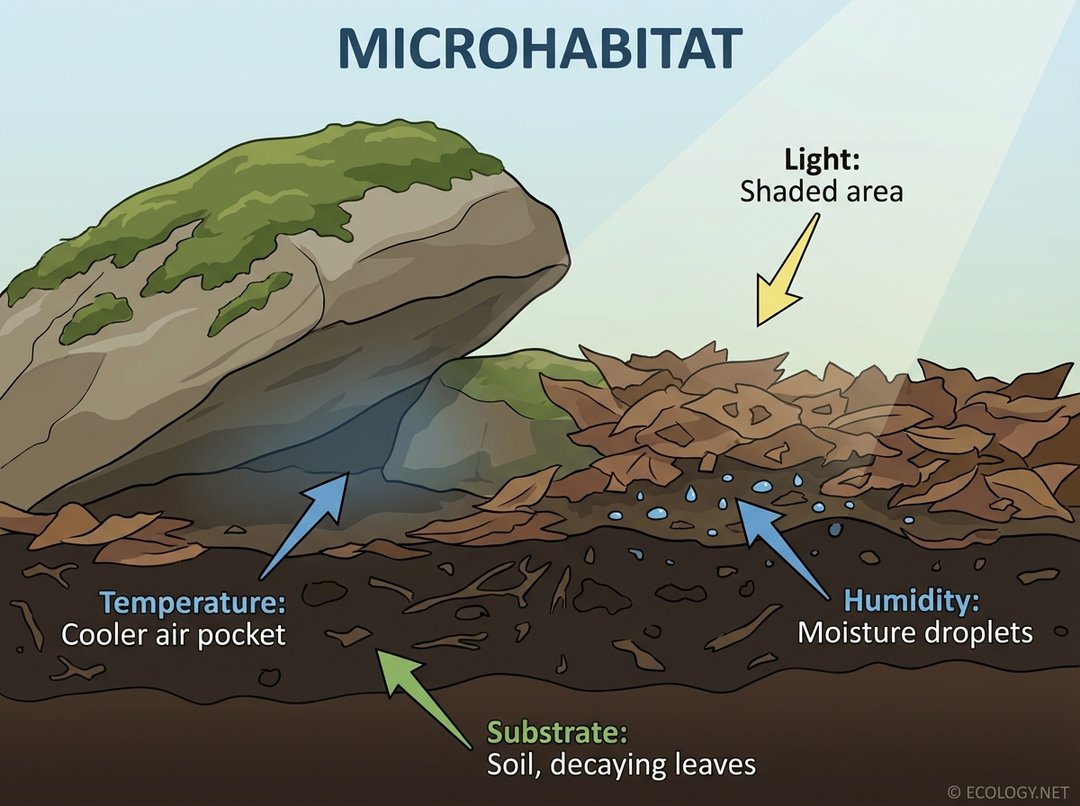
What makes a microhabitat distinct? It is a combination of several key environmental factors that create unique conditions, often dramatically different from the surrounding area. These factors interact to sculpt these miniature environments.
Temperature
Temperature can vary significantly over very short distances. Under a rock, the temperature might be several degrees cooler than the exposed surface, especially on a sunny day. Similarly, the shaded side of a tree trunk will be cooler than the sunny side. These small temperature gradients are critical for organisms that are sensitive to heat or cold.
Humidity and Moisture
Water availability is often the most defining characteristic of a microhabitat. A small depression that collects rainwater, the dampness beneath a layer of leaf litter, or the condensation on the underside of a leaf all create pockets of high humidity. This is vital for organisms that require constant moisture to survive, such as slugs, snails, and many amphibians.
Light Intensity
Light levels can change drastically within a few centimeters. The deep shade beneath a dense bush, the filtered light reaching the forest floor, or the complete darkness inside a burrow are all distinct light microclimates. Organisms adapt to these conditions, with some thriving in bright light and others requiring perpetual shade.
Substrate Composition
The material that forms the base of a microhabitat, known as the substrate, is crucial. This could be soil, sand, decaying wood, rock, water, or even the surface of another organism. The substrate provides physical support, can be a source of nutrients, and influences moisture retention and temperature regulation. For instance, sandy soil drains quickly, while clay soil retains water, creating different conditions.
Air Movement and Wind
Even slight variations in air movement can define a microhabitat. A sheltered crevice will experience less wind and evaporation than an exposed surface. This can impact moisture levels and temperature stability, favoring delicate organisms that cannot withstand strong air currents.
Nutrient Availability
The presence and type of nutrients can also vary at a micro scale. A patch of soil enriched by decaying organic matter will support different life forms than nutrient-poor soil. Fungi and bacteria, for example, thrive in microhabitats rich in decomposing material.
Why Microhabitats Matter: Ecological Significance
The existence of microhabitats is not merely a curious detail; it is fundamental to the health and complexity of ecosystems.
Biodiversity Hotspots in Miniature
Microhabitats dramatically increase the biodiversity of an area. By providing a wider range of environmental conditions within a small space, they allow more species to coexist. Each microhabitat can support a unique assemblage of organisms adapted to its specific conditions, leading to a richer overall species count.
Refuge and Survival
For many organisms, microhabitats serve as vital refuges from harsh environmental conditions. During extreme heat, cold, drought, or heavy rainfall, creatures can retreat into these sheltered spaces to survive. For example, a lizard might bask on a hot rock but quickly retreat into a cool crevice when temperatures become too high.
Niche Partitioning
Microhabitats facilitate niche partitioning, a process where different species utilize different resources or parts of the environment to avoid direct competition. Two species might feed on the same plant, but one might prefer the upper leaves while the other feeds on the underside, effectively using different microhabitats on the same host.
Ecosystem Services
The organisms thriving in microhabitats contribute significantly to essential ecosystem services. Decomposers in rotting logs and leaf litter break down organic matter, recycling nutrients back into the soil. Pollinators might find shelter in specific microhabitats, emerging to aid plant reproduction. These small-scale processes collectively underpin the functioning of larger ecosystems.
Indicators of Environmental Change
Because microhabitats are often sensitive to subtle changes in their environment, they can serve as early indicators of broader ecological shifts. Changes in temperature, moisture, or substrate composition due to climate change or human disturbance can quickly alter or eliminate specific microhabitats, impacting the species that rely on them.
Microhabitats in Action: Case Studies and Examples
Delving deeper, we can observe fascinating adaptations of life to specific microhabitats.
- Tardigrades (Water Bears) in Moss: These microscopic invertebrates are famous for their extreme resilience. They thrive in the moist microhabitats found within moss and lichen patches, where they can enter a state of suspended animation (cryptobiosis) to survive desiccation when their microhabitat dries out.
- Lichens on Rock Surfaces: Lichens themselves create a microhabitat. Their thallus traps moisture and provides a stable surface, allowing other microscopic organisms to live within their structure, contributing to the slow process of rock weathering and soil formation.
- Ant Nests: An ant colony constructs a complex microhabitat within the soil or wood, regulating temperature and humidity for the queen, larvae, and pupae. The internal conditions of the nest are meticulously maintained, often differing greatly from the external environment.
- Cave Ecosystems: While caves can be large, the specific pools, damp walls, and guano piles within them represent distinct microhabitats, each supporting highly specialized cave-dwelling organisms adapted to perpetual darkness and stable temperatures.
Exploring Your Own Backyard: Citizen Science and Observation
The beauty of microhabitats is their accessibility. You do not need to travel to a remote jungle to observe them. Your own garden, a local park, or even a crack in the pavement can reveal these miniature worlds.
Take a moment to:
- Turn over a stone or log: Observe what lives beneath. Note the differences in moisture and temperature compared to the exposed surface.
- Examine a patch of moss: Look closely for tiny insects or other invertebrates.
- Inspect the bark of a tree: Are there lichens, spiders, or small beetles hiding in the crevices?
- Observe a puddle: What microscopic life might be swimming within it?
By simply pausing and looking closely, you can uncover a hidden world of ecological interactions and appreciate the incredible diversity that thrives on a scale often overlooked.
Conclusion
Microhabitats are a testament to life’s adaptability and the intricate design of nature. These small, distinct environments, defined by subtle variations in temperature, moisture, light, and substrate, are critical for supporting a vast array of species and enhancing overall biodiversity. From the dampness beneath a rock to the sheltered underside of a leaf, these miniature worlds provide refuge, resources, and unique conditions that allow life to flourish. Recognizing and appreciating microhabitats deepens our understanding of ecology and reminds us that even the smallest spaces hold immense ecological significance. The next time you step outside, take a moment to zoom in and discover the hidden wonders right at your feet.