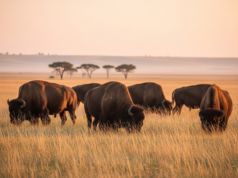
Imagine vast, open spaces stretching to the horizon, painted in shades of green and gold, where the wind whispers through endless fields of grass. This is the essence of the grassland biome, a vital and dynamic ecosystem that covers roughly one-quarter of the Earth’s land surface. From the iconic savannas of Africa to the expansive prairies of North America, grasslands are much more than just fields of green; they are bustling hubs of life, critical for global biodiversity, and indispensable for human well-being.
What Exactly is a Grassland Biome?
At its core, a grassland biome is an area dominated by grasses and herbaceous plants, with very few or no trees or shrubs. These biomes thrive in regions that receive moderate rainfall, typically more than deserts but less than forests. This specific climatic sweet spot prevents the growth of large tree canopies, allowing grasses to flourish as the primary vegetation. The climate usually features distinct wet and dry seasons, or warm and cold seasons, which dictate the life cycles of the plants and animals within them.
Grasslands are incredibly diverse, known by many names across the globe:
- Savannas: Found in tropical and subtropical regions, characterized by scattered trees and a distinct wet/dry season.
- Prairies: The temperate grasslands of North America, known for their tall and short grasses.
- Steppes: Similar temperate grasslands found in Eurasia.
- Pampas: The fertile temperate grasslands of South America.
- Veld: The open country of southern Africa.
These biomes are not just aesthetically pleasing; they play a crucial role in the planet’s ecological balance. They are significant carbon sinks, storing vast amounts of carbon in their extensive root systems and soils. They also support an incredible array of wildlife and provide essential resources for human populations, particularly through agriculture and livestock grazing.
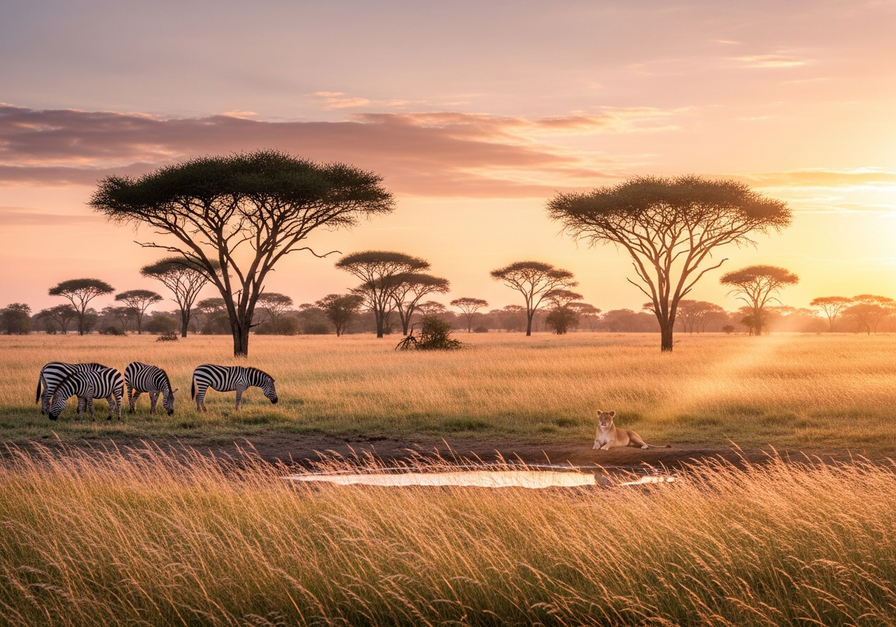
The African savanna exemplifies a tropical grassland, showcasing its warm climate, scattered acacia trees, and iconic fauna like zebras and a lioness, illustrating the rich biodiversity found in these biomes.
A Global Tour of Grassland Types
While all grasslands share the common trait of grass dominance, their specific characteristics vary greatly depending on their geographical location and climate.
Tropical Grasslands: The Savannas
Tropical grasslands, or savannas, are typically found near the equator, often bordering tropical rainforests. They experience high temperatures year-round but have pronounced wet and dry seasons. During the wet season, grasses grow tall and lush, providing abundant food for herbivores. The dry season brings drought, and often fires, which are a natural part of the savanna ecosystem, helping to prevent tree encroachment and promote new grass growth.
- Climate: Hot year-round, with distinct wet and dry seasons.
- Vegetation: Tall grasses, scattered drought-resistant trees (like acacia and baobab), and shrubs.
- Fauna: Famous for large grazing mammals such as zebras, wildebeest, elephants, giraffes, and their predators like lions, cheetahs, and hyenas.
- Examples: The Serengeti in East Africa, the Llanos of Venezuela and Colombia, and parts of northern Australia.
Temperate Grasslands: Prairies, Steppes, and Pampas
Temperate grasslands are located further from the equator, experiencing a wider range of temperatures throughout the year, with hot summers and cold winters. Rainfall is moderate, often concentrated in spring and early summer. The soils in these regions are among the most fertile on Earth, making them highly valued for agriculture.
- Climate: Warm to hot summers, cold winters, moderate rainfall.
- Vegetation: Dominated by various types of grasses (tallgrass and shortgrass prairies), with few trees except along rivers.
- Fauna: Historically home to vast herds of bison and pronghorn in North America, wild horses and saiga antelope in Eurasia, and guanacos in South America. Burrowing animals like prairie dogs, gophers, and various rodents are also common, along with predators such as wolves, coyotes, and foxes.
- Examples: The North American Great Plains, the Eurasian Steppe, and the Argentine Pampas.
Other Notable Grassland Variations
- Montane Grasslands: Found at high altitudes, these grasslands are characterized by cooler temperatures and unique plant and animal species adapted to mountain environments.
- Flooded Grasslands: These areas are seasonally or permanently inundated with water, creating unique wetland ecosystems with high biodiversity, such as the Pantanal in South America.
Life in the Grasslands: Adaptations and Interconnections
The open, often harsh conditions of grasslands have led to remarkable adaptations among their inhabitants.
Plant Adaptations
Grasses are incredibly resilient. Their growth points are near the ground, allowing them to quickly recover from grazing, fire, and mowing. Many have extensive, deep root systems that help them access water and nutrients from deep within the soil, and also anchor the soil, preventing erosion. These root systems can extend several feet deep, making up a significant portion of the plant’s biomass and storing vast amounts of carbon.
- Deep Roots: Access water and nutrients, prevent erosion, store carbon.
- Rhizomes and Stolons: Underground or above-ground stems that allow grasses to spread rapidly and recover from disturbance.
- Fire Resistance: Many grass species are adapted to fire, with seeds that germinate after a burn or roots that survive and resprout.
Animal Adaptations
Grassland animals have evolved strategies to thrive in open environments where cover is scarce.
- Grazers: Large herbivores like bison, zebras, and wildebeest have specialized digestive systems to process tough grasses. They often live in large herds, providing safety in numbers against predators.
- Burrowers: Many smaller animals, such as prairie dogs, ground squirrels, and various insects, live in burrows to escape predators, extreme temperatures, and fires. Their burrowing activities also aerate the soil and create microhabitats.
- Predators: Animals like lions, cheetahs, wolves, and coyotes are adapted for speed and stealth to hunt in open terrain. Their keen senses help them locate prey across vast distances.
- Camouflage: Many grassland animals have coats that blend in with the dry grasses, offering protection from predators or aiding in ambush.
The interactions between these plants and animals create complex food webs. Grazers keep the grass from becoming too dense, which can reduce fire risk and promote new growth. Predators regulate grazer populations, preventing overgrazing. Decomposers break down organic matter, returning nutrients to the soil, which in turn nourishes the grasses. This intricate balance highlights the interconnectedness of all life within the biome.
The Vital Role of Grasslands: Why They Matter
Grasslands are far more than just pretty landscapes; they provide invaluable ecological services and resources.
- Biodiversity Hotspots: Despite their seemingly uniform appearance, grasslands harbor immense biodiversity, including unique species of plants, insects, birds, and mammals. Many endangered species rely on grassland habitats.
- Carbon Sequestration: The extensive root systems of grasses and the rich organic matter in grassland soils make them powerful carbon sinks, playing a critical role in mitigating climate change by storing atmospheric carbon dioxide.
- Water Regulation: Grasslands help regulate water cycles. Their dense root systems improve soil infiltration, reducing runoff and erosion, and helping to recharge groundwater.
- Human Livelihoods: Historically and presently, grasslands are crucial for agriculture, particularly for raising livestock (cattle, sheep, goats) and cultivating cereal crops like wheat, corn, and barley. They also provide forage for wild game, supporting hunting and ecotourism.
Threats to Grasslands: A Landscape Under Pressure
Despite their resilience, grasslands are among the most threatened biomes on Earth. Human activities pose significant challenges to their health and survival.
Habitat Loss and Conversion
The most significant threat is the conversion of grasslands into agricultural land. The fertile soils that make grasslands productive for grazing also make them ideal for farming. Vast areas of prairies and steppes have been plowed under to grow crops, leading to irreversible habitat loss for countless species.
Overgrazing
While grazing is a natural process in grasslands, excessive or poorly managed livestock grazing can lead to degradation. Overgrazing removes too much vegetation, compacts the soil, reduces plant diversity, and can lead to soil erosion and desertification.
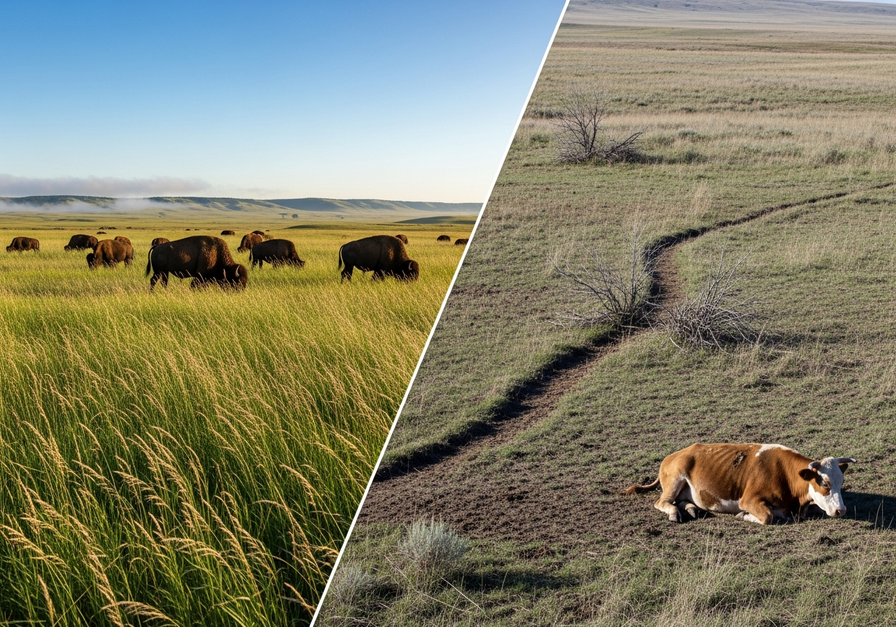
This image starkly visualizes the impact of human activity on grasslands, contrasting a healthy prairie with a degraded, overgrazed area, highlighting issues like agriculture, overgrazing, and habitat loss.
Climate Change
Changing climate patterns, including increased frequency and intensity of droughts, altered rainfall regimes, and more extreme temperatures, directly impact grassland ecosystems. These changes can stress vegetation, reduce forage availability, and alter natural fire cycles.
Invasive Species
Non-native plant species can outcompete native grasses and wildflowers, reducing biodiversity and altering ecosystem functions. Invasive animals can also disrupt food webs and habitat structures.
Altered Fire Regimes
While fire is a natural and often beneficial process in many grasslands, human suppression of fires can lead to woody encroachment, reducing grassland area. Conversely, human-caused fires that are too frequent or intense can also be damaging.
Conservation and Sustainable Management: Protecting Our Grassy Plains
Protecting grasslands requires a multi-faceted approach that balances human needs with ecological health.
Protected Areas
Establishing national parks, wildlife refuges, and other protected areas is crucial for preserving intact grassland ecosystems and their unique biodiversity. These areas provide safe havens for native species and allow natural processes to occur.
Sustainable Grazing Practices
Implementing sustainable livestock management techniques is vital, especially in regions where grazing is a primary land use. Practices like rotational grazing, where livestock are moved between different pastures, allow grazed areas to recover, promoting healthier grass growth and soil regeneration.
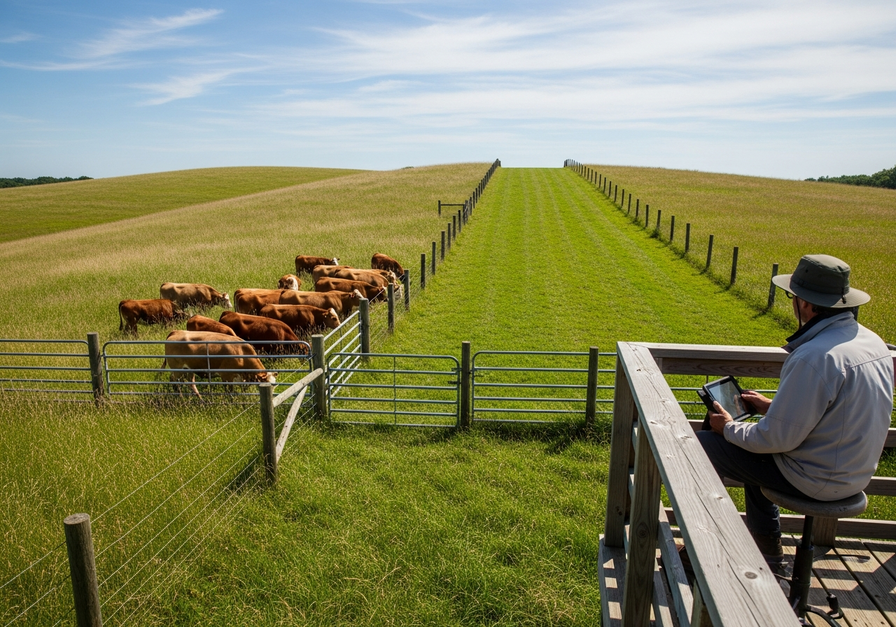
This photograph illustrates sustainable grazing practices, showing a rotational grazing system that helps maintain grassland biodiversity and soil health, a key recommendation for conservation.
Restoration Efforts
Restoring degraded grasslands involves reintroducing native plant species, controlling invasive species, and re-establishing natural fire regimes. These efforts can help bring back ecological function and biodiversity to damaged areas.
Policy and Community Involvement
Effective conservation also relies on strong environmental policies, land-use planning, and the active involvement of local communities, farmers, and ranchers. Educating the public about the value of grasslands is essential for fostering a sense of stewardship.
Conclusion: The Enduring Importance of Grasslands
Grassland biomes are magnificent and complex ecosystems, teeming with life and providing invaluable services to our planet. From their role in supporting iconic wildlife to their critical function in carbon sequestration and food production, grasslands are indispensable. However, they face immense pressures from human activities. Understanding these vital landscapes, appreciating their ecological significance, and actively supporting conservation and sustainable management efforts are crucial steps toward ensuring that these vast, beautiful, and productive plains continue to thrive for generations to come. The future of grasslands, and indeed much of our planet’s health, lies in our hands.