In the grand tapestry of life, where vibrant ecosystems thrive and energy flows, there exists a crucial, often overlooked, group of organisms that perform one of nature’s most vital tasks: recycling. These unsung heroes are the detritivores, the diligent clean-up crew responsible for breaking down dead organic matter and ensuring that life’s essential building blocks are continuously returned to the cycle.
What Exactly Are Detritivores?
At its core, a detritivore is an organism that feeds on detritus, which is non-living organic matter. This includes everything from fallen leaves, dead wood, and animal carcasses to waste products like feces. Unlike predators that hunt living prey or herbivores that graze on living plants, detritivores specialize in consuming the deceased, playing an indispensable role in decomposition and nutrient cycling.
Think of them as the ultimate recyclers. Without detritivores, the world would quickly become buried under layers of dead material, and vital nutrients would remain locked away, unavailable for new life to flourish. They are the bridge between death and rebirth in every ecosystem on Earth.
Detritivores vs. Decomposers: A Crucial Distinction
It is common to confuse detritivores with decomposers, and while their roles are complementary, there is a fundamental difference in their methods. Understanding this distinction is key to appreciating their individual contributions.
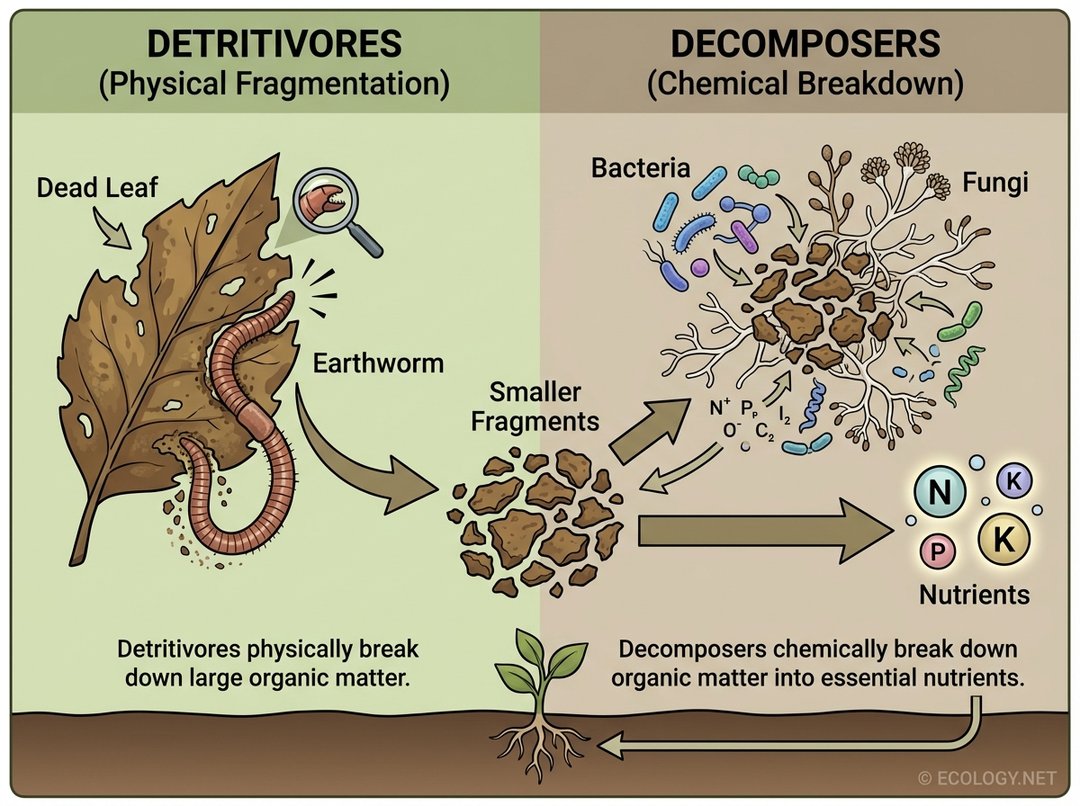
Detritivores are primarily responsible for the physical breakdown of detritus. They ingest and digest dead organic matter, breaking it into smaller fragments. This process increases the surface area of the detritus, making it more accessible for the next stage of decomposition.
Decomposers, on the other hand, are typically microscopic organisms like bacteria and fungi. They perform the chemical breakdown. They secrete enzymes onto the smaller fragments of organic matter, breaking down complex molecules into simpler inorganic nutrients, which can then be absorbed by plants. So, detritivores prepare the meal, and decomposers finish the digestion, releasing the nutrients back into the soil or water.
Common Detritivores in Action
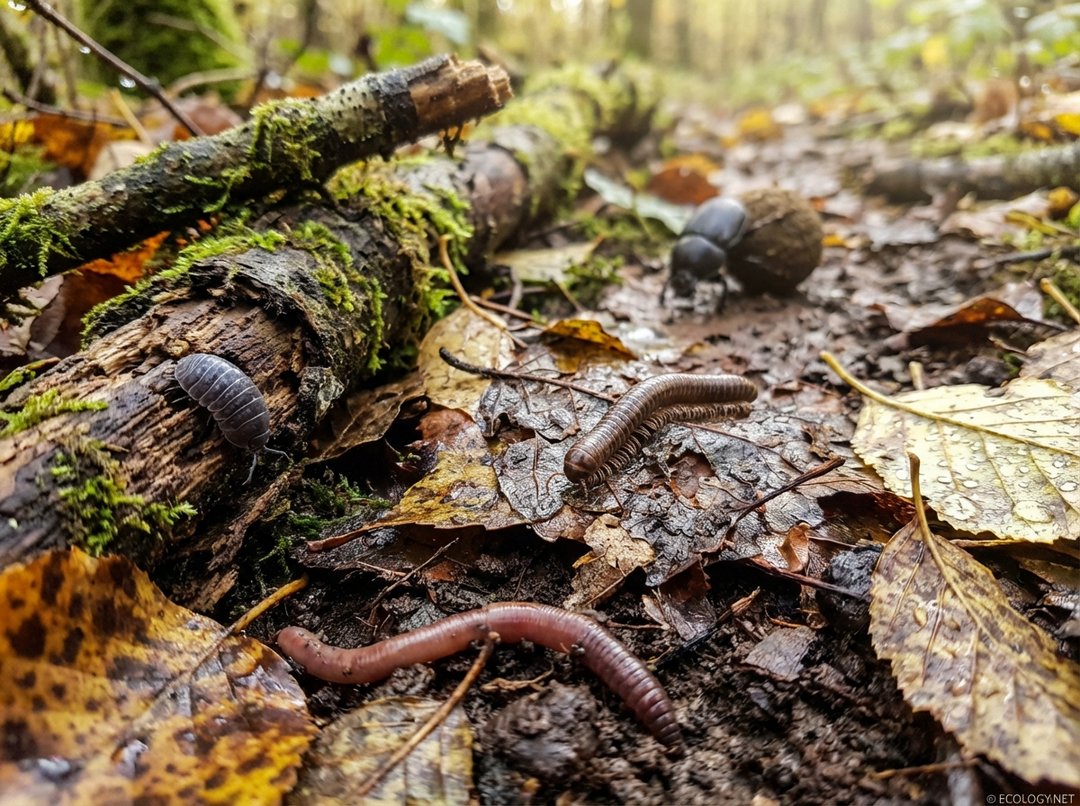
Detritivores come in a vast array of shapes and sizes, inhabiting nearly every corner of the planet. From the visible inhabitants of your garden to the microscopic creatures in the deep ocean, their diversity is astounding.
Here are some prominent examples:
- Earthworms: Perhaps the most iconic detritivores, earthworms burrow through soil, ingesting soil particles and organic matter. They break down detritus, aerate the soil, and enrich it with their castings.
- Millipedes: These multi-legged invertebrates are often found in damp, dark places, munching on decaying leaves and wood. They are crucial shredders of plant litter.
- Woodlice (Pill Bugs/Sow Bugs): Commonly found under rocks and logs, woodlice feed on decaying plant material, contributing to the breakdown of tough cellulose.
- Dung Beetles: Specialized detritivores, dung beetles feed on and bury animal feces, preventing the buildup of waste and returning nutrients to the soil.
- Sea Cucumbers: In marine environments, sea cucumbers are important detritivores, sifting through seafloor sediments to consume organic particles.
- Springtails: Tiny, six-legged arthropods abundant in soil and leaf litter, springtails graze on decaying plant matter and fungi.
- Maggots (Fly Larvae): Often seen on decaying animal carcasses, maggots rapidly consume dead flesh, playing a vital role in carrion decomposition.
The Indispensable Role in Ecosystems
The work of detritivores is not merely about tidying up; it is fundamental to the health and sustainability of all ecosystems. Their contributions ripple through the entire food web and biogeochemical cycles.
Nutrient Cycling: The Engine of Life
The most crucial ecological role of detritivores is their part in nutrient cycling. Every living organism requires a continuous supply of nutrients like nitrogen, phosphorus, and potassium to grow and thrive. When organisms die, these nutrients are locked within their tissues. Detritivores initiate the process of releasing these vital elements.
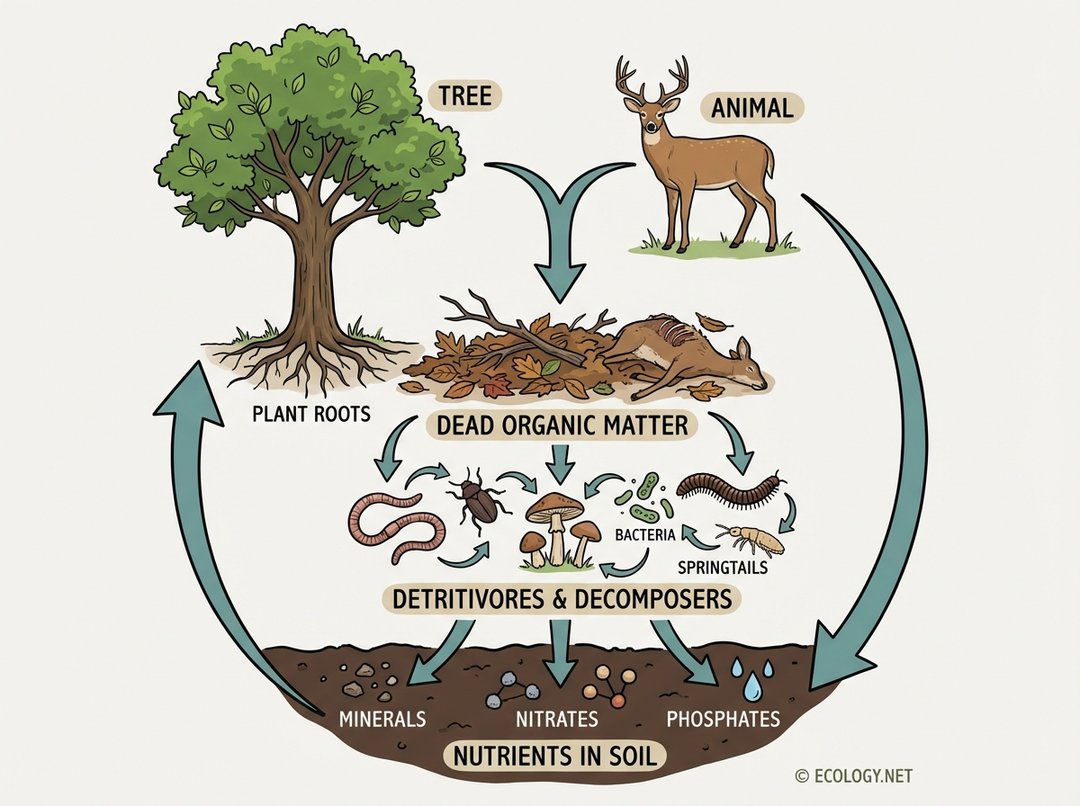
By physically breaking down dead organic matter, detritivores make the nutrients more accessible to decomposers. The decomposers then convert these complex organic compounds into simpler inorganic forms that can be absorbed by plant roots. This continuous loop ensures that nutrients are not permanently lost but are instead recycled back into the ecosystem, supporting new plant growth, which in turn feeds herbivores and carnivores. Without this recycling, ecosystems would quickly deplete their nutrient reserves and collapse.
Soil Health and Structure
Many terrestrial detritivores, particularly earthworms and various insects, significantly improve soil quality. Their burrowing activities aerate the soil, improving drainage and allowing oxygen to reach plant roots and other soil organisms. As they ingest and excrete organic matter, they mix it with mineral particles, creating stable soil aggregates. This process enhances soil structure, increases water retention, and builds rich, fertile topsoil that is essential for agriculture and natural plant communities.
Waste Management and Disease Control
Imagine a world without detritivores. Dead animals and plants would accumulate indefinitely, creating unsanitary conditions and potential breeding grounds for pathogens. Detritivores act as nature’s clean-up crew, efficiently removing waste and preventing the spread of disease. For instance, dung beetles rapidly process animal waste, reducing fly populations and improving pasture quality.
Beyond the Basics: Ecological Significance and Food Webs
While often overlooked, detritivores form a critical link in many food webs. They are not typically at the bottom of the food chain like producers, but they are essential consumers of detritus, transferring energy from dead organic matter back into the living world.
- Energy Transfer: The energy stored in dead organic matter is not lost. Detritivores consume this matter, incorporating its energy into their own bodies. They then become a food source for other organisms, such as birds, small mammals, and predatory insects, thus transferring energy from the detrital food web to the grazing food web.
- Foundation of Detrital Food Webs: In many ecosystems, especially those with high amounts of dead organic matter (like forest floors or deep-sea environments), detritivores form the base of an entire food web. Organisms that feed on detritus and the organisms that feed on them constitute the detrital food web, which often runs parallel to and interacts with the grazing food web.
- Ecosystem Stability: By ensuring efficient nutrient cycling and waste removal, detritivores contribute significantly to the overall stability and resilience of ecosystems. They help ecosystems recover from disturbances and maintain their productivity over long periods.
Threats and Conservation
Despite their immense importance, detritivore populations can be vulnerable to human activities. Habitat destruction, pesticide use, and pollution can severely impact these organisms. For example, broad-spectrum pesticides designed to kill agricultural pests can also harm beneficial soil detritivores like earthworms and springtails, disrupting the delicate balance of soil ecosystems.
Recognizing the value of detritivores is the first step towards their conservation. Practices that promote soil health, reduce chemical inputs, and preserve natural habitats are crucial for supporting these vital recyclers. Protecting detritivores means protecting the very foundation of healthy ecosystems and ensuring the continuous flow of life on Earth.
Conclusion
Detritivores may not possess the charismatic appeal of a majestic predator or the vibrant beauty of a blooming flower, but their role in sustaining life is no less profound. These tireless workers are the silent architects of healthy ecosystems, diligently breaking down the remnants of life to fuel its renewal. From the humble earthworm to the specialized dung beetle, detritivores embody nature’s perfect recycling system, reminding us that in the intricate web of life, every organism, no matter how small or seemingly insignificant, plays an absolutely critical part.