Unveiling Alpha Diversity: The Hidden World Within Our Ecosystems
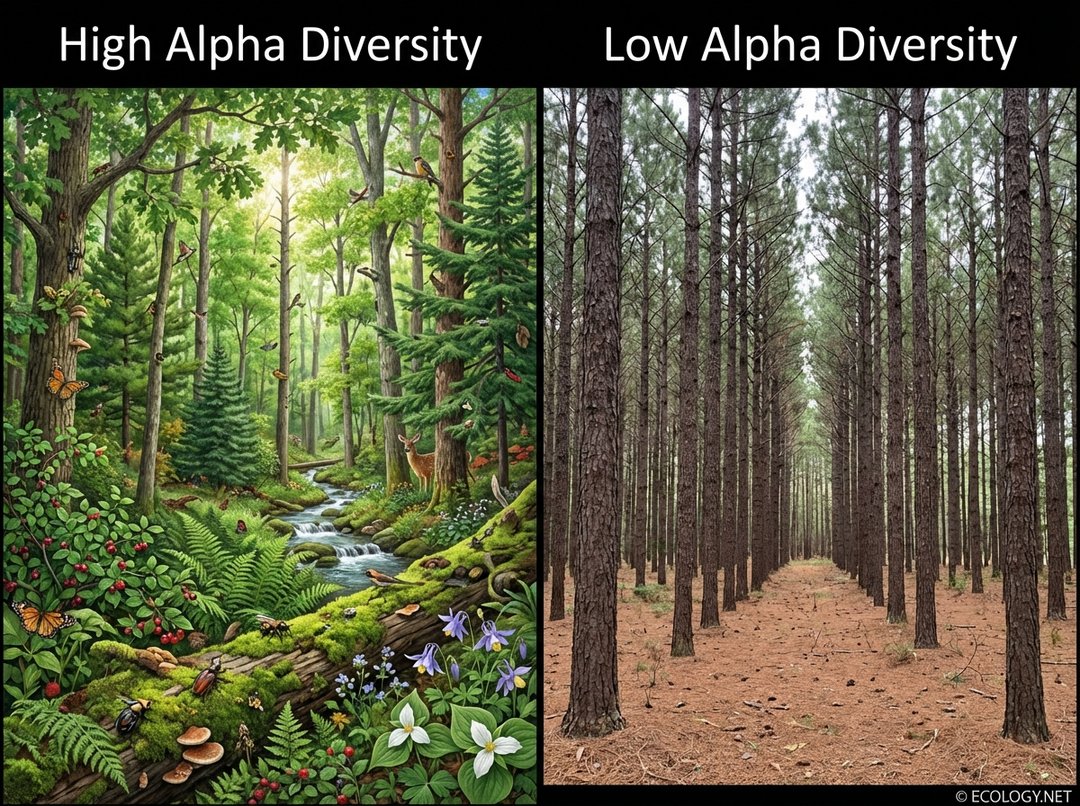
Imagine stepping into a forest. What do you see? Towering trees, delicate wildflowers, buzzing insects, and perhaps a scurrying mammal. Now, imagine another forest, one where only a few types of trees grow, and the ground is bare. The difference you perceive, the richness and variety of life in that immediate location, is at the heart of a fundamental ecological concept: alpha diversity.
Biodiversity, the vast tapestry of life on Earth, is often discussed at a global scale. However, to truly understand and protect it, ecologists break it down into more manageable components. Alpha diversity focuses on the diversity within a particular area or ecological community. It is the measure of species variety within a specific habitat, a pond, a forest patch, or even a single garden. It tells us how many different types of species live together in one place and how evenly distributed those species are.
The Two Pillars of Alpha Diversity: Richness and Evenness
Alpha diversity is not just a simple count. It is a nuanced concept built upon two crucial components: species richness and species evenness.
- Species Richness: This is perhaps the most intuitive aspect. Species richness refers to the total number of different species present in a given community. If you count 20 different types of birds in your backyard, your backyard has a bird species richness of 20. A coral reef, with its hundreds of fish species, boasts incredibly high species richness.
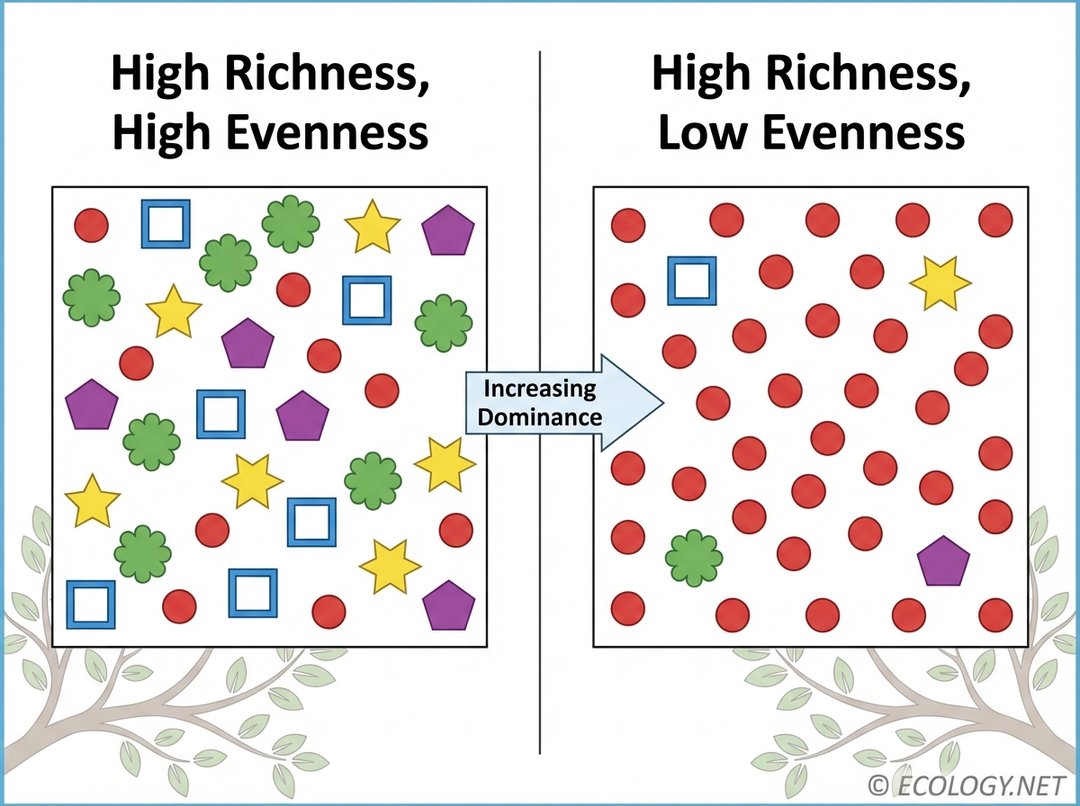
- Species Evenness: While richness tells us *how many* different species there are, evenness tells us *how many individuals* of each species there are. A community with high evenness has a relatively similar number of individuals for each species. Conversely, a community with low evenness is dominated by one or a few species, with others being rare.
Consider two hypothetical meadows. Both have 10 different species of wildflowers (high richness). In the first meadow, you find roughly equal numbers of each of the 10 species. This meadow has high evenness. In the second meadow, 90% of the flowers belong to just one species, while the other nine species are represented by only a few individuals. This meadow has low evenness. Even though both have the same richness, the first meadow is considered to have higher alpha diversity because its species are more evenly distributed.
Why Does Alpha Diversity Matter?
High alpha diversity is not merely an aesthetic preference for a vibrant ecosystem. It is a cornerstone of ecological health and resilience, providing numerous benefits:
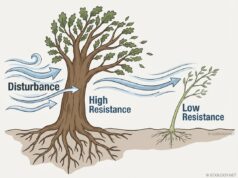
- Ecosystem Stability and Resilience: Diverse communities are often more stable and better able to withstand disturbances like disease outbreaks, climate fluctuations, or invasive species. If one species is lost or declines, others can often step in to fill its ecological role, preventing a complete collapse of the system. Think of a diverse forest: if a pest targets one tree species, many others remain unaffected, maintaining the forest’s structure and function.
- Enhanced Ecosystem Services: Diverse communities provide a wider array of essential services that benefit humans. These include pollination of crops, purification of water and air, decomposition of waste, nutrient cycling, and regulation of climate. For example, a diverse soil microbial community is crucial for healthy plant growth and nutrient availability.
- Increased Productivity: In many cases, diverse plant communities can capture more resources and produce more biomass than monocultures. Different species often have complementary traits, utilizing resources at different times or depths, leading to more efficient overall resource use.
- Robust Food Webs: A greater variety of species means more complex and resilient food webs. If a predator’s primary prey declines, it might have alternative food sources in a diverse ecosystem, preventing its own population crash and cascading effects throughout the food web.
- Genetic Resources: Each species represents a unique repository of genetic information. High alpha diversity ensures a broader genetic library, which can be vital for developing new medicines, improving crop varieties, or adapting to future environmental changes.
Measuring Alpha Diversity: Beyond Simple Counts
While species richness is a straightforward count, incorporating evenness requires more sophisticated tools. Ecologists use various diversity indices to quantify alpha diversity, the most common being the Shannon index and the Simpson index. These indices take into account both the number of species and their relative abundances, providing a single numerical value that reflects the overall diversity of a community. A higher index value generally indicates greater alpha diversity. These mathematical tools allow scientists to compare diversity across different sites or track changes in diversity over time.
Factors Shaping Local Diversity
Many factors influence the alpha diversity of a particular location:
- Habitat Complexity: More complex habitats, with a greater variety of microclimates, soil types, and structural features (like different layers of vegetation), tend to support higher alpha diversity. A rainforest, with its multiple canopy layers, understory, and forest floor, offers far more niches than a uniform grassland.
- Resource Availability: Moderate levels of resources often lead to higher diversity. Too few resources can limit the number of species, while an overabundance of one resource might allow a few dominant species to outcompete others.
- Disturbance Regimes: Intermediate levels of disturbance, such as occasional fires or floods, can prevent competitive exclusion by dominant species, creating opportunities for a wider range of species to thrive. Too frequent or too severe disturbances, however, can reduce diversity.
- Competition and Predation: Interactions between species, such as competition for resources or predation, can either reduce or enhance diversity. Predators, for instance, can sometimes increase diversity by controlling the populations of dominant herbivores, allowing less competitive plant species to flourish.
- Human Impact: Activities like habitat destruction, pollution, introduction of invasive species, and climate change are major drivers of alpha diversity loss globally. Conversely, conservation efforts and habitat restoration can help to increase it.
Alpha Diversity in the Grand Scheme: Beta and Gamma Diversity
Alpha diversity is just one piece of the biodiversity puzzle. To fully appreciate the complexity of life, it is essential to understand how it relates to other scales of diversity:
- Beta Diversity: This measures the difference in species composition between two or more different communities or habitats within a region. If you compare the species in a forest patch to those in an adjacent meadow, the unique species found in each habitat contribute to beta diversity. High beta diversity means that different habitats in a region support very different sets of species.
- Gamma Diversity: This refers to the total species diversity across a larger geographical region or landscape, encompassing multiple ecosystems and communities. It is essentially the sum of alpha diversity from all local communities and the beta diversity between them.
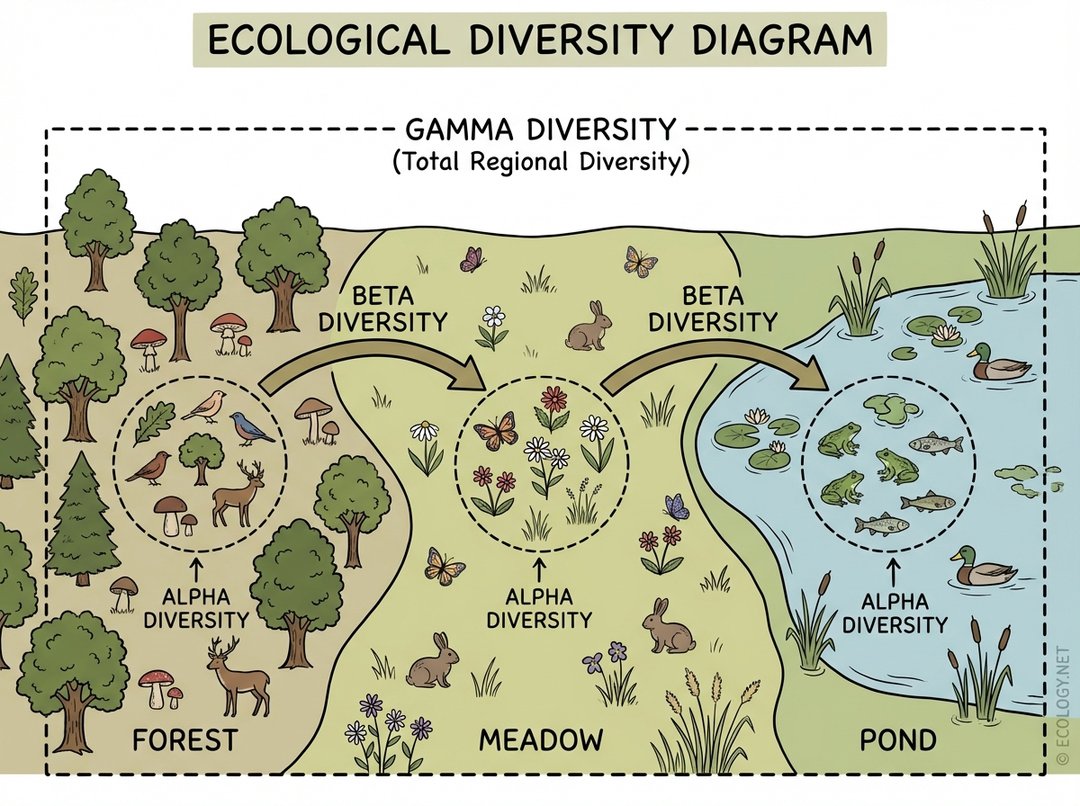
Understanding these three levels allows ecologists to assess biodiversity at various scales, from the local pond to an entire continent. For example, a region might have low alpha diversity in each individual pond, but high beta diversity if each pond has a unique set of species, leading to high gamma diversity overall.
Conservation and the Future of Alpha Diversity
The decline in alpha diversity is a critical concern for conservationists. When a local community loses species, its resilience weakens, and its ability to provide essential services diminishes. Monitoring alpha diversity is crucial for:
- Identifying Hotspots: Pinpointing areas with exceptionally high alpha diversity that require protection.
- Detecting Threats: Recognizing declines in local diversity due to pollution, habitat loss, or climate change.
- Evaluating Conservation Efforts: Assessing the success of restoration projects or protected areas in maintaining or increasing local species richness and evenness.
Efforts to conserve alpha diversity often involve protecting existing habitats, restoring degraded areas, controlling invasive species, and promoting sustainable land management practices. Every effort to maintain a rich and even distribution of species in a local community contributes to the broader health of our planet.
Conclusion: The Intrinsic Value of Local Life
Alpha diversity is far more than an academic concept. It is the vibrant pulse of life within every forest, every meadow, every stream, and every patch of soil. It represents the intricate web of interactions that sustain ecosystems and provide the very foundation for human well-being. By appreciating and protecting the richness and evenness of species in our immediate surroundings, we contribute to the stability and beauty of the natural world, ensuring a healthier and more resilient planet for all. The next time you observe a local ecosystem, take a moment to consider its alpha diversity, and recognize the profound value in its unique tapestry of life.