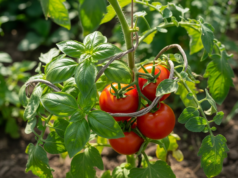
Unlocking the Earth’s Potential: A Deep Dive into Soil Enrichment
Beneath our feet lies a world teeming with life and potential: the soil. Far from being mere dirt, healthy soil is a complex, living ecosystem, the very foundation of vibrant plant life and robust ecosystems. Yet, years of conventional practices can deplete this vital resource, leaving it compacted, nutrient-poor, and struggling. This is where the art and science of soil enrichment come into play. It is the deliberate process of improving soil health, fertility, and structure, transforming barren ground into a thriving haven for growth.
Understanding soil enrichment is not just for farmers or professional gardeners; it is a fundamental concept for anyone who cares about the environment, food security, or simply wants to cultivate a flourishing backyard. By embracing these practices, we can unlock the earth’s inherent potential, fostering healthier plants, conserving water, and creating more resilient landscapes.
The Living Heart of Your Garden: What is Healthy Soil?
Before we enrich, we must understand what we are aiming for. Healthy soil is a harmonious blend of several key components:
- Mineral Particles: The bedrock of soil, comprising sand, silt, and clay, which determine its texture and water retention capabilities.
- Organic Matter: Decomposed plant and animal material, the “black gold” that provides nutrients, improves structure, and feeds soil organisms.
- Water: Essential for nutrient transport and plant hydration, held within the soil’s pores.
- Air: Crucial for root respiration and the activity of beneficial microorganisms.
- Living Organisms: An astonishing diversity of bacteria, fungi, protozoa, nematodes, and larger creatures like earthworms, all working in concert to break down organic matter, cycle nutrients, and create soil structure.
When these elements are in balance, soil becomes a powerhouse of productivity. It drains well, retains moisture, resists erosion, and provides a steady supply of nutrients to plants. Conversely, depleted soil struggles to perform these vital functions, leading to weak plants and environmental challenges.
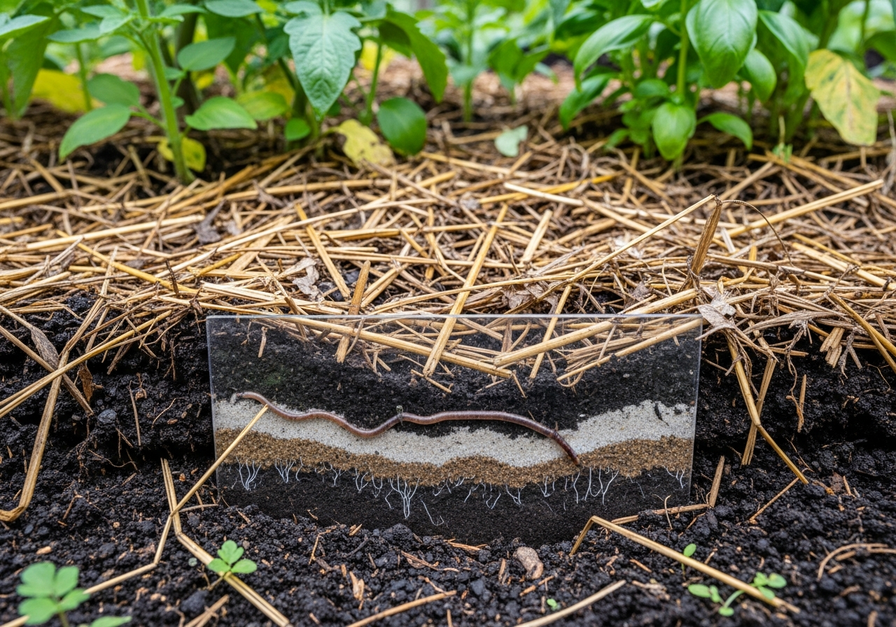
Imagine peering into a thriving garden bed, where every element works in perfect synergy to support life. This visual captures the core elements of soil enrichment: structural integrity, biological diversity, and the role of organic matter.
Why Soil Enrichment Matters: Beyond Just Bigger Plants
The benefits of enriching soil extend far beyond simply growing bigger tomatoes. It is a holistic approach that impacts the entire ecosystem:
- Enhanced Plant Health and Yield: Nutrient-rich soil supports stronger root systems, making plants more resilient to pests, diseases, and environmental stresses. This translates to more abundant and healthier harvests.
- Improved Water Management: Organic matter acts like a sponge, increasing the soil’s capacity to absorb and retain water. This reduces the need for irrigation and minimizes runoff, preventing erosion and conserving precious water resources.
- Carbon Sequestration: Healthy soil, rich in organic matter, acts as a significant carbon sink, drawing carbon dioxide from the atmosphere and storing it, thereby playing a crucial role in mitigating climate change.
- Increased Biodiversity: A vibrant soil ecosystem supports a diverse array of microorganisms and invertebrates, contributing to overall ecological health both above and below ground.
- Reduced Need for Chemical Inputs: As soil health improves, its natural fertility increases, lessening the reliance on synthetic fertilizers and pesticides, which can harm beneficial organisms and pollute waterways.
Foundational Techniques for Soil Enrichment
Embarking on a journey of soil enrichment can begin with several accessible and highly effective practices.
The Magic of Compost: Nature’s Ultimate Recycler
Compost is arguably the most powerful tool in the soil enricher’s arsenal. It is decomposed organic matter, a dark, crumbly material teeming with beneficial microbes. Adding compost to soil is like giving it a multi-vitamin and a probiotic all at once.
- How it Works: Compost introduces a wealth of organic matter, improving soil structure by binding mineral particles into stable aggregates. This creates pore spaces for air and water, while also providing a slow-release source of essential nutrients.
- Benefits:
- Boosts nutrient availability.
- Enhances water retention in sandy soils and improves drainage in clay soils.
- Suppresses plant diseases by fostering a healthy microbial community.
- Buffers soil pH, making nutrients more accessible to plants.
- Practical Application: Incorporate a 1 to 3 inch layer of finished compost into the top few inches of your garden beds annually, or use it as a top dressing around existing plants.
Cover Cropping: The Living Blanket for Your Soil
Cover crops are plants grown specifically to benefit the soil, rather than for harvest. They are often planted during fallow periods, between main cash crops, or in garden beds during the off-season.
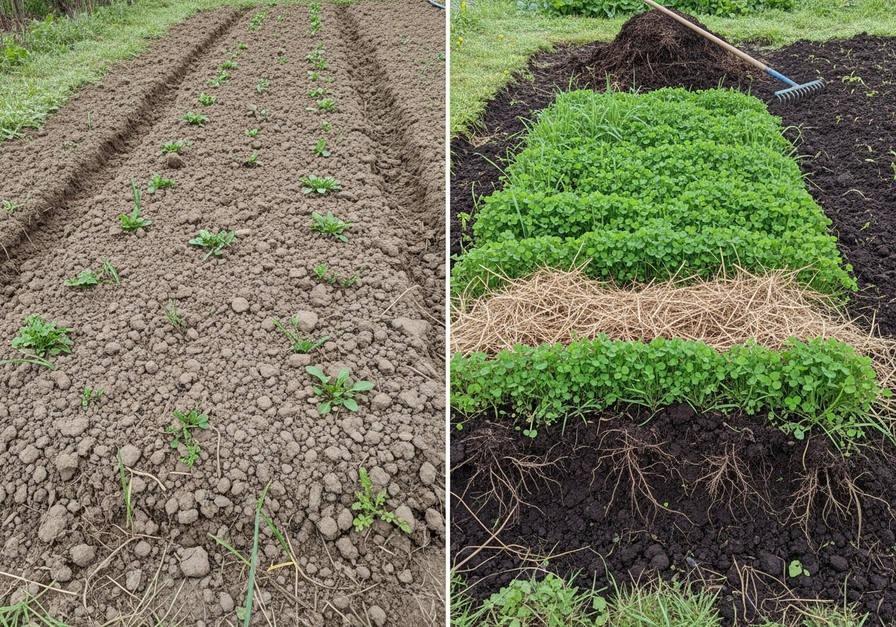
Observe the dramatic difference cover crops can make. By contrasting bare and cover-cured soil in one frame, this illustration visually demonstrates the benefits of cover cropping: soil protection, organic matter addition, and improved structure.
- How it Works: Cover crops protect the soil from erosion by wind and rain, suppress weeds, and add organic matter when they are tilled into the soil or left to decompose on the surface. Leguminous cover crops, like clover or vetch, also “fix” atmospheric nitrogen, making it available to subsequent crops.
- Benefits:
- Prevents soil erosion and nutrient leaching.
- Adds significant organic matter and improves soil structure.
- Suppresses weeds naturally.
- Some varieties, like legumes, add nitrogen to the soil.
- Breaks up compacted soil with their root systems.
- Practical Application: Choose cover crops appropriate for your climate and growing season, such as rye, oats, clover, or vetch. Sow them after your main harvest and either cut them down and leave them as mulch or lightly incorporate them before planting your next crop.
Mulching: The Protective Layer
Mulch is any material placed on the soil surface to cover and protect it. This simple practice offers a multitude of benefits for soil health.
- How it Works: Mulch acts as a barrier, reducing water evaporation, moderating soil temperature, and suppressing weed growth. As organic mulches decompose, they slowly contribute to the soil’s organic matter content.
- Benefits:
- Conserves soil moisture, reducing watering needs.
- Regulates soil temperature, protecting roots from extreme heat and cold.
- Suppresses weeds, minimizing competition for nutrients and water.
- Adds organic matter to the soil over time.
- Prevents soil compaction and erosion from rainfall.
- Practical Application: Apply a 2 to 4 inch layer of organic mulch, such as straw, wood chips, shredded leaves, or grass clippings, around plants and over bare soil. Keep mulch a few inches away from plant stems to prevent rot.
No-Till or Minimum Tillage: Disturbing the Peace
Traditional tilling, while seemingly beneficial for breaking up soil, can actually disrupt the delicate soil structure and harm the intricate web of life beneath the surface. No-till or minimum tillage practices aim to minimize this disturbance.
- How it Works: Instead of turning over the soil, plants are directly sown into the previous season’s residue or a thin layer of compost. This preserves soil aggregates, fungal networks, and the homes of beneficial organisms.
- Benefits:
- Maintains soil structure and prevents compaction.
- Enhances soil organic matter accumulation.
- Reduces erosion and runoff.
- Supports a thriving soil food web.
- Decreases labor and fuel costs.
- Practical Application: Transitioning to no-till involves building up soil health over time with compost and mulch. Use a broadfork to aerate compacted areas without inverting the soil, and plant directly into existing beds.
Advanced Techniques for the Dedicated Soil Steward
For those looking to delve deeper into soil enrichment, several advanced techniques offer specialized benefits and can further accelerate the journey to truly exceptional soil.
Vermicomposting: The Power of Worms
Vermicomposting is a highly efficient method of composting using specific species of earthworms, typically red wigglers, to break down organic waste into nutrient-rich worm castings.
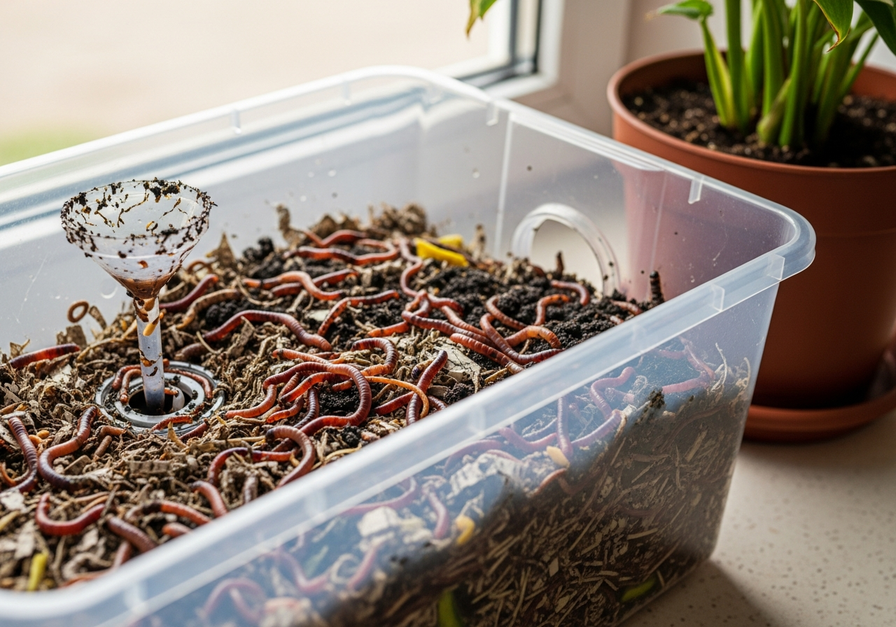
For those seeking a more hands-on, indoor approach, this image showcases vermicomposting as a practical, small-scale soil enrichment technique, illustrating the role of worms in nutrient cycling.
- How it Works: Worms consume organic materials, digest them, and excrete “castings” which are rich in microbial activity, enzymes, and plant-available nutrients. These castings are a potent soil amendment.
- Benefits:
- Produces highly fertile, nutrient-dense compost.
- Can process kitchen scraps year-round, reducing waste.
- Worm castings improve soil structure, aeration, and water retention.
- Contains beneficial microbes that enhance plant growth and disease resistance.
- Practical Application: Set up a vermicompost bin indoors or outdoors in a shaded area. Feed worms a variety of kitchen scraps, shredded paper, and cardboard. Harvest the castings periodically and mix them into potting soil or garden beds.
Biochar: The Ancient Soil Supercharger
Biochar is a charcoal-like substance made by heating biomass in a low-oxygen environment, a process called pyrolysis. It has been used for centuries by indigenous cultures to create incredibly fertile soils.
- How it Works: Biochar is highly porous, providing an ideal habitat for beneficial microbes and improving water and nutrient retention. Its stable carbon structure resists decomposition, offering long-term soil benefits.
- Benefits:
- Significantly improves soil structure and aeration.
- Increases water and nutrient holding capacity.
- Provides a long-term home for beneficial microorganisms.
- Can help sequester carbon in the soil for centuries.
- May reduce the need for fertilizers.
- Practical Application: Biochar should ideally be “charged” with nutrients and microbes before adding to soil, by mixing it with compost or a liquid fertilizer. Incorporate it into garden beds at a rate of 5 to 10 percent by volume.
Mycorrhizal Fungi: The Underground Network
Mycorrhizal fungi form a symbiotic relationship with plant roots, extending the plant’s root system through a vast underground network of hyphae.
- How it Works: The fungi receive sugars from the plant, and in return, they help the plant access water and nutrients, particularly phosphorus, that would otherwise be unavailable.
- Benefits:
- Enhances nutrient uptake, especially phosphorus.
- Improves drought resistance.
- Increases plant vigor and yield.
- Protects plants from certain soil-borne diseases.
- Contributes to soil aggregation and structure.
- Practical Application: Many healthy soils naturally contain mycorrhizal fungi. However, in disturbed or degraded soils, inoculants containing mycorrhizal spores can be applied when planting seeds or transplanting seedlings.
Soil Testing and Targeted Amendments: Precision Enrichment
While general enrichment practices are always beneficial, a soil test provides a precise roadmap for addressing specific deficiencies or imbalances.
- How it Works: A soil test analyzes nutrient levels, pH, and sometimes organic matter content. Based on the results, specific amendments can be applied to correct imbalances.
- Benefits:
- Prevents over or under application of nutrients.
- Optimizes nutrient availability for specific plants.
- Saves money by only applying what is needed.
- Ensures long-term soil health and productivity.
- Practical Application: Collect soil samples from different areas of your garden and send them to a local extension office or private lab. Follow their recommendations for applying amendments like lime (to raise pH), sulfur (to lower pH), or specific mineral fertilizers.
The Enduring Legacy of Enriched Soil
Soil enrichment is not a one-time task but an ongoing commitment to nurturing the earth. Each compost pile turned, each cover crop sown, and each layer of mulch applied contributes to a healthier, more resilient ecosystem. The rewards are manifold: thriving gardens, reduced environmental impact, and a deeper connection to the natural world.
By understanding and implementing these practices, from the basic addition of compost to advanced techniques like vermicomposting and biochar, we become stewards of the soil. We empower the earth to do what it does best: sustain life, nourish plants, and create beauty. Embrace the journey of soil enrichment, and witness the remarkable transformation it brings to your garden and beyond.