Agroforestry: Weaving Trees into the Fabric of Sustainable Agriculture
Imagine a farm where towering trees stand alongside vibrant crops, where livestock graze peacefully under a leafy canopy, and where every element works in concert to create a thriving ecosystem. This is not a scene from a forgotten past, but a vision for the future of food production, brought to life by the ancient yet innovative practice of agroforestry. As the world grapples with climate change, soil degradation, and the need for resilient food systems, agroforestry emerges as a powerful solution, blending the best of agriculture and forestry to cultivate both food and ecological health.
What is Agroforestry? A Symbiotic Partnership
At its heart, agroforestry is the intentional integration of trees and shrubs with crop and/or livestock production systems. Unlike conventional agriculture, which often separates these components, agroforestry embraces their synergistic relationship. It is a dynamic, ecologically based natural resource management system that diversifies and sustains production to increase social, economic, and environmental benefits for land users at all levels.
Think of it as moving beyond the simple, singular focus of a monoculture field. Instead of vast stretches of a single crop, agroforestry introduces vertical layers and biological diversity, creating a more complex and robust farm landscape.
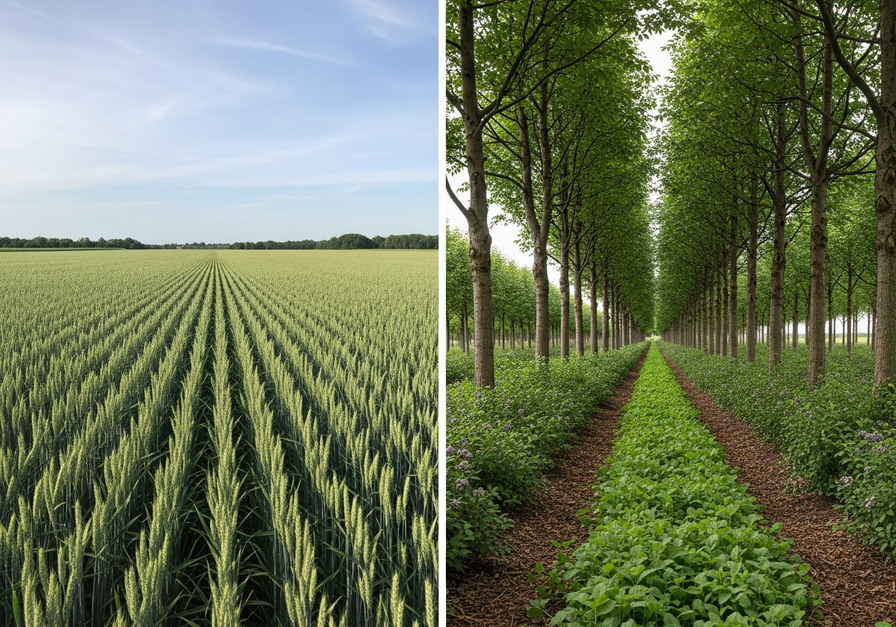
This image visually contrasts monoculture with a multilayer agroforestry system, illustrating the core idea of diversity and the synergistic interactions between trees and crops described in the article.
Why Agroforestry Matters: Cultivating Resilience and Abundance
The benefits of integrating trees into farming systems are profound and far-reaching, addressing some of the most pressing challenges facing our planet and its inhabitants.
- Environmental Stewardship: Trees are powerful allies in combating climate change. They sequester carbon dioxide from the atmosphere, improve soil health by adding organic matter and preventing erosion, and enhance biodiversity by providing habitat for pollinators, beneficial insects, and wildlife. Their deep root systems also improve water infiltration and reduce runoff, leading to cleaner waterways.
- Economic Diversification: Farmers can generate multiple income streams from timber, nuts, fruits, fodder, and other tree products, alongside traditional crops and livestock. This diversification reduces financial risk and can lead to greater economic stability.
- Increased Productivity and Resource Efficiency: Trees can create a more favorable microclimate for crops and livestock, offering shade, reducing wind stress, and improving water use efficiency. They can also tap into deeper nutrient reserves in the soil, making them available to other plants.
- Social Well-being: Agroforestry systems can enhance food security, provide local employment, and create more aesthetically pleasing and healthier working environments for farmers and communities.
Key Agroforestry Systems: Examples in Practice
Agroforestry is not a one-size-fits-all solution. It encompasses a variety of distinct practices, each tailored to specific landscapes, climates, and production goals. Here are some of the most common and impactful systems:
Silvopasture: Trees and Livestock in Harmony
Silvopasture integrates trees, forage, and livestock on the same land. This system allows animals to graze among trees, which provide shade, shelter, and often additional fodder. The trees, in turn, can produce timber, nuts, or fruits, adding another layer of income for the farmer.
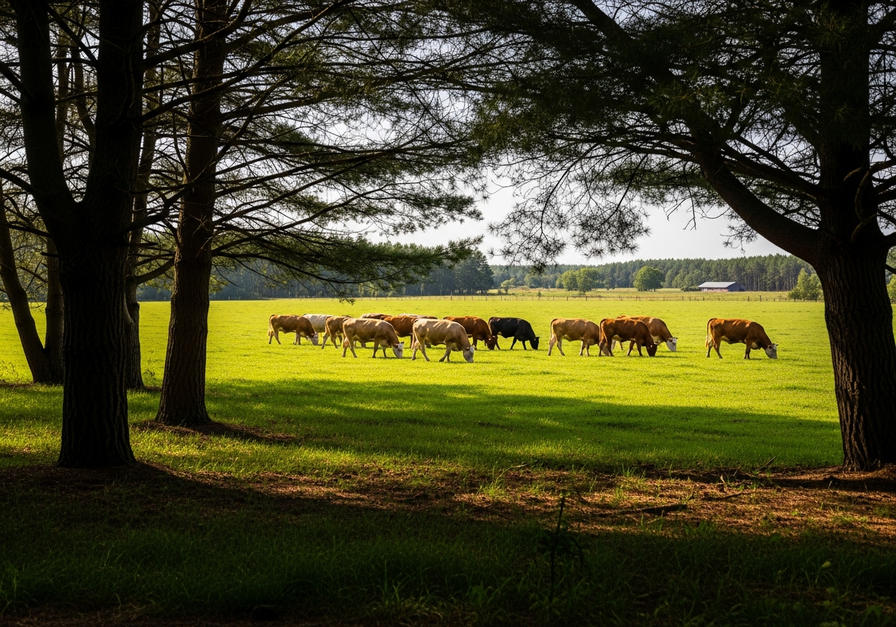
This illustration exemplifies silvopasture, one of the key agroforestry systems highlighted in the article, showing how trees provide shade, improve pasture quality, and create a source of additional income.
Example: In the southeastern United States, cattle often graze in pine plantations. The trees provide valuable timber, while the filtered sunlight allows for productive forage growth. The cattle benefit from shade during hot summers, reducing heat stress and improving weight gain. Similarly, sheep or chickens can be integrated into fruit orchards, helping with pest control and fertilization while benefiting from the trees’ protection.
Alley Cropping and Intercropping: Cultivating Between the Rows
Alley cropping involves planting rows of trees or shrubs with alleys in between where agricultural crops are cultivated. The trees can be fruit trees, nut trees, or timber species, providing a long-term yield while the annual crops offer short-term income.
Example: A farmer might plant rows of black walnut trees, known for their valuable timber and nuts, with wide alleys in between for growing wheat, corn, or soybeans. The trees can improve the microclimate for the crops, and their deep roots can access nutrients unavailable to the shallower-rooted annuals. Another variation involves planting rows of fruit trees like apples or peaches with vegetables or cover crops grown in the inter-rows.
Windbreaks and Shelterbelts: Natural Protection for Fields
Windbreaks are rows of trees and shrubs planted to protect agricultural fields, homes, or livestock from wind and erosion. They reduce wind speed, which can prevent soil loss, decrease water evaporation from crops, and provide a more stable environment for plant growth.
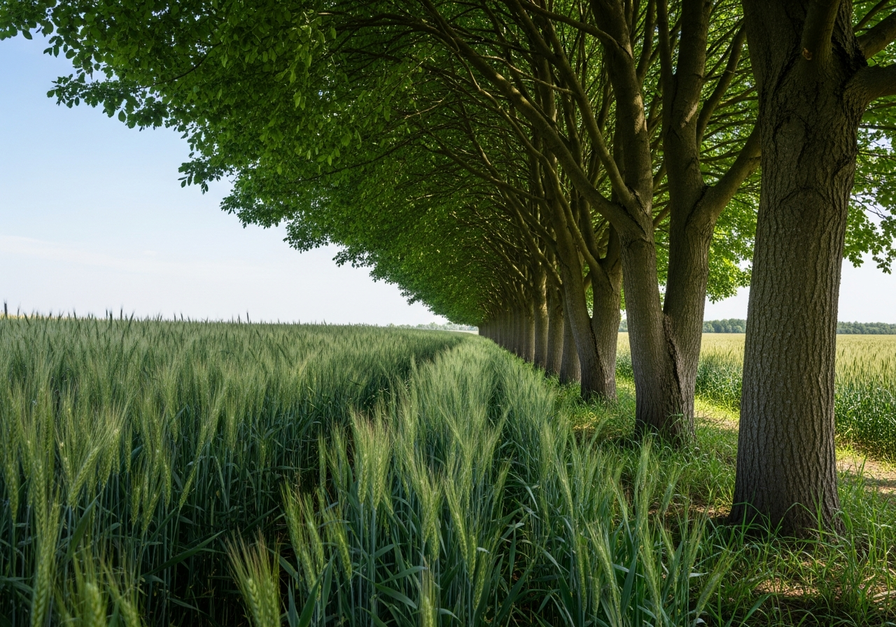
This image demonstrates one of the practical benefits of agroforestry—windbreaks—which reduce soil erosion and improve crop yields, a point emphasized in the article.
Example: A dense line of black locust or cedar trees planted along the northern edge of a field can significantly reduce wind damage to sensitive crops like corn or vegetables. Beyond protection, these windbreaks also provide habitat for beneficial insects and birds, and can yield products like firewood or berries.
Riparian Forest Buffers: Guardians of Waterways
Riparian buffers are strips of trees, shrubs, and grasses planted along streams, rivers, and other water bodies. Their primary role is to filter pollutants from agricultural runoff, stabilize stream banks, and provide shade to keep water temperatures cool, which is vital for aquatic life.
Example: Planting native willows, alders, and sedges along a farm stream can prevent soil erosion into the water, absorb excess nutrients like nitrogen and phosphorus from fertilizer runoff, and create a healthy habitat corridor for wildlife.
Forest Farming: Cultivating Under the Canopy
Forest farming involves cultivating high-value specialty crops under the canopy of an existing or newly planted forest. This system leverages the natural forest environment to produce shade-loving plants.
Example: Growing medicinal plants like ginseng or goldenseal, cultivating gourmet mushrooms such as shiitake on logs, or producing maple syrup from sugar maples are all forms of forest farming. These practices provide income from non-timber forest products while maintaining the forest ecosystem.
The Science Behind the Synergy: Deeper Ecological Insights
The success of agroforestry is rooted in complex ecological interactions that create a more robust and productive system than monocultures. Understanding these mechanisms is key to optimizing agroforestry designs.
Ecological Interactions and Resource Partitioning
- Nutrient Cycling: Trees, with their deep root systems, can access nutrients and water from deeper soil layers that are unavailable to shallow-rooted annual crops. They bring these nutrients to the surface through leaf litter decomposition, enriching the topsoil for other plants. Leguminous trees can also fix atmospheric nitrogen, naturally fertilizing the soil.
- Water Management: Tree canopies reduce the impact of rainfall, preventing soil erosion. Their roots improve soil structure, enhancing water infiltration and reducing runoff. In dry climates, trees can reduce evaporation from the soil surface and provide shade, conserving moisture for crops.
- Microclimate Modification: Trees moderate temperature extremes, reduce wind speed, and increase humidity within the system. This creates a more stable and favorable growing environment for crops and a more comfortable environment for livestock, extending growing seasons and reducing stress.
- Pest and Disease Regulation: Increased biodiversity in agroforestry systems often leads to a greater abundance of beneficial insects and birds that prey on agricultural pests. The structural complexity can also disrupt pest life cycles and reduce the spread of diseases.
Economic Resilience and Long-Term Investment
Beyond immediate yields, agroforestry offers significant long-term economic advantages:
- Risk Diversification: By producing multiple products, farmers are less vulnerable to market fluctuations or crop failures in any single commodity. If the price of wheat drops, income from nuts or timber can help stabilize the farm’s finances.
- Value-Added Products: Many tree products, such as specialty timbers, fruits, or medicinal herbs, command higher prices than staple crops, offering opportunities for increased profitability.
- Long-Term Asset Building: Trees represent a living capital investment that appreciates over time. A well-managed timber stand can provide a significant financial return decades down the line, acting as a retirement fund or a legacy for future generations.
- Reduced External Inputs: Improved soil health, natural pest control, and nutrient cycling can reduce the need for synthetic fertilizers and pesticides, lowering operational costs.
Implementing Agroforestry: Practical Considerations for Farmers
Adopting agroforestry requires careful planning and a long-term perspective. It is a commitment that yields increasing returns over time.
- Site Assessment and Planning: Understand the specific characteristics of the land, including soil type, topography, climate, and existing vegetation. Define clear objectives for the system, whether it is timber production, fruit, fodder, or environmental services.
- Species Selection: Choose tree and crop species that are well-suited to the local environment and are compatible with each other. Consider growth rates, mature size, light requirements, and potential allelopathic effects. Prioritize native species where appropriate.
- Design and Layout: Determine the optimal spacing and arrangement of trees and crops to maximize light penetration, minimize competition, and facilitate farm operations. Consider factors like equipment access and harvesting methods.
- Management and Maintenance: Agroforestry systems require ongoing management, including pruning trees for timber or fruit production, managing understory vegetation, and monitoring for pests and diseases. Integrated pest management and organic practices are often favored.
- Patience and Persistence: Trees take time to grow and mature. The full benefits of an agroforestry system may not be realized for several years or even decades. This requires a long-term vision and commitment from the land manager.
The Future is Rooted in Agroforestry
Agroforestry represents a powerful paradigm shift in how we view and manage agricultural landscapes. It moves beyond the traditional separation of fields and forests, recognizing the profound benefits of their integration. By embracing the wisdom of nature and the science of ecology, agroforestry offers a pathway to more productive, resilient, and environmentally sound food systems. It is a testament to the idea that we can grow food, protect the environment, and build a more sustainable future, all on the same land.