Understanding Sustainability: A Blueprint for a Thriving Future
The concept of sustainability has become a cornerstone of modern thought, guiding our efforts to build a world where both humanity and nature can flourish indefinitely. Far from being a niche environmental term, sustainability is a holistic approach to living, designing, and interacting with our planet, recognizing the intricate connections between all systems. It is about meeting the needs of the present without compromising the ability of future generations to meet their own needs.
The Three Pillars of Sustainability: A Balanced Foundation
At its heart, sustainability is often understood through the lens of three interconnected pillars: environmental, social, and economic. These pillars are not separate entities but rather interdependent components that must be balanced for true, lasting sustainability to be achieved. Imagine them as three overlapping circles, with the sweet spot of sustainability residing in their intersection.
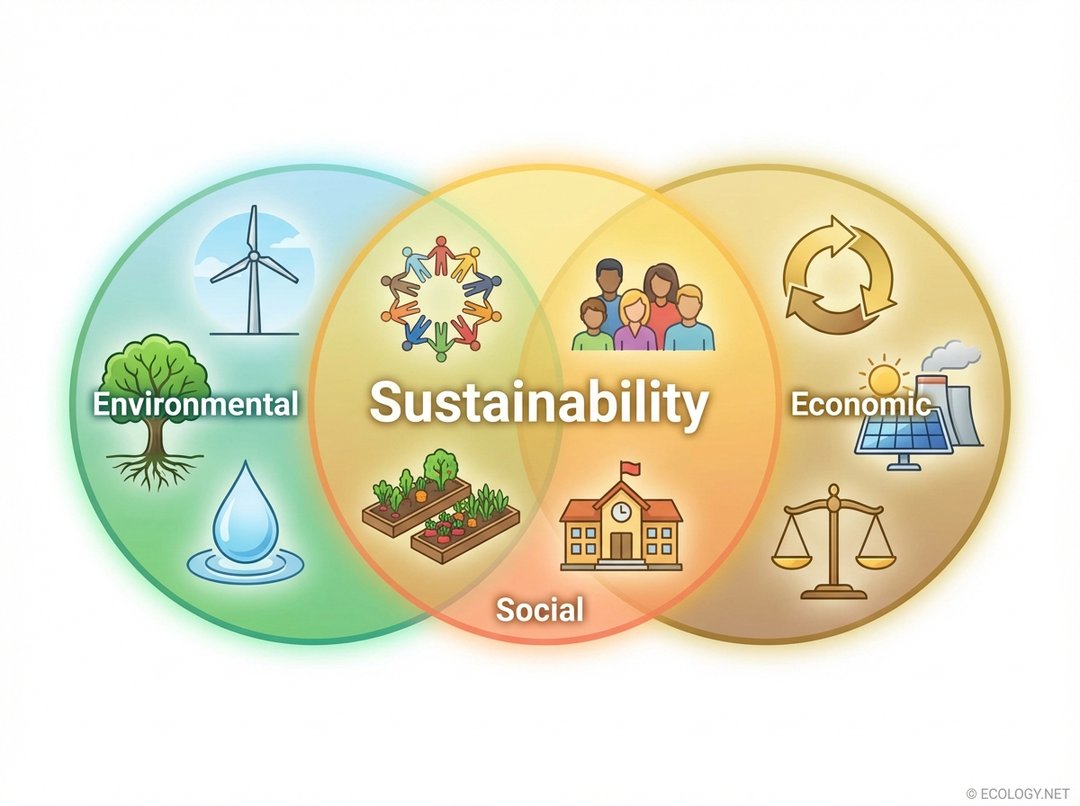
- Environmental Sustainability: Protecting Our Planet’s Life Support Systems
This pillar focuses on maintaining the integrity and resilience of Earth’s natural systems. It involves practices that minimize our impact on the environment, conserve natural resources, and protect biodiversity. Key aspects include:
- Reducing pollution (air, water, soil)
- Conserving water and energy
- Minimizing waste and promoting recycling
- Protecting ecosystems and wildlife habitats
- Combating climate change by reducing greenhouse gas emissions
Examples of environmental sustainability in action range from using renewable energy sources like solar and wind power to implementing sustainable forestry practices that ensure forests can regenerate.
- Social Sustainability: Fostering Equitable and Healthy Communities
Social sustainability centers on creating fair, inclusive, and healthy communities where all individuals have access to resources and opportunities. It addresses issues of human well-being, equity, and justice. Important elements include:
- Ensuring access to education and healthcare
- Promoting human rights and labor standards
- Reducing poverty and inequality
- Building strong, resilient communities
- Encouraging cultural diversity and participation
Consider initiatives that provide affordable housing, support local food systems, or ensure safe working conditions. These are all vital for building socially sustainable societies.
- Economic Sustainability: Building Resilient and Equitable Economies
This pillar is about creating economic systems that can support human well-being over the long term, without depleting natural capital or exacerbating social inequalities. It emphasizes efficiency, innovation, and responsible resource management. Core principles include:
- Promoting fair trade and ethical business practices
- Investing in green technologies and renewable energy
- Encouraging local economies and entrepreneurship
- Ensuring stable employment and living wages
- Transitioning to a circular economy model that minimizes waste
An economically sustainable business might prioritize local sourcing, invest in energy-efficient operations, and offer fair wages, demonstrating that profit and planetary health are not mutually exclusive.
True sustainability emerges when decisions consider the impacts across all three pillars, striving for solutions that benefit the environment, society, and the economy simultaneously.
The Limits of Our World: Understanding Carrying Capacity
A fundamental ecological principle underpinning sustainability is the concept of “carrying capacity.” This refers to the maximum population size of a biological species that can be sustained indefinitely by a given environment, given the available resources, without degrading that environment. Our planet, like any ecosystem, has its limits.
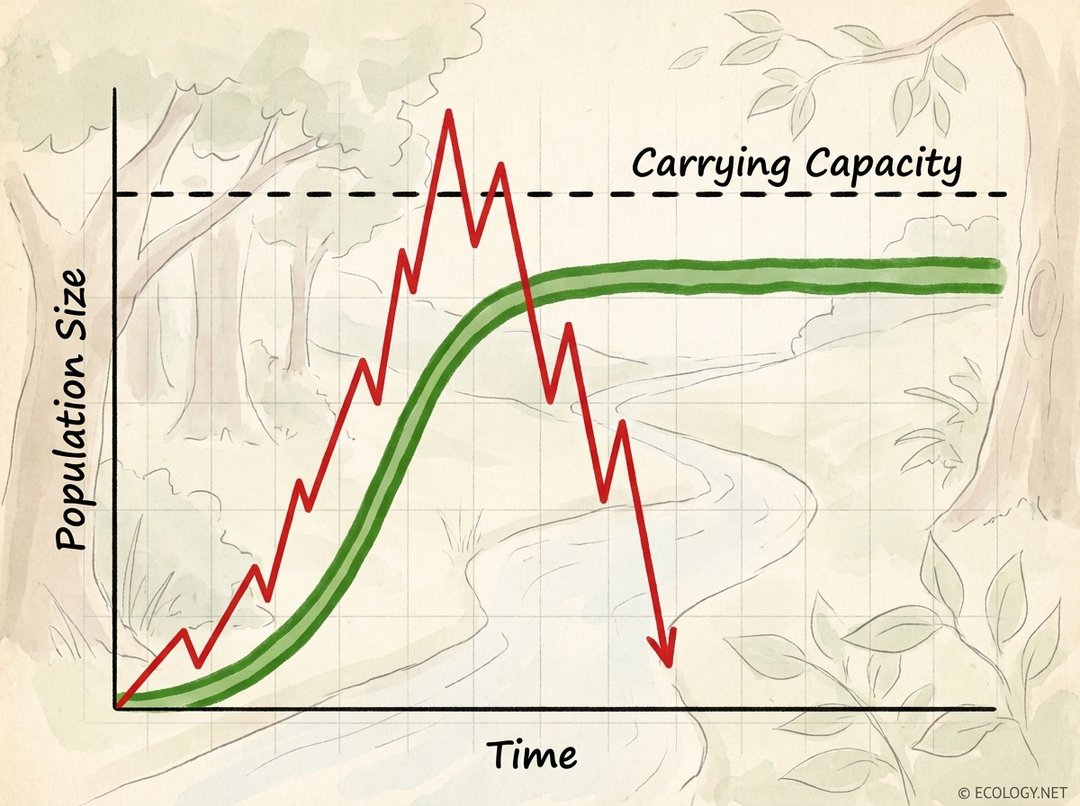
When a population, whether of deer in a forest or humans on Earth, exceeds its environment’s carrying capacity, the consequences can be severe. Resources like food, water, and clean air become scarce, leading to increased competition, environmental degradation, and ultimately, a decline in population. The red line in the diagram vividly illustrates this ecological overshoot and subsequent collapse. Understanding carrying capacity compels us to manage our consumption and population growth within the Earth’s regenerative capabilities, ensuring that we do not deplete the natural capital that sustains us.
Biodiversity: The Unsung Hero of Ecosystem Resilience
Beyond resource limits, the health and stability of our planet’s life support systems are profoundly linked to biodiversity. Biodiversity, or biological diversity, refers to the variety of life on Earth at all its levels, from genes to species to ecosystems. It is the intricate web of life that provides us with essential ecosystem services.
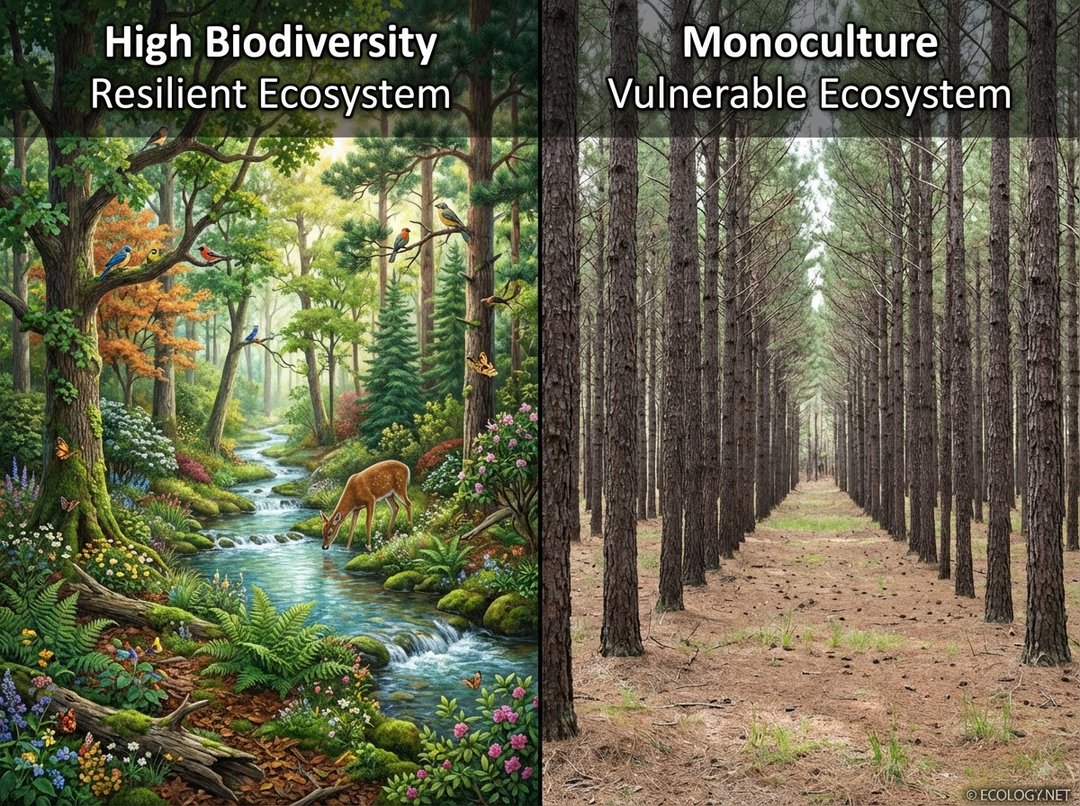
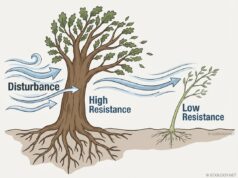
A diverse ecosystem, like the vibrant forest on the left, is inherently more resilient. It can better withstand disturbances such as disease outbreaks, climate shifts, or natural disasters because it has a wider array of species performing different roles. If one species is affected, others can often step in or adapt, maintaining the overall function of the ecosystem. For instance, a forest with many tree species is less likely to be wiped out by a single pest than a monoculture plantation.
Conversely, a monoculture, such as a vast field planted with a single crop or a forest with only one type of tree, is highly vulnerable. While seemingly efficient in the short term, it lacks the biological redundancy and complexity to cope with change. A single pest or disease can devastate the entire system, leading to significant economic losses and ecological instability. This stark contrast highlights why protecting and restoring biodiversity is not just an environmental ideal, but a practical necessity for long-term sustainability. It ensures the continued provision of clean air and water, fertile soil, pollination, and climate regulation, all services that underpin human civilization.
Practical Pathways to a Sustainable Future
The principles of sustainability are not abstract ideals; they are actionable frameworks guiding real-world solutions across various sectors.
- Renewable Energy Transition: Shifting from fossil fuels to sources like solar, wind, hydro, and geothermal power reduces greenhouse gas emissions, combats climate change, and creates new economic opportunities.
- Circular Economy: Moving beyond the traditional “take-make-dispose” model, a circular economy aims to keep resources in use for as long as possible, extract the maximum value from them while in use, then recover and regenerate products and materials at the end of each service life. This includes robust recycling, reuse, repair, and remanufacturing systems.
- Sustainable Agriculture: Practices such as organic farming, agroforestry, permaculture, and precision agriculture reduce reliance on synthetic pesticides and fertilizers, conserve soil health, protect water resources, and enhance biodiversity on farms. Supporting local food systems also reduces transportation emissions and strengthens communities.
- Green Building and Infrastructure: Designing and constructing buildings that are energy-efficient, use sustainable materials, minimize waste, and integrate natural systems (like green roofs) reduces environmental impact and creates healthier living spaces. Sustainable urban planning prioritizes public transport, green spaces, and walkable communities.
- Responsible Consumption and Production: This involves consumers making informed choices about the products they buy, supporting ethical businesses, and reducing their overall consumption. For businesses, it means designing products for durability, repairability, and recyclability, and ensuring ethical supply chains.
- Community Engagement and Education: Empowering individuals and communities through education about sustainable practices, fostering local initiatives, and promoting civic participation are crucial for driving widespread change.
Embracing the Journey Towards Sustainability
Sustainability is not a destination but an ongoing journey, a continuous process of learning, adapting, and innovating. It requires a fundamental shift in mindset, moving from short-term gains to long-term well-being, from individualistic pursuits to collective responsibility. While the challenges are significant, the opportunities for innovation, collaboration, and creating a more just and thriving world are even greater. By understanding its core principles, from the three pillars to carrying capacity and the vital role of biodiversity, individuals, communities, and nations can work together to build a truly sustainable future for all.