Unraveling the Tapestry: A Deep Dive into Human Ecology
Imagine a world where human societies are not just inhabitants of the Earth, but an inseparable thread woven into its very fabric. This is the fundamental premise of human ecology, a captivating field that explores the intricate, two-way relationship between people and their natural environments. It is a lens through which we can understand how our cultures, technologies, and economies shape the planet, and in turn, how the planet shapes us. Far from seeing humans as separate from nature, human ecology reveals us as integral, active participants in Earth’s grand ecosystems.
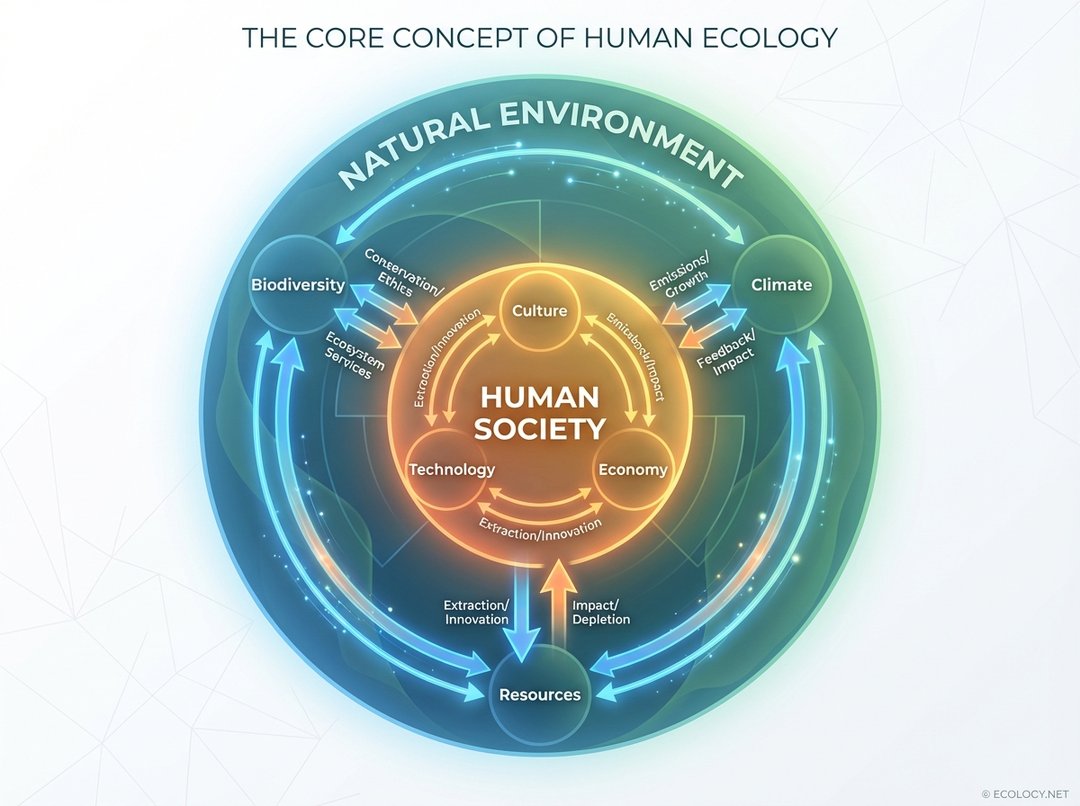
This image illustrates the foundational idea introduced in the article: that humans are an integral part of ecosystems, not separate from them, and profoundly shape and are shaped by their environment. It visually represents the complex, two-way relationship between human society and the natural world.
The Core Idea: Interconnectedness and Reciprocity
At its heart, human ecology is about interconnectedness. It recognizes that every human action, from building a city to planting a crop, has consequences for the natural world. Conversely, every environmental change, be it a shift in climate or a loss of biodiversity, profoundly impacts human societies. This is a relationship of constant feedback and adaptation, a dynamic dance between human ingenuity and natural processes.
Consider a simple example: a farming community. The farmers cultivate the land, altering the natural vegetation and soil composition. This is a human impact on the environment. In return, the land provides food, sustaining the community. But if the soil degrades due to unsustainable practices, or if climate patterns shift, the community’s ability to thrive is directly threatened. This illustrates the reciprocal nature of human-environment interactions, a cornerstone of human ecological thought.
Systems Thinking: Understanding the Whole Picture
One of the most powerful tools in human ecology is systems thinking. Instead of looking at isolated problems, human ecologists view societies and environments as complex systems where everything is linked. A change in one part of the system inevitably ripples through others.
Take a city, for instance. It is not merely a collection of buildings. It is a vibrant, intricate system comprising people, infrastructure, resource flows, economic activities, and waste generation.
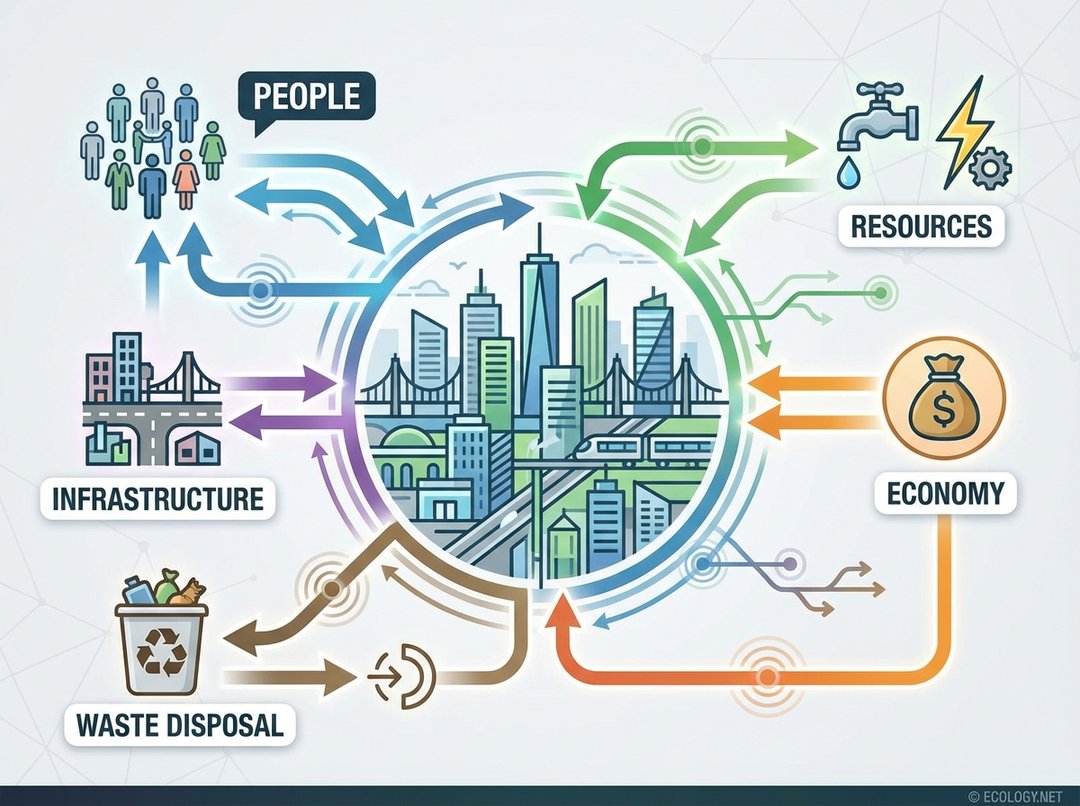
This image visually explains the “Systems Thinking” principle, using the article’s example of a city. It helps readers understand how different elements within an urban environment are interconnected and how changes in one part can affect the whole system, making the abstract concept more concrete.
If a city’s population grows rapidly, it places increased demand on water resources, energy supply, and waste disposal systems. This can lead to:
- Water scarcity: Over-extraction from local rivers or aquifers.
- Energy strain: Increased reliance on fossil fuels, contributing to air pollution.
- Waste management challenges: Landfills overflowing, leading to environmental contamination.
Each of these issues is not isolated but part of a larger, interconnected urban ecosystem. Understanding these linkages is crucial for designing sustainable urban environments.
The Role of Culture, Technology, and Economy
Human ecology delves deep into how human attributes shape our environmental interactions.
- Culture: Our beliefs, values, and traditions dictate how we perceive and interact with nature. Indigenous cultures, for example, often hold deep reverence for the land, fostering sustainable practices over generations. In contrast, cultures emphasizing rapid consumption might lead to resource depletion.
- Technology: A double-edged sword, technology can both solve environmental problems and create new ones.
- Economy: Economic systems, particularly those driven by growth and consumption, exert immense pressure on natural resources and ecosystems. The pursuit of profit can sometimes override environmental concerns, leading to unsustainable exploitation.
Technology’s Dual Impact: Innovation and Consequence
Technology is a particularly fascinating aspect of human ecology. From the invention of agriculture to the digital revolution, technological advancements have profoundly altered our relationship with the environment.
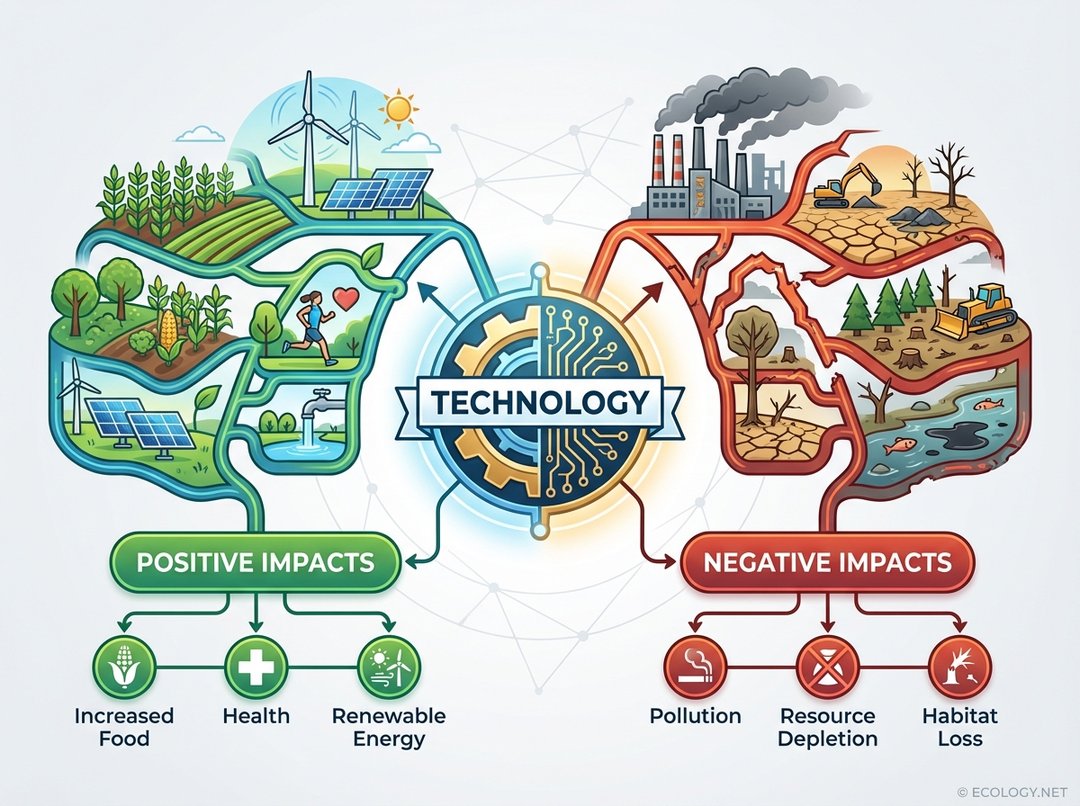
This image illustrates the “Role of Technology” section, visually explaining how technology can both solve problems and create new ones. It helps the reader grasp the complex and often contradictory effects of technological advancements on human-environment interactions.
Consider the following:
- Positive Impacts:
- Increased Food Production: Modern agricultural technologies, like improved irrigation and crop varieties, have fed billions.
- Health Advancements: Medical technologies have eradicated diseases and extended lifespans.
- Renewable Energy: Solar panels and wind turbines offer cleaner alternatives to fossil fuels.
- Negative Impacts:
- Pollution: Industrial processes release pollutants into air, water, and soil.
- Resource Depletion: Extraction technologies allow us to mine deeper and faster, depleting non-renewable resources.
- Habitat Loss: Infrastructure development and expansion often destroy natural habitats.
Human ecology encourages us to critically evaluate technology, not just for its immediate benefits, but for its long-term ecological footprint.
Adaptation and Resilience: Learning from the Past, Planning for the Future
Humans are incredibly adaptable creatures. Throughout history, societies have adapted to diverse environments, from arid deserts to icy tundras. This adaptation involves developing unique cultural practices, technologies, and social structures to thrive within environmental constraints.
However, our ability to adapt is not limitless. When environmental changes are too rapid or too severe, or when human activities push ecosystems beyond their tipping points, societies can face significant challenges. Human ecology examines:
- How societies have historically adapted to environmental changes, such as droughts or floods.
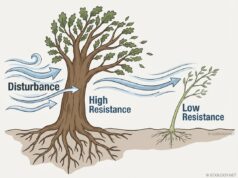
- The factors that contribute to a community’s resilience, its ability to bounce back from disturbances.
- The vulnerabilities that make certain populations more susceptible to environmental shocks.
Understanding these dynamics is crucial for building resilient communities in the face of contemporary challenges like climate change.
Practical Insights and Applications of Human Ecology
The principles of human ecology are not just academic concepts; they offer vital insights for addressing real-world problems.
Sustainable Development
Human ecology provides a framework for understanding what truly constitutes sustainable development. It emphasizes meeting the needs of the present without compromising the ability of future generations to meet their own needs, all while respecting ecological limits. This involves:
- Integrated Planning: Considering environmental, social, and economic factors simultaneously in development projects.
- Resource Efficiency: Minimizing waste and maximizing the utility of natural resources.
- Ecosystem Services: Recognizing and valuing the benefits that nature provides, such as clean air, water purification, and pollination.
Conservation and Biodiversity
By highlighting the deep connections between human well-being and healthy ecosystems, human ecology underscores the importance of biodiversity conservation. It moves beyond simply protecting species for their intrinsic value to understanding how biodiversity loss directly impacts human societies through:
- Reduced food security.
- Loss of medicinal resources.
- Disruption of vital ecosystem services.
Urban Planning and Design
Applying human ecological principles to urban planning can lead to more livable and sustainable cities. This includes:
- Designing green spaces that enhance biodiversity and provide recreational opportunities.
- Developing efficient public transportation systems to reduce reliance on private vehicles.
- Implementing circular economy models to minimize waste and maximize resource reuse.
Public Health
The health of human populations is inextricably linked to the health of their environment. Human ecology helps us understand how environmental factors contribute to disease patterns, from air pollution causing respiratory illnesses to contaminated water leading to infectious diseases. It also explores the benefits of access to nature for mental and physical well-being.
The Interdisciplinary Nature of Human Ecology
Human ecology is inherently interdisciplinary, drawing knowledge from a vast array of fields to create a holistic understanding. It bridges the gap between the natural sciences and the social sciences, incorporating insights from:
- Biology and Ecology: Understanding ecosystem functions, biodiversity, and natural processes.
- Sociology and Anthropology: Examining social structures, cultural practices, and human behavior.
- Geography: Analyzing spatial patterns of human-environment interactions.
- Economics: Studying resource allocation, consumption patterns, and environmental valuation.
- Public Health: Investigating environmental determinants of health and disease.
- Urban Planning: Designing sustainable human settlements.
This broad perspective allows human ecologists to tackle complex problems with a comprehensive approach, recognizing that no single discipline holds all the answers.
Conclusion: Towards a Sustainable Future
Human ecology offers a powerful and essential framework for navigating the complexities of our modern world. It compels us to recognize our place within the natural world, not above it, and to understand the profound consequences of our actions. By embracing systems thinking, critically evaluating technology, and learning from both historical adaptations and contemporary challenges, we can move towards a future where human societies thrive in harmony with the planet. The journey to sustainability begins with understanding the interwoven tapestry of human ecology, a journey that promises not just knowledge, but the wisdom to build a better world for all.