Unveiling the Tapestry of Life: Understanding Ecological Communities
Imagine a bustling city, not of humans, but of countless living organisms. From the towering trees to the microscopic bacteria in the soil, each plays a role, interacts with its neighbors, and contributes to the vibrant life around it. This intricate web of life is what ecologists call a “community.” Far more than just a collection of individuals, an ecological community is a dynamic, interconnected system where the fate of one often influences the many. Understanding these communities is fundamental to grasping how life on Earth thrives and adapts.
The Building Blocks of a Community: Species and Populations
Before we can truly appreciate the complexity of a community, it is essential to understand its foundational components. The most basic unit is the species, a group of organisms that can interbreed and produce fertile offspring. Think of a single deer, a unique biological entity.
When we observe multiple individuals of the same species living together in a defined area, we are looking at a population. A herd of deer grazing in a particular meadow constitutes a population. These individuals interact with each other, compete for resources, and reproduce, shaping the population’s dynamics.
Now, expand that view. When populations of different species live and interact within the same geographical area, they form an ecological community. This could be all the deer, wolves, oak trees, wildflowers, insects, and fungi coexisting in a forest. The interactions between these diverse populations are what give a community its unique character and function.

How Species Interact: The Core of Community Ecology
The heartbeat of any community lies in the myriad ways its member species interact. These interactions are not random; they are predictable patterns that shape population sizes, influence evolution, and determine the overall health and stability of the ecosystem. Here are the primary types of interactions observed in ecological communities:
- Competition: Occurs when two or more species require the same limited resources, such as food, water, light, or space. This can be direct, like two lions fighting over a carcass, or indirect, like different plant species competing for sunlight.
- Predation: A classic interaction where one organism, the predator, hunts and kills another organism, the prey, for food. Examples include a wolf chasing a deer or an owl catching a mouse.
- Herbivory: A specific type of predation where an animal consumes plants or algae. A deer browsing on leaves or a caterpillar munching on a flower are common examples.
- Mutualism: A symbiotic relationship where both interacting species benefit. The classic example is a bee pollinating a flower; the bee gets nectar, and the flower gets its pollen dispersed.
- Commensalism: A symbiotic relationship where one species benefits, and the other is neither significantly helped nor harmed. Barnacles attaching to a whale benefit from transport and food particles, while the whale is largely unaffected.
- Parasitism: A symbiotic relationship where one species, the parasite, lives on or in another species, the host, benefiting at the host’s expense. A tick feeding on a dog’s blood is a clear example.

Community Structure: Beyond Just Interactions
Beyond individual interactions, communities possess a larger structure, defined by the roles and relative abundances of their member species. Not all species are created equal in their impact on the community.
Keystone Species: The Linchpins of an Ecosystem
Some species have a disproportionately large effect on their environment relative to their abundance. These are known as keystone species. Remove a keystone species, and the entire community can undergo dramatic changes, often leading to a collapse in diversity or function.
A prime example is the sea otter in kelp forest ecosystems along the Pacific coast. Sea otters prey on sea urchins, which in turn graze on kelp. Without sea otters, sea urchin populations explode, leading to overgrazing of kelp forests, transforming vibrant underwater habitats into barren “urchin barrens.” The presence of sea otters maintains the health and biodiversity of the entire kelp forest community.

Dominant and Foundation Species
While keystone species have a critical functional role, dominant species are those that have the highest biomass or abundance in a community. For instance, oak trees might be a dominant species in an oak forest, simply because there are so many of them and they contribute significantly to the total living matter.
Foundation species are another important category. These species physically modify the environment to create or maintain habitats for other species. Coral in a coral reef or beavers building dams are excellent examples of foundation species, as they literally build the structure of their community.
Species Diversity and Richness
The health and resilience of a community are often measured by its species diversity. This concept has two main components:
- Species richness: The total number of different species present in a community. A rainforest typically has higher species richness than a desert.
- Species evenness: The relative abundance of each species. A community where all species are represented by roughly equal numbers of individuals is considered more “even” than one dominated by a few species.
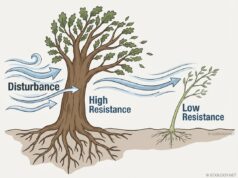
High diversity generally leads to greater community stability and resilience, meaning the community is better able to withstand disturbances and recover from them.
Dynamics of Communities: Change is Constant
Ecological communities are not static entities; they are constantly changing and evolving. These changes can be gradual or sudden, driven by internal processes or external forces.
Ecological Succession: The Unfolding Story
Ecological succession describes the predictable and orderly process of change in an ecosystem over time, as one community replaces another. This can happen in two main ways:
- Primary succession: Occurs in areas devoid of life and soil, such as newly formed volcanic islands or bare rock exposed by a retreating glacier. Pioneer species, like lichens and mosses, colonize first, slowly building soil and paving the way for grasses, shrubs, and eventually trees.
- Secondary succession: Occurs in areas where a pre-existing community has been disturbed or removed, but the soil remains intact. This might happen after a forest fire, a flood, or abandoned farmland. The process is generally faster than primary succession because of the existing soil and seed bank.
Historically, ecologists spoke of a “climax community” as the stable, final stage of succession. However, modern ecology recognizes that communities are rarely truly static and are always subject to ongoing change and disturbance.
Disturbances: Nature’s Reshapers
Disturbances are events that alter the structure of a community, such as fires, floods, storms, volcanic eruptions, or human activities. While often perceived negatively, disturbances are natural and essential processes that can create new opportunities for species, increase biodiversity, and prevent a single species from dominating. The frequency and intensity of disturbances play a crucial role in shaping the types of communities found in different regions.
Human Impact on Communities
Human activities have become a dominant force shaping ecological communities globally. Habitat destruction, climate change, pollution, and the introduction of invasive species are profoundly altering community structures, reducing biodiversity, and impacting ecosystem services that are vital for human well-being. Understanding the intricate workings of ecological communities is therefore not just an academic exercise; it is a critical endeavor for conservation, sustainable resource management, and ensuring a healthy planet for future generations.
Conclusion
Ecological communities are breathtaking examples of nature’s complexity and interconnectedness. From the foundational definitions of species and populations to the intricate dance of species interactions, the critical roles of keystone species, and the dynamic processes of succession and disturbance, each aspect contributes to the vibrant tapestry of life. By appreciating these intricate relationships, we gain a deeper understanding of the natural world and our place within it, empowering us to become better stewards of Earth’s invaluable biodiversity.