Imagine a bustling city, full of life, activity, and intricate connections. Now, think about everything that makes that city possible: the roads, the buildings, the air you breathe, the climate, and even the very ground it stands on. In the natural world, ecosystems are like these cities, teeming with life. But just like a city needs its infrastructure, every ecosystem relies on a fundamental set of non-living elements that dictate its very existence and the life within it. These unsung heroes of the natural world are what ecologists call abiotic factors.
Understanding abiotic factors is not just for scientists; it is key to appreciating the delicate balance of nature, predicting environmental changes, and even understanding why certain plants and animals thrive in one place but not another. Let us embark on a journey to uncover the profound influence of these non-living components on all life on Earth.
What Exactly Are Abiotic Factors?
At its core, an ecosystem is a community of living organisms interacting with their non-living environment. We often focus on the fascinating creatures and plants, the “biotic” components, but the “abiotic” factors are equally, if not more, crucial. The term “abiotic” literally means “not living” (a- = not, bio = life). These are the physical and chemical elements of an ecosystem that influence the organisms living within it.
Think of a pond. The fish, frogs, insects, and aquatic plants are the biotic components. But what about the water itself, the sunlight warming it, the rocks at the bottom, the air above the surface, and the soil beneath? These are all abiotic factors. They provide the stage, set the rules, and supply the resources necessary for life to flourish.

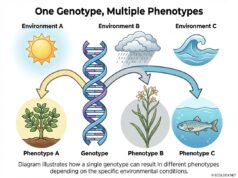
Without the right abiotic conditions, even the most resilient species would struggle to survive. A cactus cannot grow in a rainforest, nor can a coral reef thrive in a freezing polar sea. This is because each organism has evolved to cope with, and often depend on, a specific set of abiotic conditions.
Core Abiotic Factors and Their Impact
While there are countless abiotic factors, some play a more prominent role in shaping ecosystems globally. These are the fundamental forces that dictate where life can exist and what forms it will take. Let us explore some of the most critical ones:

1. Sunlight
The ultimate energy source for almost all life on Earth, sunlight drives photosynthesis, the process by which plants convert light energy into chemical energy. Without sunlight, most food chains would collapse. Its intensity, duration, and angle vary greatly across the globe, leading to diverse ecosystems:
- Deserts receive intense, direct sunlight, leading to plants with adaptations for heat and water conservation.
- Rainforests have abundant sunlight, but much of it is intercepted by the canopy, creating a shaded understory.
- Oceans have distinct light zones; photosynthesis occurs only in the sunlit upper layers, while deeper zones rely on chemosynthesis or falling organic matter.
2. Water
The universal solvent and the medium for all life processes, water is indispensable. Its availability, form (liquid, ice, vapor), and movement profoundly influence ecosystems:
- Arid regions like deserts are defined by extreme water scarcity, leading to specialized flora and fauna.
- Aquatic ecosystems, from vast oceans to tiny puddles, are entirely dependent on water, with organisms adapted to its specific properties.
- Precipitation patterns, including rain, snow, and fog, determine vegetation types and agricultural viability.
3. Temperature
Temperature dictates the rate of biochemical reactions within organisms. Every species has an optimal temperature range for survival and reproduction. Extreme temperatures, hot or cold, can be lethal:
- Polar regions support life adapted to freezing conditions, like polar bears and penguins.
- Tropical regions, with consistently warm temperatures, host an incredible diversity of life.
- Seasonal temperature fluctuations trigger migrations, hibernation, and changes in plant growth cycles.
4. Soil
More than just dirt, soil is a complex mixture of minerals, organic matter, water, and air, teeming with microorganisms. It provides physical support, nutrients, and water retention for plants, forming the foundation of terrestrial ecosystems:
- Fertile topsoil is crucial for agriculture and supports lush forests.
- Sandy soils drain quickly and are poor in nutrients, favoring drought-resistant plants.
- Clay soils retain water well but can become waterlogged, impacting root respiration.
5. Air (Atmospheric Gases and Wind)
The composition of the atmosphere, particularly the availability of oxygen and carbon dioxide, is vital for respiration and photosynthesis. Wind, a movement of air, also plays a significant role:
- Oxygen is essential for aerobic respiration in most living organisms.
- Carbon dioxide is the primary raw material for photosynthesis.
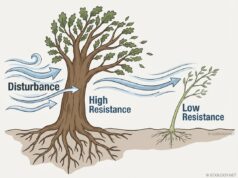
- Wind aids in seed dispersal, pollination, and can influence plant growth patterns, sometimes causing “wind shear” on exposed trees.
6. Salinity
The concentration of salts in water or soil is a critical factor, especially in aquatic and coastal environments. Organisms must maintain a delicate internal salt balance:
- Marine organisms are adapted to high salt concentrations in oceans.
- Freshwater organisms cannot tolerate high salinity and live in rivers, lakes, and ponds.
- Estuaries, where fresh and saltwater mix, host unique species adapted to fluctuating salinity levels.
7. pH
pH measures the acidity or alkalinity of water and soil. It influences nutrient availability and can directly affect the physiology of organisms:
- Acidic soils (low pH) can make certain nutrients unavailable to plants, impacting growth.
- Alkaline soils (high pH) also present challenges for nutrient uptake.
- Aquatic pH is crucial for fish and other aquatic life; extreme changes, often due to pollution like acid rain, can be devastating.
Beyond the Basics: The Interplay and Limiting Factors
Abiotic factors do not operate in isolation; they constantly interact, creating a complex web of environmental conditions that define an ecosystem. For instance, high temperatures increase evaporation, reducing water availability. Strong winds can increase water loss from plants, mimicking drought conditions even with moderate rainfall.
Limiting Factors: The Weakest Link
One of the most profound concepts in ecology related to abiotic factors is the idea of a limiting factor. This is an abiotic factor that, despite the abundance of all other necessary resources, restricts the growth, abundance, or distribution of a population or an entire ecosystem. It is often explained by Liebig’s Law of the Minimum, which states that growth is dictated not by the total resources available, but by the scarcest resource.

Imagine a barrel with staves of different heights, where each stave represents an abiotic factor like sunlight, water, or nutrients. The water level in the barrel, representing the ecosystem’s growth potential, can only rise as high as the shortest stave. Even if there is plenty of sunlight and nutrients, if water is scarce, the ecosystem’s productivity will be limited by that lack of water.
- In a desert, water is often the primary limiting factor.
- In a dense forest, sunlight might be the limiting factor for understory plants.
- In nutrient-poor oceans, nitrogen or phosphorus can limit algal growth.
Adaptations to Abiotic Factors
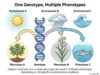
Life has an astonishing capacity to adapt to the prevailing abiotic conditions. These adaptations can be physical, physiological, or behavioral:
- Physical adaptations: Cacti have thick, waxy cuticles and spines to reduce water loss and deter herbivores in arid environments.
- Physiological adaptations: Fish in cold waters produce antifreeze proteins to prevent their blood from freezing.
- Behavioral adaptations: Many desert animals are nocturnal, avoiding the scorching daytime temperatures.
Why Abiotic Factors Matter: A Broader Perspective
Understanding abiotic factors is not merely an academic exercise; it has profound implications for our world:
- Climate Change: Global warming is fundamentally altering abiotic factors like temperature, precipitation patterns, and ocean pH, leading to widespread ecological shifts and species extinctions.
- Conservation: Protecting endangered species often involves preserving their specific abiotic requirements, such as clean water sources or suitable soil types.
- Agriculture: Farmers meticulously manage soil pH, nutrient levels, and water availability to optimize crop yields.
- Urban Planning: City designers consider sunlight, wind patterns, and water drainage to create livable and sustainable environments.
Conclusion
Abiotic factors are the silent architects of our planet’s diverse ecosystems. From the warmth of the sun to the acidity of the soil, these non-living elements sculpt the landscapes, dictate the distribution of life, and set the stage for the intricate dramas of the natural world. They remind us that life is not just about living organisms, but about the profound and inseparable connection between all living things and their physical environment.
By appreciating the power and influence of abiotic factors, we gain a deeper understanding of ecological resilience, vulnerability, and the critical importance of maintaining the delicate balance of our planet. The next time you step outside, take a moment to consider the air you breathe, the ground beneath your feet, and the light above; you are observing the fundamental forces that make life, in all its wondrous forms, possible.