When we talk about biodiversity, our minds often jump to the sheer number of different species in an ecosystem. This is known as species richness, and it is undoubtedly a vital measure of an environment’s health. However, imagine two forests, both home to ten different tree species. In the first forest, 90% of the trees belong to a single species, while the other nine species are represented by just a handful of individuals. In the second forest, all ten species are present in roughly equal numbers. Which forest do you think is more robust, more resilient, and ultimately, healthier?
The answer lies in a concept often overlooked but equally critical: species evenness. It is the measure of how similar the abundances of different species are within a community. In simpler terms, it tells us whether an ecosystem is dominated by a few species or if all species present have a more balanced representation.
Understanding Species Evenness: Beyond Just Counting
Species richness gives us the “who” of an ecosystem: how many unique species call it home. Species evenness, on the other hand, tells us the “how much” of each species. A community with high evenness has species that are all present in similar proportions. A community with low evenness, conversely, has one or a few species that are overwhelmingly dominant, while others are rare.
Think of it like a diverse musical ensemble. If you have a band with ten different instruments, but one instrument is playing so loudly that you can barely hear the others, that is low evenness. If all ten instruments are playing at a balanced volume, contributing equally to the overall sound, that is high evenness. Both scenarios involve ten instruments (high richness), but the quality and balance of the sound are vastly different.
Let us visualize this concept with a clear example:
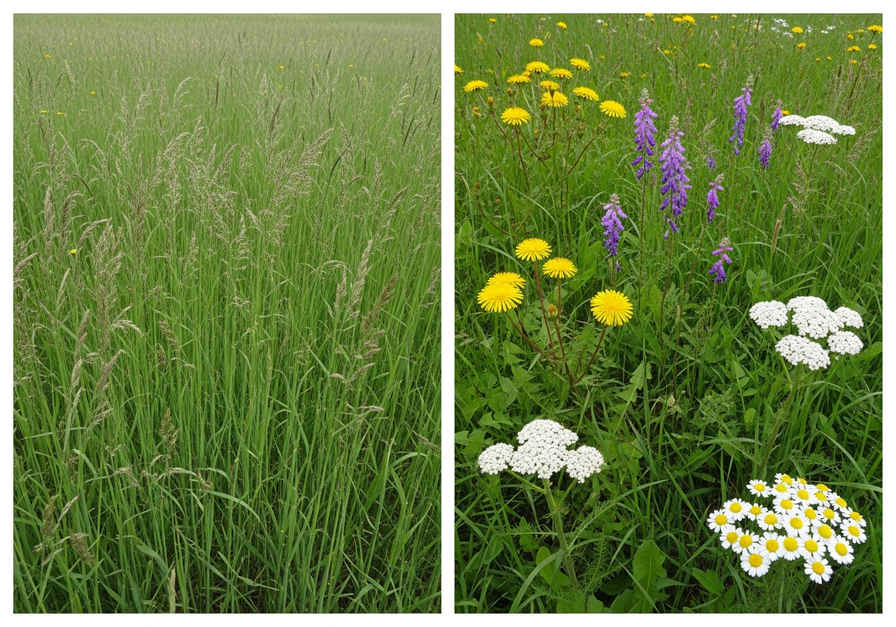
This split-screen image directly illustrates the concept of species evenness: the left side demonstrates low evenness with a dominant species, while the right side shows high evenness with an equal representation of multiple species, mirroring the article’s meadow example.
Why Evenness Matters: The Pillars of Ecosystem Health
The balance that species evenness brings is not merely an aesthetic preference; it is fundamental to the functioning and resilience of ecosystems. High species evenness contributes to several critical aspects of ecological health:
- Ecosystem Stability and Resilience: When many species contribute equally, an ecosystem is less vulnerable to the loss of any single species. If one species declines due to disease or environmental change, others can step in to fill its functional role, maintaining the overall health and productivity of the system. This redundancy acts as a natural insurance policy.
- Efficient Resource Utilization: Diverse species often have different ways of utilizing resources. Some plants might have deep roots, accessing water and nutrients from lower soil layers, while others have shallow roots. Some insects might be active during the day, others at night. High evenness ensures that resources like light, water, and nutrients are used more thoroughly and efficiently across the ecosystem, reducing waste and maximizing productivity.
- Increased Productivity: A balanced mix of species can lead to higher overall biomass production. Different species can complement each other, leading to a greater collective output than any single species could achieve alone.
- Resistance to Pests and Diseases: Monocultures, which are examples of extremely low evenness, are notoriously susceptible to widespread outbreaks of pests and diseases. A diverse and even community, however, creates a natural barrier. Pests that specialize in one plant species will find it harder to spread when their host plants are interspersed with many other species they cannot consume.
- Enhanced Ecosystem Services: From pollination and nutrient cycling to water purification and soil formation, ecosystems provide invaluable services to humanity. High species evenness often correlates with a greater provision of these services, as a wider array of species performing different roles ensures these processes continue robustly.
Evenness in Action: Forests and Fields
To truly grasp the impact of species evenness, let us look at two contrasting environments:
The Balanced Beauty of an Old-Growth Forest
Consider an old-growth temperate forest, a marvel of natural complexity. Here, you will find a rich tapestry of life, not just in terms of the number of species, but also in their balanced representation. Oaks, maples, birches, and chestnuts might stand shoulder to shoulder, none overwhelmingly dominating the canopy. Below them, a vibrant understory of shrubs, ferns, and wildflowers like trillium and goldenrod are evenly distributed, each playing its part.
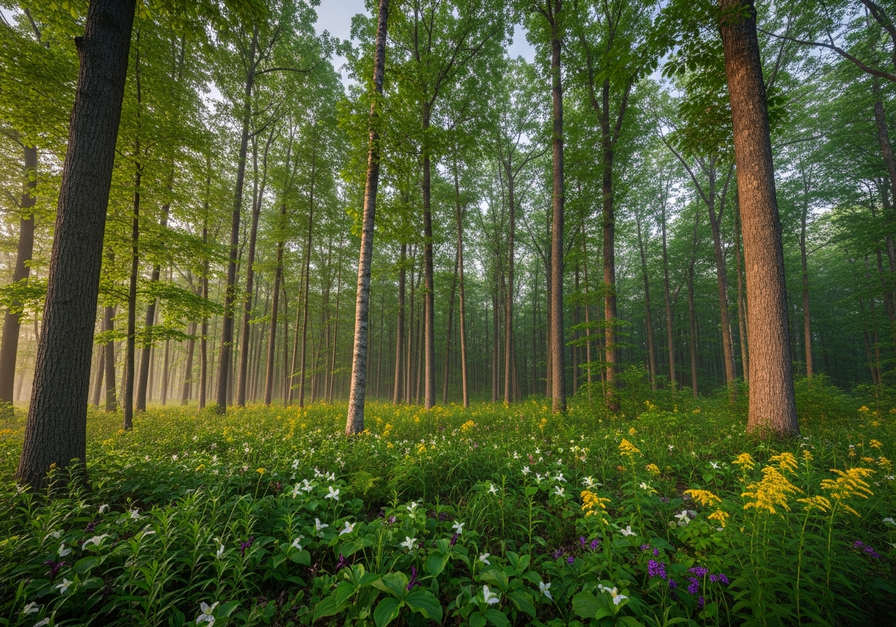
This image visually represents high species evenness in an old-growth forest, illustrating how a balanced mix of tree and understory species contributes to ecosystem resilience and productivity, as discussed in the article.
This high evenness means that if a particular disease targets oak trees, the forest will not collapse. The maples, birches, and chestnuts will continue to provide canopy cover and support the ecosystem. The diverse understory ensures a continuous cycle of nutrients and provides varied habitats for wildlife. Such an ecosystem is inherently more stable and resilient to environmental changes and disturbances.
The Vulnerability of a Monoculture Crop Field
Now, let us turn our attention to a different landscape: a vast agricultural field dedicated solely to growing corn. Here, rows of corn stretch uniformly, with virtually no other plant species present. This is a classic example of extremely low species evenness.
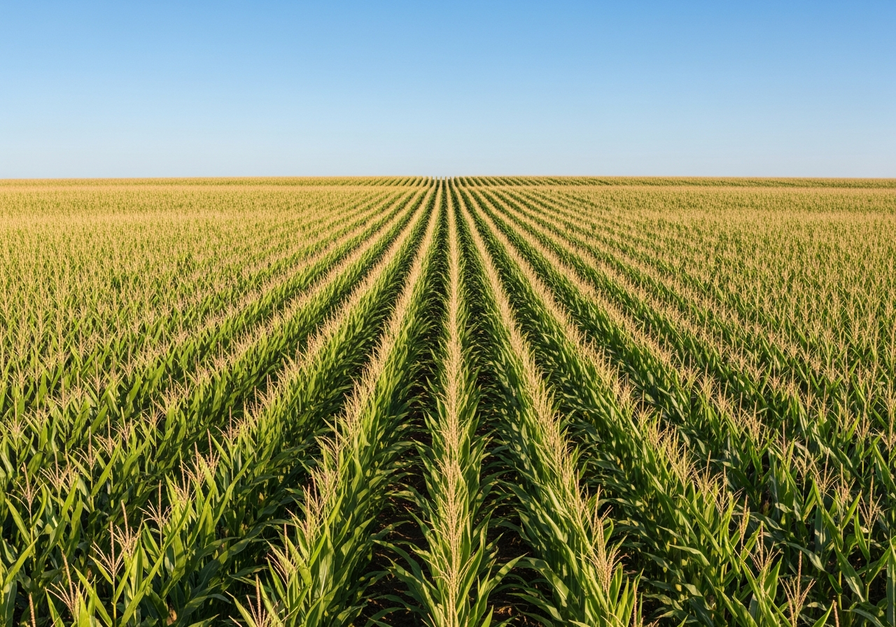
This photo exemplifies low species evenness in a monoculture setting, underscoring the article’s point about vulnerability and reduced ecosystem services in such landscapes.
While monocultures can be highly productive for a single crop, they come with significant ecological drawbacks. Their low evenness makes them incredibly vulnerable. A single pest or disease outbreak can devastate an entire crop, leading to massive economic losses and food insecurity. These systems often require heavy inputs of pesticides and fertilizers to maintain their productivity, further impacting the environment. The lack of diverse plant life also means reduced habitat for pollinators and other beneficial insects, and diminished soil health.
Quantifying Evenness: A Deeper Dive
For ecologists, simply observing evenness is not enough; they need to quantify it. Various mathematical indices have been developed to measure species evenness, allowing for objective comparisons between different communities or changes within a community over time.
- Pielou’s Evenness Index (J’): This is one of the most commonly used indices. It ranges from 0 to 1, where 1 indicates perfect evenness (all species have the same abundance) and values closer to 0 indicate low evenness (one or a few species dominate).
- Shannon Evenness Index (E): Derived from the Shannon diversity index, this also provides a measure of how evenly species are distributed.
These indices help scientists track the health of ecosystems, identify areas of concern, and evaluate the success of conservation or restoration efforts. A decline in evenness, even if species richness remains stable, can be a warning sign of ecological imbalance.
Factors Shaping Species Evenness
What drives the level of evenness in an ecosystem? It is a complex interplay of environmental conditions and ecological processes:
- Environmental Heterogeneity: Diverse habitats with varied microclimates, soil types, and topography tend to support higher evenness. Different species can specialize in different niches, preventing any single species from monopolizing resources across the entire landscape.
- Disturbance Regimes: Intermediate levels of disturbance, such as occasional fires, floods, or grazing, can promote high evenness. Too little disturbance allows a few competitive species to dominate. Too much disturbance can wipe out many species, leaving only a few hardy pioneers. A moderate level of disturbance can create opportunities for a wider range of species to coexist.
- Competition: The intensity and nature of competition among species play a crucial role. If one species is an exceptionally strong competitor, it can outcompete others and reduce evenness. However, if competitive abilities are more balanced, or if there are mechanisms that reduce competitive exclusion (like resource partitioning), evenness can be maintained.
- Predation and Herbivory: Predators and herbivores can sometimes increase species evenness by keeping dominant plant or prey species in check, preventing them from monopolizing resources and allowing less competitive species to thrive. This is often referred to as a “keystone species” effect.
- Human Impact: Human activities are a major driver of changes in species evenness. Habitat destruction, pollution, introduction of invasive species, and unsustainable resource extraction often lead to a reduction in evenness, favoring a few disturbance-tolerant species while marginalizing many others.
Evenness in Conservation and Management
Recognizing the importance of species evenness has profound implications for conservation and environmental management. Conservation efforts should not solely focus on increasing the number of species (richness) but also on ensuring a balanced representation of those species.
- Restoration Ecology: When restoring degraded habitats, the goal should be to reintroduce not just a variety of species, but to foster conditions that allow them to thrive in relatively balanced proportions. This might involve managing competitive species, creating diverse microhabitats, or reintroducing natural disturbance regimes.
- Sustainable Agriculture: Moving away from vast monocultures towards polyculture systems, which incorporate multiple crop species or integrate crops with beneficial native plants, can significantly increase evenness and reduce reliance on external inputs. This enhances resilience and promotes natural pest control.
- Monitoring Ecosystem Health: Regular assessment of species evenness, alongside richness, provides a more comprehensive picture of an ecosystem’s health. Declines in evenness can signal underlying ecological problems that might not be apparent if only species counts are considered.
The Harmony of Nature
Species evenness is a powerful concept that deepens our understanding of biodiversity. It reminds us that the strength of an ecosystem lies not just in its variety, but in the harmonious balance of its components. A forest where every tree species has its place, a meadow where wildflowers and grasses coexist in vibrant equilibrium, these are not just beautiful scenes; they are robust, resilient systems that provide the life support for our planet.
By appreciating and striving for species evenness, we move beyond simply counting species to fostering truly healthy, functional, and enduring natural environments for all.