Imagine a world where the air is always fresh, floods are naturally managed, and the climate remains stable without any human intervention. This isn’t a fantasy, but a description of the invaluable work performed by nature’s unsung heroes: regulating services. These are the hidden mechanisms of our planet, the intricate processes that keep our world habitable and healthy, often without us even realizing their profound impact on our daily lives.
As an ecologist, I’ve witnessed firsthand the incredible power and delicate balance of these natural systems. They are the silent guardians of our well-being, providing benefits that are often taken for granted until they are compromised. Understanding regulating services is not just an academic exercise; it’s crucial for appreciating our planet and making informed decisions about its future.
What are Regulating Services? Nature’s Invisible Hand
At its core, regulating services refer to the benefits that human populations receive from the regulation of natural processes. Think of them as the Earth’s self-maintenance systems. These services emerge from the complex interactions within ecosystems, from the smallest microbes in the soil to the vast expanse of our oceans and forests. They control environmental conditions, mitigate hazards, and maintain the overall health of our planet, directly supporting human life and economic stability.
Unlike provisioning services, which give us tangible products like food and water, or cultural services, which provide recreational and spiritual benefits, regulating services are about the ‘how’ and ‘why’ our environment functions in a way that supports us. They are the background operations, the essential environmental conditions that make life possible and pleasant.
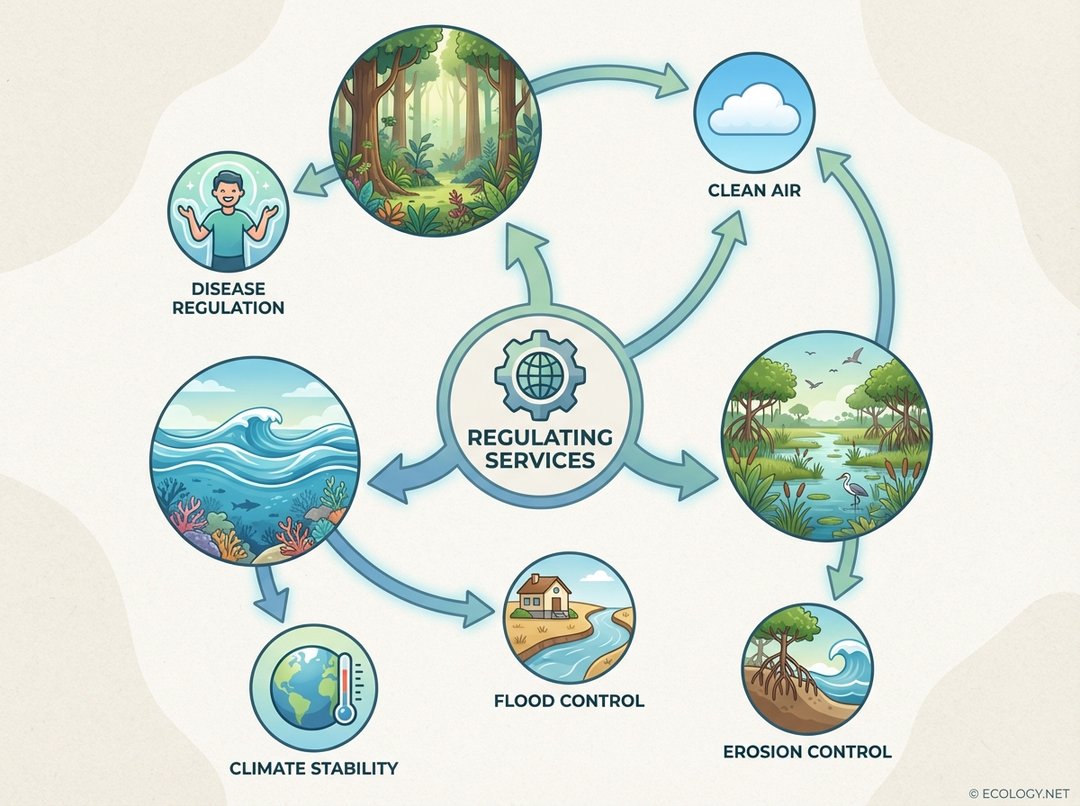
Consider a forest. It doesn’t just provide timber; it actively cleans the air we breathe, absorbs carbon dioxide to stabilize our climate, and its root systems prevent soil erosion. These are all regulating services. A healthy ocean doesn’t just give us fish; it regulates global temperatures and weather patterns. Wetlands don’t just host diverse wildlife; they act as natural sponges, absorbing excess water and preventing floods.
Key Types of Regulating Services and Examples in Action
The spectrum of regulating services is vast and diverse, each playing a critical role in maintaining ecological balance and human well-being. Let’s explore some of the most vital categories:
Air Quality Regulation
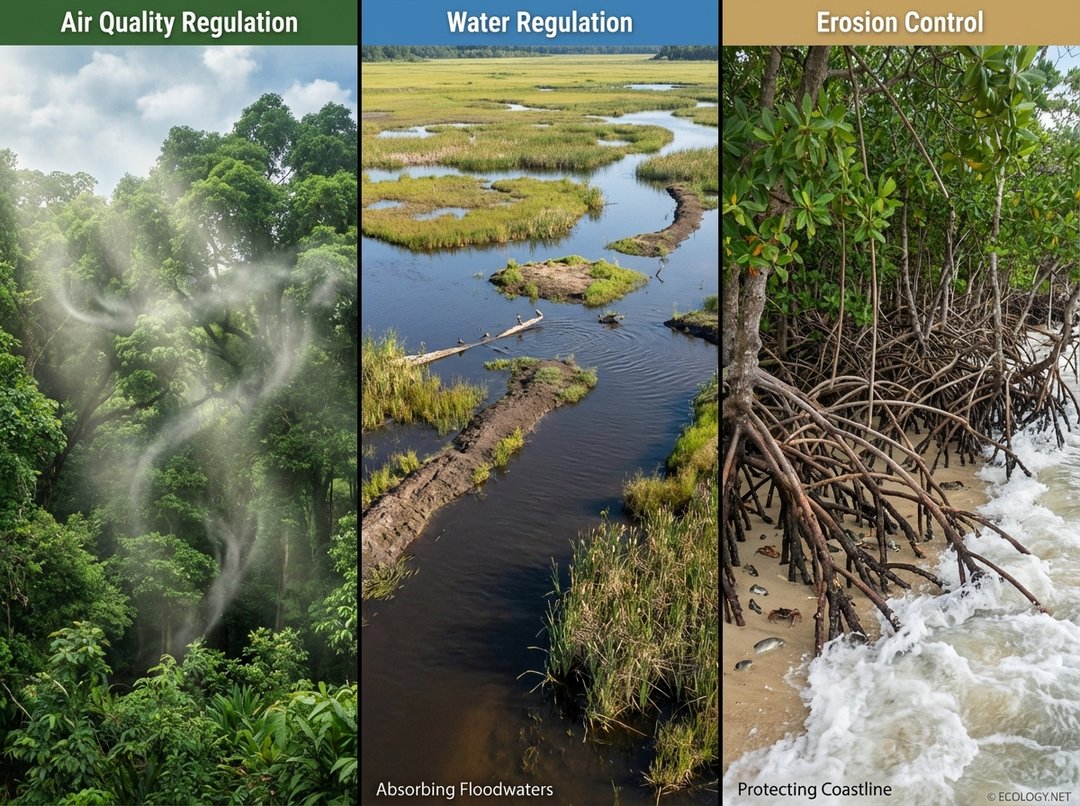
Our planet’s ecosystems are constantly working to purify the air we breathe. Forests, grasslands, and even oceans absorb pollutants and particulate matter, releasing clean oxygen. Trees, for instance, filter airborne particles and absorb harmful gases like ozone and sulfur dioxide, significantly improving local air quality. This natural air conditioning system is vital for preventing respiratory illnesses and maintaining a healthy atmosphere.
Climate Regulation
Perhaps one of the most critical regulating services in our current era is climate regulation. Ecosystems play a monumental role in stabilizing Earth’s climate by regulating atmospheric greenhouse gas concentrations. Forests and oceans act as massive carbon sinks, absorbing vast amounts of carbon dioxide from the atmosphere. This process, known as carbon sequestration, helps to mitigate global warming and its associated impacts, such as extreme weather events and sea-level rise.
Water Regulation and Purification
Healthy ecosystems are nature’s water managers. Wetlands, forests, and intact floodplains absorb and store rainwater, slowly releasing it over time. This process reduces the severity of floods and droughts, ensuring a more consistent water supply. Furthermore, soil and vegetation act as natural filters, purifying water as it percolates through the ground, removing pollutants and making it safe for consumption. A pristine watershed is a natural water treatment plant, providing clean drinking water without costly human intervention.
Erosion Control and Soil Formation
The stability of our landscapes relies heavily on regulating services. Plant roots bind soil particles together, preventing erosion by wind and water. This is particularly evident in coastal areas where mangrove forests and coral reefs protect shorelines from destructive waves and storm surges. Beyond preventing loss, ecosystems are also constantly involved in the slow, vital process of soil formation, creating the fertile ground necessary for agriculture and supporting biodiversity.
Disease and Pest Regulation
Nature has its own sophisticated methods for keeping diseases and pests in check. Diverse ecosystems support a wide array of species, including natural predators and parasites that control populations of disease-carrying organisms or agricultural pests. For example, healthy bird populations can significantly reduce insect pest outbreaks in crops, and diverse microbial communities in soil can suppress plant pathogens. Disrupting these natural balances can lead to outbreaks of diseases and pest infestations, impacting both human health and food security.
Waste Treatment and Detoxification
Ecosystems possess an incredible capacity to break down and detoxify waste products. Wetlands and soil microbes, for instance, can filter and process pollutants from water and air, transforming harmful substances into benign ones. This natural waste treatment system helps to maintain environmental quality and prevents the accumulation of toxic materials that could harm human health and other species.
Why are Regulating Services Important? The Cost of Neglect
The importance of regulating services cannot be overstated. They are not merely ‘nice to have’ benefits; they are fundamental to human survival, economic prosperity, and overall quality of life. When these services are robust, societies thrive. When they are degraded, the consequences can be severe and costly.
Consider the economic value. While often invisible, the financial benefits of regulating services are immense. For example, the cost of building artificial flood defenses pales in comparison to the free flood protection offered by healthy wetlands and forests. The expense of air purification technologies is dwarfed by the natural air cleaning provided by urban green spaces. Investing in the conservation of these natural systems is often far more cost-effective than attempting to replace their functions with engineered solutions.
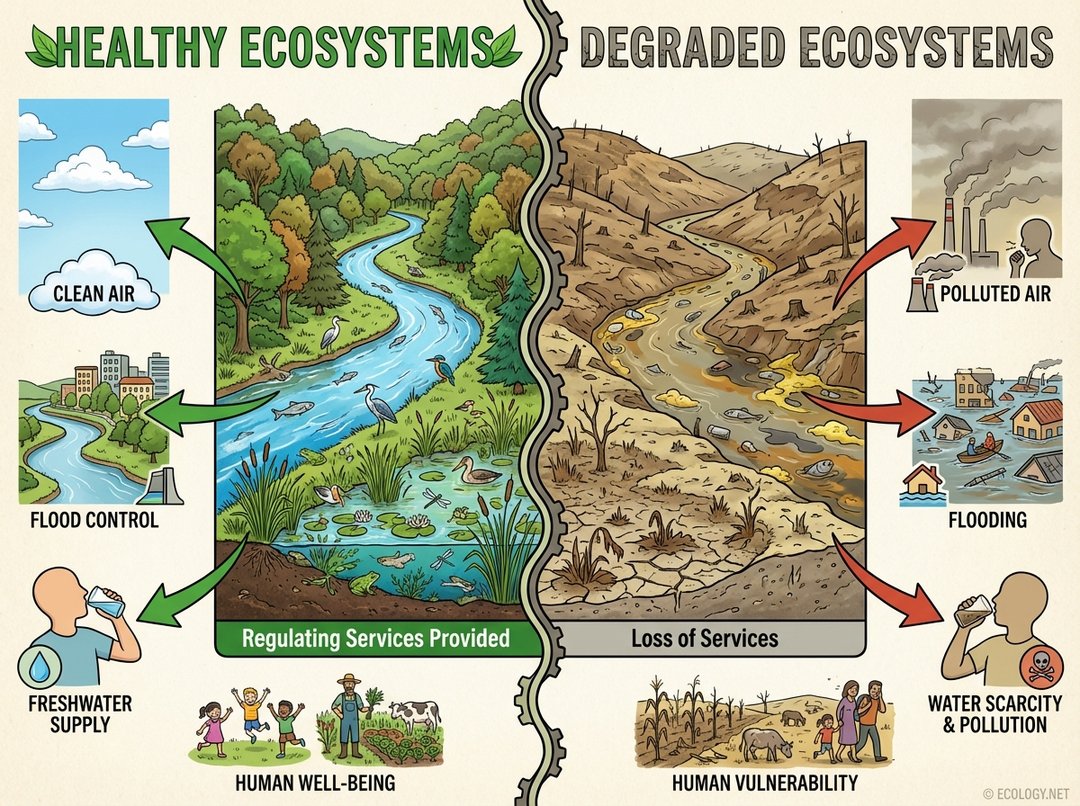
Beyond economics, regulating services are directly linked to human health and safety. Clean air and water are essential for preventing illness. Stable climates reduce the frequency and intensity of natural disasters. Effective disease regulation limits the spread of pathogens. The loss of these services can lead to increased health care costs, food insecurity, displacement, and even loss of life.
The stark contrast between a healthy ecosystem providing abundant services and a degraded one struggling to offer basic functions highlights this critical importance. A deforested hillside, for instance, loses its ability to regulate water flow, leading to increased runoff, soil erosion, and a higher risk of landslides and floods downstream. A polluted river can no longer purify water, impacting drinking water sources and aquatic life. These are not abstract problems; they are real-world challenges with tangible impacts on communities worldwide.
The Interconnected Web: How Regulating Services Work Together
It is crucial to understand that regulating services do not operate in isolation. They are deeply interconnected, forming a complex web where the health of one service often depends on the integrity of others. For example, a healthy forest provides air quality regulation, climate regulation through carbon sequestration, water regulation by absorbing rainfall, and erosion control through its root systems. If the forest is cleared, all these interconnected services are diminished or lost.
This interconnectedness means that degradation in one area can have cascading effects across an entire ecosystem and beyond. Protecting one type of regulating service often yields co-benefits for others, creating a positive feedback loop that enhances overall ecosystem resilience.
Threats to Regulating Services: A Call for Action
Unfortunately, many of the Earth’s regulating services are under severe threat due to human activities. Deforestation, pollution of air and water, urbanization, unsustainable agricultural practices, and climate change are all contributing to the degradation of these vital natural systems. When ecosystems are fragmented, simplified, or overwhelmed by pollutants, their capacity to provide regulating services diminishes.
For instance, the conversion of wetlands for development reduces their capacity for flood control and water purification. Intensive farming practices can deplete soil health, impairing its ability to regulate water and cycle nutrients. The emission of greenhouse gases from human activities overwhelms natural carbon sinks, exacerbating climate change and further stressing ecosystems.
Protecting Our Natural Regulators: Conservation and Restoration
Recognizing the immense value of regulating services is the first step towards protecting them. Conservation efforts that focus on preserving intact ecosystems are paramount. This includes establishing protected areas, sustainable land management practices, and reducing pollution at its source.
Beyond protection, restoration plays a critical role. Reforestation projects, wetland restoration, and efforts to improve soil health can help to rebuild and enhance the capacity of degraded ecosystems to provide regulating services. These initiatives not only benefit the environment but also offer long-term economic and social advantages.
Individual actions, such as reducing our carbon footprint, supporting sustainable businesses, and advocating for environmental policies, collectively contribute to the larger goal of safeguarding these essential natural processes. Understanding that our well-being is inextricably linked to the health of our planet’s ecosystems empowers us to make choices that support both.
Conclusion: Valuing Nature’s Essential Work
Regulating services are the invisible infrastructure that supports all life on Earth, including our own. From the air we breathe to the stability of our climate and the purity of our water, these natural processes work tirelessly to maintain a habitable planet. They are a testament to the intricate beauty and profound efficiency of nature.
As we navigate the complexities of the 21st century, recognizing, valuing, and investing in the health of our ecosystems is not just an environmental imperative; it is a fundamental pillar of sustainable human development. By understanding and appreciating nature’s regulating services, we can foster a deeper connection to our planet and work towards a future where both humanity and the natural world can thrive in harmony.