The night sky, once a universal canvas of stars, is slowly fading from view for billions across the globe. This isn’t due to clouds, but to an often-overlooked environmental pollutant: light pollution. As our cities grow brighter, the natural rhythm of day and night is increasingly disrupted, casting a long, artificial shadow over ecosystems, human health, and our connection to the cosmos.
Light pollution is more than just a nuisance; it represents the excessive, misdirected, or obtrusive use of artificial outdoor light. It’s a byproduct of urbanization and technological advancement, yet its consequences are far-reaching and complex, impacting everything from the migratory patterns of birds to the quality of human sleep. Understanding this pervasive issue is the first step towards reclaiming our nights and fostering a healthier, more balanced environment.
Unmasking the Glow: What is Light Pollution?
At its core, light pollution is simply too much light in the wrong place at the wrong time. While artificial light has brought undeniable benefits to human society, enabling nighttime activities and enhancing safety, its uncontrolled proliferation has created a new form of environmental degradation. This isn’t just about bright lights; it’s about light that serves no purpose, shines where it isn’t needed, or is excessively intense.
The sources of light pollution are ubiquitous in modern society. They include streetlights, commercial buildings, sports stadiums, advertising billboards, residential outdoor lighting, and even vehicle headlights. Each of these, when poorly designed or improperly used, contributes to the overall problem.
The Four Faces of Light Pollution
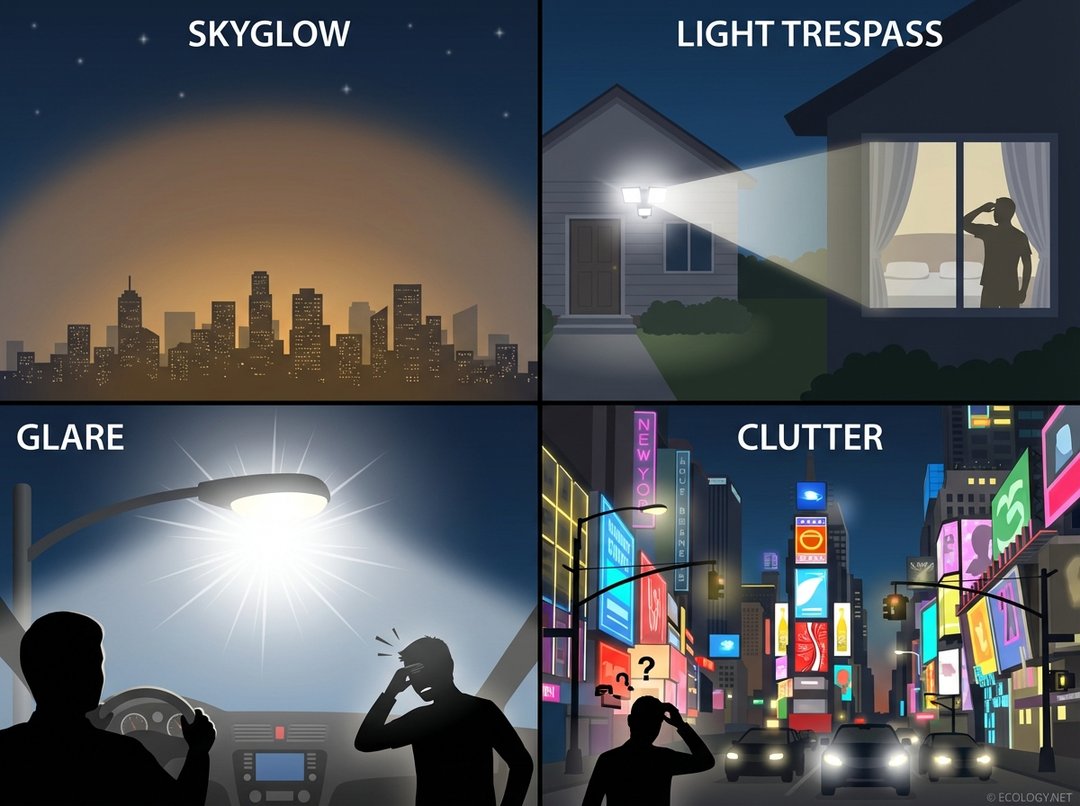
Light pollution manifests in several distinct forms, each with its own characteristics and impacts:
- Skyglow: This is the most recognizable form, appearing as a diffuse, orange or white glow over urban areas. It’s caused by light scattering in the atmosphere, obscuring stars and planets. Imagine trying to see stars from a brightly lit city park; the skyglow makes it nearly impossible.
- Light Trespass: This occurs when unwanted light from one property spills onto another. A common example is a neighbor’s security light shining directly into your bedroom window, disrupting sleep and privacy.
- Glare: Glare is the excessive brightness that causes visual discomfort or reduces visibility. Think of driving at night and being temporarily blinded by an unshielded streetlight or oncoming headlights. It can be disabling or simply annoying.
- Clutter: This refers to excessive groupings of bright, confusing, and often distracting lights. A street lined with numerous uncoordinated billboards, neon signs, and advertising displays creates visual chaos, making it difficult to discern important information or even navigate safely.
Understanding these different types is crucial for addressing the problem effectively.
The Hidden Costs: Far-Reaching Impacts of Artificial Night Light
The consequences of light pollution extend far beyond simply obscuring our view of the cosmos. They ripple through ecosystems, affect human health, waste energy, and even diminish our cultural heritage.
Disrupting Nature’s Rhythms: Impact on Wildlife
For millions of years, life on Earth evolved under a predictable cycle of day and night. Artificial light at night fundamentally alters this cycle, with profound effects on nocturnal animals, migratory species, and even plants.
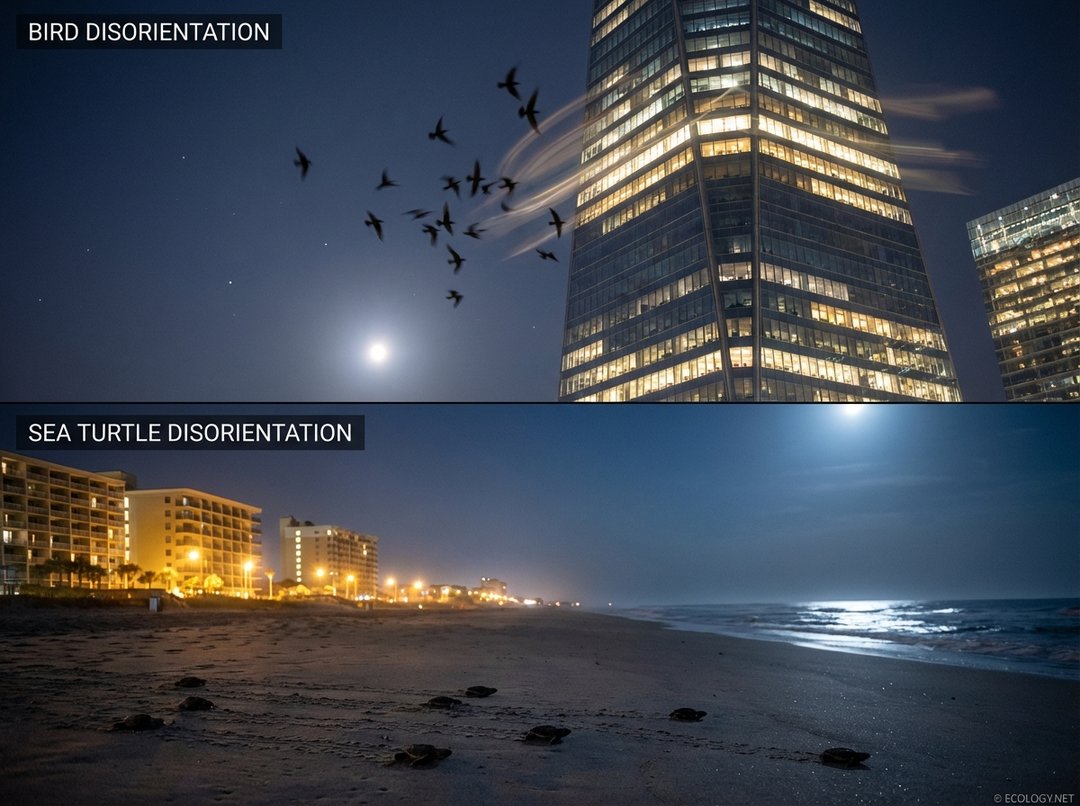
- Bird Disorientation: Migratory birds navigate using celestial cues, such as the moon and stars, and the Earth’s magnetic field. Bright city lights can disorient them, drawing them off course, causing them to circle exhaustedly, or leading to fatal collisions with illuminated buildings. Millions of birds perish each year due to light pollution.
- Sea Turtle Hatchlings: Newly hatched sea turtles instinctively crawl towards the brightest horizon, which historically was the moonlit ocean. Coastal development with artificial lights now often draws them inland, away from the safety of the sea, making them vulnerable to predators and dehydration.
- Insect Attraction: Moths and other nocturnal insects are famously drawn to artificial lights. This attraction can trap them, making them easy prey, disrupting their feeding and reproductive cycles, and ultimately impacting the entire food web, including the birds and bats that feed on them. Pollinators, vital for plant reproduction, are also affected.
- Mammalian Behavior: Nocturnal mammals, from bats to deer, rely on darkness for hunting, foraging, and avoiding predators. Artificial light can alter their activity patterns, force them into less suitable habitats, or expose them to greater risks.
- Amphibians: Frogs and toads, often active at night, can have their breeding calls and mating behaviors disrupted by artificial light, impacting their reproductive success.
A Threat to Our Well-being: Human Health Concerns
Humans, like all life on Earth, are biologically tuned to the natural light-dark cycle. Exposure to artificial light at night, particularly blue-rich light, can interfere with our internal biological clock, known as the circadian rhythm.
- Sleep Disruption: Light at night suppresses the production of melatonin, a hormone crucial for regulating sleep. This can lead to difficulty falling asleep, reduced sleep quality, and increased risk of sleep disorders.
- Potential Health Risks: Chronic disruption of the circadian rhythm and melatonin suppression have been linked to a range of health issues, including increased risk of obesity, depression, diabetes, and certain types of cancer.
- Vision Impairment: Glare from poorly designed lighting can reduce visual acuity, especially for older individuals, and contribute to eye strain.
Losing Our View: Impact on Astronomy and Cultural Heritage
For millennia, the night sky has inspired humanity, guiding navigation, fostering scientific inquiry, and serving as a source of wonder and spiritual connection. Light pollution is rapidly eroding this fundamental human experience.
- Obscuring the Cosmos: Skyglow makes it increasingly difficult to see stars, planets, and galaxies, even from suburban areas. This directly impacts professional astronomical observatories, which are forced to seek ever more remote locations, and denies the general public the awe-inspiring sight of a truly dark sky.
- Loss of Cultural Heritage: The ability to gaze at the Milky Way is a shared human heritage. Its disappearance from urban skies represents a loss of natural beauty and a diminished connection to our place in the universe.
Wasted Energy, Wasted Resources
Much of the light that contributes to pollution is simply wasted. Unshielded fixtures that shine light upwards or sideways, excessively bright lights, and lights left on when not needed all consume energy unnecessarily. This translates to:
- Increased Energy Consumption: More electricity is used than required, leading to higher energy bills for individuals and municipalities.
- Higher Carbon Emissions: The generation of this wasted electricity often relies on fossil fuels, contributing to greenhouse gas emissions and climate change.
Reclaiming the Night: Solutions and Responsible Lighting
The good news is that light pollution is largely reversible. Unlike many other environmental issues, solutions are readily available and often lead to immediate improvements. The key lies in adopting responsible lighting practices.
Principles of Responsible Outdoor Lighting
Effective solutions are guided by five core principles:
- Use it only when needed: Employ timers, dimmers, and motion sensors to ensure lights are on only when and where they are required.
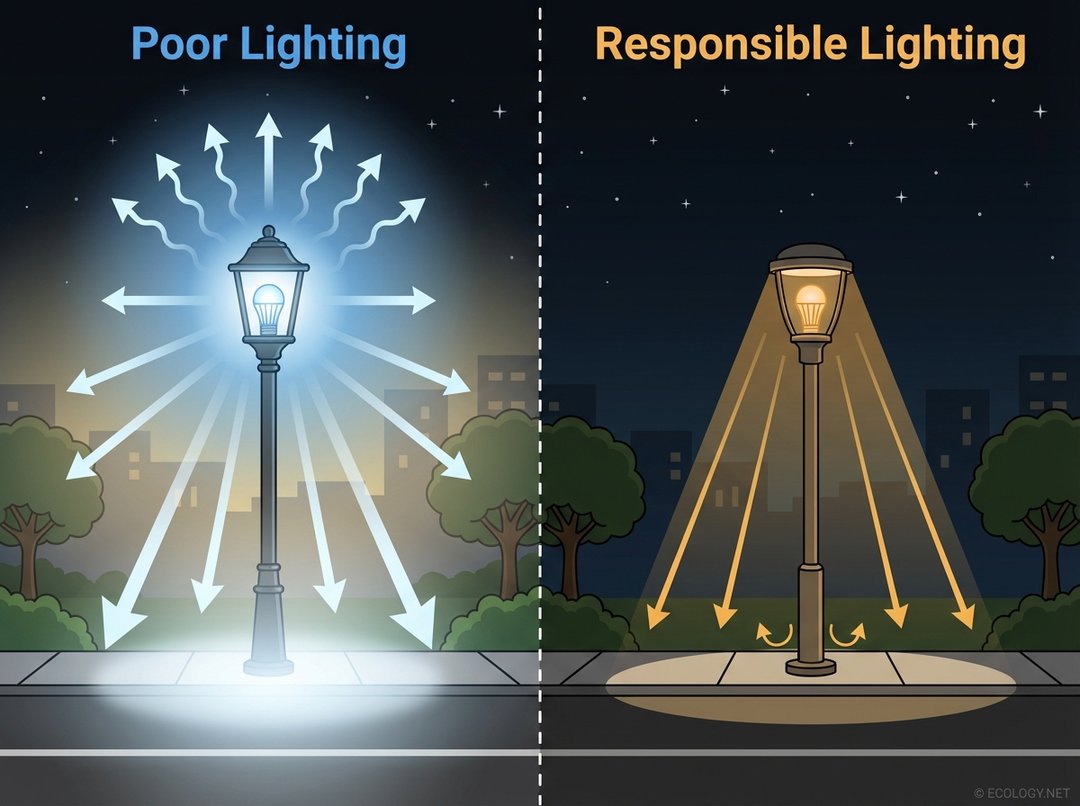
- Use it only where needed: Direct light downwards and avoid light spill into unwanted areas.
- Use the minimum amount needed: Use the lowest light level required for the task. Brighter is not always better.
- Use warmer color temperatures: Opt for warm-colored lights (typically 3000 Kelvin or less) which have less blue light content, reducing skyglow and minimizing biological impacts.
- Use fully shielded fixtures: Ensure light fixtures are designed to direct all light downwards, preventing light from escaping upwards or horizontally.
Practical Steps for Individuals and Communities
Addressing light pollution requires a collective effort, from individual homeowners to municipal planners.
What Individuals Can Do:
- Evaluate Home Lighting: Check outdoor lights for excessive brightness, glare, and upward spill. Replace unshielded fixtures with fully shielded ones.
- Choose Warm-Colored Bulbs: When purchasing outdoor bulbs, look for “warm white” or “soft white” options with a color temperature of 3000K or less.
- Use Timers and Motion Sensors: Install timers or motion sensors on outdoor lights so they are only on when necessary.
- Close Blinds and Curtains: At night, close window coverings to prevent indoor light from contributing to skyglow and light trespass.
- Educate Others: Share information about responsible lighting with neighbors and community members.
What Communities and Municipalities Can Do:
- Adopt Dark Sky Ordinances: Implement lighting codes that mandate shielded fixtures, appropriate brightness levels, and warm color temperatures for public and commercial outdoor lighting.
- Upgrade Streetlights: Replace old, inefficient streetlights with fully shielded, dimmable LED fixtures that emit warm-colored light.
- Promote Dark Sky Parks: Support the creation and designation of Dark Sky Parks and Reserves, which are areas committed to preserving natural night skies. These areas offer opportunities for stargazing and serve as havens for nocturnal wildlife.
- Public Awareness Campaigns: Launch initiatives to educate residents and businesses about the benefits of responsible lighting.
The simple act of directing light downwards, using only what is needed, and choosing warmer hues can dramatically reduce light pollution, save energy, and restore the natural night environment.
Embracing the Darkness: A Brighter Future
Light pollution is a modern environmental challenge, but it is one with clear and achievable solutions. By making conscious choices about how we illuminate our world, we can mitigate its negative impacts on wildlife, human health, and our ability to connect with the universe. Reclaiming the night sky is not about plunging our communities into darkness; it is about intelligent, responsible lighting that serves our needs without sacrificing the health of our planet or the wonder of the cosmos.
The return of starry nights, the undisturbed migration of birds, and healthier sleep patterns for humans are all within reach. It begins with awareness, thoughtful design, and a commitment to preserving the natural rhythm of light and dark that has shaped life on Earth for billions of years. Let us work together to ensure that future generations can also look up and marvel at the breathtaking beauty of a truly dark, star-filled sky.