Understanding the Greenhouse Effect: Earth’s Essential Blanket and Its Changing Thickness
The term “greenhouse effect” often conjures images of environmental crisis, yet it is one of the most fundamental processes that makes our planet habitable. Without it, Earth would be a frozen, lifeless world, far too cold to support the vast biodiversity we cherish. This natural phenomenon acts like a thermal blanket, wrapping our planet in warmth. However, human activities are thickening this blanket, leading to significant changes in our global climate. To truly grasp the challenges we face, it is crucial to understand both the natural and enhanced aspects of this vital atmospheric process.
How Does the Greenhouse Effect Work?
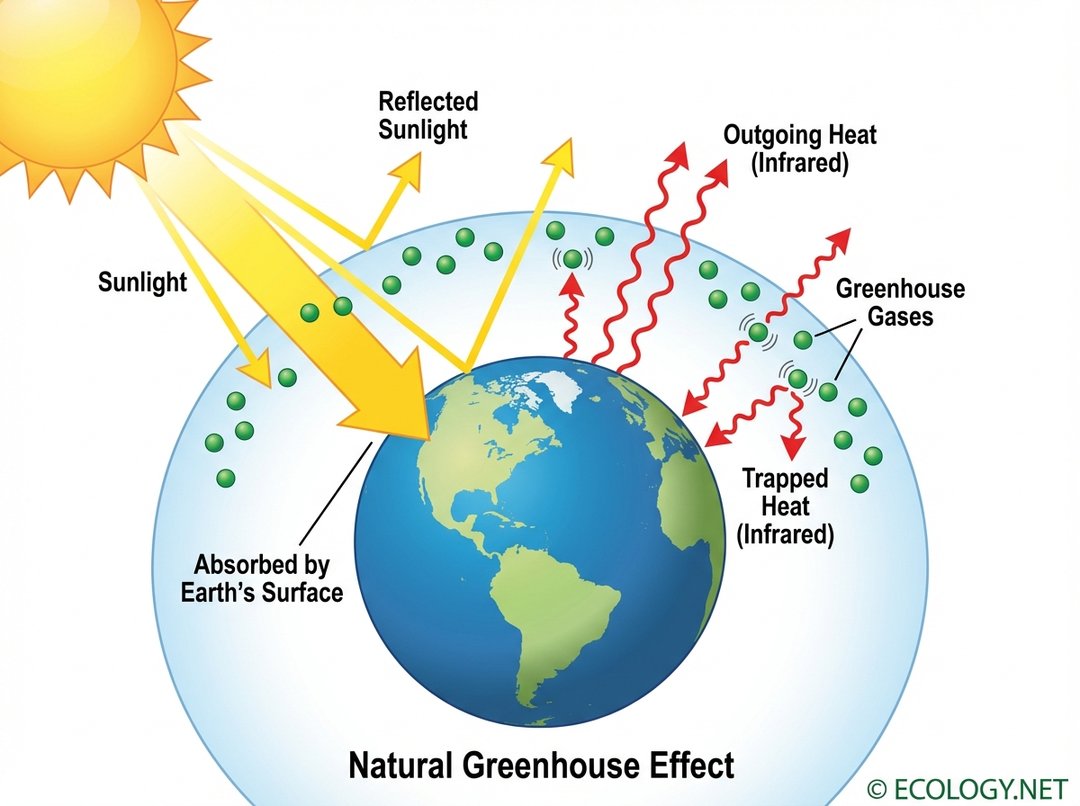
Imagine a greenhouse, a structure designed to cultivate plants by trapping heat from the sun. Earth’s atmosphere functions in a remarkably similar way. When sunlight, primarily in the form of visible light, reaches our planet, about 30 percent is reflected back into space by clouds, ice, and other reflective surfaces. The remaining 70 percent is absorbed by the land, oceans, and atmosphere, warming the Earth’s surface.
As the Earth warms, it radiates heat back towards space, but this outgoing energy is in the form of infrared radiation, which has a longer wavelength than incoming sunlight. Certain gases in our atmosphere, known as greenhouse gases, are transparent to incoming sunlight but effectively absorb and re-emit this outgoing infrared radiation. This absorption and re-emission process traps heat within the lower atmosphere, preventing it from escaping directly into space. This trapped heat is what keeps our planet at an average temperature of about 15 degrees Celsius (59 degrees Fahrenheit), a comfortable range for life to flourish. Without this natural process, Earth’s average temperature would plummet to a frigid -18 degrees Celsius (0 degrees Fahrenheit).
The Natural Greenhouse Effect vs. The Enhanced Greenhouse Effect
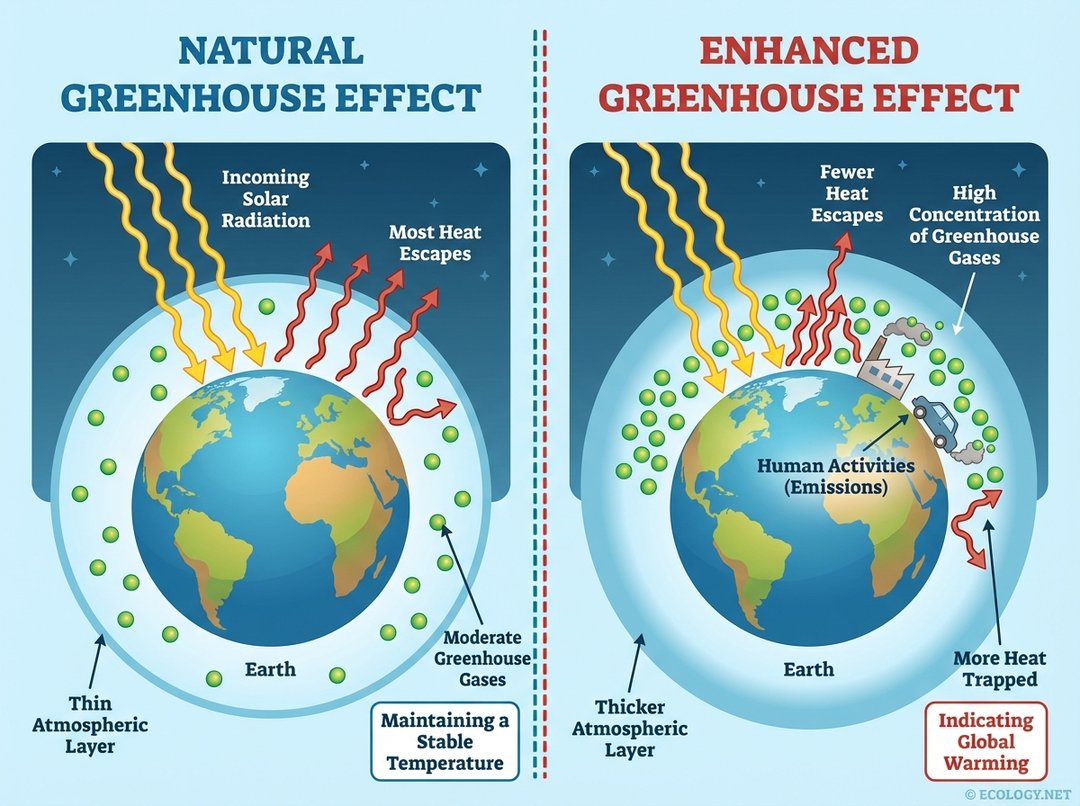
The distinction between the natural and enhanced greenhouse effect is critical for understanding climate change. The natural greenhouse effect is a benevolent force, a necessary condition for life on Earth. It has been operating for billions of years, maintaining a stable climate that has allowed complex ecosystems to evolve.
The enhanced, or anthropogenic, greenhouse effect, however, refers to the additional warming of Earth’s atmosphere caused by human activities. Since the Industrial Revolution, the concentration of greenhouse gases in the atmosphere has increased dramatically. This surge is primarily due to the burning of fossil fuels (coal, oil, and natural gas) for energy, deforestation, industrial processes, and certain agricultural practices.
When these additional greenhouse gases accumulate, they trap more of the outgoing infrared radiation, intensifying the natural warming process. It is akin to adding extra layers to our planet’s thermal blanket, making it thicker and causing the Earth’s surface and lower atmosphere to warm beyond their natural levels. This excess warming is what scientists refer to as global warming, a key component of climate change.
Key Greenhouse Gases and Their Sources
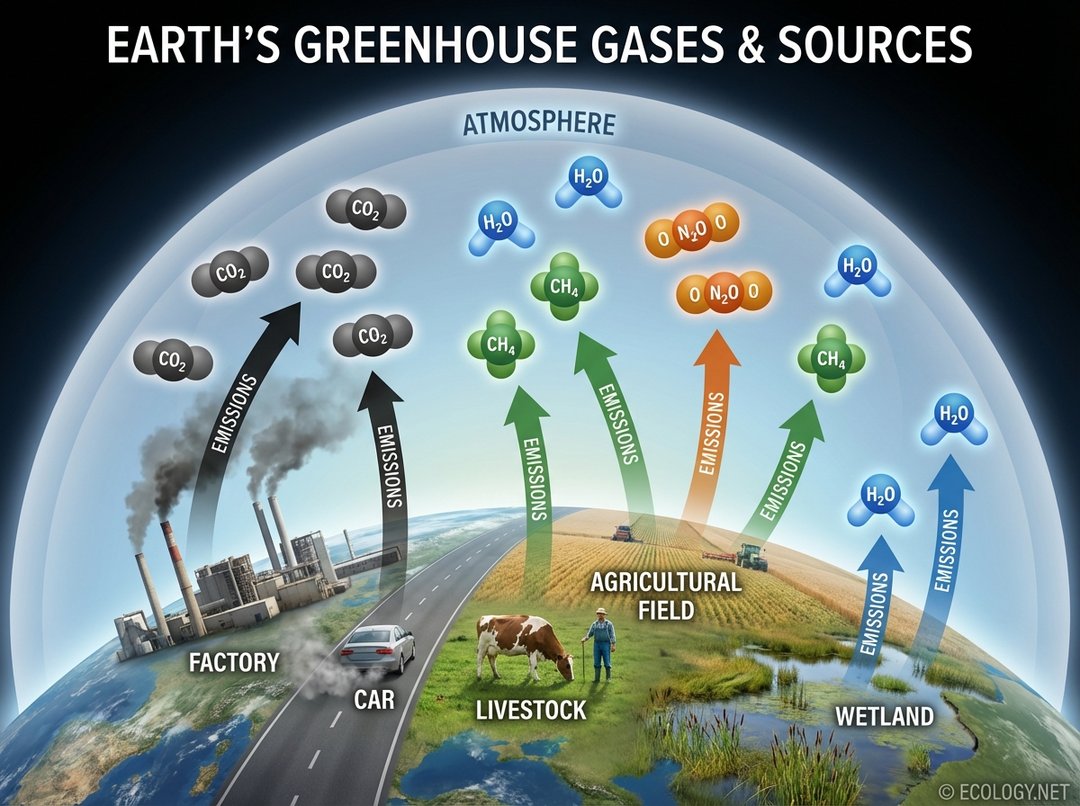
While many gases exist in our atmosphere, only a select few possess the unique molecular structure to absorb and re-emit infrared radiation, thus acting as greenhouse gases. Each gas has a different heat-trapping ability and atmospheric lifetime, meaning how long it remains in the atmosphere.
- Carbon Dioxide (CO2): This is the most significant anthropogenic greenhouse gas.
- Sources: The primary source is the combustion of fossil fuels (coal, oil, natural gas) for electricity generation, transportation, and industrial processes. Deforestation also contributes significantly, as trees absorb CO2, and their removal or burning releases stored carbon.
- Impact: While individual CO2 molecules have a lower heat-trapping potential than some other gases, its sheer volume and long atmospheric lifetime (hundreds to thousands of years) make it the largest contributor to the enhanced greenhouse effect.
- Methane (CH4): A potent greenhouse gas, much more effective at trapping heat than CO2 over a 20-year period, though it has a shorter atmospheric lifetime (around 12 years).
- Sources: Natural sources include wetlands and termites. Anthropogenic sources are diverse and include livestock farming (enteric fermentation in cattle), rice cultivation, landfills (decomposition of organic waste), and the production and transport of coal, natural gas, and oil.
- Nitrous Oxide (N2O): Another powerful greenhouse gas, with a global warming potential nearly 300 times that of CO2 over a 100-year period and an atmospheric lifetime of about 120 years.
- Sources: Primarily from agricultural activities, particularly the use of synthetic and organic fertilizers, which release N2O through microbial action in soils. Other sources include industrial processes and the combustion of fossil fuels.
- Water Vapor (H2O): The most abundant greenhouse gas in the atmosphere.
- Sources: Evaporation from oceans, lakes, and rivers.
- Impact: Water vapor is unique because its concentration is largely controlled by temperature. As the Earth warms due to other greenhouse gases, more water evaporates, leading to more water vapor in the atmosphere. This creates a powerful positive feedback loop, amplifying the warming effect.
- Fluorinated Gases: A group of synthetic gases including hydrofluorocarbons (HFCs), perfluorocarbons (PFCs), sulfur hexafluoride (SF6), and nitrogen trifluoride (NF3).
- Sources: Used in various industrial applications, such as refrigerants, propellants, fire suppressants, and in manufacturing processes.
- Impact: Though present in smaller concentrations, these gases have extremely high global warming potentials, thousands to tens of thousands of times greater than CO2, and very long atmospheric lifetimes.
The Far-Reaching Impact of the Enhanced Greenhouse Effect
The thickening of Earth’s atmospheric blanket has profound and cascading effects across the globe, altering natural systems and impacting human societies.
Rising Global Temperatures
The most direct consequence is a measurable increase in Earth’s average surface temperature. This warming is not uniform, with some regions experiencing more rapid temperature increases than others, particularly the Arctic.
Changes in Weather Patterns
A warmer atmosphere holds more moisture, leading to more intense rainfall and increased risk of flooding in some areas. Conversely, other regions may experience prolonged droughts and more frequent, severe heatwaves. The energy in a warmer climate can also fuel more powerful storms, including hurricanes and typhoons.
Melting Ice and Rising Sea Levels
Increased temperatures cause glaciers and ice sheets, particularly in Greenland and Antarctica, to melt at an accelerated rate. This meltwater, combined with the thermal expansion of ocean water as it warms, contributes to rising sea levels. Coastal communities face increased risks of erosion, flooding, and saltwater intrusion into freshwater supplies.
Ocean Acidification
The oceans absorb a significant portion of the excess CO2 from the atmosphere. While this helps mitigate atmospheric warming, it leads to a chemical reaction that increases the acidity of seawater. Ocean acidification poses a severe threat to marine life, particularly organisms like corals, shellfish, and plankton that rely on calcium carbonate to build their shells and skeletons.
Impacts on Ecosystems and Biodiversity
Species are adapted to specific climatic conditions. Rapid changes in temperature and precipitation patterns can disrupt ecosystems, forcing species to migrate, altering breeding cycles, and increasing the risk of extinction for those unable to adapt quickly enough. Coral reefs, for example, are highly vulnerable to warming waters and acidification.
Threats to Food Security and Human Health
Changes in climate can reduce agricultural yields, particularly in regions already vulnerable to food insecurity. Extreme weather events can destroy crops and infrastructure. Furthermore, heatwaves pose direct health risks, and changes in climate can expand the range of vector-borne diseases like malaria and dengue fever.
Addressing the Challenge: Solutions and Mitigation
Tackling the enhanced greenhouse effect requires a global, multi-faceted approach involving technological innovation, policy changes, and individual actions.
- Transition to Renewable Energy: Shifting away from fossil fuels towards clean, renewable energy sources like solar, wind, hydroelectric, and geothermal power is paramount. This involves investing in infrastructure, research, and development for these technologies.
- Energy Efficiency and Conservation: Reducing energy consumption through improved insulation in buildings, more efficient appliances, and smarter transportation systems can significantly lower greenhouse gas emissions.
- Sustainable Agriculture and Land Use: Implementing practices that reduce methane and nitrous oxide emissions, such as improved livestock management and precision fertilizer application, is crucial. Reforestation and preventing deforestation are vital for absorbing atmospheric CO2.
- Carbon Capture and Storage (CCS): Technologies that capture CO2 emissions from industrial sources and power plants before they enter the atmosphere and store them underground are being developed, though their widespread application faces challenges.
- Individual Actions: Every individual can contribute by making conscious choices, such as reducing energy consumption, choosing sustainable transportation, adopting plant-rich diets, and supporting businesses committed to environmental responsibility.
A Call to Action for a Balanced Future
The greenhouse effect is a testament to the intricate balance of Earth’s natural systems. It is a phenomenon that has nurtured life for eons, providing the warmth necessary for our planet to thrive. However, the enhanced greenhouse effect, driven by human activities, is now pushing this delicate balance out of equilibrium, leading to consequences that affect every corner of the globe. Understanding this complex process is the first step towards informed action. By embracing sustainable practices, fostering innovation, and working collectively, humanity can strive to restore the balance of Earth’s essential thermal blanket, ensuring a stable and healthy planet for generations to come.