Unlocking the Secrets of Life’s Resilience: A Deep Dive into Genetic Diversity
Imagine a world where every living thing is exactly the same. Every tree in a forest is an identical clone, every animal in a herd shares the same genetic makeup, every human being possesses the exact same traits. While this might sound like a science fiction premise, it is a stark illustration of what a world without genetic diversity would look like. And it would be a world teetering on the brink of collapse.
Genetic diversity is one of the most fundamental concepts in ecology and evolution, yet its profound importance is often overlooked. It is the hidden strength that allows life to adapt, survive, and thrive in an ever-changing environment. Without it, species become vulnerable, ecosystems falter, and the intricate web of life unravels. This exploration will uncover what genetic diversity truly is, why it matters so much, how it arises, and what we can do to protect this invaluable natural resource.
What Exactly Is Genetic Diversity?
At its core, genetic diversity refers to the total number of genetic characteristics in the genetic makeup of a species. Think of it as the variety of genes and alleles present within a population or species. To understand this, we need a quick refresher on some basic biology.
- Genes: These are the fundamental units of heredity, segments of DNA that carry instructions for building and maintaining an organism. They determine traits like eye color, disease resistance, or the ability of a plant to tolerate drought.
- Alleles: These are different versions of the same gene. For example, a gene for flower color might have an allele for red flowers and another allele for white flowers.
- Gene Pool: This term refers to the complete set of unique alleles in a population. A large and varied gene pool indicates high genetic diversity.
When a population has high genetic diversity, it means there is a wide array of different alleles for many genes among its individuals. Conversely, low genetic diversity means that most individuals share very similar genetic characteristics, with few variations.
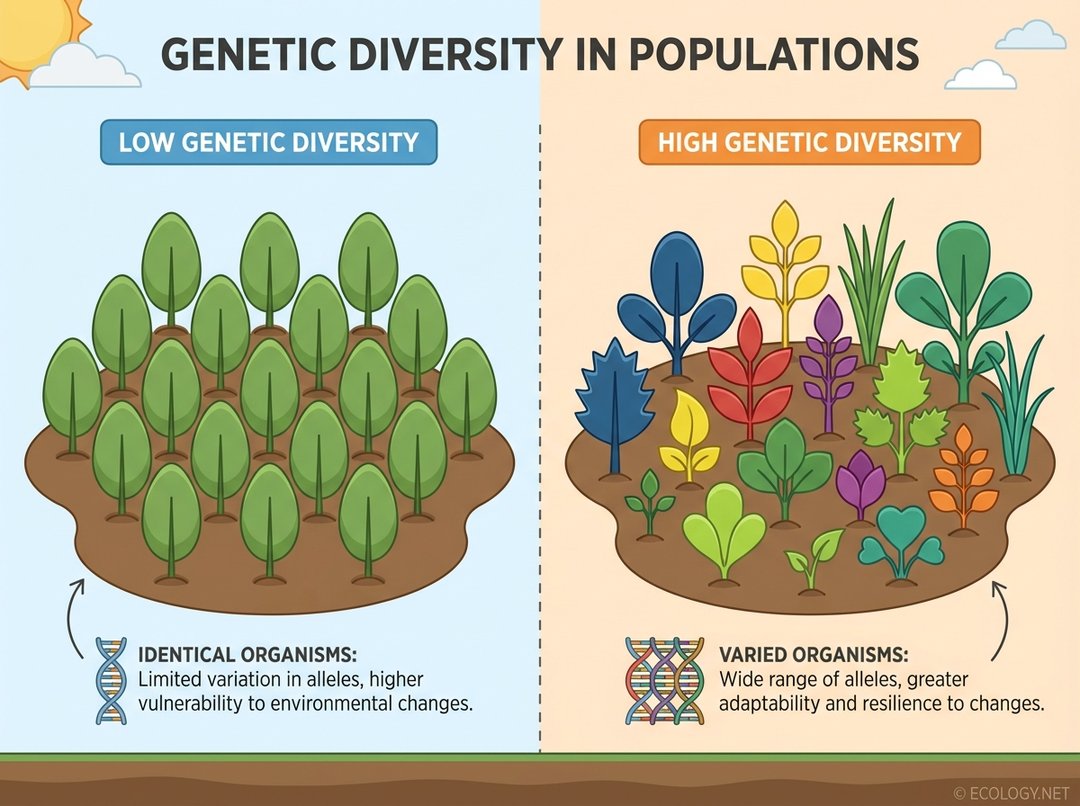
This visual comparison makes the concept clear. The group on the left, with its uniform members, represents low genetic diversity. Should a new challenge arise, like a specific disease, all individuals might be equally susceptible. The group on the right, however, with its rich tapestry of variations, possesses the inherent flexibility to face such challenges. Some individuals might have traits that allow them to survive, ensuring the population’s continuity.
Why Is Genetic Diversity Important?
The importance of genetic diversity cannot be overstated. It is the bedrock of a species’ ability to adapt and survive, acting as a biological insurance policy against environmental change and threats.
1. Resilience Against Disease and Pests
Perhaps the most dramatic illustration of genetic diversity’s importance comes from its role in disease resistance. When a population lacks genetic variety, all individuals might share the same susceptibility to a particular pathogen or pest. If one individual is vulnerable, chances are they all are.
The Irish Potato Famine of the 1840s stands as a tragic testament to the dangers of low genetic diversity. Irish peasants relied heavily on a single variety of potato, the ‘Lumper’, which was genetically uniform. When a new blight, Phytophthora infestans, arrived, it rapidly wiped out potato crops across the country, leading to widespread starvation and mass emigration. Had there been a greater variety of potato strains, some might have possessed natural resistance to the blight, mitigating the disaster.
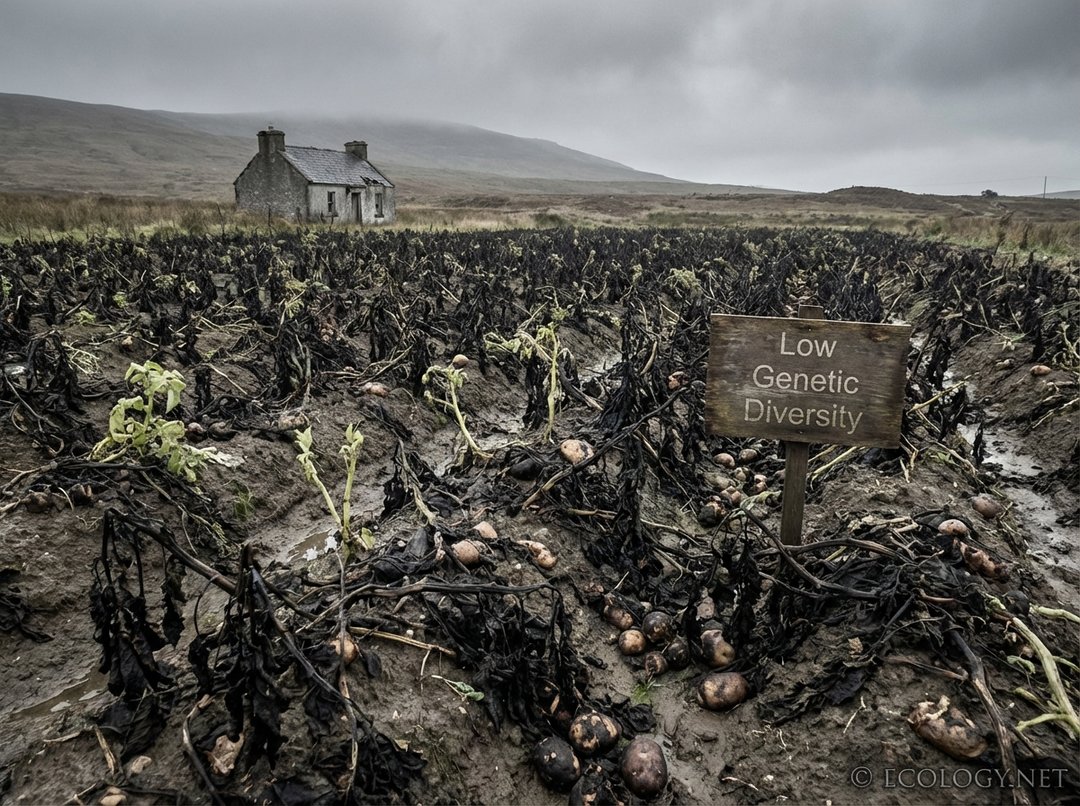
This devastating historical event powerfully demonstrates how a lack of genetic variation can lead to catastrophic consequences for both species and human societies.
2. Adaptation to Environmental Change
Our planet is dynamic. Climates shift, habitats transform, and new challenges constantly emerge. Genetic diversity provides the raw material for evolution, allowing species to adapt to these changes over generations. If a population faces a new environmental stressor, such as rising temperatures or a new predator, individuals with advantageous alleles are more likely to survive and reproduce, passing those beneficial traits to their offspring. Without this genetic variation, a species might simply lack the necessary traits to cope and could face extinction.
3. Ecosystem Stability and Health
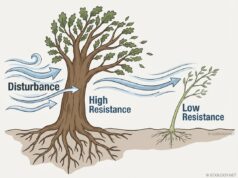
Healthy ecosystems are often characterized by high biodiversity, which includes genetic diversity within species. A diverse gene pool contributes to the overall health and stability of an ecosystem by ensuring that its component species are robust and adaptable. For example, a forest with genetically diverse tree species is more likely to withstand a specific pest outbreak or a period of drought than a monoculture plantation.
4. Maintaining Reproductive Fitness
Low genetic diversity often leads to inbreeding, especially in small, isolated populations. Inbreeding occurs when closely related individuals mate, increasing the likelihood that offspring will inherit two copies of harmful recessive alleles. This can result in “inbreeding depression,” characterized by reduced fertility, lower survival rates, increased susceptibility to disease, and overall decreased fitness. Many endangered species suffer from inbreeding depression, making their recovery even more challenging.
How Does Genetic Diversity Arise and Change?
Genetic diversity is not static; it is a constantly evolving tapestry shaped by several key biological processes:
- Mutation: This is the ultimate source of all new genetic variation. Mutations are random changes in the DNA sequence. While many mutations are neutral or harmful, some can be beneficial, introducing new alleles into the gene pool.
- Gene Flow (Migration): The movement of individuals, and thus their genes, between populations is known as gene flow. When individuals from one population migrate and breed with individuals from another, they introduce new alleles, increasing genetic diversity in the recipient population and making the populations more similar genetically.
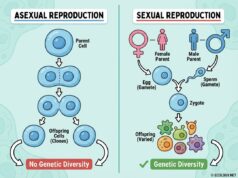
- Sexual Reproduction: The shuffling and recombination of genes during sexual reproduction create unique combinations of alleles in offspring. This process does not create new alleles, but it generates new combinations of existing ones, contributing significantly to the diversity seen within a population.
- Genetic Drift: This refers to random fluctuations in allele frequencies from one generation to the next, particularly pronounced in small populations. Genetic drift can lead to the loss of alleles, thereby reducing genetic diversity.
- Natural Selection: While natural selection acts on existing variation, it can also influence genetic diversity. By favoring certain alleles that confer a survival advantage, it can increase the frequency of those alleles, but it can also reduce diversity if it strongly selects against other alleles.
Threats to Genetic Diversity
Despite its critical importance, genetic diversity is under severe threat globally, primarily due to human activities. The loss of genetic diversity is a silent crisis, often less visible than species extinction but equally devastating.
- Habitat Loss and Fragmentation: As natural habitats are destroyed or broken into smaller, isolated patches, populations become smaller and more isolated. This restricts gene flow and makes them more susceptible to genetic drift and inbreeding.
- Overexploitation: Overhunting, overfishing, and overharvesting of wild populations can drastically reduce their numbers, leading to a bottleneck effect where only a small fraction of the original genetic diversity survives.
- Climate Change: Rapid changes in temperature, precipitation patterns, and extreme weather events can push species beyond their adaptive limits. Populations lacking the genetic variation to cope with these shifts may decline or go extinct.
- Monoculture Agriculture: The widespread practice of growing genetically uniform crop varieties and raising genetically similar livestock breeds has significantly reduced the genetic diversity of our food sources. This makes our agricultural systems highly vulnerable to new diseases and pests, echoing the Irish Potato Famine.
- Pollution: Contaminants in the environment can directly harm organisms, reduce population sizes, and indirectly impact genetic diversity by stressing populations.
Conserving Genetic Diversity: A Path Forward
Protecting genetic diversity is not just an ecological imperative; it is a matter of human survival and well-being. Several strategies are crucial for safeguarding this vital resource:
- Protected Areas and Habitat Restoration: Establishing and effectively managing national parks, wildlife reserves, and other protected areas helps maintain large, interconnected populations, allowing for natural gene flow and reducing the risk of genetic erosion. Restoring degraded habitats can also expand living space for species.
- Ex Situ Conservation (Off-site Conservation): This involves preserving genetic material outside of natural habitats.
- Seed Banks: Store seeds of wild and cultivated plants, acting as a genetic library for future use.
- Gene Banks: Preserve genetic material from animals (e.g., sperm, eggs, embryos) and microorganisms.
- Zoological Parks and Botanical Gardens: Maintain breeding programs for endangered species, carefully managing genetic lineages to maximize diversity.
- Sustainable Agriculture and Breeding Programs: Promoting diverse crop varieties and livestock breeds, including traditional and heirloom varieties, enhances the resilience of our food systems. Breeding programs can also focus on maintaining genetic diversity within domesticated species.
- Reducing Human Impact: Addressing the root causes of biodiversity loss, such as climate change, pollution, and habitat destruction, is fundamental to preserving genetic diversity in the long term.
- Public Awareness and Education: Informing the public about the importance of genetic diversity fosters support for conservation efforts and encourages sustainable practices.
The Unseen Strength: A Call to Action
Genetic diversity is the unseen strength woven into the fabric of life, a testament to evolution’s ingenuity. It is the reason species can adapt to a changing world, resist disease, and continue their journey through time. While often less visible than the majestic tiger or the ancient redwood, its loss is just as profound, undermining the very foundations of biological resilience.
Understanding and valuing genetic diversity is the first step towards its protection. By supporting conservation initiatives, promoting sustainable practices, and making informed choices, we can all contribute to safeguarding this irreplaceable asset, ensuring a vibrant and adaptable future for all life on Earth.