The air we breathe, the food we eat, the clothes we wear, and the homes we live in all have something in common: they leave an invisible trail, a mark on our planet. This mark is known as a carbon footprint, and understanding it is one of the most crucial steps we can take towards a more sustainable future. Far from being a complex scientific enigma, a carbon footprint is a concept that touches every aspect of our daily lives, revealing the environmental impact of our existence.
What Exactly is a Carbon Footprint?
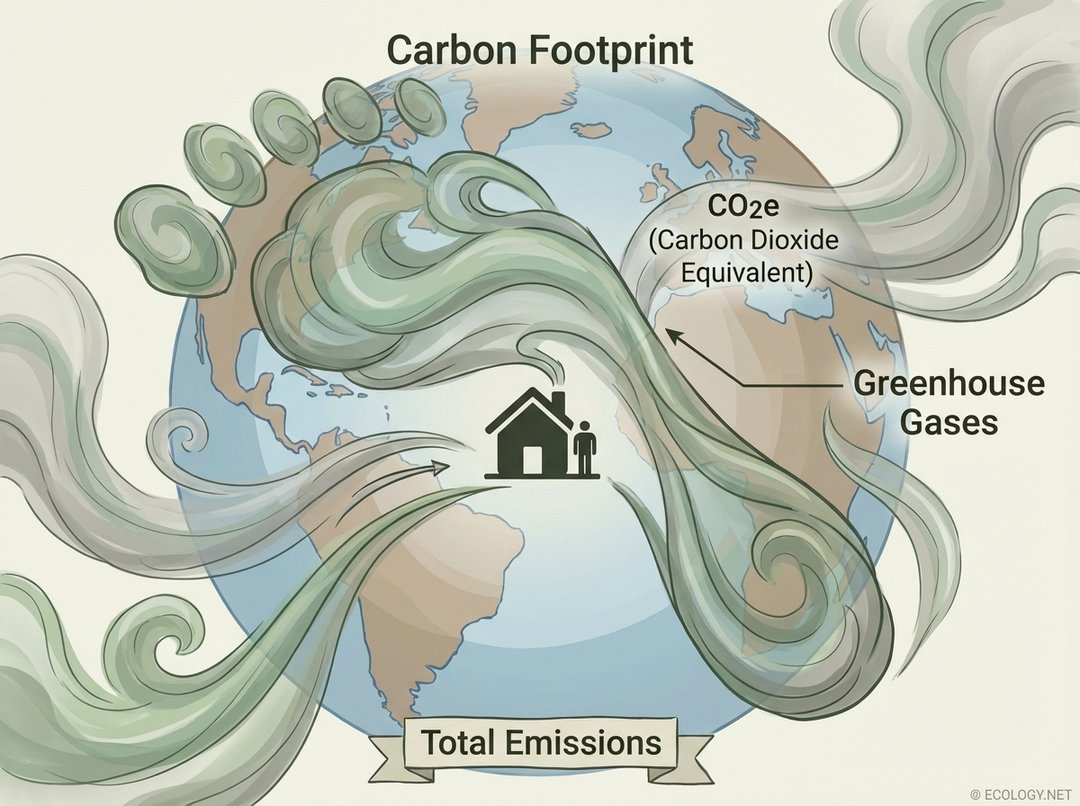
At its core, a carbon footprint represents the total amount of greenhouse gases (GHGs) generated by our actions. Think of it as the sum of all emissions of carbon dioxide (CO2) and other GHGs, like methane (CH4) and nitrous oxide (N2O), that are released into the atmosphere as a result of human activities. Because these different gases have varying warming potentials, they are often converted into a single, standardized unit: carbon dioxide equivalent, or CO2e.
This CO2e figure provides a comprehensive measure, allowing us to compare the impact of diverse activities, from driving a car to manufacturing a smartphone. It encompasses everything from the fuel burned directly by your vehicle to the energy consumed to produce the food on your plate. Essentially, it is a powerful metric that quantifies our contribution to climate change.
Direct vs. Indirect Emissions: Unpacking the Sources
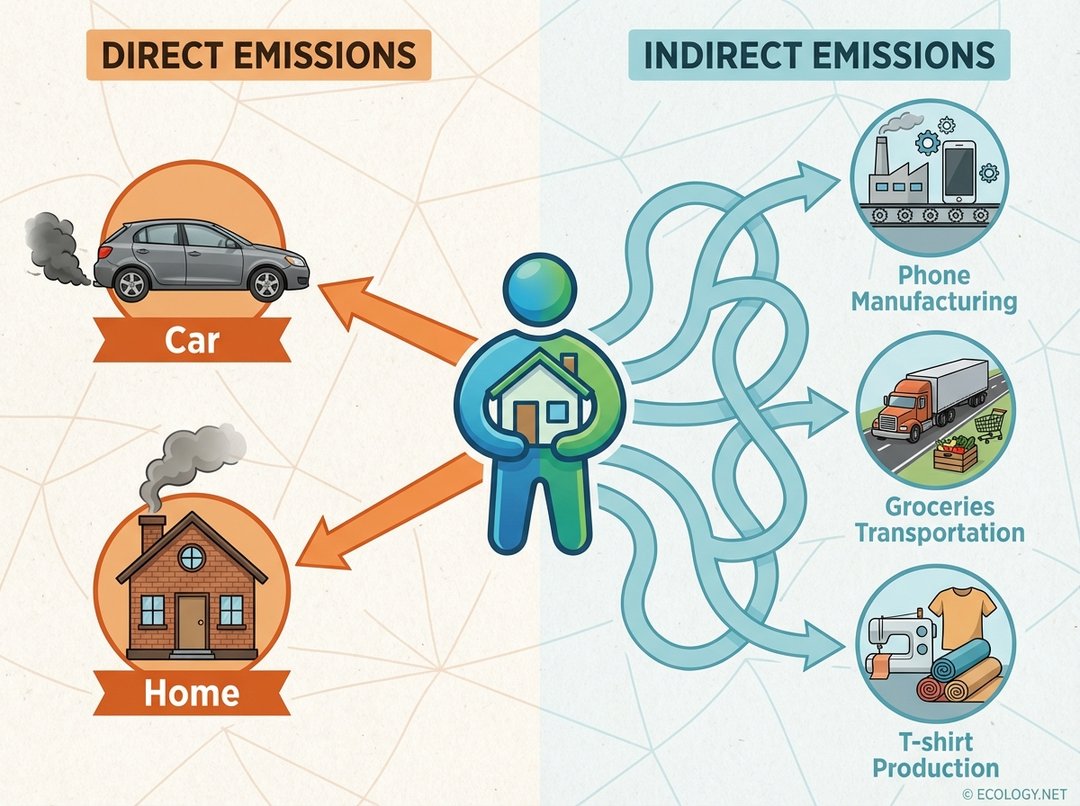
To truly grasp your carbon footprint, it is essential to distinguish between two main categories of emissions: direct and indirect.
Direct Emissions: What You Control
These are the greenhouse gases released directly from activities under your immediate control. They are often the easiest to identify and, in many cases, to reduce. Examples include:
- Transportation: The exhaust fumes from your car, motorcycle, or other personal vehicles.
- Home Energy: The emissions from burning natural gas, oil, or coal for heating, cooling, or cooking in your home.
- Electricity Generation: While the power plant itself emits the gases, your consumption of electricity directly drives that generation, making it a direct consequence of your choices.
Indirect Emissions: The Hidden Impact
Indirect emissions are far more pervasive and often less obvious. These are the emissions associated with the entire lifecycle of the products and services you consume, but which are not directly released by you. They occur upstream (during production) and downstream (during disposal). Consider these examples:
- Food: The emissions from growing, harvesting, processing, packaging, and transporting your groceries. This includes methane from livestock, nitrous oxide from fertilizers, and CO2 from refrigeration and transport.
- Products: The energy used to manufacture your phone, your clothes, your furniture, and every other item you purchase. This also includes the emissions from extracting raw materials and transporting finished goods.
- Services: The emissions embedded in services like banking, healthcare, or even streaming entertainment, which require energy for data centers, offices, and infrastructure.
Understanding this distinction is crucial because it highlights that our environmental impact extends far beyond the immediate actions we take. Every purchase, every meal, and every decision carries an embedded carbon cost.
The Invisible Trail: How Your Daily Life Contributes
Let us delve deeper into how common aspects of daily life contribute to your carbon footprint, painting a clearer picture of this invisible trail.
- Transportation Choices:
- Driving: A significant contributor. The type of vehicle, its fuel efficiency, and the distance traveled all play a role. A gas-guzzling SUV driven daily will have a much larger footprint than an electric car or public transport.
- Flying: Air travel is particularly carbon-intensive due to the high altitude release of emissions and the sheer amount of fuel consumed over long distances. A single long-haul flight can equate to a substantial portion of an individual’s annual footprint.
- What You Eat:
- Meat and Dairy: The production of beef, lamb, and dairy products is notoriously carbon-intensive, primarily due to methane emissions from livestock and the land use required for grazing and feed crops.
- Food Miles: The distance your food travels from farm to plate. Locally sourced, seasonal produce generally has a lower footprint than items flown in from across the globe.
- Food Waste: When food is thrown away, the energy and resources used to produce it are also wasted, and it often decomposes in landfills, releasing methane.
- Energy at Home:
- Electricity Consumption: The source of your electricity matters. If your grid relies heavily on fossil fuels, your electricity use will have a higher footprint than if it is powered by renewables.
- Heating and Cooling: Maintaining comfortable indoor temperatures, especially in poorly insulated homes, requires substantial energy, leading to significant emissions.
- Appliance Use: Energy-intensive appliances, particularly older models, can add to your footprint.
- The Things You Buy:
- Manufacturing: Every product, from a simple pen to a complex computer, requires energy and resources for its extraction, processing, and assembly.
- Packaging: Excessive or non-recyclable packaging adds to the footprint through its production and disposal.
- Planned Obsolescence: Products designed to fail or become outdated quickly encourage more consumption and, therefore, more emissions.
Beyond the Basics: The Life Cycle Assessment
For a truly comprehensive understanding of the environmental impact of a product or service, scientists and businesses employ a rigorous methodology called Life Cycle Assessment (LCA). LCA goes beyond just direct and indirect emissions to evaluate the environmental impacts of a product, process, or service throughout its entire existence, from “cradle to grave.”
An LCA typically examines several stages:
- Raw Material Extraction: The impact of obtaining the basic materials needed.
- Manufacturing and Processing: The energy and resources used to transform raw materials into a finished product.
- Transportation: The emissions from moving materials and products between different stages and to the consumer.
- Use Phase: The environmental impact during the product’s active life, such as energy consumption for appliances or water for washing clothes.
- End-of-Life (Disposal/Recycling): The impact of discarding the product, whether it ends up in a landfill, is incinerated, or recycled.
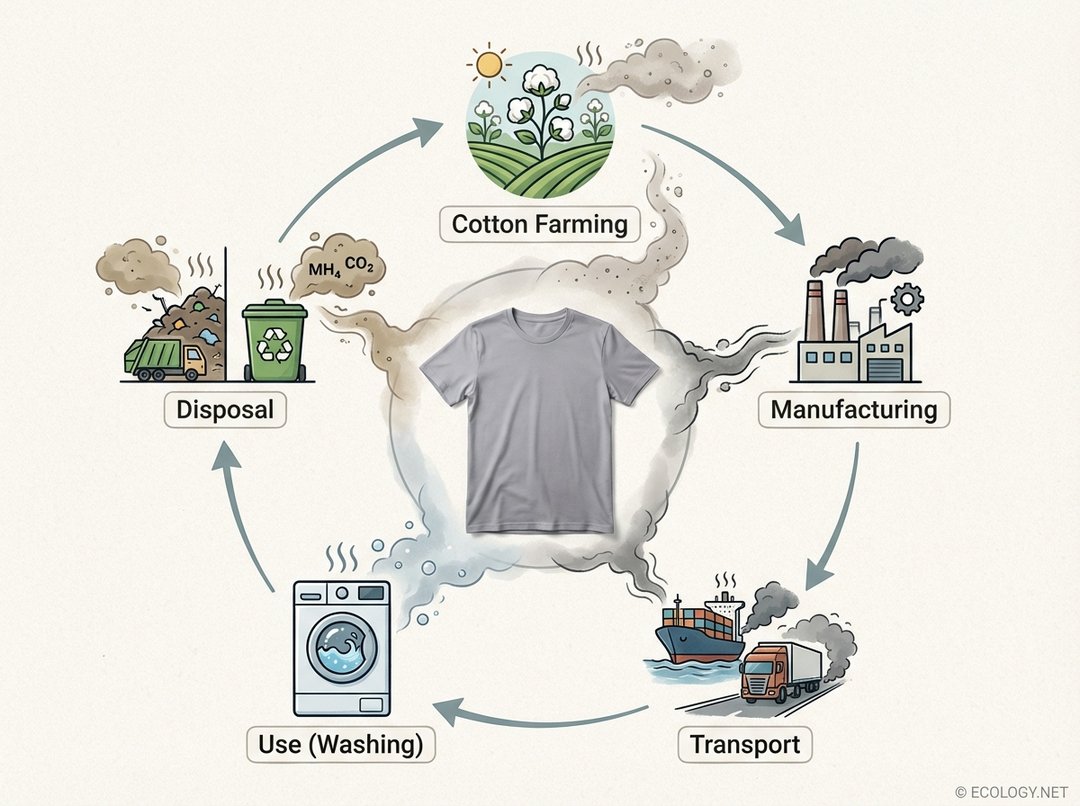
Consider the humble T-shirt as an example. Its carbon footprint is not just about the energy used to wash it. It begins with the cultivation of cotton, which involves water, pesticides, and fertilizers, each with its own embedded emissions. Then comes the energy-intensive process of spinning the cotton into yarn, weaving it into fabric, dyeing it, and cutting and sewing it into a shirt. The shirt is then transported from the factory to a distribution center, then to a retail store, and finally to your home. During its use, you wash and dry it, consuming water and energy. Finally, when you discard it, its fate as landfill waste or recycled material determines its final environmental impact.
Why Does Your Carbon Footprint Matter?
The collective sum of all individual and organizational carbon footprints contributes directly to the concentration of greenhouse gases in Earth’s atmosphere. These gases trap heat, leading to a phenomenon known as the greenhouse effect, which is warming our planet. This warming, often referred to as climate change, has far-reaching and severe consequences:
- Rising Global Temperatures: Leading to more frequent and intense heatwaves.
- Extreme Weather Events: Increased frequency and severity of storms, droughts, floods, and wildfires.
- Sea-Level Rise: Threatening coastal communities and ecosystems due to melting glaciers and ice sheets.
- Ocean Acidification: Harming marine life and coral reefs.
- Loss of Biodiversity: Species struggling to adapt to rapidly changing habitats.
Every kilogram of CO2e we emit, whether directly or indirectly, adds to this global challenge. Understanding and reducing our individual and collective footprints is not merely an academic exercise; it is a vital step in mitigating these impacts and safeguarding the planet for future generations.
Measuring Your Footprint: Tools and Approaches
While a precise, real-time measurement of your exact carbon footprint can be complex, numerous online calculators and tools offer excellent estimates. These tools typically ask about your energy consumption, travel habits, dietary choices, and purchasing patterns. While they may not capture every nuance, they provide valuable insights and highlight the areas where your impact is greatest.
The act of calculating your footprint, even an estimate, is a powerful educational experience, revealing the hidden environmental costs of everyday choices.
For businesses and governments, the process is far more rigorous, often involving detailed data collection, supply chain analysis, and adherence to international standards like the Greenhouse Gas Protocol.
Shrinking Your Footprint: Practical Steps for a Greener Future
The good news is that reducing your carbon footprint is entirely within reach, often leading to benefits beyond environmental protection, such as cost savings and improved health. Here are practical steps everyone can take:
- Energy Efficiency at Home:
- Switch to renewable energy providers if available.
- Improve insulation, seal drafts, and use energy-efficient appliances.
- Turn off lights and electronics when not in use.
- Lower your thermostat in winter and raise it in summer.
- Sustainable Transportation:
- Walk, cycle, or use public transport whenever possible.
- Consider electric or hybrid vehicles.
- Combine errands to reduce driving trips.
- Reduce air travel, or choose direct flights when flying.
- Conscious Consumption and Diet:
- Reduce consumption of meat and dairy, opting for more plant-based meals.
- Buy local, seasonal produce to reduce food miles.
- Minimize food waste by planning meals and composting scraps.
- Choose durable, long-lasting products and repair items instead of replacing them.
- Support companies committed to sustainable practices and transparent supply chains.
- Waste Reduction:
- Reduce, reuse, recycle, and compost.
- Avoid single-use plastics and excessive packaging.
- Advocacy and Education:
- Talk about climate change and sustainable living with friends and family.
- Support policies and initiatives that promote renewable energy and carbon reduction.
Conclusion
The concept of a carbon footprint is a powerful lens through which to view our impact on the planet. It transforms the abstract idea of climate change into a tangible, measurable reality tied to our daily choices. By understanding the difference between direct and indirect emissions, appreciating the full life cycle of products, and recognizing the collective weight of our individual actions, we empower ourselves to make more informed decisions.
Shrinking your carbon footprint is not about perfection, but about progress. Every small change, when multiplied across communities and nations, contributes to a healthier planet. It is a journey of continuous learning and conscious living, one that ultimately leads to a more sustainable, resilient, and equitable future for all.