The Ultimate Survivors: Unpacking the World of Omnivores
In the intricate tapestry of life, organisms occupy various roles, each defined by how they obtain energy. While some creatures specialize in consuming plants and others exclusively hunt animals, a fascinating group thrives by embracing both. These are the omnivores, the ultimate generalists, whose flexible diets allow them to adapt and flourish in an ever-changing world. Understanding omnivores reveals not just their individual survival strategies, but also their profound impact on the ecosystems they inhabit.
What Exactly is an Omnivore?
At its core, an omnivore is an animal that naturally consumes both plant and animal matter. This broad definition distinguishes them from herbivores, which feed solely on plants, and carnivores, which subsist entirely on meat. The term “omnivore” itself comes from the Latin words “omnis” meaning “all” or “everything,” and “vorare” meaning “to devour.” This “eat all” strategy is a testament to their adaptability and resourcefulness.
Unlike specialized eaters, omnivores possess a digestive system capable of processing a wide range of food types. Their teeth often reflect this versatility, featuring a combination of sharp canines for tearing meat, flat molars for grinding plants, and incisors for biting. This dental toolkit, along with a digestive tract that can handle both fibrous plant material and protein-rich animal tissue, equips them for a diverse menu.
The Evolutionary Advantage of a Flexible Diet
The ability to eat both plants and animals offers a significant evolutionary advantage. In environments where food sources can be unpredictable or seasonal, a specialized diet can be a liability. If a herbivore’s preferred plant becomes scarce, or a carnivore’s prey population declines, survival becomes a challenge. Omnivores, however, can simply shift their diet to whatever is available. This dietary flexibility enhances their chances of survival and allows them to colonize a wider range of habitats.
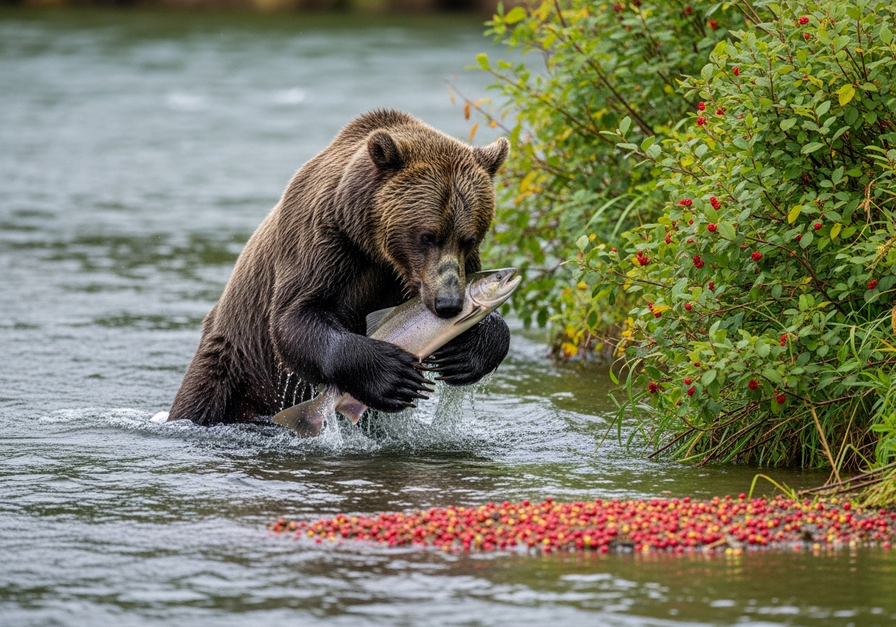
Consider the grizzly bear, a magnificent example of an omnivore in action. While renowned for their prowess in catching salmon, these powerful animals also consume a vast array of plant matter, including berries, roots, and nuts. This dual feast, as seen with a grizzly bear mid-capture of a salmon while surrounded by ripe berries, perfectly illustrates the simultaneous consumption of animal and plant matter. This flexible diet allows grizzlies to thrive across diverse landscapes, adapting to the seasonal availability of different food sources.
A World of Omnivores: Diverse Examples
Omnivores are found across the animal kingdom, from tiny insects to large mammals. Their varied diets and behaviors offer a fascinating glimpse into ecological adaptation.
- Humans: Perhaps the most prominent omnivores, humans have evolved to consume a vast array of foods, a key factor in our global distribution and success.
-
Pigs: Domestic pigs are classic examples of opportunistic omnivores. Their natural foraging behavior involves rooting through soil for tubers, roots, and insects, while also readily consuming fallen fruits, grains, and even small animals.
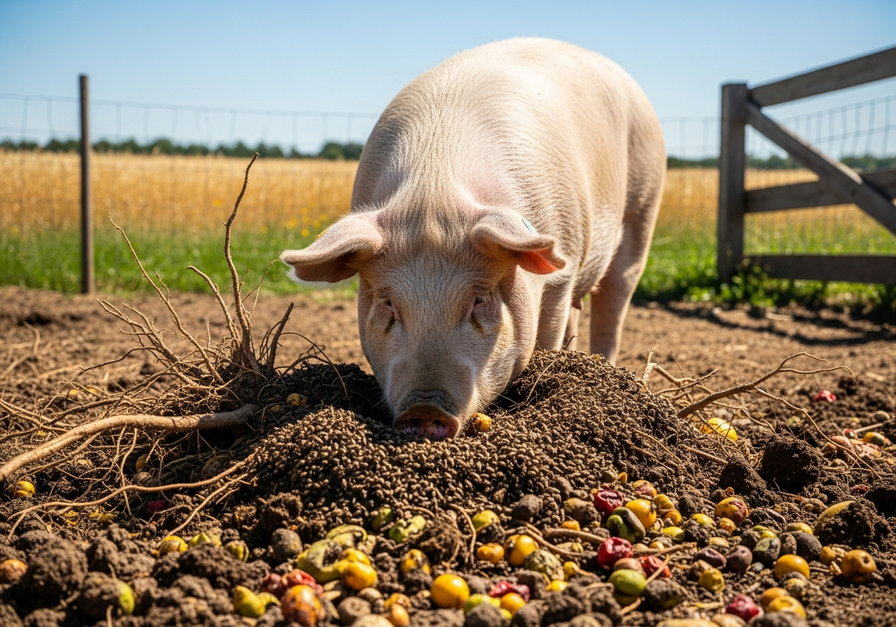
This image of a pig with its snout buried in earth rich with roots, fallen fruit, and insects, with a sunny field of wheat in the background, beautifully illustrates the varied diet of pigs, reinforcing the concept that omnivores consume a broad spectrum of foods beyond simple meat or plant categories. -
Raccoons: These masked mammals are incredibly adaptable urban and wild omnivores. They will eat almost anything, from berries, nuts, and corn to insects, eggs, small rodents, and even human refuse.
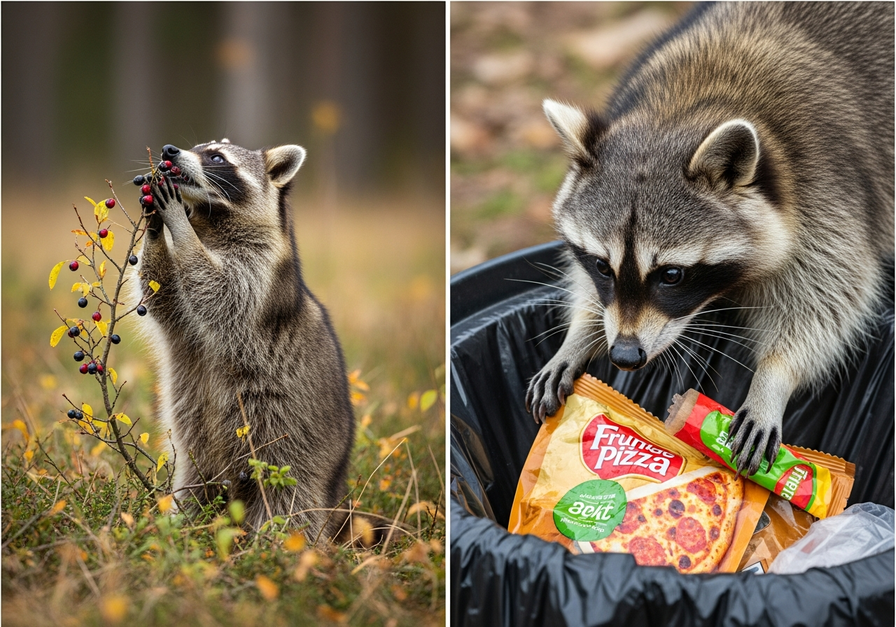
This split image of a raccoon picking berries in a forest and then rummaging through a trash can highlights the raccoon’s opportunistic feeding habits and its remarkable adaptability, showcasing its ability to exploit diverse food sources in both natural and human-altered environments. - Chickens: While often thought of as grain eaters, chickens are true omnivores, eagerly pecking at insects, worms, and even small lizards alongside seeds and greens.
- Foxes: Red foxes, for instance, have a highly varied diet that includes rodents, rabbits, birds, insects, fruits, and berries, adapting their menu to seasonal availability.
- Some Fish: Certain fish species, like carp, consume both aquatic plants and small invertebrates, demonstrating omnivory in aquatic environments.
The Ecological Role of Omnivores
Omnivores play a crucial and often underestimated role in maintaining the balance and health of ecosystems. Their ability to consume diverse food sources means they interact with multiple trophic levels, bridging gaps in food webs.
- Nutrient Cycling: By consuming both plant and animal matter, omnivores contribute significantly to the decomposition and redistribution of nutrients throughout an ecosystem. They help break down organic material, making nutrients available for other organisms.
- Seed Dispersal: Many omnivores consume fruits and then disperse the seeds through their waste, often far from the parent plant. This process is vital for plant reproduction and the colonization of new areas. Raccoons eating berries are a prime example of this ecological service.
- Population Regulation: As predators, omnivores help control the populations of various prey species. As consumers of plants, they can also influence plant community structure. This dual role helps prevent any single species from dominating an ecosystem.
- Ecosystem Resilience: Their dietary flexibility makes ecosystems more resilient. If one food source diminishes, omnivores can switch to another, preventing a collapse in the food web that might occur if all consumers were highly specialized.
Beyond the Obvious: Nuances of Omnivory
While the basic definition of an omnivore is straightforward, the reality is often more complex. Not all omnivores consume equal proportions of plant and animal matter, and their diets can shift dramatically based on age, season, and geographical location.
Some omnivores might be primarily herbivorous but supplement their diet with animal protein when available, such as some species of bears that eat mostly berries but will opportunistically hunt or scavenge. Others might be primarily carnivorous but consume plant matter to obtain essential vitamins or minerals, or simply when prey is scarce. This dietary plasticity is a hallmark of omnivory.
The impact of omnivores on their environment can also be multifaceted. For example, while they contribute to seed dispersal, some omnivores can also become agricultural pests when they exploit human food sources. Their adaptability, while beneficial for their survival, can sometimes lead to conflicts with human interests, particularly in urbanizing landscapes.
Challenges and Adaptations for a Mixed Diet
Maintaining a mixed diet requires specific biological adaptations.
- Digestive Systems: Omnivores typically have a digestive tract that is intermediate in length and complexity compared to the very long, complex systems of herbivores (designed for breaking down cellulose) and the shorter, simpler systems of carnivores (optimized for protein digestion). Their stomachs are often capable of handling both plant and animal material, and their intestines can absorb nutrients from both.
-
Dental Structures: As mentioned, omnivores possess a generalized dentition.
- Incisors: For biting and nipping.
- Canines: For tearing and piercing, particularly useful for meat.
- Premolars and Molars: Often flattened or rounded, suitable for grinding and crushing both plant material and bone.
- Behavioral Adaptations: Omnivores often exhibit sophisticated foraging behaviors. They may learn to identify a wide variety of edible plants, develop hunting strategies for different prey, and even use tools to access food. Their intelligence and problem-solving skills are often highly developed, allowing them to exploit diverse food niches.
Conclusion
Omnivores are the unsung heroes of ecological resilience. Their ability to thrive on a mixed diet of plants and animals makes them incredibly adaptable, allowing them to survive in a vast array of habitats and fluctuating conditions. From the mighty grizzly to the resourceful raccoon, these animals demonstrate the profound evolutionary benefits of not putting all your dietary eggs in one basket. By bridging different trophic levels, omnivores play indispensable roles in nutrient cycling, seed dispersal, and maintaining the delicate balance of ecosystems, truly embodying the spirit of survival and adaptability in the natural world.