Imagine an intricate web where every strand is connected, and tugging on one strand sends ripples throughout the entire structure. This is not just a metaphor for life; it is the fundamental reality of ecosystems, and few phenomena illustrate this interconnectedness as dramatically as trophic cascades. These powerful ecological processes reveal how changes at one level of a food web can trigger a cascade of effects, transforming entire landscapes and aquatic environments.
At its heart, a trophic cascade describes a series of indirect interactions that can control entire ecosystems. It typically involves a top predator influencing the abundance of its prey, which in turn affects the next lower trophic level, and so on. Think of it as a domino effect, but with living organisms and profound ecological consequences.
Understanding the Ripple Effect: What are Trophic Cascades?
In ecology, a food web illustrates who eats whom. Trophic levels represent the different positions organisms occupy in this web, from producers (plants) at the bottom, to primary consumers (herbivores), secondary consumers (carnivores that eat herbivores), and tertiary consumers (carnivores that eat other carnivores) at the top. A trophic cascade occurs when a change in the population of a species at one trophic level impacts the populations at other, non-adjacent trophic levels.
The most commonly discussed type is the top-down trophic cascade, where a predator at the top of the food chain suppresses its prey, leading to an increase in the next lower trophic level. For example, if predators reduce the number of herbivores, the plants that the herbivores eat will flourish. This chain reaction can have far-reaching effects on biodiversity, ecosystem health, and even physical landscape features.
The Return of the Wolves: Yellowstone’s Transformation
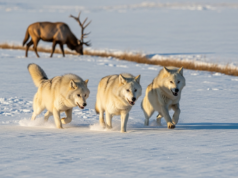
One of the most celebrated and well-documented examples of a top-down trophic cascade occurred in Yellowstone National Park with the reintroduction of wolves in 1995. For decades, with wolves largely absent, elk populations had boomed, leading to overgrazing of willow and aspen trees along riverbanks. This had a devastating impact on the riparian ecosystem.
When wolves returned, they began to prey on elk. This did not just reduce the elk population; it also changed elk behavior. Elk became more wary, avoiding areas where they were vulnerable to wolf predation, such as river valleys. This behavioral shift allowed young willow and aspen trees to grow taller and denser. The recovery of these plants stabilized riverbanks, reduced erosion, and provided crucial habitat for other species.
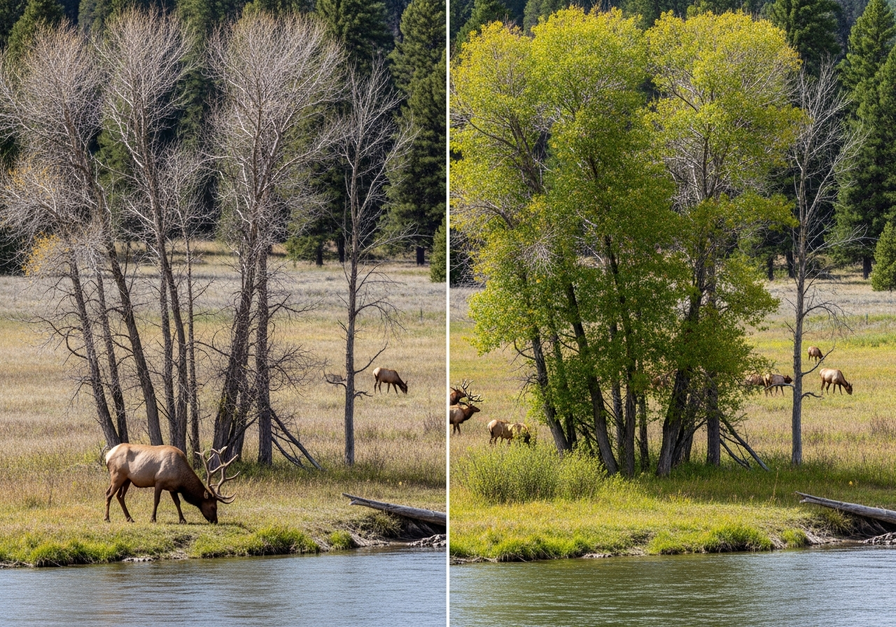
The image above visually contrasts the pre- and post-wolf reintroduction conditions in Yellowstone, directly illustrating a top-down trophic cascade where predator presence restores vegetation and biodiversity.
The cascade continued: more trees meant more food for beavers, whose dams created new wetlands, benefiting amphibians, fish, and waterfowl. The increased vegetation also provided shade, cooling the rivers and improving conditions for fish. Even scavengers like bald eagles and ravens benefited from the wolf kills. The wolves, a single species, had orchestrated a profound ecological restoration.
Sea Otters: Guardians of the Kelp Forests
Another classic example unfolds beneath the ocean’s surface, involving sea otters, sea urchins, and kelp forests. Sea otters are charismatic marine mammals that play a vital role in coastal ecosystems, particularly in the North Pacific.
Sea urchins are voracious herbivores that graze on kelp, large underwater algae that form dense forests. Without predators, sea urchin populations can explode, creating “urchin barrens” where kelp is decimated. This loss of kelp has severe consequences, as kelp forests provide food, shelter, and breeding grounds for countless marine species, support commercial fisheries, and even protect coastlines from erosion.
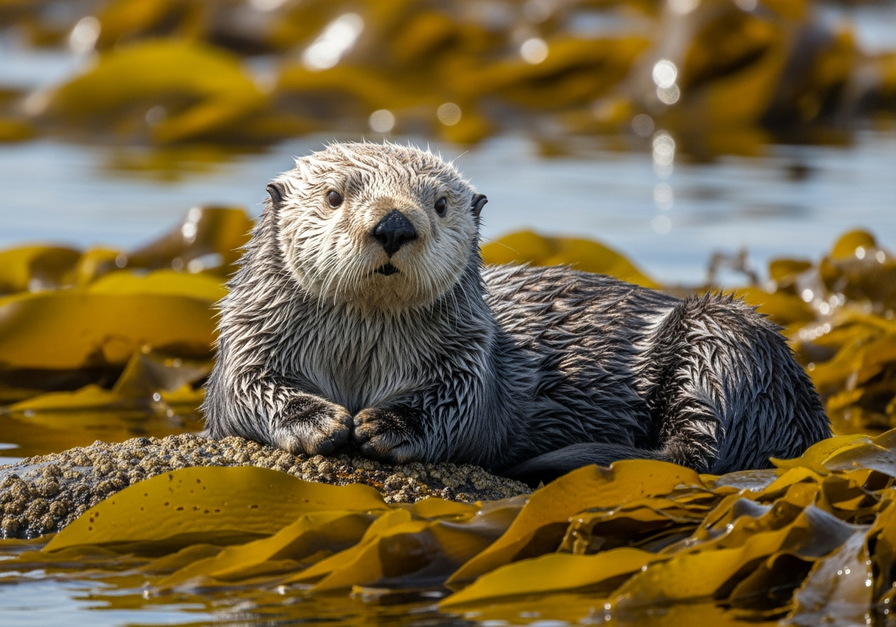
The image above demonstrates how the presence of a top-level predator (sea otter) regulates an intermediate species (sea urchins) and preserves the primary producers (kelp), a classic example of a trophic cascade.
Sea otters, however, love to eat sea urchins. Where sea otter populations are healthy, they keep urchin numbers in check, allowing kelp forests to thrive. This allows the entire kelp forest ecosystem to flourish, supporting a rich diversity of marine life. When otters were hunted to near extinction in the past, kelp forests suffered dramatically, only to recover when otter populations were protected and rebounded. This highlights the critical role of a keystone species in maintaining ecosystem stability.
When Cascades Go Wrong: The Nile Perch in Lake Victoria
Not all trophic cascades lead to positive outcomes. Sometimes, human actions can trigger devastating cascades, often through the introduction of non-native species. The story of the Nile perch in Lake Victoria, East Africa, is a sobering reminder of the fragility of ecosystems.
In the 1950s and 60s, the Nile perch, a large predatory fish, was introduced into Lake Victoria, primarily to boost local fisheries. The lake was home to an incredible diversity of cichlid fish, with over 500 endemic species, many of which were herbivores or detritivores, playing crucial roles in the lake’s food web.
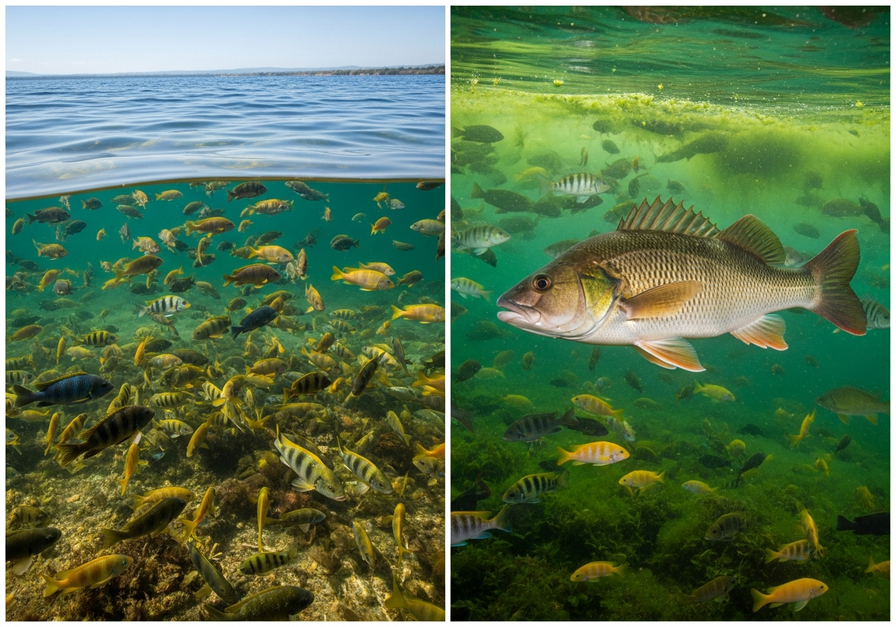
This juxtaposition illustrates a top-down trophic cascade triggered by the introduction of a predatory species, highlighting the far-reaching effects on biodiversity and water quality.
The Nile perch, with no natural predators in Lake Victoria, rapidly multiplied and began to decimate the native cichlid populations. This was a classic top-down cascade, but with disastrous consequences:
- Loss of Biodiversity: Hundreds of cichlid species, many found nowhere else on Earth, were driven to extinction or to the brink.
- Algal Blooms: Many cichlids were algae-eaters. With their disappearance, algal populations exploded, leading to massive algal blooms. These blooms reduced water clarity, depleted oxygen when they decomposed, and created “dead zones” in the lake.
- Impact on Local Communities: While the Nile perch initially supported a booming export fishery, the long-term ecological damage led to a decline in the overall health of the lake and impacted traditional fishing practices.
The Lake Victoria example underscores that while predators are essential, the introduction of novel predators into an ecosystem can have unpredictable and often catastrophic effects.
The Mechanics Behind the Magic: Deeper Dive into Trophic Cascades
While the concept of a trophic cascade seems straightforward, the underlying mechanisms can be quite complex, involving various types of interactions and environmental factors.
Direct Versus Indirect Effects
A trophic cascade is fundamentally about indirect effects. The predator (e.g., wolf) directly affects its prey (e.g., elk). But the cascade occurs because the predator indirectly affects the plants (e.g., willows) by reducing the number or altering the behavior of the elk. These indirect effects are what make cascades so powerful and sometimes surprising.
Density-Mediated Versus Behaviorally-Mediated Cascades
Trophic cascades can operate through two primary pathways:
- Density-Mediated Cascades: These occur when predators directly reduce the population size (density) of their prey. Fewer prey mean less consumption of the next lower trophic level. The Yellowstone wolf example initially involved a significant reduction in elk numbers.
- Behaviorally-Mediated Cascades (or “Risk Effects”): These occur when the mere presence of a predator, or the perceived risk of predation, changes the behavior of the prey. Prey might spend less time foraging in risky areas, or they might become more vigilant, even if their population size does not drastically change. The Yellowstone example also showed strong behavioral shifts in elk, which avoided riverbanks even if their numbers were still relatively high. This “landscape of fear” can be a powerful driver of ecosystem change.
Food Web Complexity and Environmental Context
The strength and even the occurrence of a trophic cascade can depend on many factors:
- Food Web Structure: Simpler food webs with fewer alternative prey or predators might exhibit stronger cascades. More complex webs can buffer these effects.
- Productivity: The amount of available resources (e.g., plant growth) can influence how cascades play out.
- Habitat Complexity: Diverse habitats can offer refuges for prey, potentially weakening cascade effects.
- Human Impact: Pollution, habitat fragmentation, and climate change can alter trophic interactions and either amplify or dampen cascades.
Beyond the Obvious: Broader Impacts and Importance
The implications of understanding trophic cascades extend far beyond academic interest. They offer critical insights for conservation, ecosystem management, and even climate change mitigation.
Biodiversity Conservation
Trophic cascades demonstrate that protecting top predators is not just about saving a single species; it is about preserving the health and diversity of entire ecosystems. By maintaining balanced food webs, we can safeguard countless species that might otherwise be indirectly impacted by imbalances.
Ecosystem Services
Healthy ecosystems provide invaluable services to humanity, often for free. Trophic cascades contribute to these services:
- Water Quality: In Yellowstone, the recovery of riparian vegetation helped stabilize riverbanks and reduce sediment runoff, improving water quality.
- Carbon Sequestration: Thriving kelp forests and terrestrial forests absorb significant amounts of carbon dioxide from the atmosphere, playing a role in mitigating climate change.
- Soil Health: Changes in vegetation can influence soil structure, nutrient cycling, and microbial communities.
Restoration Ecology
The success stories of Yellowstone and sea otter recovery provide powerful blueprints for restoration efforts. Reintroducing or protecting keystone species can be a highly effective strategy for restoring degraded ecosystems, often yielding more comprehensive and lasting results than simply replanting trees or removing invasive species in isolation.
Conclusion: Our Interconnected World
Trophic cascades are a profound testament to the interconnectedness of life on Earth. They remind us that every species, from the smallest plankton to the largest predator, plays a role in the intricate dance of ecosystems. Understanding these powerful ecological forces is not just a scientific pursuit; it is a vital step towards becoming better stewards of our planet. By recognizing how our actions, whether intentional or accidental, can trigger these cascades, we gain the knowledge to protect and restore the natural world, ensuring its health and resilience for generations to come.