The Silent Depletion: Understanding Overfishing and Its Global Impact
Beneath the shimmering surface of our oceans, a silent crisis unfolds, threatening the very lifeblood of marine ecosystems and the livelihoods of millions. This crisis is known as overfishing, a phenomenon where fish are caught faster than their populations can replenish themselves. It is a complex challenge, driven by a combination of technological advancements, increasing global demand, and sometimes, inadequate management. Understanding overfishing is the first step towards safeguarding our planet’s invaluable marine resources for generations to come.
What Exactly is Overfishing?
At its core, overfishing occurs when fishing activity reduces fish stocks to an unsustainable level. Imagine a bank account where you withdraw money faster than you deposit it. Eventually, the account runs dry. The same principle applies to fish populations. When too many fish are removed, the remaining population struggles to reproduce and grow, leading to a decline in numbers and, in severe cases, the collapse of entire species.
This visual contrast illustrates the core concept of overfishing—catching fish at a rate that depletes stocks—highlighting the immediate, observable difference between an overfished area and its aftermath.
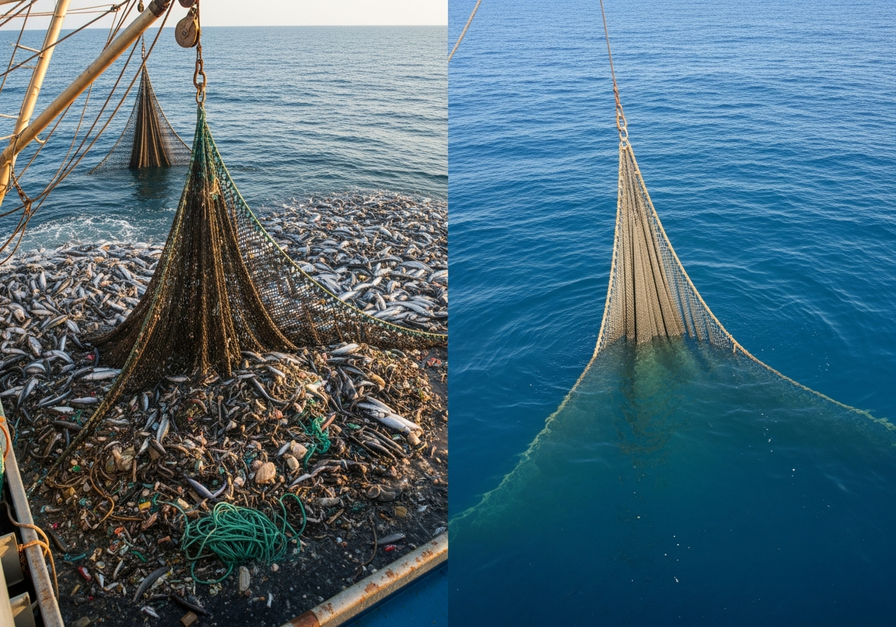
The consequences extend far beyond just fewer fish in the sea. Overfishing disrupts delicate marine food webs, impacts biodiversity, and poses significant economic threats to coastal communities that rely on fishing for their sustenance and income. It is a global issue, affecting oceans from the Arctic to the Antarctic, and requires a concerted effort to address.
The Ripple Effect: Consequences of Overfishing
The impacts of overfishing are multifaceted, creating a cascade of problems throughout marine environments and human societies.
- Ecological Imbalance: When key species are overfished, their predators lose a food source, and their prey populations can explode, leading to an imbalance in the ecosystem. For example, if large predatory fish like tuna or cod are depleted, smaller fish they once hunted might proliferate, altering the entire food web structure. This can lead to a less resilient and less diverse ecosystem.
- Loss of Biodiversity: Overfishing often targets specific species, but the methods used, such as bottom trawling, can indiscriminately catch many other marine creatures, including endangered species, corals, and sponges. This bycatch, often discarded, contributes significantly to biodiversity loss.
- Economic Hardship: Fishing communities face severe economic challenges when fish stocks decline. Fewer fish mean smaller catches, reduced income, and potential job losses for fishers, processors, and related industries. This can lead to social instability and migration from traditional fishing areas.
- Food Security Concerns: For many nations, particularly developing countries, fish is a primary source of protein. Depleted fish stocks threaten food security for millions of people, exacerbating malnutrition and poverty.
Delving Deeper: Types of Overfishing
While the general concept of overfishing is straightforward, ecologists and fisheries managers identify specific types based on the stage of the fish’s life cycle or the broader ecosystem impact.
Growth Overfishing
Growth overfishing occurs when fish are harvested at an average size that is too small, before they have had the chance to grow to their full potential and contribute significantly to the population’s biomass. This often happens when fishing targets juvenile fish or uses gear that catches smaller individuals.
The image directly visualizes growth overfishing, where the removal of larger, mature fish reduces the overall reproductive potential of the population, making the future of that stock uncertain.
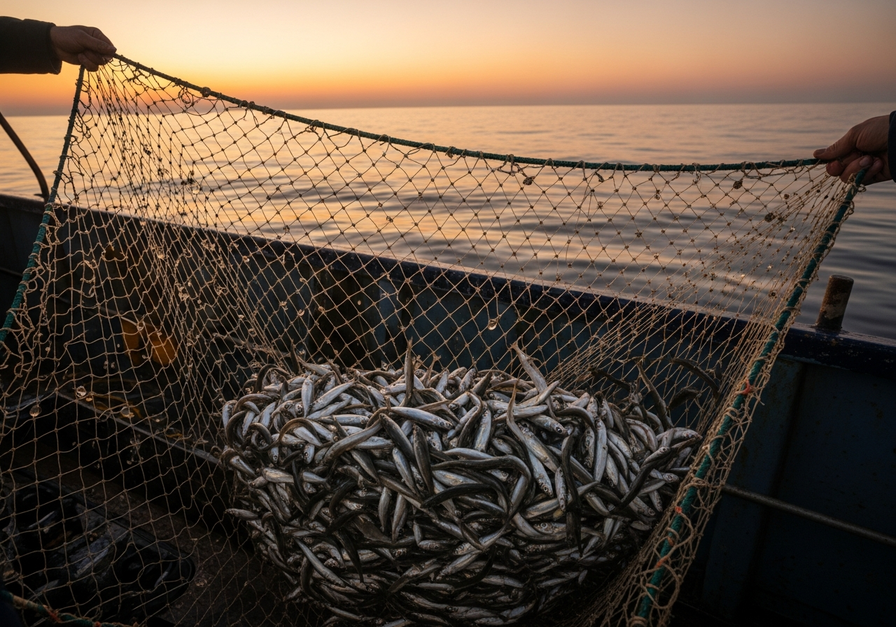
Imagine a farmer harvesting crops before they are fully ripe. While some yield is obtained, the potential for a much larger, more valuable harvest is lost. Similarly, catching young fish means foregoing the opportunity for them to grow larger, reproduce, and contribute more offspring to the next generation. This reduces the overall productivity of the fishery and makes it less resilient to environmental changes.
Recruitment Overfishing
This is arguably the most severe form of overfishing. Recruitment overfishing happens when the adult breeding population is reduced to such a low level that it can no longer produce enough young fish (recruits) to sustain the population. It is like depleting the capital in your bank account to the point where it can no longer generate interest.
When recruitment overfishing occurs, the population enters a downward spiral. Even if fishing pressure is reduced, the stock may struggle to recover because there are simply not enough adult fish left to reproduce effectively. This can lead to a complete collapse of the fishery, with long-term or even irreversible consequences for the species and the ecosystem.
Ecosystem Overfishing
Ecosystem overfishing takes a broader view, considering the impact of fishing on the entire marine ecosystem, not just individual target species. This type of overfishing occurs when fishing activities fundamentally alter the structure and function of the ecosystem. For example, removing top predators can lead to an increase in their prey, which in turn might overgraze kelp forests or coral reefs, transforming the entire habitat.
This can also involve “fishing down the food web,” where fishers initially target large, high-value predatory fish. As these stocks decline, they shift to smaller, lower trophic level species, further disrupting the ecosystem’s balance and reducing its overall productivity and resilience.
Why Does Overfishing Persist?
Several factors contribute to the ongoing challenge of overfishing:
- Technological Advancements: Modern fishing vessels are equipped with sophisticated sonar, GPS, and powerful nets that allow them to locate and catch vast quantities of fish with unprecedented efficiency. This technological edge often outpaces the ability of fish populations to recover.
- Lack of Effective Governance: In many parts of the world, fisheries management is weak, poorly enforced, or non-existent. This can lead to open access fisheries where anyone can fish, creating a “tragedy of the commons” scenario where individual incentives to catch more outweigh the collective need for sustainability.
- Subsidies: Government subsidies for fuel, vessel construction, and gear can artificially lower the cost of fishing, encouraging more fishing effort than would otherwise be economically viable. This can keep unprofitable fisheries operating, contributing to overcapacity.
- Illegal, Unreported, and Unregulated (IUU) Fishing: IUU fishing undermines conservation efforts, distorts markets, and robs legitimate fishers of their livelihoods. It is a significant contributor to overfishing globally.
- High Demand for Seafood: A growing global population and increasing demand for seafood put immense pressure on fish stocks. Consumer choices and market forces play a crucial role in driving fishing effort.
Charting a Course for Recovery: Solutions to Overfishing
Despite the daunting challenges, there are effective strategies and solutions being implemented worldwide to combat overfishing and restore marine health.
Sustainable Fisheries Management
Robust management frameworks are essential. These include:
- Catch Limits (Quotas): Setting scientifically determined limits on the amount of fish that can be caught helps ensure that enough fish remain to reproduce.
- Gear Restrictions: Regulating the types of fishing gear allowed, such as mesh size limits for nets, can help reduce bycatch and prevent the capture of juvenile fish.
- Seasonal and Area Closures: Temporarily closing certain fishing grounds during spawning seasons or permanently protecting critical habitats allows fish populations to recover and reproduce without disturbance.
- Individual Fishing Quotas (IFQs): Assigning individual fishers or fishing companies a share of the total allowable catch can create an incentive for long-term sustainability and responsible fishing practices.
Marine Protected Areas (MPAs)
Marine Protected Areas are designated zones where fishing and other extractive activities are restricted or prohibited. These areas act as safe havens, allowing fish populations to recover, grow larger, and spill over into adjacent fishing grounds, effectively restocking the surrounding ocean.
This illustration demonstrates the positive outcomes of marine protected areas, showing how limiting fishing activity can restore biodiversity and allow fish populations to recover, reinforcing the article’s discussion of effective solutions to overfishing.
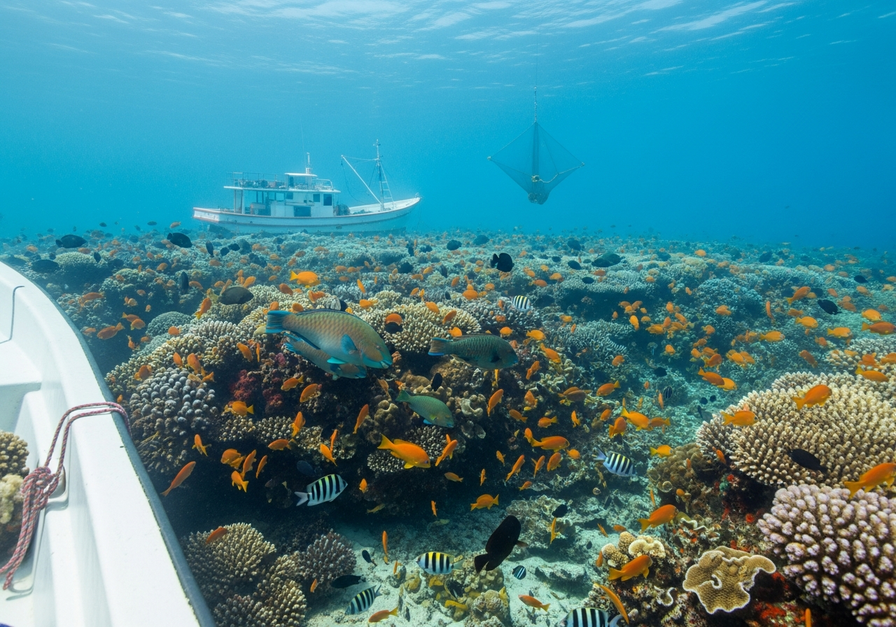
MPAs are vital tools for conservation, protecting biodiversity, and enhancing the resilience of marine ecosystems against other threats like climate change.
Consumer Choices and Market-Based Solutions
Consumers have significant power to drive change. By choosing sustainably sourced seafood, certified by reputable organizations, individuals can support responsible fishing practices and create market demand for well-managed fisheries. Seafood guides and labeling schemes help consumers make informed decisions.
Combating IUU Fishing
International cooperation, enhanced surveillance, and stricter port state measures are crucial to eliminate illegal, unreported, and unregulated fishing, ensuring that all fishing activities adhere to conservation and management rules.
A Future with Flourishing Oceans
Overfishing is a formidable challenge, but it is not insurmountable. By understanding its causes and consequences, and by implementing comprehensive, science-based management strategies, we can reverse the trend of depletion. The health of our oceans is intrinsically linked to the well-being of humanity. Through collective action, from international policy makers to individual consumers, we can ensure that our oceans remain vibrant, productive, and teeming with life for generations to come, securing both ecological balance and sustainable livelihoods.