In the vast tapestry of life on Earth, every species employs a unique strategy to survive and reproduce. From the smallest bacteria to the largest whales, these strategies are shaped by environmental pressures and evolutionary history. Among the most fascinating of these approaches is what ecologists call the K-selected strategy, a life history characterized by a focus on quality over quantity.
Imagine a species that invests heavily in each individual offspring, nurturing them for extended periods, and living a long life itself. These are the hallmarks of K-selected species, named after the ecological concept of carrying capacity, denoted by the letter ‘K’. Carrying capacity represents the maximum population size of a biological species that can be sustained indefinitely by the environment, given the available food, habitat, water, and other necessities.
Understanding K-selected Species: Life’s Long Game
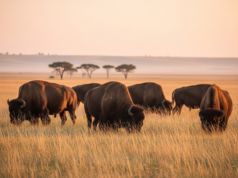
K-selected species thrive in stable, predictable environments where competition for resources is often high. Instead of producing vast numbers of offspring with little individual investment, they adopt a strategy of producing fewer, larger offspring and providing extensive parental care. This approach ensures a higher probability of survival for each individual, allowing them to eventually reach reproductive age and contribute to the population.
Key Characteristics of K-selected Species
Several distinct traits define the K-selected life history strategy:
- Long Lifespan: These species typically live for many years, sometimes decades or even centuries. This extended lifespan allows for multiple reproductive cycles over their lifetime.
- Slow Development and Maturation: K-selected individuals grow slowly, taking a considerable amount of time to reach sexual maturity. This extended developmental period often involves learning essential survival skills from parents or other adults.
- Few, Large Offspring: Rather than producing hundreds or thousands of tiny offspring, K-selected species produce a small number of larger, well-developed young.
- High Parental Investment: A significant amount of energy, time, and resources is dedicated to the care, protection, and education of each offspring. This can include gestation, feeding, teaching, and defending the young.
- Stable Environments: K-selected species are typically found in environments that are relatively stable and predictable, where resources are consistent and population sizes tend to remain close to the carrying capacity.
- Large Body Size: While not universal, many K-selected species tend to have larger body sizes, which can contribute to their longevity and ability to compete for resources.
Illustrative Examples from the Natural World
To truly grasp the essence of K-selected species, let us explore some compelling examples from across the animal and plant kingdoms.
The Majestic Elephant: A Symbol of K-selection
Perhaps no animal embodies the K-selected strategy more perfectly than the African elephant. These magnificent creatures exhibit nearly all the defining characteristics.
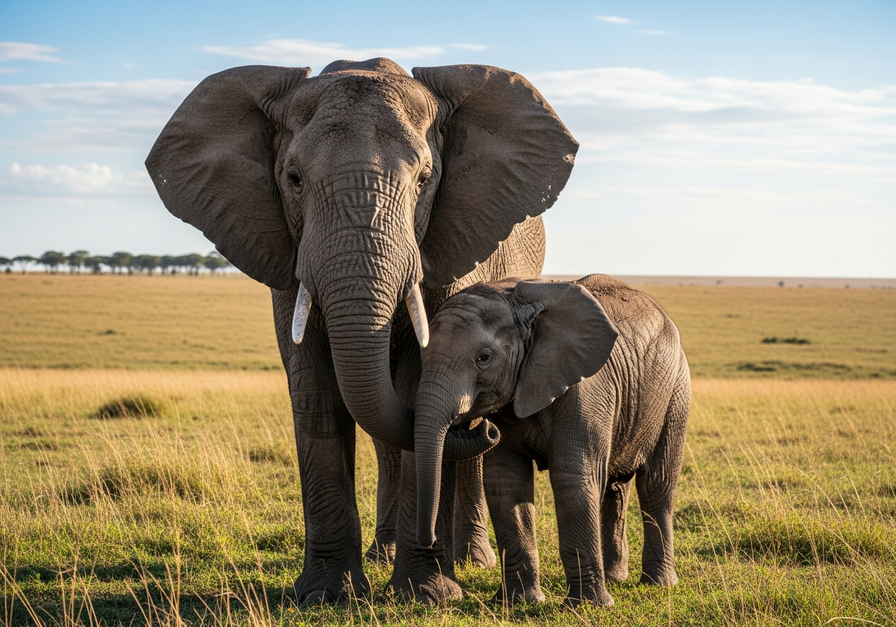
Elephants have incredibly long lifespans, often living for 60 to 70 years. They mature slowly, with females not typically breeding until their teens. A female elephant usually gives birth to a single calf after a gestation period of nearly two years, the longest of any mammal. This calf then receives intensive care and protection from its mother and the entire herd for many years, learning vital survival skills and social behaviors. This immense investment ensures the calf’s survival in a challenging environment, illustrating the slow growth, long lifespan, and high parental care characteristic of K-selected species.
The Enduring Oak Tree: A Plant’s K-strategy
While often associated with animals, the K-selected strategy is also prevalent in the plant kingdom. Consider the mighty oak tree.
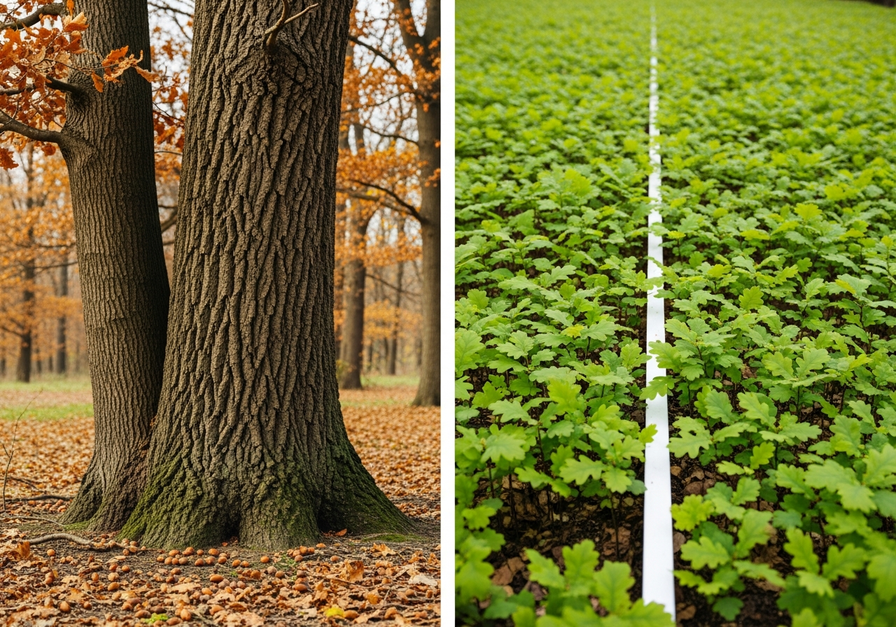
Oak trees can live for hundreds of years, some even exceeding a millennium. They take many decades to reach full maturity and begin producing acorns. While an individual oak tree can produce thousands of acorns over its lifetime, the survival rate of these acorns into mature trees is relatively low. However, the investment in each acorn is substantial compared to the tiny, wind-dispersed seeds of r-selected plants. Once established, an oak sapling grows slowly but steadily, eventually becoming a dominant, long-lived member of its forest community. This image shows the small clutch size yet strong investment in offspring, and the long lifespan of oak trees, highlighting key traits of K-selected species.
Humans: The Ultimate K-selected Species
Humans are a prime example of a K-selected species, showcasing these traits in a highly developed manner.

Our species boasts one of the longest lifespans among mammals, coupled with an exceptionally long period of childhood and adolescence. Human offspring are entirely dependent on parental care for many years, requiring extensive teaching, protection, and resource provision. We typically have a small number of offspring over our reproductive years, and each child receives immense investment from parents and often the wider community. This extended period of learning and development allows for the transmission of complex culture, knowledge, and skills across generations. This image depicts humans as a K-selected species with long lifespans, extended parental care, and a stable, predictable environment, reinforcing the article’s discussion of human life history traits.
The “K” in K-selection: Carrying Capacity Explained
The term “K-selected” is derived from the concept of carrying capacity (K). In population ecology, carrying capacity refers to the maximum population size of a species that the environment can sustain indefinitely, without degrading the environment itself. K-selected species are adapted to environments where populations are typically close to this carrying capacity. This means resources are often limited, and competition among individuals is intense.
In such environments, the evolutionary advantage shifts from producing many offspring (which would quickly deplete resources) to producing fewer, higher-quality offspring that are better equipped to compete and survive. These species are highly efficient at utilizing limited resources and maintaining stable population sizes near the environmental limit.
Ecological Implications and Conservation Challenges
The K-selected strategy has significant ecological implications. These species often play crucial roles in their ecosystems, acting as keystone species or top predators, influencing the structure and function of their communities. Their long lifespans and slow reproductive rates mean they are often highly sensitive to environmental disturbances.
Because K-selected species invest so much in each individual, their populations are slow to recover from declines. This makes them particularly vulnerable to threats such as habitat loss, poaching, and climate change. Conservation efforts for K-selected species often require long-term strategies, focusing on protecting habitats, reducing human impact, and supporting slow population growth.
Understanding the K-selected life history is vital for effective conservation. For example, protecting a single breeding pair of elephants or a stand of ancient oak trees can have a disproportionately large impact on the future of their populations compared to protecting an equivalent number of r-selected individuals.
K-selection Versus r-selection: A Brief Contrast
To fully appreciate K-selection, it is helpful to briefly consider its counterpart: r-selected species. Named after the intrinsic rate of natural increase (r), these species adopt an opposite strategy. They typically live in unstable or unpredictable environments, produce a large number of small offspring, provide little to no parental care, have short lifespans, and mature quickly. Think of insects, weeds, or bacteria. While both strategies are successful, they represent different evolutionary responses to varying environmental conditions.
Conclusion: The Enduring Legacy of K-selected Species
K-selected species represent a profound evolutionary commitment to quality, longevity, and intensive care. From the nurturing embrace of an elephant mother to the centuries-long endurance of an oak tree, these species remind us of the intricate ways life adapts to its surroundings. Their strategies, while making them vulnerable to rapid environmental change, also highlight their resilience and the deep ecological connections that sustain our planet. By understanding and appreciating the K-selected approach to life, we gain valuable insights into the delicate balance of ecosystems and our own place within the grand scheme of nature.