Unlocking Nature’s Secret: The Art of Spatial Partitioning
Imagine a bustling city where everyone needs the same limited resources: the best apartments, the freshest food, the fastest transport. Chaos, right? Yet, in the natural world, countless species often require similar resources within the same habitat, and instead of constant conflict, many manage to coexist with remarkable harmony. How do they do it? One of nature’s most elegant solutions is a concept known as spatial partitioning.
What is Spatial Partitioning? The Foundation of Coexistence
At its core, spatial partitioning is the ecological strategy where different species minimize direct competition by utilizing distinct areas or “spaces” within a shared environment. It is a brilliant natural mechanism that allows a greater diversity of life to thrive in a single location, ensuring that resources are distributed and utilized efficiently without constant, energy-draining battles. Instead of fighting over every morsel or every inch of territory, species find their own unique niche, their own designated “spot” where they can forage, nest, or rest with less interference from others.
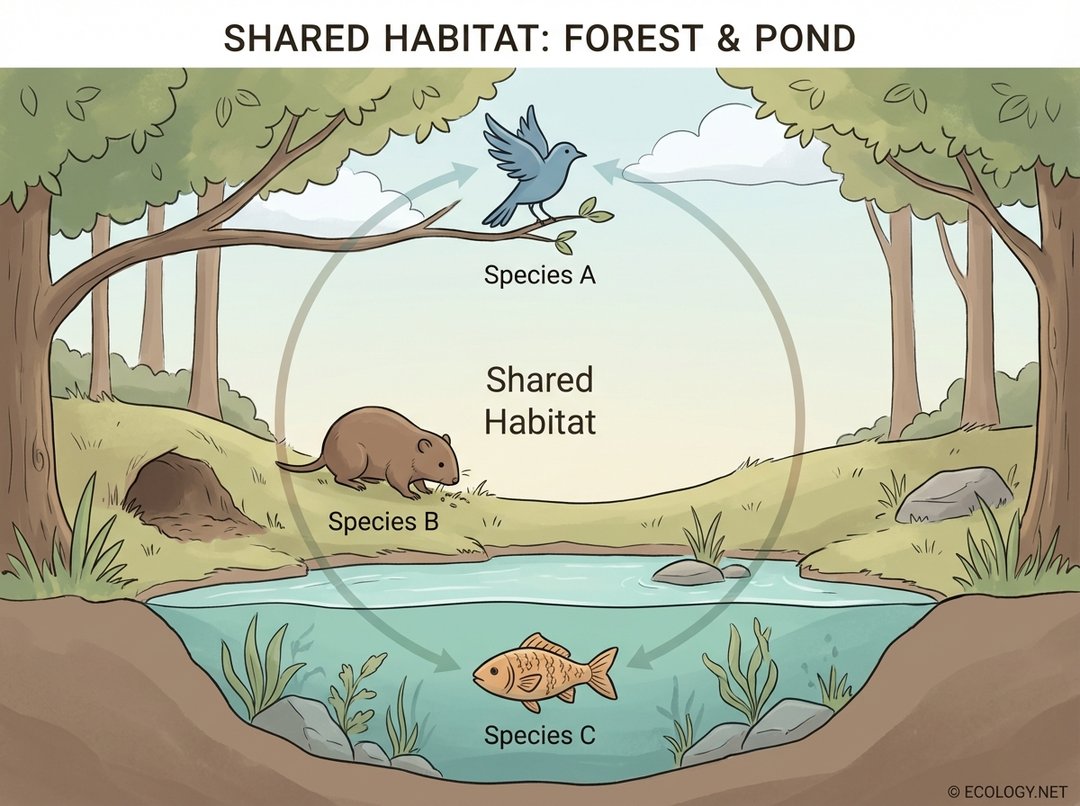
This fundamental principle is crucial for understanding how complex ecosystems maintain their balance and support such a rich tapestry of life. Without it, many habitats would only be able to sustain a handful of dominant species, leading to a much less diverse and resilient natural world.
The Many Faces of Sharing: Forms of Spatial Partitioning
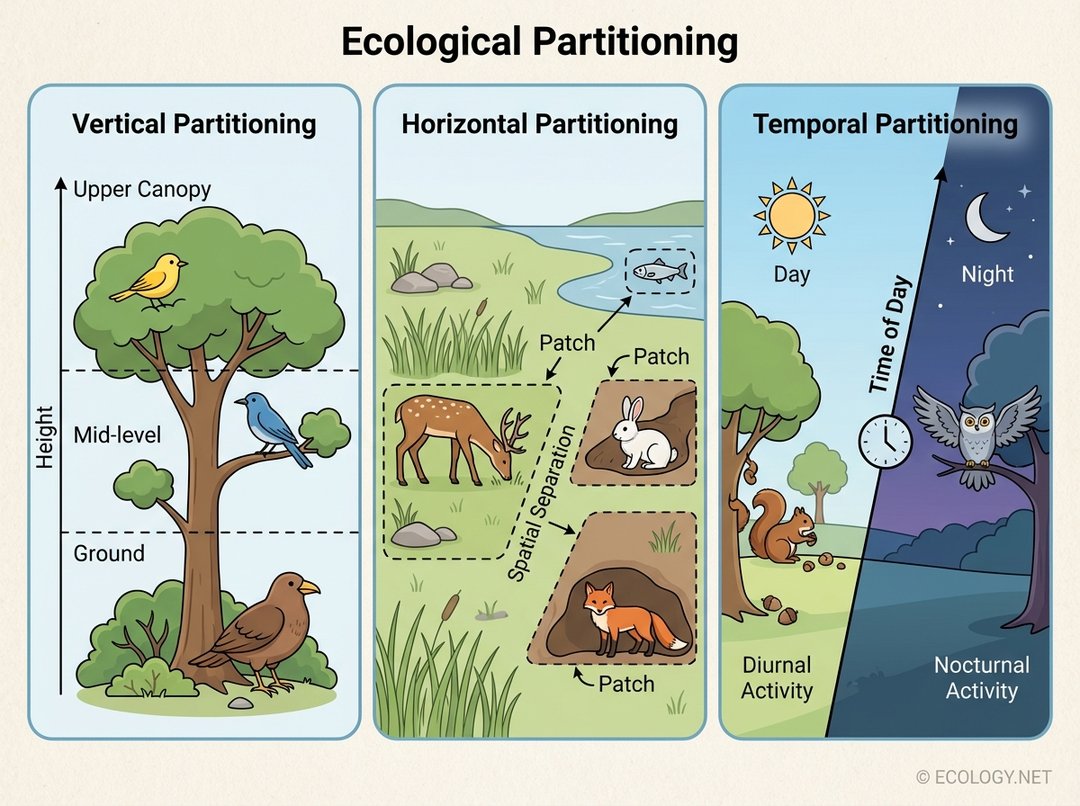
Spatial partitioning is not a one-size-fits-all strategy. Nature employs several ingenious variations, each tailored to the specific challenges and opportunities presented by an environment. Ecologists typically categorize these into three primary forms: vertical, horizontal, and temporal partitioning.
Vertical Partitioning: The Highs and Lows of a Shared World
Vertical partitioning occurs when species divide a habitat based on different heights or depths. Think of a tall tree or a deep body of water. Different species will specialize in utilizing specific layers, minimizing direct encounters and competition for food or nesting sites.
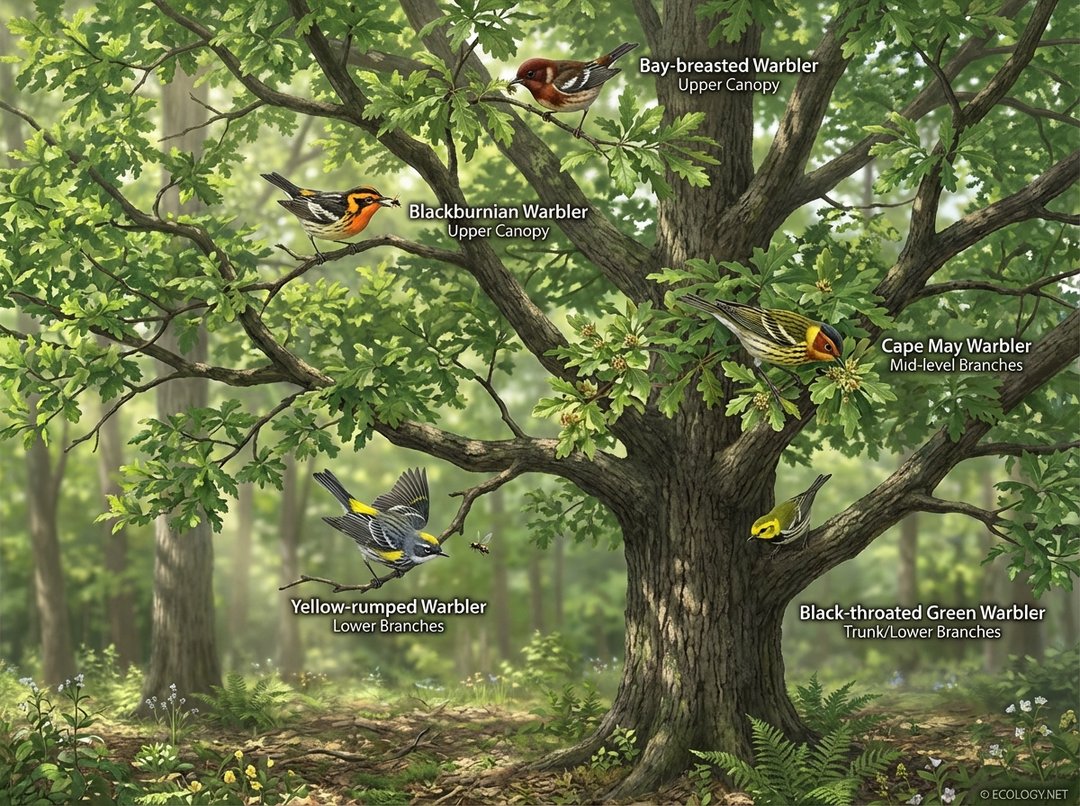
A classic and highly illustrative example of vertical partitioning comes from the study of warblers in North American forests. Several species of warblers, all insect-eating birds, can often be found foraging in the same trees. However, rather than competing fiercely, they have evolved to specialize in different vertical zones of the tree.
For instance:
- The Bay-breasted Warbler often prefers the dense foliage of the upper canopy.
- The Blackburnian Warbler tends to forage in the outer, upper branches.
- The Cape May Warbler frequently searches for insects in the mid-level, outer branches.
- The Yellow-rumped Warbler is more versatile, often found in lower branches and inner parts of the tree.
- The Black-throated Green Warbler typically sticks to the lower branches and closer to the trunk.
By dividing the tree into these distinct foraging zones, each warbler species can efficiently find its food without constantly clashing with its relatives, allowing multiple species to coexist within the same arboreal environment.
Horizontal Partitioning: Dividing the Landscape
Horizontal partitioning involves species dividing a habitat based on different geographical areas or patches within a broader landscape. This is evident when different animals occupy separate sections of a grassland, distinct parts of a river, or even different types of soil in a forest.
Consider a vast African savanna. While many herbivore species graze on the same grasses, they often do so in different areas or prefer slightly different types of vegetation within the savanna. Zebras might prefer taller, coarser grasses, while wildebeest might favor shorter, finer varieties, and gazelles might browse on specific shrubs found in certain patches. Similarly, in a large lake, different fish species might inhabit specific depths near the shore, in open water, or near the bottom, each utilizing distinct horizontal zones.
Temporal Partitioning: The Rhythm of Life
Temporal partitioning is when species minimize competition by utilizing the same space but at different times. This is one of the most fascinating ways nature avoids conflict, essentially sharing a habitat by taking turns.
The most straightforward example is the division between diurnal and nocturnal animals. A squirrel, active during the day, might forage for nuts and build nests in a tree. At night, an owl might use the very same tree as a perch from which to hunt, or a bat might emerge from a nearby cave to feed on insects. They share the physical space but operate on completely different schedules. Other forms of temporal partitioning can include:
- Crepuscular activity: Animals active during dawn and dusk, like deer or rabbits.
- Seasonal shifts: Some species might use a habitat during one season, while others use it during another, perhaps due to migration patterns or changes in resource availability.
This temporal division ensures that resources are not overexploited at any single moment and allows a greater number of species to thrive within the same geographical boundaries over a 24-hour cycle or across the year.
Why is Spatial Partitioning So Important?
The implications of spatial partitioning extend far beyond simply avoiding squabbles between animals. It is a cornerstone of ecological stability and biodiversity.
- Reduces Interspecific Competition: By carving out unique niches, species lessen the direct struggle for food, shelter, and mates, which can be energetically costly and even fatal.
- Increases Biodiversity: When competition is reduced, more species can successfully coexist in the same area, leading to richer, more complex ecosystems.
- Promotes Ecosystem Stability: Diverse ecosystems with many interacting species are generally more resilient to disturbances like disease outbreaks or environmental changes.
- Efficient Resource Utilization: Partitioning ensures that different aspects of a habitat’s resources are tapped into, leading to a more thorough and efficient use of available energy and nutrients.
Beyond the Basics: Niche Differentiation and Overlap
While spatial partitioning is a powerful concept, it is part of a broader ecological idea known as resource partitioning, which also includes temporal (as discussed) and trophic (food-based) partitioning. All these mechanisms contribute to niche differentiation, where each species develops a unique “role” or “profession” within the ecosystem, defined by its resource use, habitat, and interactions with other species.
It is important to understand that spatial partitioning is rarely absolute. There is often some degree of overlap between species’ territories or foraging zones. However, even small differences in preferred areas can be enough to significantly reduce competition and allow for coexistence. These overlaps can also be dynamic, shifting with resource availability, population sizes, or even the presence of predators. The intricate dance of species adjusting their spatial use is a testament to the constant evolution and adaptation occurring in nature.
Human activities, such as habitat fragmentation, pollution, or the introduction of invasive species, can severely disrupt these delicate partitioning strategies. When habitats are reduced or altered, species are forced into closer proximity, increasing competition and potentially leading to declines in populations or even extinctions. Understanding spatial partitioning is therefore not just an academic exercise; it is vital for effective conservation efforts and for preserving the rich biodiversity of our planet.
Conclusion: Nature’s Ingenuity in Sharing
Spatial partitioning stands as a testament to nature’s incredible ingenuity in fostering coexistence. From the warblers meticulously dividing a single tree to the vast herds sharing a savanna, species have evolved sophisticated ways to share space, minimize conflict, and maximize the potential for life. This fundamental ecological principle allows for the breathtaking diversity we observe in ecosystems worldwide, reminding us that even in a world of limited resources, there is always room for a multitude of life forms, provided they learn the art of sharing. It is a powerful lesson in efficiency, adaptation, and the intricate balance that sustains our living planet.