In the vast tapestry of life, where every creature plays a unique role, there exists a fascinating group defined by a singular, crucial dietary preference: insects. These are the insectivores, a diverse assembly of animals that have mastered the art of hunting, catching, and consuming the myriad invertebrates that scuttle, fly, and burrow across our planet. From the smallest shrew to the largest anteater, insectivores are not just diners with a specific taste; they are vital architects of ecological balance, often unseen but always at work.
Understanding insectivores means delving into a world of specialized adaptations, intricate food webs, and profound ecological impact. This article will explore what defines an insectivore, showcase the incredible variety within this group, illuminate their indispensable roles in nature, and marvel at the ingenious ways they have evolved to thrive on an insectivorous diet.
What Defines an Insectivore?
At its core, an insectivore is an animal whose primary diet consists of insects and other small invertebrates. This definition might seem straightforward, but it encompasses an astonishing array of life forms, each with its own unique approach to this specialized feeding strategy. It is important to distinguish between true insectivores, for whom insects form the vast majority of their diet, and opportunistic feeders that might consume insects alongside other food sources.
True insectivores often exhibit highly specialized physical traits and behaviors tailored to finding, capturing, and processing their tiny prey. These adaptations are a testament to the evolutionary pressures of securing a nutrient-rich but often elusive food source. The concept extends beyond just mammals, encompassing birds, amphibians, reptiles, and even some fish and invertebrates.
A World of Tiny Hunters: Examples of Insectivores
The diversity among insectivores is truly remarkable. They inhabit nearly every ecosystem on Earth, from arid deserts to lush rainforests, and from subterranean tunnels to the highest canopies. Here are just a few examples that highlight their incredible variety:
- Mammals:
- Shrews: Among the smallest mammals, shrews have incredibly high metabolisms, requiring them to eat almost constantly. Their pointed snouts and sharp teeth are perfect for snatching insects.
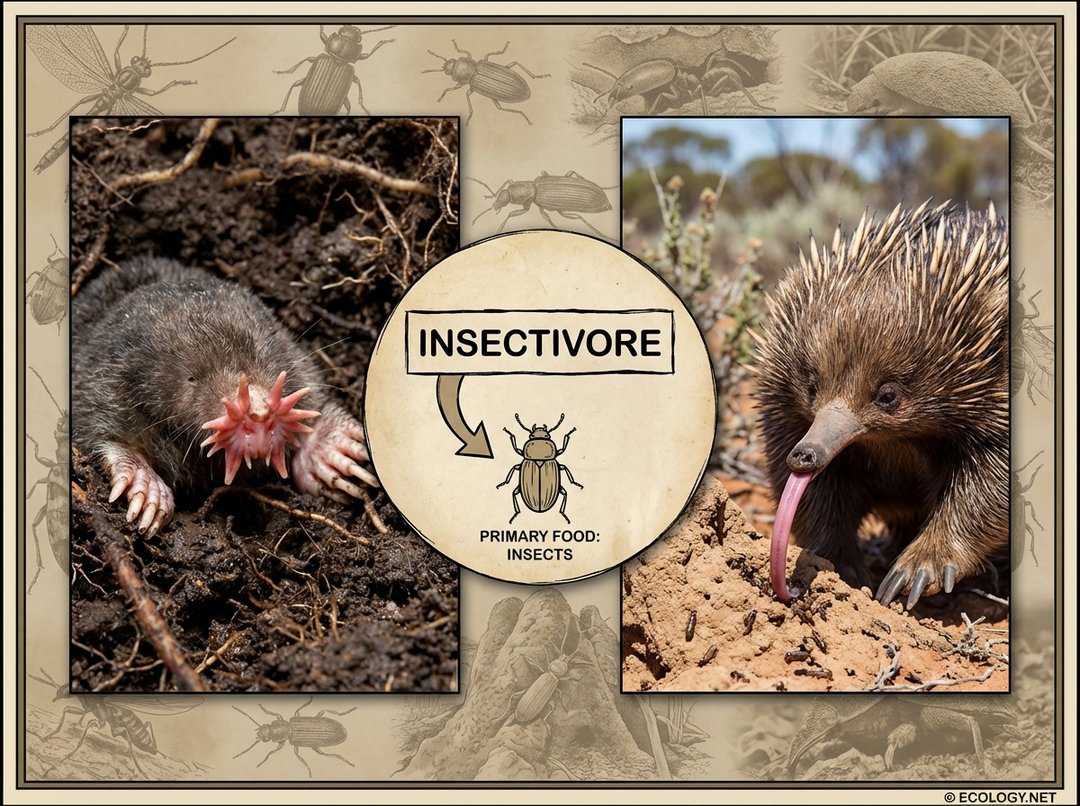
- Moles: These subterranean specialists use powerful front claws to tunnel through soil, hunting earthworms, grubs, and other soil-dwelling invertebrates. The star-nosed mole, with its unique sensory appendages, is a prime example of extreme specialization.
- Hedgehogs: Known for their spiny defense, hedgehogs are nocturnal foragers, snuffling through undergrowth for beetles, caterpillars, and slugs.
- Bats: Many bat species are insectivorous, using echolocation to navigate and pinpoint flying insects in the dark. Microbats, in particular, are voracious insect eaters.
- Aardvarks and Pangolins: These unique mammals are highly specialized myrmecophages, meaning they primarily eat ants and termites. They possess long, sticky tongues and powerful claws for breaking into insect nests.
- Echidnas (Spiny Anteaters): Native to Australia and New Guinea, echidnas use their long, sticky tongues to lap up ants and termites, much like their mammalian counterparts.
- Birds:
- Swallows and Swifts: These aerial acrobats spend much of their lives on the wing, expertly catching flying insects mid-air.
- Flycatchers: As their name suggests, these birds perch and then sally forth to snatch insects from the air or foliage.
- Woodpeckers: While some eat nuts, many woodpecker species use their strong beaks to drill into wood, extracting insect larvae.
- Warblers: Small, agile birds that glean insects from leaves and branches.
- Amphibians:
- Frogs and Toads: Famous for their long, sticky tongues, frogs and toads are highly effective insect predators, consuming vast quantities of flies, mosquitoes, and beetles.
- Salamanders: Many salamander species are insectivorous, feeding on a variety of small invertebrates.
- Reptiles:
- Chameleons and Geckos: Many lizard species are insectivores, employing camouflage, ambush tactics, and often projectile tongues to capture prey.
- Fish:
- Some freshwater fish, such as certain species of minnows and killifish, primarily feed on aquatic insects and their larvae.
Ecological Roles of Insectivores
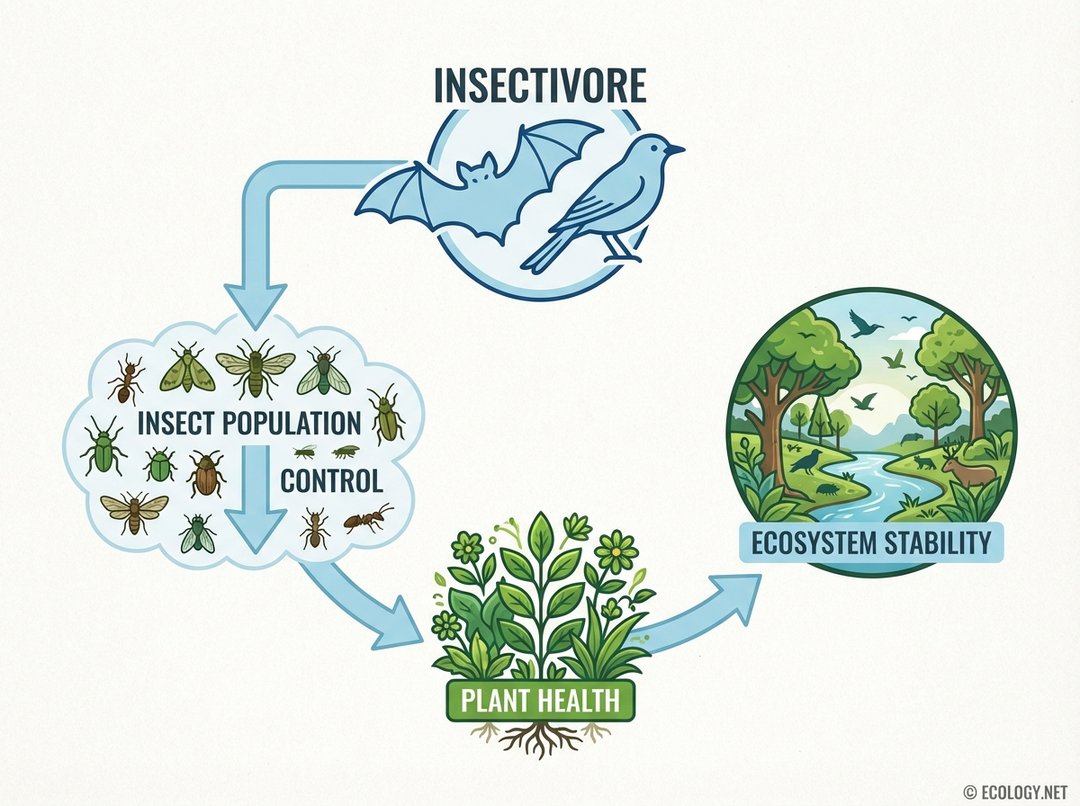
The importance of insectivores extends far beyond their individual survival; they are indispensable components of healthy ecosystems. Their collective impact on insect populations has profound ripple effects throughout the natural world, influencing everything from plant health to disease control.
Natural Pest Control
Perhaps the most widely recognized ecological role of insectivores is their function as natural pest controllers. Insects, while vital to ecosystems, can sometimes reach population levels that become detrimental to agriculture, forestry, and even human health. Insectivores act as a biological buffer, keeping these populations in check.
- Agricultural Benefits: Birds and bats consume enormous quantities of crop pests, reducing the need for chemical pesticides. A single bat can eat thousands of insects in one night, including agricultural pests like moths and beetles.
- Forest Health: Woodpeckers and other insectivorous birds help control bark beetles and other insects that can damage trees, contributing to the resilience of forest ecosystems.
- Disease Prevention: Insectivores that feed on mosquitoes, ticks, and other disease-carrying insects play a crucial role in limiting the spread of pathogens that affect humans and wildlife.
Maintaining Ecosystem Balance
By regulating insect populations, insectivores indirectly support the health and stability of entire ecosystems. When insect populations are kept within natural limits, it prevents overgrazing of plants, reduces competition for resources among insect species, and ensures that other trophic levels are not overwhelmed.
- Plant Health: Fewer herbivorous insects mean healthier plants, which in turn support more herbivores and their predators. This creates a cascade of positive effects throughout the food web.
- Nutrient Cycling: Insectivores contribute to nutrient cycling by consuming insects and then depositing waste or decomposing after death, returning valuable nutrients to the soil.
- Biodiversity Support: A balanced ecosystem, partly maintained by insectivores, fosters greater biodiversity, allowing a wider range of species to coexist and thrive.
Specialized Tools for a Specialized Diet: Adaptations for Insectivory
The success of insectivores lies in their remarkable adaptations, which allow them to efficiently locate, capture, and consume their often elusive and sometimes well-defended prey. These adaptations can be morphological (physical structures) or behavioral.
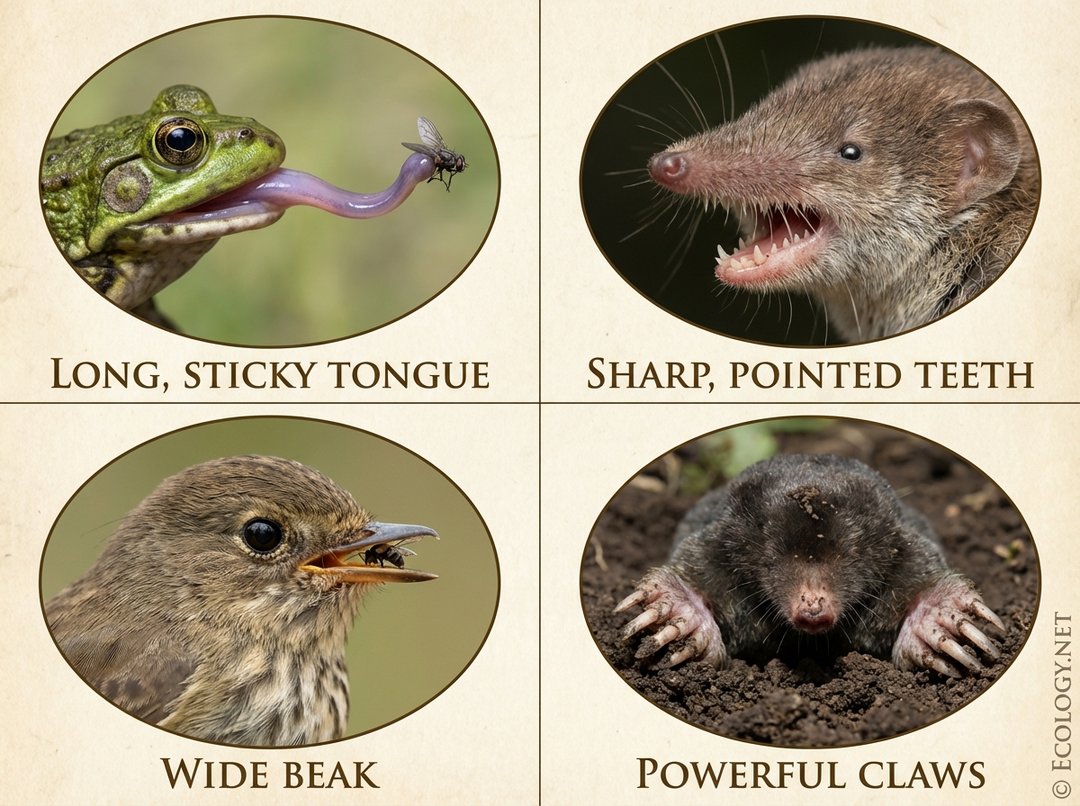
Morphological Adaptations
The physical characteristics of insectivores are often finely tuned for their specific hunting strategies:
- Tongues:
- Long, Sticky Tongues: Frogs, chameleons, anteaters, and echidnas possess incredibly long, often sticky tongues that can be rapidly extended to snatch insects. The speed and precision of these tongues are astounding.
- Barbed Tongues: Some woodpeckers have barbed tongues that can spear insect larvae hidden deep within wood.
- Teeth and Jaws:
- Sharp, Pointed Teeth: Many insectivorous mammals, like shrews and hedgehogs, have numerous small, sharp, pointed teeth designed for piercing the exoskeletons of insects. Their jaws are often adapted for rapid chewing.
- Reduced or Absent Teeth: Animals like anteaters and pangolins, which consume soft-bodied ants and termites, have greatly reduced or even absent teeth, relying instead on their powerful gizzards or stomach muscles to grind food.
- Beaks:
- Wide Beaks: Birds like swallows, swifts, and flycatchers have wide, gaping beaks that act like nets to scoop up flying insects.
- Slender, Probing Beaks: Some shorebirds and warblers have thin, pointed beaks for probing into crevices or foliage to extract hidden insects.
- Claws and Limbs:
- Powerful Digging Claws: Moles, aardvarks, and pangolins possess strong, shovel-like claws perfectly suited for digging into soil or breaking open insect nests.
- Grasping Feet: Many insectivorous birds have feet adapted for perching and grasping branches, allowing them to maneuver through foliage while hunting.
Sensory Adaptations
Beyond physical structures, insectivores also employ highly developed senses to locate their prey:
- Echolocation: Insectivorous bats emit high-frequency sounds and interpret the echoes to create a detailed map of their surroundings, allowing them to hunt insects in complete darkness.
- Keen Hearing: Owls and some shrews have exceptional hearing, enabling them to pinpoint the exact location of insects moving under leaves or snow.
- Acute Sense of Smell: Moles and shrews use their highly sensitive noses to detect grubs and worms underground. Aardvarks and pangolins rely heavily on smell to locate ant and termite colonies.
- Excellent Vision: Many insectivorous birds and lizards possess sharp eyesight, crucial for spotting camouflaged insects or catching them in flight.
Beyond the Buzz: The Broader Impact and Conservation
Despite their critical roles, many insectivore populations face significant threats. Habitat loss, largely due to urbanization and agricultural expansion, reduces the spaces where they can live and hunt. The widespread use of pesticides, while targeting insect pests, also harms insectivores by reducing their food supply and exposing them to toxic chemicals. Climate change further complicates their survival, altering insect life cycles and distribution patterns.
Recognizing the immense value of insectivores is the first step towards their conservation. Protecting their habitats, promoting sustainable agricultural practices that minimize pesticide use, and raising awareness about their ecological importance are all vital actions. By safeguarding these tiny hunters, we not only preserve biodiversity but also ensure the health and stability of the ecosystems upon which all life depends.
Conclusion
Insectivores, in all their diverse forms, are a testament to nature’s ingenuity and the intricate web of life. From the silent flight of a bat to the subterranean tunnels of a mole, their lives are dedicated to the pursuit of insects, a pursuit that underpins the health of our planet. They are the unsung heroes of pest control, the quiet guardians of plant health, and essential contributors to ecosystem balance.
The next time you see a frog flick its tongue, a bird dart through the air, or even hear the rustle of leaves in the night, remember the insectivores. Their tireless work ensures that the delicate balance of nature continues, reminding us that even the smallest creatures can have the most profound impact.