The Unseen Architects of Our Forests: Unraveling the World of Xylophages
Deep within the heart of every forest, beneath the bark of fallen giants, and even in the timbers of our homes, an incredible process of recycling is constantly underway. This vital work is performed by a diverse group of organisms known as xylophages. Derived from the Greek words “xylon” (wood) and “phagein” (to eat), xylophages are simply wood eaters. Far from being mere destroyers, these creatures are the unsung heroes of decomposition, playing an indispensable role in maintaining the health and balance of ecosystems worldwide. Without them, our forests would be choked with dead wood, and the cycle of life would grind to a halt.
A Diverse Cast of Wood Eaters
The world of xylophages is surprisingly vast and varied, encompassing everything from microscopic fungi to complex social insects. Each group has evolved unique strategies to tackle the formidable challenge of digesting wood, a material renowned for its structural integrity and resistance to breakdown.
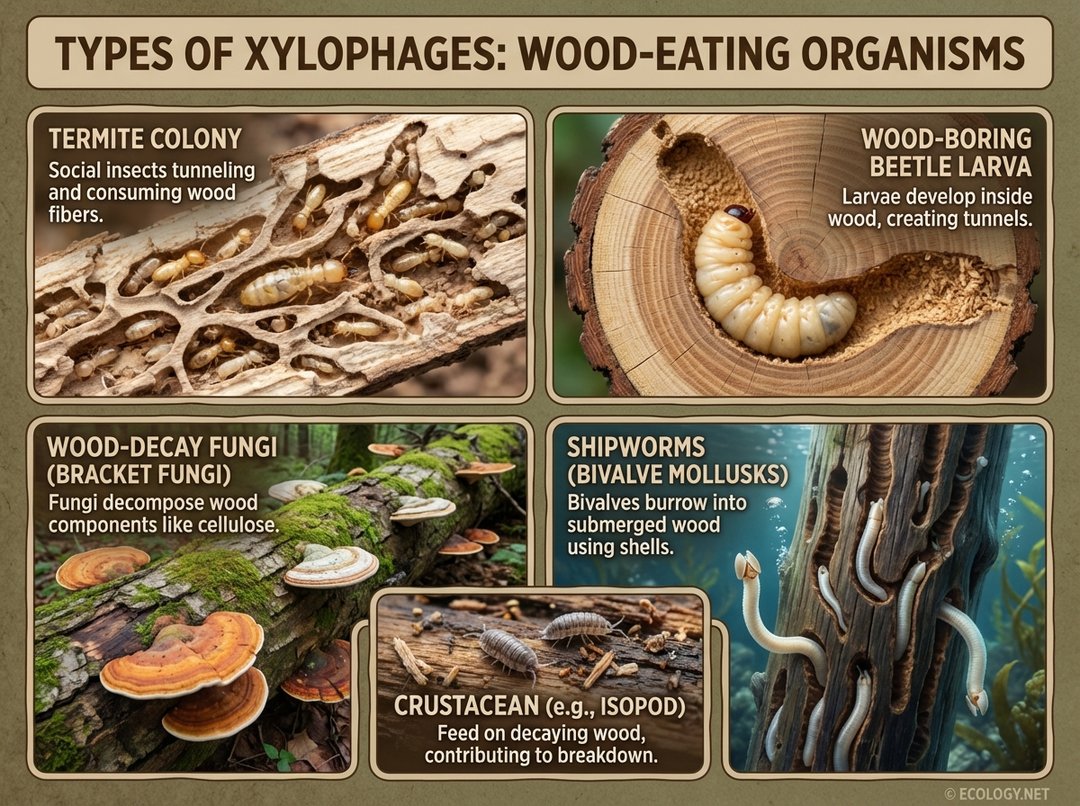
Let us explore some of the most prominent members of this fascinating guild:
- Termites: Perhaps the most famous wood eaters, termites are social insects that live in highly organized colonies. They are masters of tunneling, creating intricate networks within wood structures, often with devastating effects on human constructions but crucial roles in natural environments.
- Wood-boring Beetles: Many beetle species, particularly in their larval stage, are dedicated xylophages. Larvae of longhorn beetles, bark beetles, and powderpost beetles tunnel through wood, creating distinctive galleries as they feed and grow.
- Wood-decay Fungi: These organisms are arguably the most significant decomposers of wood. Fungi, such as bracket fungi and shelf fungi, secrete powerful enzymes directly into the wood, breaking down its complex components externally before absorbing the nutrients.
- Shipworms: Despite their name, shipworms are not worms at all but highly specialized bivalve mollusks. They burrow into submerged wood, such as piers and shipwrecks, playing a critical role in marine decomposition.
- Crustaceans: Certain marine crustaceans, like gribbles (isopods), also contribute to wood degradation in aquatic environments, rasping away at timber and creating shallow tunnels.
The Ecological Importance of Xylophagy
The work of xylophages extends far beyond simply consuming dead wood. Their activities are fundamental to several ecological processes that underpin the health and productivity of terrestrial and aquatic ecosystems.
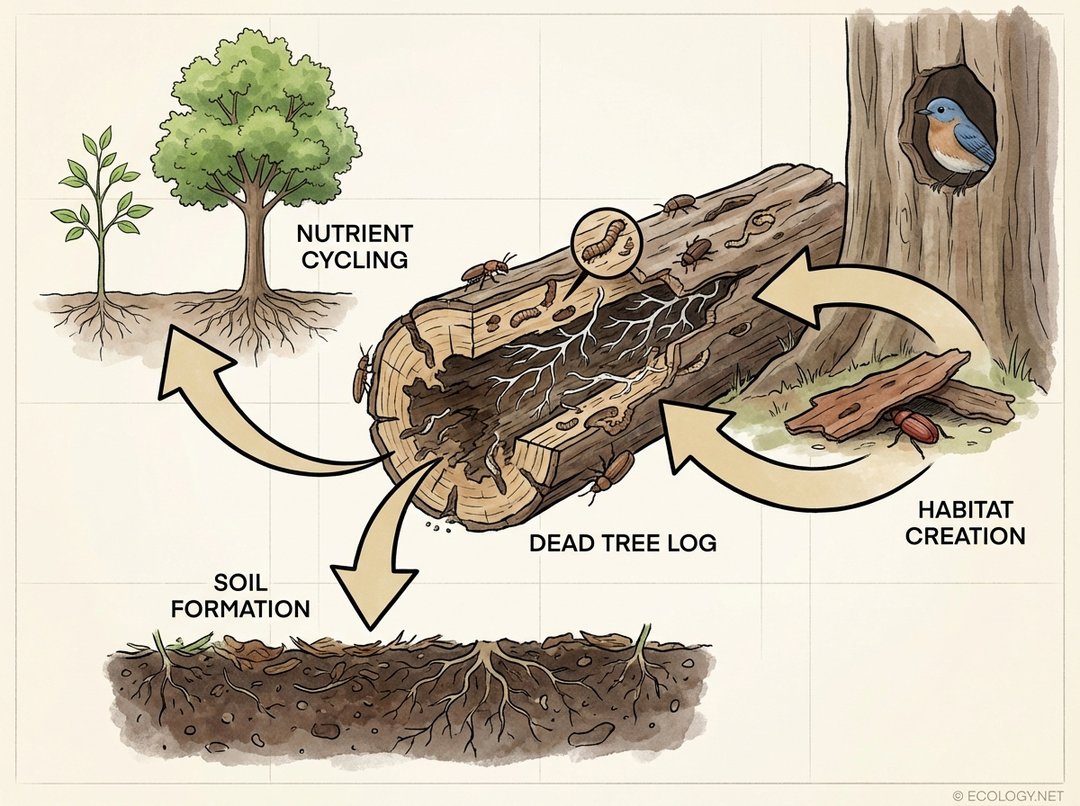
The three primary ecological roles of xylophages are:
- Nutrient Cycling: Wood is rich in essential nutrients like carbon, nitrogen, and phosphorus, but these are locked away in complex polymers. Xylophages break down wood, releasing these vital nutrients back into the soil and atmosphere, making them available for new plant growth. This continuous recycling is crucial for forest regeneration and overall ecosystem productivity.
- Habitat Creation: As xylophages tunnel and decay wood, they create a myriad of microhabitats. These cavities and softened wood provide shelter, nesting sites, and food sources for countless other organisms, including insects, amphibians, reptiles, birds, and small mammals. A decaying log is a bustling mini-ecosystem in itself.
- Soil Formation: The decomposition of wood by xylophages contributes significantly to the formation of nutrient-rich topsoil. As wood breaks down into smaller organic particles, it enriches the soil structure, improves water retention, and provides a substrate for microbial communities, ultimately fostering a fertile environment for future plant life.
The Challenges of Wood Digestion
Wood is an incredibly tough and recalcitrant material, primarily composed of three complex polymers: cellulose, hemicellulose, and lignin. Cellulose provides strength, hemicellulose acts as a filler, and lignin, a highly resistant aromatic polymer, acts as the glue, making wood exceptionally difficult to break down. This structural complexity presents a significant digestive challenge for any organism attempting to make a meal of it. To overcome this, xylophages have evolved a range of remarkable adaptations.
The Role of Symbiosis
Many of the most efficient wood eaters do not digest wood directly themselves. Instead, they rely on a fascinating partnership with microscopic allies. This symbiotic relationship is particularly well-illustrated by termites.
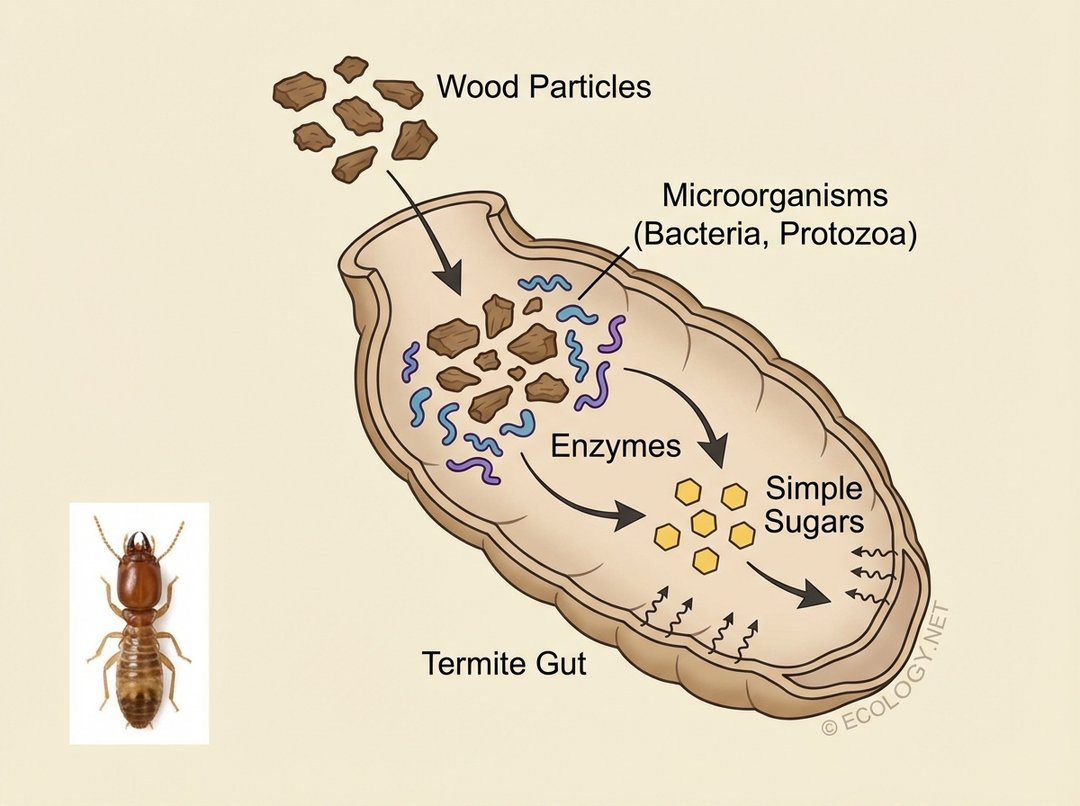
Inside the gut of a termite, a bustling community of microorganisms, including bacteria, archaea, and protozoa, resides. These tiny symbionts possess the specialized enzymes, such as cellulases and ligninases, that are capable of breaking down the tough cellulose and lignin molecules into simpler sugars. The termite then absorbs these sugars, effectively outsourcing the most difficult part of its digestion to its microbial partners. This intricate internal ecosystem allows termites to thrive on a diet that would be indigestible to most other animals. Similar symbiotic relationships are found in some wood-boring beetles and other insect xylophages.
Enzymatic Powerhouses
While symbiosis is common, some xylophages, particularly many fungi and certain beetle larvae, produce their own powerful enzymes to directly break down wood. Wood-decay fungi, for instance, are categorized by the type of wood components they target:
- White Rot Fungi: These fungi are unique in their ability to degrade all components of wood, including the highly resistant lignin. They leave behind a soft, stringy, whitish residue.
- Brown Rot Fungi: These fungi primarily target cellulose and hemicellulose, leaving the lignin largely intact. This results in wood that crumbles into cubical pieces, often appearing brown.
These fungi secrete their enzymes externally, effectively digesting the wood before absorbing the released nutrients.
Xylophages and Human Interaction
The activities of xylophages often bring them into direct contact with human interests, sometimes beneficially, but often as perceived pests.
On the one hand, xylophages are vital ecological engineers. They clear away dead wood, preventing fuel buildup that could lead to intense wildfires, and they contribute to the health and vitality of forests. Researchers are also studying the enzymes produced by xylophages and their symbionts for potential applications in biofuel production, aiming to efficiently convert woody biomass into renewable energy.
On the other hand, when xylophages encounter human-built wooden structures, they can cause significant economic damage. Termites can compromise the structural integrity of homes, while wood-boring beetles can infest furniture, antique pieces, and timber. Managing these interactions requires a deep understanding of their biology and ecological roles.
Unsung Heroes of Decomposition
From the smallest beetle larva tunneling through a log to the vast fungal networks spreading beneath the forest floor, xylophages are a testament to nature’s ingenuity in recycling. They transform what appears to be inert, dead material into a vibrant source of life, nutrients, and habitat. By understanding and appreciating these remarkable organisms, we gain a deeper insight into the intricate workings of our planet’s ecosystems and recognize the profound importance of even the smallest creatures in maintaining the delicate balance of life. They are, without a doubt, the unsung heroes of decomposition, tirelessly working to keep our world turning.