Life on Earth is a grand, intricate dance of energy. From the smallest microbe to the largest whale, every living thing plays a role in a vast, interconnected system of give and take. At the heart of this system lies a fundamental concept, one that dictates survival, shapes ecosystems, and ultimately underpins all biodiversity: the food chain.
Far from being a simple linear progression, food chains are the invisible threads weaving through every habitat, illustrating how energy flows from one organism to another. Understanding them is not just an academic exercise; it is key to comprehending the delicate balance of nature and our own place within it.
The Blueprint of Life: What Exactly is a Food Chain?
Imagine a pathway, a direct route showing who eats whom in an ecosystem. That, in its simplest form, is a food chain. It is a diagrammatic representation of the feeding relationships between different organisms, illustrating the transfer of energy and nutrients from one living thing to another.
Every food chain begins with energy from the sun, captured by organisms capable of producing their own food. This energy then moves through a series of steps, or trophic levels, as one organism consumes another.
The Essential Players: Trophic Levels Explained
To truly grasp food chains, it is crucial to understand the roles each organism plays. These roles are categorized into distinct trophic levels:
- Producers (Autotrophs)
- These are the foundation of almost every food chain. Producers are organisms that create their own food, primarily through photosynthesis, using sunlight, water, and carbon dioxide. They convert light energy into chemical energy stored in organic compounds.
- Examples: Grasses, trees, shrubs, phytoplankton (microscopic marine algae), cyanobacteria.
- Consumers (Heterotrophs)
- Consumers are organisms that obtain energy by feeding on other organisms. They cannot produce their own food.
- Consumers are further divided based on what they eat:
- Primary Consumers (Herbivores): These organisms feed directly on producers. They are the first link in the energy transfer from plants.
- Examples: Deer eating leaves, rabbits eating grass, caterpillars munching on plants, zooplankton grazing on phytoplankton.
- Secondary Consumers (Carnivores or Omnivores): These organisms feed on primary consumers.
- Examples: A fox eating a rabbit, a snake eating a mouse, a small fish eating zooplankton, a bird eating caterpillars.
- Tertiary Consumers (Top Carnivores or Omnivores): These organisms feed on secondary consumers. They are often at the top of their specific food chain.
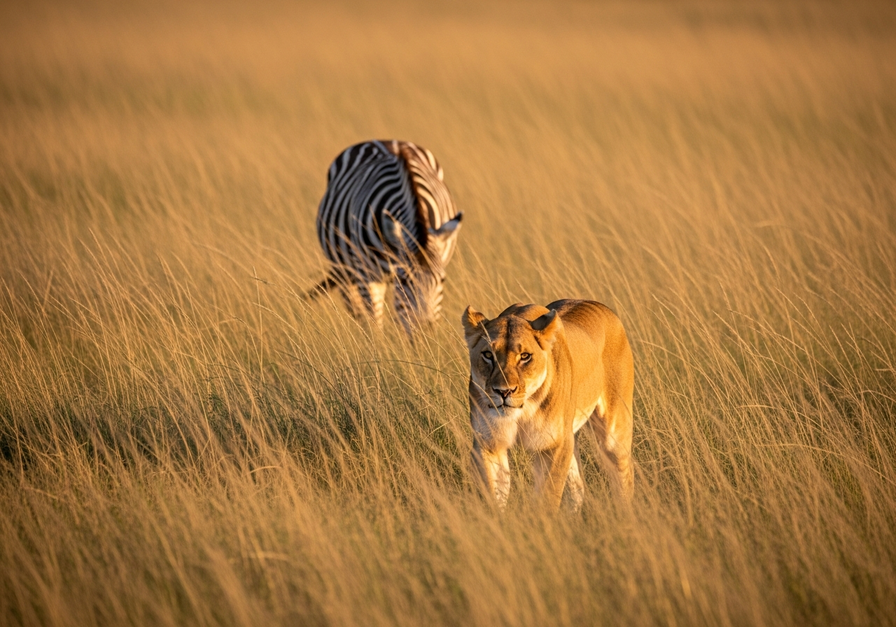
- Examples: An eagle preying on a snake, a lion hunting a zebra (which ate grass), a shark eating a smaller fish.
- Primary Consumers (Herbivores): These organisms feed directly on producers. They are the first link in the energy transfer from plants.
- Decomposers (Detritivores)
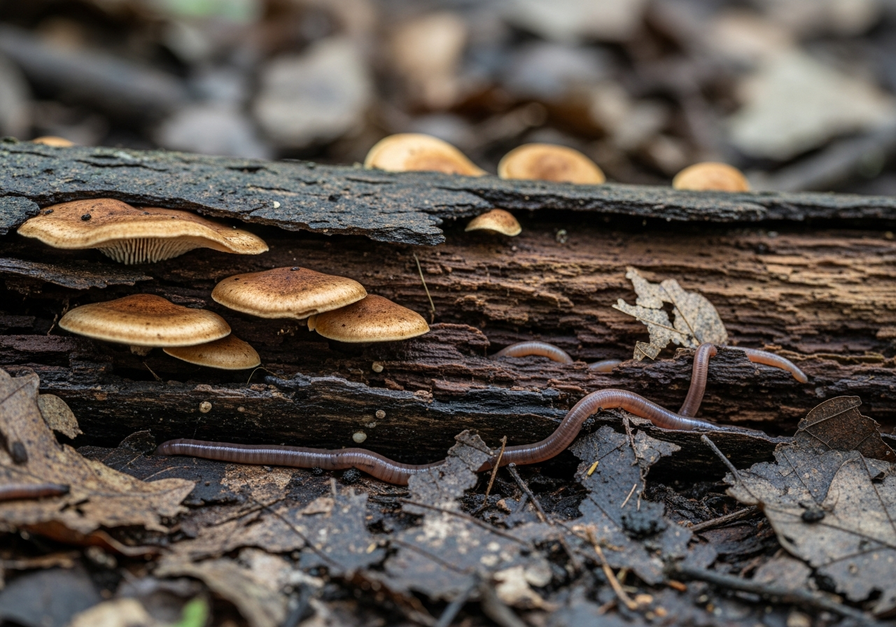
- While not always explicitly shown within a linear food chain, decomposers are absolutely vital. They break down dead organic matter from all trophic levels, returning essential nutrients to the soil or water, making them available for producers once again. Without decomposers, nutrients would be locked away, and life would grind to a halt.
- Examples: Bacteria, fungi, earthworms, dung beetles.
A Simple Journey of Energy: Food Chain Examples
Let us trace the path of energy through a few classic examples:
- Terrestrial Food Chain:
- Sunlight → Grass (Producer)
- Grass → Zebra (Primary Consumer)
- Zebra → Lion (Secondary Consumer)
- Aquatic Food Chain:
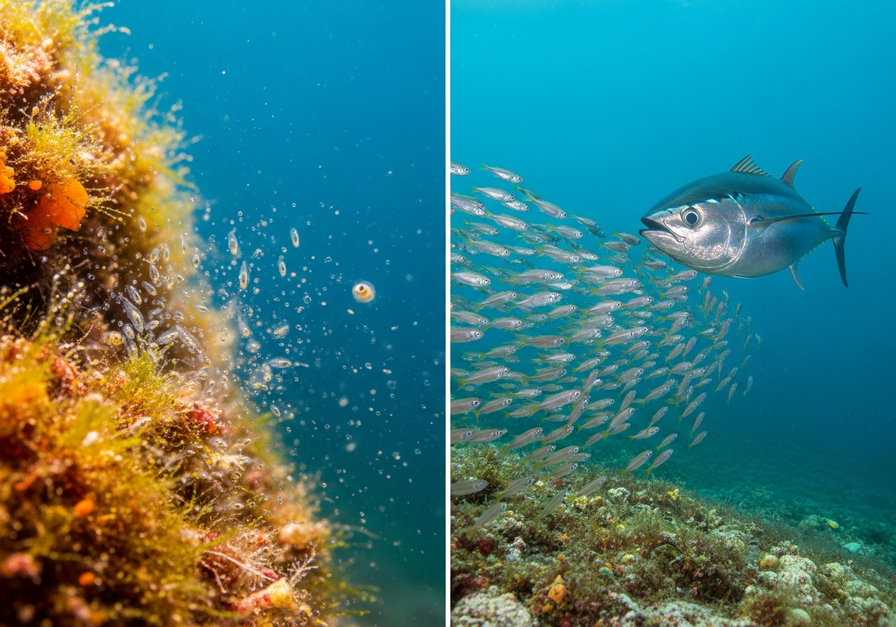
- Sunlight → Phytoplankton (Producer)
- Phytoplankton → Zooplankton (Primary Consumer)
- Zooplankton → Small Fish (Secondary Consumer)
- Small Fish → Tuna (Tertiary Consumer)
Beyond the Basics: Energy Flow and Ecosystem Dynamics
Food chains are more than just lists of who eats whom; they are conduits for energy. Understanding how this energy moves, and how much is transferred, reveals profound insights into ecosystem structure and function.
The Unidirectional Flow of Energy and the 10% Rule
Energy flows through an ecosystem in one direction: from the sun, through producers, and then through successive levels of consumers. It is a one-way street, unlike nutrients which cycle. Crucially, this transfer is not 100% efficient.
The 10% Rule of Energy Transfer: On average, only about 10% of the energy from one trophic level is transferred to the next. The remaining 90% is lost as heat during metabolic processes, used for life functions (movement, reproduction), or remains unconsumed and undigested.
This significant energy loss at each step explains why food chains rarely have more than four or five trophic levels. There simply is not enough energy left to support higher levels. It also means that a vast amount of biomass at the producer level is required to support a much smaller amount of biomass at the top consumer level.
From Chains to Webs: The Reality of Interconnectedness
While food chains are excellent for illustrating basic energy flow, real ecosystems are far more complex. Most organisms do not eat just one type of food, and most are eaten by more than one type of predator. This intricate network of interconnected food chains is known as a food web.
A food web provides a more realistic and comprehensive picture of feeding relationships within an ecosystem. It highlights the multiple pathways energy can take, making ecosystems more resilient. If one food source becomes scarce, a consumer might have alternative options, preventing a complete collapse of the system.
Two Main Pathways: Grazing and Detrital Food Chains
We often focus on the grazing food chain, which starts with living plants. However, another equally vital pathway exists:
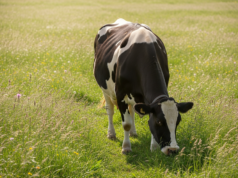
- Grazing Food Chain: Starts with producers (living plants or phytoplankton) and moves through herbivores to carnivores. (e.g., Grass → Cow → Human)
- Detrital Food Chain: Starts with dead organic matter (detritus) and moves through decomposers and detritivores. This chain is often overlooked but is incredibly important for nutrient cycling.
- Examples: Dead leaves → Earthworm → Robin; Dead animal carcass → Maggots → Vulture.
In reality, these two chains are intertwined. The waste products and dead bodies from the grazing food chain become the starting material for the detrital food chain, demonstrating the holistic nature of ecosystems.
Visualizing Energy and Biomass: Ecological Pyramids
Ecologists use ecological pyramids to graphically represent the quantitative relationships between different trophic levels. These pyramids can illustrate numbers of organisms, biomass, or energy content.
- Pyramid of Numbers: Shows the number of individual organisms at each trophic level.
- Typically, the number of individuals decreases at successive trophic levels.
- Example: Many blades of grass → fewer grasshoppers → even fewer frogs → a single snake.
- Note: Can sometimes be inverted, such as a single large tree supporting many insects.
- Pyramid of Biomass: Represents the total mass of living organisms (biomass) at each trophic level.
- Generally, biomass decreases at higher trophic levels, reflecting the energy loss.
- Example: A large biomass of plants → a smaller biomass of herbivores → an even smaller biomass of carnivores.
- Note: Can be inverted in some aquatic ecosystems where phytoplankton (producers) have a very short lifespan and are consumed rapidly, leading to a smaller standing crop biomass than their consumers.
- Pyramid of Energy: Illustrates the total amount of energy at each trophic level.
- This pyramid is always upright because energy is lost at each transfer, meaning less energy is available at higher trophic levels. It directly reflects the 10% rule.
- It is the most fundamental and accurate representation of energy flow.
The Deeper Dive: Complexities and Consequences
For those eager to explore the more intricate and often profound implications of food chains, we delve into topics that highlight their critical role in environmental health and ecosystem stability.
Bioaccumulation and Biomagnification: The Perilous Climb
Food chains are not just pathways for energy; they can also be pathways for harmful substances. Two related concepts illustrate this danger:
- Bioaccumulation: The buildup of a toxic substance in the tissues of an individual organism over its lifetime. If an organism continually ingests a toxin faster than it can excrete it, the concentration in its body increases.
- Biomagnification: The increasing concentration of a toxic substance in the tissues of organisms at successively higher trophic levels. As predators consume prey that have bioaccumulated toxins, these toxins become more concentrated at each step up the food chain.
Classic Example: DDT and Birds of Prey
DDT, a pesticide widely used in the mid-20th century, sprayed on plants, was ingested by insects. Small fish ate the insects, and larger fish ate the small fish. Birds of prey, like eagles and ospreys, consumed the larger fish. At each step, the DDT became more concentrated, leading to dangerously high levels in the birds. This caused their eggshells to thin, leading to reproductive failure and a dramatic decline in their populations.
Modern Concern: Mercury in Fish
Mercury, often released into the environment from industrial processes, enters aquatic food chains. Microorganisms convert it into methylmercury, which is then absorbed by phytoplankton. Small fish eat the phytoplankton, larger fish eat the small fish, and so on. Top predators like tuna, swordfish, and sharks can accumulate significant levels of mercury, posing health risks to humans who consume them.
Keystone Species and Trophic Cascades: The Ripple Effect
Not all species in a food web are equally important. Some play disproportionately large roles in maintaining the structure and function of an ecosystem. These are known as keystone species.
- Keystone Species: A species whose presence and role within an ecosystem has a disproportionate effect on other organisms within the system. Without keystone species, the ecosystem would be dramatically different or cease to exist altogether.
- Example: Sea Otters in Kelp Forests: Sea otters prey on sea urchins. Without otters, urchin populations explode, and they decimate kelp forests. Kelp forests are crucial habitats for countless other marine species, so the otters indirectly protect the entire ecosystem.
The removal or introduction of a keystone species, or any significant change at one trophic level, can trigger a trophic cascade: a series of direct and indirect effects that propagate through an entire food web.
- Trophic Cascades: Powerful indirect interactions that can control entire ecosystems, occurring when a trophic level in a food web is suppressed.
- Top-Down Cascade: When a top predator is removed, its prey population increases, which then reduces the population of the prey’s food source.
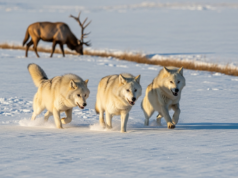
- Example: Wolves in Yellowstone: The reintroduction of wolves (top predators) to Yellowstone National Park led to a decrease in elk populations. This allowed aspen and willow trees (elk’s food source) to recover, which in turn stabilized riverbanks, created better habitats for beavers and fish, and increased biodiversity across the park.
- Bottom-Up Cascade: When a change at the producer level affects the entire food chain above it.
- Example: Nutrient enrichment in lakes: An increase in nutrients (like phosphates from agricultural runoff) can lead to an algal bloom (producers), which then supports a larger population of zooplankton, and subsequently, more fish.
- Top-Down Cascade: When a top predator is removed, its prey population increases, which then reduces the population of the prey’s food source.
Humanity’s Footprint: Impacting Food Chains
Humans are not outside of food chains; we are integral parts of many, often as top consumers. Our activities have profound and widespread impacts on these delicate systems:
- Overfishing: Depleting populations of specific fish species can have cascading effects, impacting their predators and prey, and altering entire marine food webs.
- Habitat Destruction: Clearing forests, draining wetlands, or paving over grasslands removes producers and the habitats for countless species, disrupting entire food chains.
- Pollution: Beyond biomagnification, pollutants like plastics can directly harm organisms, blocking digestive tracts or releasing toxins, affecting their ability to feed or be fed upon.
- Climate Change: Altering temperatures and weather patterns can shift the distribution of species, impact growing seasons for plants, and disrupt the timing of crucial life events (like insect emergence for bird feeding), leading to mismatches in food availability.
- Introduction of Invasive Species: Non-native species can outcompete native producers or consumers, or become novel predators, severely disrupting existing food chains and webs.
The Unseen Benefits: Food Chains and Ecosystem Services
The health and stability of food chains are fundamental to the provision of essential ecosystem services, the benefits that humans receive from ecosystems:
- Nutrient Cycling: Decomposers, the unsung heroes of the detrital food chain, ensure that vital nutrients are recycled back into the soil and water, supporting new plant growth.
- Population Control: Predator-prey relationships within food chains help regulate populations, preventing any single species from overpopulating and depleting resources.
- Ecosystem Resilience: Healthy food webs, with their multiple pathways, contribute to the resilience of an ecosystem, allowing it to better absorb disturbances and recover from change.
- Biodiversity Maintenance: Healthy food chains support a rich diversity of life, as each species plays a role in the intricate web of interactions.
The Grand Tapestry: Our Place in the Food Chain
From the simplest blade of grass to the most complex predator, every organism is a link in the grand, interconnected food chain of life. Understanding these fundamental pathways of energy and nutrient transfer is not merely an academic pursuit; it is a critical lens through which we can view the health of our planet.
The intricate dance of who eats whom dictates the very structure of ecosystems, influences the spread of toxins, and highlights the profound impact of even small changes. As inhabitants of this planet, we are not external observers but active participants in these vast, dynamic systems. Recognizing our role, and the consequences of our actions on these vital connections, is the first step towards fostering a more sustainable and harmonious relationship with the natural world.