Air pollution, an often invisible yet pervasive threat, silently weaves its way through our atmosphere, impacting everything from the smallest microbial life to vast global ecosystems and human health. It is a complex environmental challenge, born from a myriad of sources, both natural and anthropogenic, and its consequences ripple across the planet in intricate and often surprising ways. Understanding this silent adversary is the first step towards safeguarding the delicate balance of life on Earth.
What Exactly Is Air Pollution?
At its core, air pollution refers to the presence of harmful substances in the Earth’s atmosphere. These substances, or pollutants, can be solid particles, liquid droplets, or gases. They reach concentrations high enough to endanger the health of living organisms, damage ecosystems, or harm materials. The air we breathe is a complex mixture of gases, primarily nitrogen and oxygen, along with trace amounts of others. When this delicate balance is disrupted by unwanted additions, we have air pollution.
Primary and Secondary Pollutants: The Two Faces of Atmospheric Contamination
Air pollutants are broadly categorized into two main types based on their origin:
- Primary Pollutants: These are substances directly emitted into the atmosphere from identifiable sources. Think of the smoke billowing from a factory chimney, the exhaust fumes from a car, or the ash and gases released during a volcanic eruption.
- Secondary Pollutants: These are not directly emitted but form in the atmosphere when primary pollutants react with each other, or with naturally occurring atmospheric components, often under the influence of sunlight.
Consider a common example: nitrogen oxides (NOx) and volatile organic compounds (VOCs) are primary pollutants emitted by vehicles and industrial processes. When these interact in the presence of sunlight, they can form ground-level ozone, a potent secondary pollutant. Similarly, sulfur dioxide (SO2) and nitrogen oxides (NOx), also primary pollutants, can react with water vapor and other chemicals in the atmosphere to form sulfuric and nitric acids, leading to acid rain.
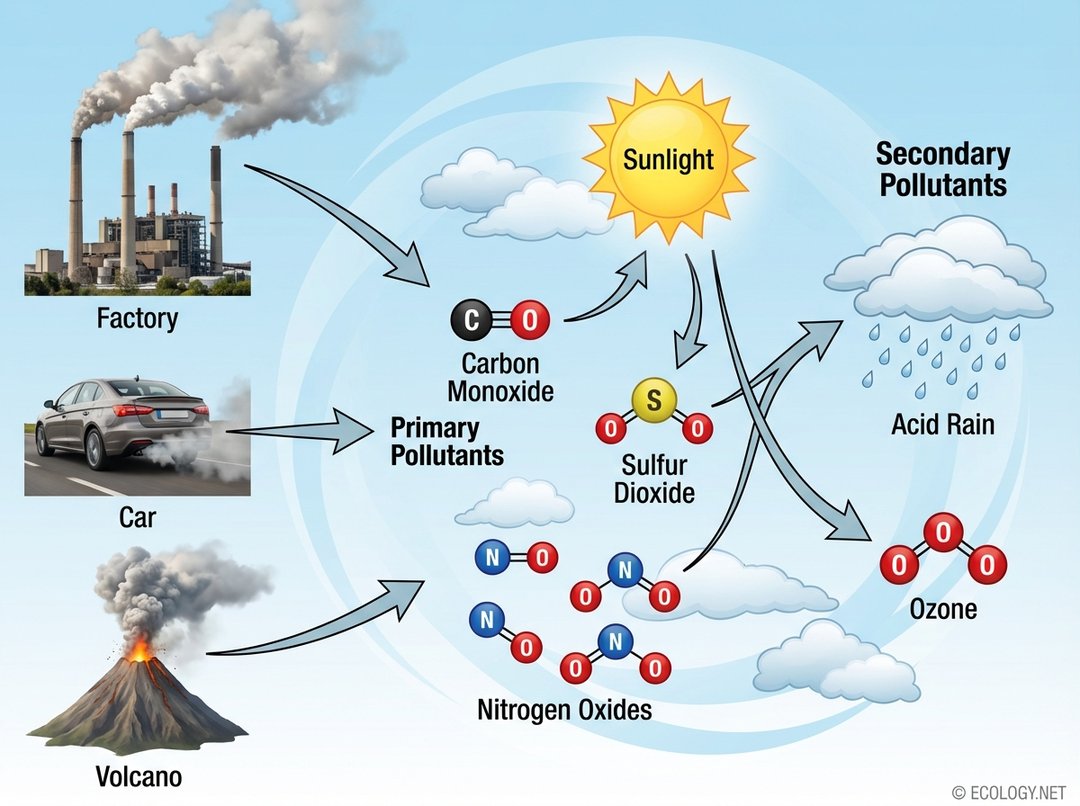
This distinction is crucial because it highlights the complex chemistry occurring above our heads and the interconnectedness of various pollutants. Addressing air pollution requires understanding both the direct emissions and the subsequent atmospheric transformations.
The Usual Suspects: Common Air Pollutants
A diverse range of substances contributes to air pollution, each with its own sources and impacts. Here are some of the most prevalent:
- Particulate Matter (PM): These are tiny solid or liquid particles suspended in the air. They are categorized by size, with PM10 (particles less than 10 micrometers in diameter) and PM2.5 (particles less than 2.5 micrometers) being of particular concern. Sources include dust, soot from combustion (vehicles, power plants, wildfires), and industrial processes.
- Ground-level Ozone (O3): Unlike the beneficial ozone layer in the stratosphere that protects us from UV radiation, ground-level ozone is a harmful pollutant. As a secondary pollutant, it forms from reactions between NOx and VOCs in sunlight. It is a major component of smog.
- Carbon Monoxide (CO): A colorless, odorless gas produced by the incomplete combustion of carbon-containing fuels. Major sources include vehicle exhaust, industrial processes, and residential heating.
- Sulfur Dioxide (SO2): Primarily released from the burning of fossil fuels (especially coal) by power plants and industrial facilities. It is a major precursor to acid rain.
- Nitrogen Oxides (NOx): A group of highly reactive gases, including nitrogen dioxide (NO2) and nitric oxide (NO). They are formed when fuel is burned at high temperatures, such as in vehicle engines and power plants. NOx contributes to smog and acid rain.
- Volatile Organic Compounds (VOCs): Organic chemicals that evaporate easily at room temperature. They are emitted from a wide range of sources, including paints, solvents, gasoline, and some industrial processes. VOCs are key precursors to ground-level ozone formation.
- Lead (Pb): While largely phased out in gasoline in many parts of the world, lead pollution can still arise from industrial sources, metal processing, and waste incineration. It is a highly toxic heavy metal.
Ecological Impacts: A Chain Reaction of Harm
The consequences of air pollution extend far beyond the immediate vicinity of its sources, creating a cascade of effects that disrupt natural ecosystems. These impacts can be subtle at first, but over time, they lead to significant environmental degradation.
Impacts on Flora: From Stunted Growth to Forest Dieback
Plants are often the first to show signs of stress from air pollution. Ground-level ozone, for instance, can damage plant cells, leading to reduced photosynthesis, stunted growth, and visible injury to leaves, such as yellowing or bronzing. This can significantly reduce crop yields, impacting food security. Acid rain, formed from SO2 and NOx, leaches vital nutrients from soil, making it less fertile and harming beneficial microorganisms. It can also directly damage tree foliage and weaken trees, making them more susceptible to disease, insects, and extreme weather, leading to widespread forest dieback in severe cases.
Impacts on Fauna: Respiratory Woes and Food Web Disruptions
Animals, like humans, suffer respiratory problems from inhaling polluted air. Birds, mammals, and even insects can experience lung damage, reduced immunity, and reproductive issues. The disruption extends to entire food webs. For example, if air pollution reduces insect populations, birds that feed on those insects will struggle to find food, potentially leading to declines in bird populations. Similarly, if plants are damaged, herbivores that depend on them will suffer, and this effect will ripple up the food chain.
Aquatic Ecosystems: The Silent Suffering of Lakes and Rivers
Acid rain does not just affect land; it also falls into lakes, rivers, and streams, increasing their acidity. This acidification can be devastating for aquatic life. Many fish species, amphibians, and aquatic insects cannot tolerate highly acidic water, leading to reduced biodiversity and even the complete loss of certain species. For instance, in some regions, once-thriving fish populations have disappeared from lakes due to prolonged acid rain exposure. The heavy metals mobilized by acidic conditions can also accumulate in aquatic organisms, posing risks to predators, including humans.
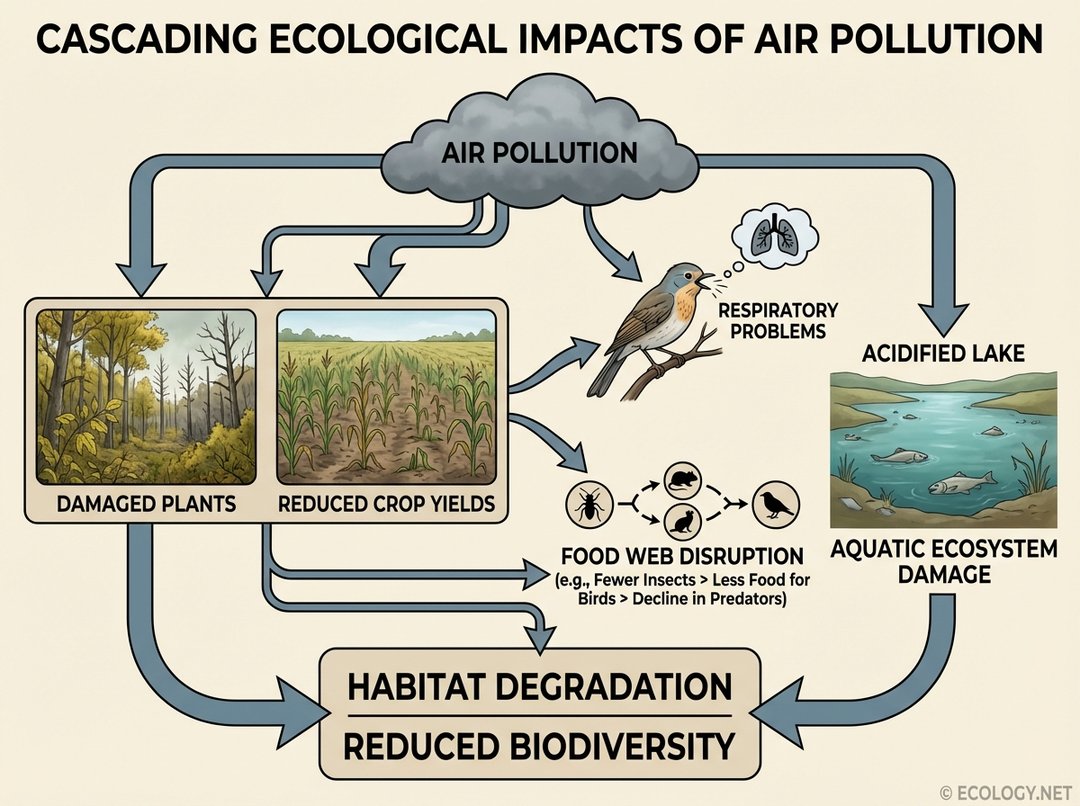
Overall, air pollution contributes to habitat degradation, making environments less hospitable for a wide array of species, and ultimately leading to a reduction in biodiversity, weakening the resilience of ecosystems against other environmental stressors.
Beyond the Environment: Impacts on Human Health
While this article focuses on ecological impacts, it is important to acknowledge that air pollution poses significant threats to human health. Inhaling polluted air can lead to a range of health problems, from acute respiratory infections and asthma exacerbations to chronic conditions like heart disease, stroke, and lung cancer. Vulnerable populations, such as children, the elderly, and those with pre-existing health conditions, are particularly at risk. The interconnectedness of environmental and human health underscores the urgency of addressing air pollution.
Mitigating Air Pollution: A Path Towards Healthier Ecosystems
Addressing air pollution is a monumental task, but significant progress can be made through a combination of technological innovation, policy changes, and individual actions. The goal is not just to reduce emissions, but to foster a healthier, more sustainable relationship with our planet.
Technological Advancements and Industrial Solutions
- Cleaner Energy Production: Shifting away from fossil fuels towards renewable energy sources like solar, wind, and hydropower drastically reduces emissions of SO2, NOx, and particulate matter.
- Emission Control Technologies: Industries and power plants can install scrubbers, electrostatic precipitators, and catalytic converters to remove pollutants from exhaust gases before they are released into the atmosphere.
- Improved Vehicle Standards: Stricter emission standards for vehicles, coupled with advancements in engine technology and the promotion of electric and hybrid vehicles, significantly cut down on automotive pollution.
Policy, Regulation, and Urban Planning
- Legislation and Enforcement: Governments play a critical role in setting air quality standards, regulating industrial emissions, and enforcing compliance. International agreements are also vital for addressing transboundary pollution.
- Public Transportation and Urban Design: Investing in efficient public transport systems, promoting cycling and walking, and designing cities that reduce the need for extensive car travel can lower urban air pollution.
- Sustainable Agriculture Practices: Reducing the use of certain fertilizers and managing livestock waste more effectively can decrease emissions of ammonia and other agricultural pollutants.
Individual Actions and Nature-Based Solutions
- Energy Conservation: Simple actions like turning off lights, using energy-efficient appliances, and reducing overall energy consumption contribute to less demand for energy produced by polluting sources.
- Sustainable Transportation Choices: Opting for walking, cycling, or public transport instead of driving, or choosing electric vehicles, directly reduces personal emissions.
- Tree Planting and Green Spaces: Trees act as natural air filters, absorbing pollutants and releasing oxygen. Expanding urban green spaces and reforesting degraded areas can significantly improve local air quality and provide numerous ecological benefits.
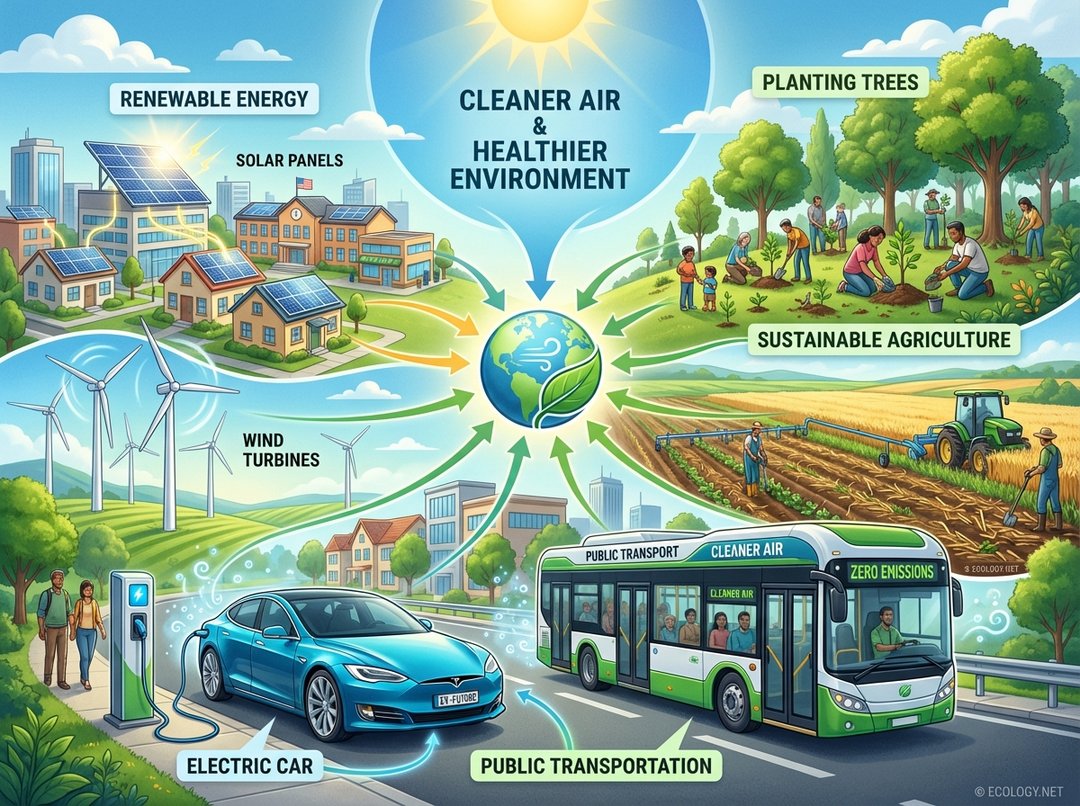
These strategies, when implemented collectively, create a powerful force for change, leading to cleaner air, healthier ecosystems, and a more sustainable future for all.
The Global Perspective: Air Pollution Knows No Borders
One of the most challenging aspects of air pollution is its transboundary nature. Pollutants emitted in one country can travel thousands of kilometers on prevailing winds, impacting air quality and ecosystems in distant regions. This phenomenon necessitates international cooperation and agreements to effectively manage and reduce global air pollution. Issues like acid rain in Europe or haze in Southeast Asia are stark reminders that the atmosphere is a shared resource, and pollution anywhere can become a problem everywhere.
Conclusion
Air pollution is a multifaceted environmental issue with profound and far-reaching consequences for our planet’s ecosystems and the health of all living beings. From the intricate chemical reactions that form secondary pollutants to the cascading ecological damage observed in forests and aquatic environments, the story of air pollution is one of interconnectedness and vulnerability. However, it is also a story of hope and action. By understanding its causes, recognizing its impacts, and embracing a diverse array of mitigation strategies, humanity can work towards a future where clean air is a universal reality, fostering healthier ecosystems and a more sustainable world for generations to come.