The Earth is a dynamic planet, constantly undergoing natural cycles and changes. However, in recent decades, a phenomenon known as global warming has emerged as a pressing concern, fundamentally altering our planet’s delicate balance. Far from a distant threat, global warming is a complex issue driven primarily by human activities, manifesting in observable changes across every continent and ocean. Understanding this critical environmental challenge is the first step towards addressing its profound implications for ecosystems, economies, and societies worldwide.
The Greenhouse Effect: A Natural Process Gone Awry
To grasp global warming, one must first understand the greenhouse effect. This is a natural and essential process that keeps our planet warm enough to sustain life. Imagine Earth wrapped in a cozy, invisible blanket of gases. When sunlight reaches Earth, some of it is reflected back into space, but a significant portion is absorbed by the land and oceans, warming the planet. As Earth warms, it radiates heat back towards space. However, certain gases in the atmosphere, known as greenhouse gases, trap some of this outgoing heat, preventing it from escaping entirely. This trapped heat warms the atmosphere, much like the glass walls of a greenhouse trap heat inside, hence the name.
Without this natural greenhouse effect, Earth’s average temperature would be a frigid -18°C (0°F), making it uninhabitable. It is a vital planetary thermostat.
The problem arises when human activities significantly increase the concentration of these greenhouse gases in the atmosphere. This thickening of the “blanket” traps more heat than usual, leading to an enhanced greenhouse effect and, consequently, global warming.
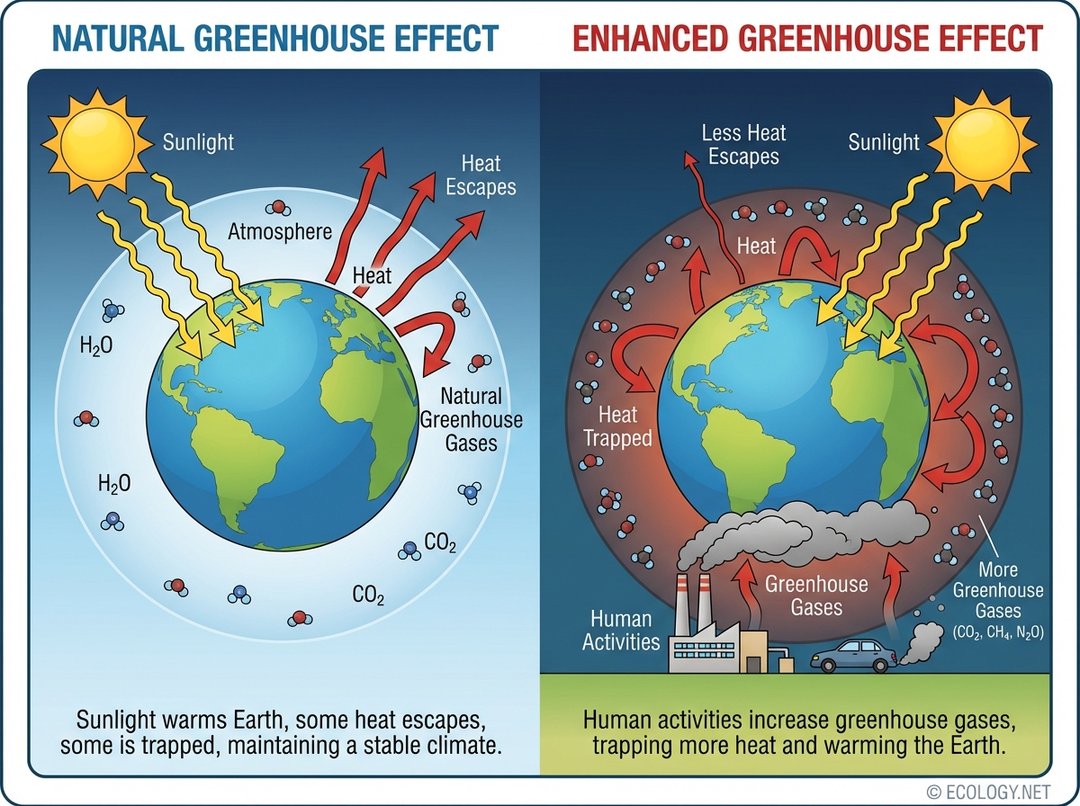
This image visually explains the fundamental concept of the greenhouse effect and how human activities intensify it, leading to global warming, as described in ‘The Greenhouse Effect: A Natural Process Gone Awry’ section.
Key Greenhouse Gases and Their Sources
Several gases contribute to the greenhouse effect, each with varying potency and atmospheric longevity:
- Carbon Dioxide (CO2): This is the most significant greenhouse gas emitted by human activities. Its primary sources include the burning of fossil fuels (coal, oil, and natural gas) for electricity, transportation, and industrial processes, as well as deforestation. When forests are cleared, the carbon stored in trees is released into the atmosphere.
- Methane (CH4): Methane is a potent greenhouse gas, far more effective at trapping heat than CO2 over a shorter period. Major human sources include agriculture (livestock digestion, rice cultivation), landfills, and the production and transport of coal, natural gas, and oil.
- Nitrous Oxide (N2O): This gas is primarily emitted from agricultural activities, such as the use of nitrogen fertilizers, as well as from industrial processes and the combustion of fossil fuels.
- Fluorinated Gases: These are synthetic, powerful greenhouse gases emitted from a variety of industrial processes. Although present in smaller quantities, they have an extremely high global warming potential.
Evidence of a Warming World
The scientific community overwhelmingly agrees that the Earth is warming, and this warming is unequivocally linked to human activities. The evidence is abundant and observable across multiple indicators:
- Rising Global Temperatures: Global average temperatures have been steadily increasing, with the past decade being the warmest on record. This trend is not just about warmer days, but a shift in the baseline climate.
- Melting Ice and Glaciers: Glaciers are retreating worldwide, from the Himalayas to the Andes. Arctic sea ice is shrinking dramatically, and the Greenland and Antarctic ice sheets are losing mass at an accelerating rate. This melt contributes directly to sea level rise.
- Sea-Level Rise: As glaciers and ice sheets melt, and as ocean water expands when it warms (thermal expansion), global sea levels are rising. This poses a significant threat to coastal communities and ecosystems.
- Ocean Warming and Acidification: The oceans absorb a vast amount of the excess heat and carbon dioxide from the atmosphere. This leads to warmer ocean temperatures, impacting marine life, and ocean acidification, which threatens shell-forming organisms like corals and shellfish.
- Extreme Weather Events: While individual weather events cannot be solely attributed to global warming, the frequency and intensity of certain events are increasing. This includes more severe heatwaves, prolonged droughts, heavier rainfall leading to floods, and more powerful tropical storms.
Impacts on Ecosystems
The ripple effects of global warming are profoundly altering natural ecosystems, threatening biodiversity and disrupting the delicate balance of life on Earth.
- Biodiversity Loss: Species are struggling to adapt to rapidly changing conditions. Many plants and animals are shifting their geographic ranges towards cooler poles or higher altitudes, but for those that cannot move fast enough or have nowhere to go, extinction becomes a real threat.
- Habitat Destruction: Rising sea levels inundate coastal wetlands, vital nurseries for many marine species. Changes in temperature and precipitation patterns transform forests into grasslands or vice versa, destroying established habitats.
- Disruption of Food Chains: Altered timing of seasons, such as earlier springs, can throw off the synchronized life cycles of species. For example, insects may hatch before birds migrate to feed on them, leading to food shortages.
- Coral Bleaching: One of the most visible and devastating impacts on marine ecosystems is coral bleaching. Corals are highly sensitive to temperature changes. When ocean temperatures rise, corals expel the symbiotic algae living in their tissues, which provide them with food and color. This causes the corals to turn white and, if temperatures remain high, eventually die. This loss devastates entire reef ecosystems, which are vital habitats for countless marine species and protect coastlines.
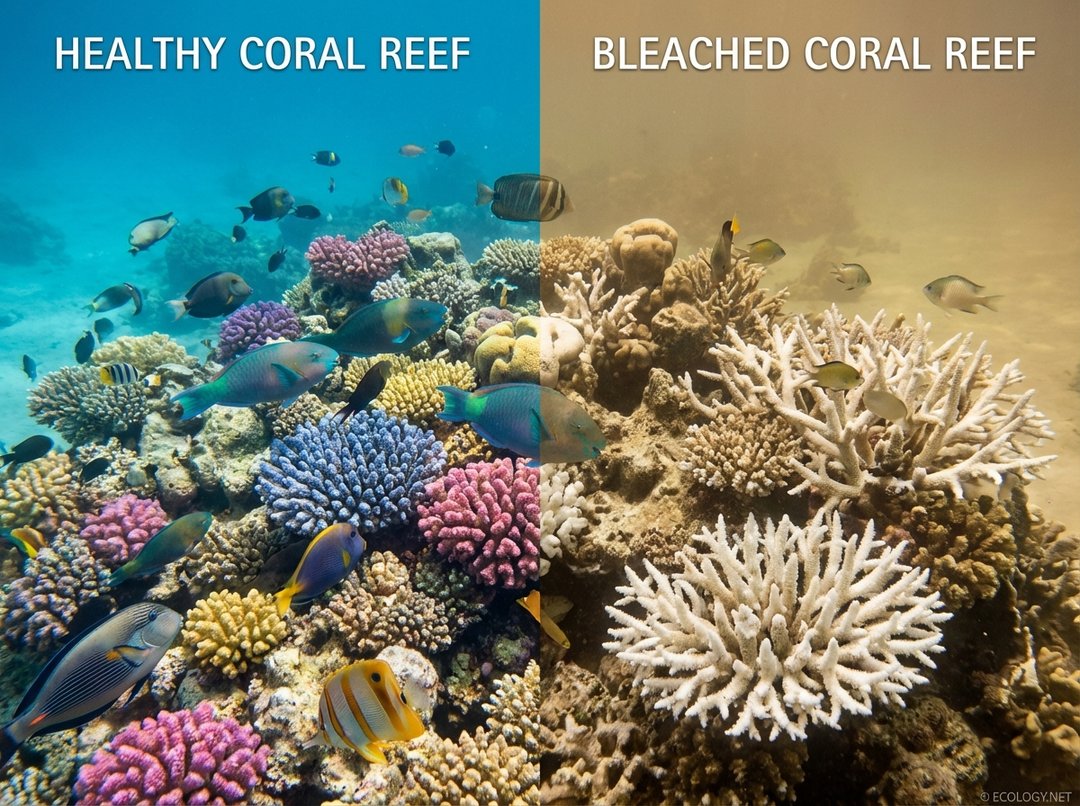
This image vividly illustrates one of the significant ecological consequences of global warming, specifically coral bleaching due to warming ocean temperatures, as detailed in the ‘Impacts on Ecosystems’ section.
Impacts on Human Society
Global warming is not just an environmental issue; it is a humanitarian and economic crisis in the making, affecting every aspect of human society.
- Food Security: Changes in temperature and rainfall patterns can reduce crop yields, increase pest outbreaks, and disrupt fisheries, threatening food supplies, particularly in vulnerable regions.
- Water Scarcity: Altered precipitation patterns, melting glaciers that feed rivers, and increased evaporation can lead to water shortages for drinking, agriculture, and industry.
- Health Impacts: Warmer temperatures can expand the range of disease-carrying insects like mosquitoes, leading to increased incidence of diseases such as malaria and dengue fever. Heatwaves pose direct health risks, especially to the elderly and vulnerable populations.
- Displacement and Migration: Rising sea levels, extreme weather events, and resource scarcity can force communities to abandon their homes, leading to internal displacement and international migration.
- Economic Consequences: The costs associated with repairing damage from extreme weather, managing health crises, and adapting infrastructure to new climate realities are enormous, placing significant strain on national economies.
Feedback Loops: Amplifying the Warming
One of the more complex and concerning aspects of global warming involves feedback loops. These are processes where an initial change in the climate system triggers further changes that either amplify (positive feedback) or diminish (negative feedback) the original change. Unfortunately, many significant feedback loops related to global warming are positive, meaning they accelerate the warming trend.
The Albedo Effect
A prime example of a positive feedback loop is the albedo effect, particularly in polar regions. Albedo refers to the reflectivity of a surface. Bright surfaces, like ice and snow, have a high albedo, meaning they reflect a large portion of incoming sunlight back into space. Darker surfaces, like open ocean water or bare land, have a low albedo, absorbing more sunlight and converting it into heat.
As global temperatures rise, ice and snow melt. This exposes the darker land or ocean beneath. These darker surfaces then absorb more solar radiation, causing further warming, which in turn leads to more melting. This creates a vicious cycle, accelerating the warming process in these critical regions.
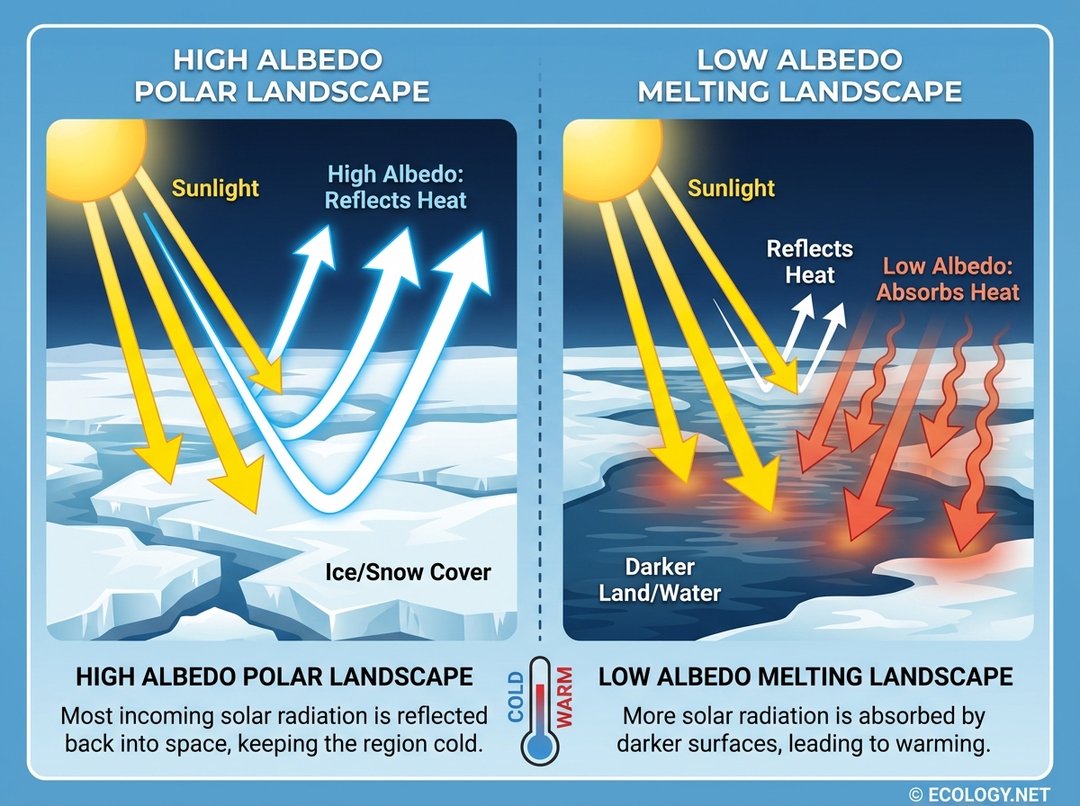
This image explains the positive feedback loop of the albedo effect, where melting ice and snow expose darker surfaces that absorb more heat, further accelerating global warming, as described in the ‘Feedback Loops: Amplifying the Warming’ section.
Other Positive Feedback Loops
- Permafrost Thaw: Vast areas of the Arctic are covered by permafrost, ground that has been frozen for thousands of years. Permafrost contains enormous quantities of trapped organic matter. As temperatures rise, permafrost thaws, and this organic matter decomposes, releasing potent greenhouse gases like methane and carbon dioxide into the atmosphere, further accelerating warming.
- Forest Fires: Warmer and drier conditions, exacerbated by global warming, lead to more frequent and intense wildfires. These fires release large amounts of CO2 into the atmosphere and destroy forests that would otherwise absorb CO2, creating another positive feedback loop.
Addressing Global Warming: Mitigation and Adaptation
Tackling global warming requires a two-pronged approach: mitigation and adaptation.
Mitigation Strategies
Mitigation focuses on reducing greenhouse gas emissions and enhancing carbon sinks to slow or halt global warming. Key strategies include:
- Transition to Renewable Energy: Shifting from fossil fuels to clean energy sources like solar, wind, hydro, and geothermal power.
- Energy Efficiency: Improving the efficiency of homes, buildings, transportation, and industrial processes to reduce energy consumption.
- Sustainable Transportation: Promoting electric vehicles, public transit, cycling, and walking.
- Forestry and Land Use: Protecting existing forests, reforestation, and adopting sustainable agricultural practices that store carbon in soil.
- Carbon Capture Technologies: Developing and deploying technologies to capture CO2 from industrial emissions or directly from the atmosphere.
Adaptation Strategies
Adaptation involves adjusting to the actual or expected future climate. Since some level of warming is already inevitable, adaptation is crucial to minimize its negative impacts. Examples include:
- Building Resilient Infrastructure: Constructing sea walls and improving drainage systems to cope with rising sea levels and increased rainfall.
- Water Management: Developing drought-resistant crops, improving irrigation efficiency, and implementing water conservation measures.
- Early Warning Systems: Establishing systems for extreme weather events to protect lives and property.
- Ecosystem-Based Adaptation: Restoring natural habitats like mangroves and coral reefs that provide natural protection against storms and erosion.
Conclusion
Global warming is arguably the most significant environmental challenge of our time, a complex web of scientific phenomena, ecological impacts, and societal consequences. It is a testament to the interconnectedness of Earth’s systems and the profound influence of human activity. From the microscopic algae in coral reefs to the vast ice sheets of the poles, and from the food on our tables to the air we breathe, the warming planet touches every aspect of life. Understanding its mechanisms, recognizing its evidence, and acknowledging its far-reaching impacts are essential. The path forward demands collective action, innovative solutions, and a commitment to fostering a sustainable relationship with our planet. The future of Earth’s climate, and indeed its inhabitants, hinges on the choices made today.