In the intricate dance of nature, plants are constantly vying for survival. Among the most persistent contenders are weeds, often defined simply as plants growing where they are not wanted. The art and science of “weed suppression” is not merely about eradication, but about understanding and leveraging ecological principles to give desired plants the upper hand. It is a fascinating field that combines botany, ecology, and sustainable agriculture, offering insights into how plants interact and thrive.
Weed suppression is fundamentally about creating an environment where cultivated plants can flourish without undue competition from unwanted species. This involves a spectrum of strategies, from direct physical intervention to subtle biochemical warfare waged beneath the soil. By understanding these mechanisms, we can cultivate healthier gardens, more productive farms, and more resilient ecosystems.
The Fundamental Principles of Weed Suppression
At its core, weed suppression relies on a few key ecological principles that dictate how plants interact with their environment and with each other. Mastering these principles allows for effective and often sustainable management.
Competition – The Engine of Suppression
Perhaps the most intuitive form of weed suppression is competition. Just like any living organism, plants require essential resources to grow: sunlight for photosynthesis, water for hydration and nutrient transport, and nutrients from the soil for structural development and metabolic processes. When desired plants are robust and healthy, they can effectively outcompete weeds for these vital resources.
Imagine a dense crop of corn or a lush lawn. Each individual plant in these desired populations is a formidable competitor. Their extensive root systems efficiently absorb water and nutrients from the soil, leaving little for opportunistic weeds. Their broad leaves create a canopy that shades the soil surface, blocking sunlight that weed seeds need to germinate and weed seedlings need to grow. This shading effect is particularly potent, as many weed species are adapted to disturbed, open ground and struggle in low light conditions.

For example, a well-established perennial flower bed with closely spaced plants will naturally suppress annual weeds. The perennials quickly form a dense canopy, monopolizing light and soil resources. Similarly, in agricultural settings, planting crops at optimal densities ensures that the cultivated plants quickly establish dominance, reducing the window of opportunity for weeds to take hold.
Allelopathy – Chemical Warfare in the Plant World
Beyond direct competition for resources, some plants employ a more sophisticated strategy: chemical warfare. This phenomenon is known as allelopathy, where one plant releases biochemicals into the environment that inhibit the growth, germination, or survival of other plants. These chemicals, called allelochemicals, can be exuded from roots, leached from leaves by rain, or released during decomposition of plant residues.

Allelopathy is a powerful natural mechanism. For instance, certain varieties of rye, wheat, and oats are known to be allelopathic. When used as cover crops, their residues can suppress the germination and growth of subsequent weed flushes. Black walnut trees are a classic example of allelopathic plants, producing a chemical called juglone that is toxic to many other plant species, creating a distinct zone around the tree where few other plants can thrive. Understanding and harnessing allelopathy offers exciting possibilities for developing natural, sustainable weed management solutions.
Practical Strategies for Effective Weed Suppression
Armed with an understanding of competition and allelopathy, various practical strategies can be employed to suppress weeds effectively, ranging from simple gardening techniques to sophisticated agricultural practices.
Cover Cropping – Nature’s Mulch
Cover cropping is a cornerstone of sustainable agriculture and a highly effective weed suppression strategy. It involves planting specific crops, not for harvest, but to cover the soil during periods when main crops are not growing. These cover crops, such as clover, vetch, rye, or buckwheat, provide a multitude of benefits, with weed suppression being paramount.
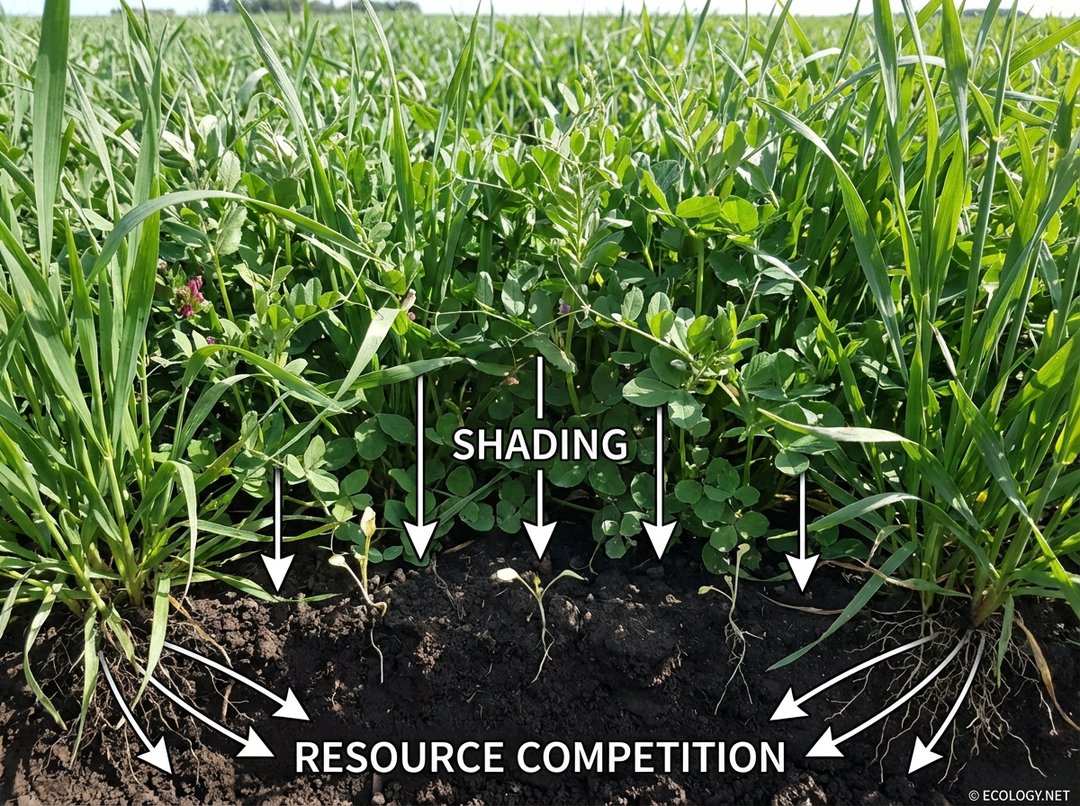
How do cover crops work their magic? Firstly, their dense foliage creates a living mulch that shades the soil, preventing weed seeds from germinating and outcompeting any emerging weed seedlings for light. Secondly, their extensive root systems compete vigorously for water and nutrients, effectively starving out weeds. Thirdly, some cover crops, like rye, are allelopathic, releasing chemicals that further inhibit weed growth. When cover crops are terminated and left on the soil surface, they continue to provide a physical barrier and release allelochemicals, extending their suppressive effect.
Mulching – The Protective Blanket
Mulching is a widely used and highly effective method for weed suppression in gardens and landscapes. A layer of organic or inorganic material is applied to the soil surface, creating a physical barrier that blocks sunlight from reaching weed seeds and emerging seedlings. This lack of light prevents germination and growth.
Organic mulches, such as wood chips, straw, shredded leaves, or compost, offer additional benefits. As they decompose, they enrich the soil, improve soil structure, and provide a slow release of nutrients to desired plants. They also help retain soil moisture and moderate soil temperature, creating a more favorable environment for cultivated plants. Inorganic mulches, like landscape fabric or gravel, also suppress weeds by blocking light, though they do not contribute to soil health in the same way.
Crop Rotation and Diversity – Breaking the Weed Cycle
In agricultural systems, crop rotation is a vital strategy. By rotating different types of crops through a field over several seasons, farmers can disrupt the life cycles of specific weed species that might be adapted to a particular crop. For example, a weed that thrives in a cornfield might struggle in a subsequent soybean or wheat crop due to different cultivation practices, planting times, or competitive dynamics. Introducing diverse crops also encourages a broader range of beneficial insects and soil microbes, contributing to overall ecosystem health.
Proper Plant Spacing and Timing – Strategic Advantage
Simple yet powerful, ensuring proper plant spacing and timing can significantly enhance weed suppression. Planting desired crops or garden plants at their optimal density allows them to quickly form a canopy and establish a strong root system, maximizing their competitive advantage. Planting at the correct time, when soil temperatures and moisture are ideal for the desired plant, but perhaps less so for common weeds, gives the cultivated species a head start.
Advanced Insights and Ecological Considerations
Moving beyond individual techniques, a holistic understanding of weed suppression integrates ecological principles for long term sustainability and resilience.
Integrated Weed Management (IWM)
The most effective approach to weed suppression is often not a single method, but a combination of strategies tailored to specific conditions. This is the essence of Integrated Weed Management (IWM). IWM involves a thoughtful blend of cultural practices (like cover cropping and rotation), biological controls (using natural enemies of weeds), mechanical methods (like tilling or hand weeding), and, if necessary, judicious use of chemical controls. The goal is to minimize reliance on any single method, reduce environmental impact, and achieve sustainable weed control.
The Role of Soil Health
Healthy soil is the foundation of effective weed suppression. Soil rich in organic matter, teeming with beneficial microbes, and possessing good structure promotes vigorous growth in desired plants. Strong, healthy plants are inherently better competitors against weeds. Practices that enhance soil health, such as composting, no-till farming, and reducing chemical inputs, indirectly contribute to weed suppression by fostering a robust environment for cultivated species.
Understanding Weed Ecology
True mastery of weed suppression requires understanding the weeds themselves. What are their life cycles? Do they prefer disturbed soil or compacted soil? Are they annuals that complete their life cycle in one season, or perennials that return year after year? Knowing the enemy allows for targeted strategies. For instance, annual weeds are often best controlled by preventing seed set, while perennial weeds require strategies that deplete their root reserves.
Weeds are not inherently “bad”; they are simply plants that have adapted to thrive in specific conditions, often those created by human disturbance. Our goal in weed suppression is to alter those conditions to favor the plants we desire.
Conclusion
Weed suppression is a dynamic and multifaceted challenge, but one that offers immense rewards for those who embrace ecological understanding. From the fierce competition for sunlight and nutrients to the subtle chemical warfare of allelopathy, plants employ a remarkable array of strategies to secure their place in the world. By applying principles like cover cropping, mulching, crop rotation, and fostering soil health, we can create environments where desired plants flourish, naturally outcompeting unwanted species.
Embracing these sustainable approaches not only leads to more productive gardens and farms but also contributes to healthier ecosystems, reduced reliance on synthetic inputs, and a deeper appreciation for the intricate workings of the natural world. Understanding weed suppression is not just about controlling unwanted plants; it is about cultivating a harmonious balance between human endeavors and ecological wisdom.