Unveiling the Wonders of Temperate Forests: Earth’s Dynamic Green Heartlands
Imagine a landscape that dramatically transforms with each passing season, painting the world in a vibrant palette of greens, golds, reds, and whites. This ever-changing spectacle is the hallmark of temperate forests, magnificent ecosystems that thrive in the mid-latitude regions of our planet. Far from static, these forests are dynamic powerhouses, crucial for global biodiversity and ecological balance. From the rustling leaves of autumn to the quiet beauty of a snow-dusted winter, temperate forests offer a continuous display of nature’s resilience and adaptability.
What Defines a Temperate Forest?
Temperate forests are found in regions with four distinct seasons: a warm summer, a cool autumn, a cold winter, and a mild spring. These areas typically receive moderate to high rainfall throughout the year, supporting lush vegetation. Geographically, they are located between the tropics and the polar regions, encompassing vast stretches of North America, Europe, Asia, and parts of the Southern Hemisphere.
Key characteristics that set temperate forests apart include:
- Distinct Seasons: The most defining feature, influencing everything from plant growth cycles to animal behavior.
- Moderate Climate: Temperatures fluctuate significantly between seasons but remain within a range suitable for diverse life.
- Abundant Precipitation: Sufficient rainfall supports dense tree cover and a rich understory.
- Rich Soil: Decomposing leaves and organic matter create fertile soil layers, supporting vigorous plant growth.
- High Biodiversity: These forests are home to a wide array of plant and animal species adapted to seasonal changes.
The Rhythmic Dance of Seasons: A Forest’s Annual Metamorphosis
The true magic of a temperate forest lies in its annual transformation, a breathtaking cycle that dictates life within its bounds. Each season brings its own unique character and ecological processes.
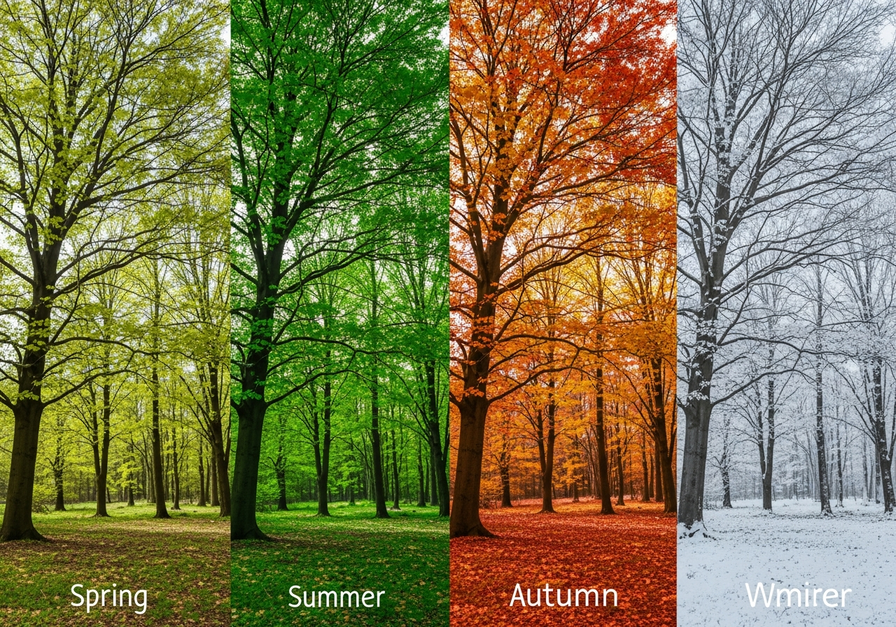
This illustration visually demonstrates the dramatic seasonal changes described in the article, emphasizing the dynamic nature of temperate forests across spring, summer, autumn, and winter.
Spring: A Burst of New Life
As winter’s chill recedes, spring breathes new life into the forest. Deciduous trees, which shed their leaves in autumn, begin to bud, unfurling delicate, fresh green leaves. The forest floor, now bathed in sunlight before the canopy fully closes, becomes a carpet of wildflowers like trillium, bloodroot, and wild ginger, racing to bloom and set seed. Migratory birds return, filling the air with their songs, and many animals emerge from hibernation or begin their breeding seasons.
Summer: The Verdant Canopy
Summer brings a dense, vibrant canopy of leaves, creating a cool, shaded environment below. Sunlight filters through the thick foliage, dappling the forest floor. This is a period of intense growth for many plants, and the forest hums with insect activity. Animals are busy raising their young, foraging for abundant food, and preparing for the leaner months ahead. The air is often humid, and the forest feels lush and alive.
Autumn: A Symphony of Colors
Perhaps the most iconic season, autumn transforms temperate forests into a breathtaking display of color. As daylight hours shorten and temperatures drop, chlorophyll in deciduous leaves breaks down, revealing underlying pigments of yellow, orange, and red. Maple, oak, birch, and beech trees contribute to this spectacular show. Animals become increasingly active, gathering food and preparing for winter. The forest floor becomes a soft, rustling carpet of fallen leaves.
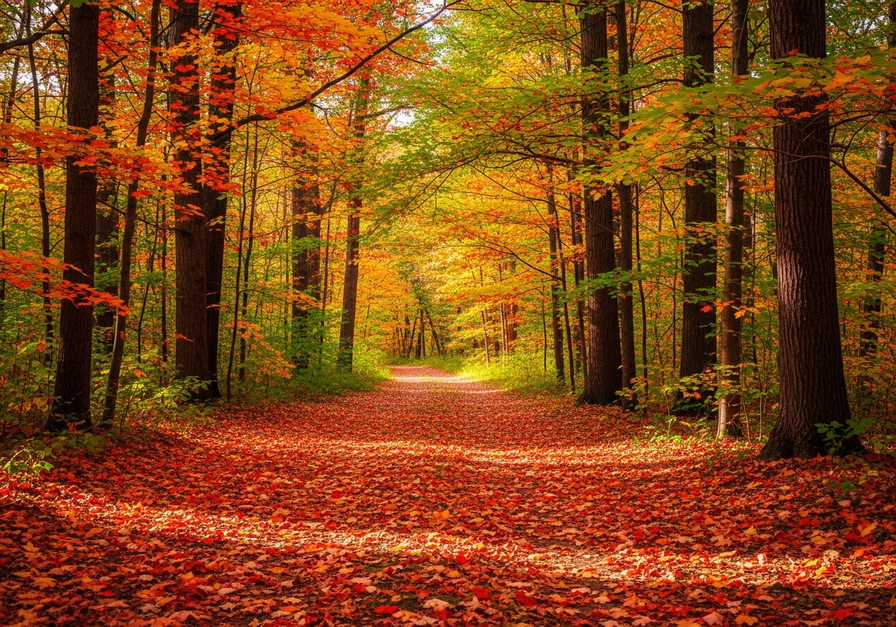
This image captures the iconic leaf-carpet scene of a deciduous forest, directly illustrating the article’s description of autumnal color change and the role of deciduous trees in temperate forests.
Winter: A Period of Rest and Resilience
Winter brings colder temperatures and often snow. Deciduous trees stand bare, their skeletal branches silhouetted against a pale sky. Evergreen conifers, however, provide a splash of green. Many animals hibernate or migrate, while others, like deer, foxes, and various birds, remain active, adapting to scarcer food resources. The forest becomes quieter, a time of rest and renewal, conserving energy for the coming spring.
Diverse Faces of Temperate Forests: More Than Just Deciduous
While the image of a deciduous forest with its autumn colors is often synonymous with temperate regions, this biome encompasses several distinct forest types, each with unique characteristics.
Temperate Deciduous Forests
These are the classic temperate forests, dominated by broad-leaved trees that shed their leaves annually. Common tree species include oak, maple, beech, hickory, and elm. They are found in eastern North America, western and central Europe, and parts of East Asia. The annual leaf fall contributes significantly to the rich, fertile soil.
Temperate Coniferous Forests
Characterized by evergreen conifers like pine, spruce, fir, and hemlock, these forests are found in areas with colder winters or specific soil conditions. Examples include the vast pine forests of the southeastern United States or the boreal transition zones. Their needle-like leaves are adapted to conserve water and withstand cold.
Temperate Mixed Forests
As the name suggests, these forests are a blend of deciduous and coniferous trees. They represent a transition zone between the two types, offering a greater diversity of tree species and often a richer understory.
Temperate Rainforests
A unique and often overlooked subtype, temperate rainforests receive exceptionally high rainfall and are characterized by cool, moist conditions year-round. They are found along coastal regions, such as the Pacific Northwest of North America, parts of Chile, New Zealand, and Tasmania. These forests are incredibly lush, with massive trees, dense undergrowth, and a profusion of mosses, ferns, and lichens draping every surface.
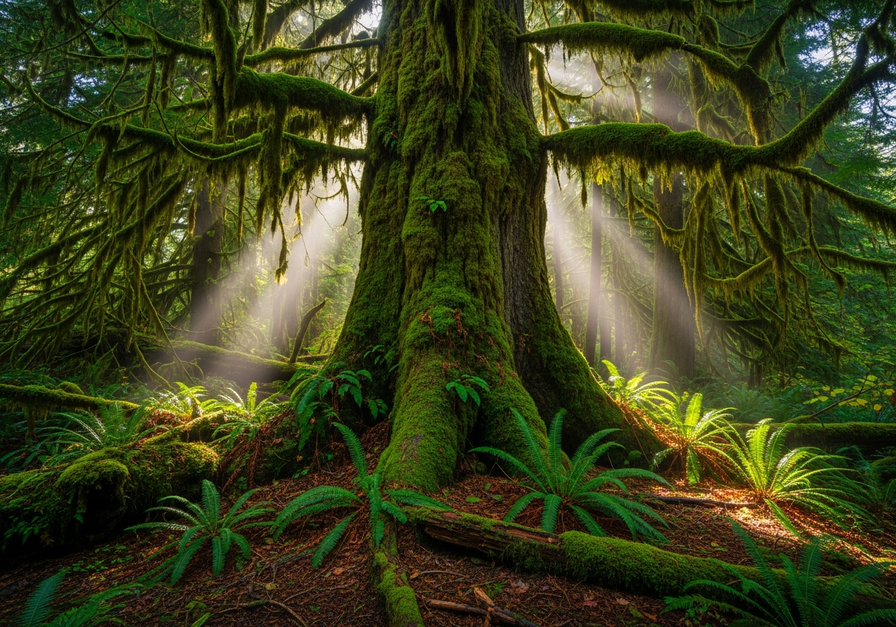
This illustration showcases the temperate rainforest subtype, providing a visual example of the dense, moss-covered, moisture-rich forests mentioned in the article.
Life Within the Layers: Biodiversity of Temperate Forests
Temperate forests are teeming with life, from the tallest trees to the smallest soil organisms. Their layered structure provides diverse habitats.
Flora: A Green Tapestry
The dominant plants are trees, forming the canopy, but a rich understory thrives below.
- Canopy Layer: Tall trees like oaks, maples, beeches, and pines form the uppermost layer, capturing most of the sunlight.
- Understory Layer: Smaller trees and saplings, such as dogwood, redbud, and younger versions of canopy trees, grow beneath the main canopy.
- Shrub Layer: Bushes and woody plants like rhododendrons, azaleas, and various berry bushes thrive here.
- Herb Layer: Non-woody plants, including wildflowers, ferns, and grasses, cover the forest floor, often blooming early in spring.
- Forest Floor: A vital layer of decomposing leaves, fungi, mosses, and countless microorganisms that recycle nutrients.
Fauna: Adapting to the Seasons
Animals in temperate forests have developed remarkable adaptations to cope with the changing seasons.
- Mammals: Deer, bears, raccoons, squirrels, foxes, and bobcats are common inhabitants. Many hibernate during winter, like bears and groundhogs, while others, like squirrels, cache food.
- Birds: A wide variety of birds, including woodpeckers, owls, warblers, and thrushes, either reside year-round or migrate to warmer climates for winter.
- Amphibians and Reptiles: Frogs, salamanders, snakes, and turtles are often found, many of which burrow or enter a state of torpor during colder months.
- Insects: A vast array of insects, from butterflies and beetles to ants and bees, play crucial roles in pollination and decomposition.
The Indispensable Role of Temperate Forests
Beyond their aesthetic appeal, temperate forests provide invaluable ecological services that benefit the entire planet.
- Carbon Sequestration: Through photosynthesis, trees absorb vast amounts of carbon dioxide from the atmosphere, helping to mitigate climate change. The carbon is stored in their wood, leaves, and the soil.
- Water Regulation: Forests act like giant sponges, absorbing rainfall, reducing runoff, and preventing soil erosion. They help regulate water cycles, ensuring clean water supplies for communities.
- Habitat Provision: These forests are critical habitats for countless species, supporting biodiversity and maintaining complex food webs.
- Soil Health: The continuous decomposition of organic matter enriches the soil, making it fertile and capable of supporting a wide range of plant life.
- Oxygen Production: As a byproduct of photosynthesis, forests release oxygen, essential for most life forms on Earth.
Challenges and Conservation Efforts
Despite their resilience, temperate forests face significant threats in the modern era.
- Deforestation: Logging for timber, agriculture, and urban expansion continues to reduce forest cover, leading to habitat loss and fragmentation.
- Climate Change: Shifting temperature and precipitation patterns can alter forest composition, increase the frequency of extreme weather events like droughts and severe storms, and make forests more susceptible to pests and diseases.
- Invasive Species: Non-native plants, insects, and diseases can outcompete native species, disrupt ecosystems, and cause widespread tree mortality.
- Pollution: Acid rain and other forms of pollution can damage trees and alter soil chemistry, impacting forest health.
Conservation efforts are crucial to protect these vital ecosystems. These include sustainable forestry practices, establishing protected areas, reforestation projects, controlling invasive species, and mitigating climate change through reduced emissions. Educating the public about the importance of temperate forests also plays a significant role in fostering their preservation.
A Call to Appreciation
Temperate forests are more than just collections of trees; they are living, breathing systems that demonstrate nature’s incredible capacity for adaptation and renewal. Their seasonal transformations offer a constant reminder of the cycles of life and the intricate connections within our natural world. By understanding and appreciating these dynamic green heartlands, we can better advocate for their protection, ensuring that future generations can also marvel at their beauty and benefit from their ecological gifts.