The Dynamic Dance of Nature: Understanding Secondary Succession
Imagine a forest, vibrant and teeming with life. Now, picture that same forest after a devastating wildfire, a logging operation, or a powerful hurricane. What remains is a landscape transformed, seemingly barren or drastically altered. Yet, nature is incredibly resilient. From these scenes of disturbance, a remarkable process of renewal begins, a fascinating ecological journey known as secondary succession.
Secondary succession is the predictable pattern of change in an ecosystem following a disturbance that removes much of the existing vegetation but leaves the soil intact. Unlike primary succession, which starts from bare rock where no soil exists, secondary succession has a head start. The presence of soil, along with residual seeds, spores, and surviving organisms, allows life to rebound much more quickly, orchestrating a complex and beautiful return to ecological balance.
The Stages of Recovery: A Step-by-Step Transformation
The journey of secondary succession unfolds in distinct, albeit sometimes overlapping, stages. Each stage is characterized by different dominant plant and animal species, reflecting the changing environmental conditions.
1. The Pioneer Stage: Life from the Ashes
Immediately after a disturbance, the landscape might appear desolate, but it is far from lifeless. The soil, rich with nutrients from the previous ecosystem and often containing a dormant seed bank, provides a fertile ground for the first colonizers. These are the pioneer species: hardy, fast-growing plants like grasses, weeds, and annual wildflowers. They thrive in direct sunlight and nutrient-rich, disturbed soil, quickly establishing themselves and stabilizing the ground.
These early arrivals play a crucial role. Their roots help prevent soil erosion, and their decomposition adds organic matter, further enriching the soil. They create microclimates that are slightly more hospitable for the next wave of species.
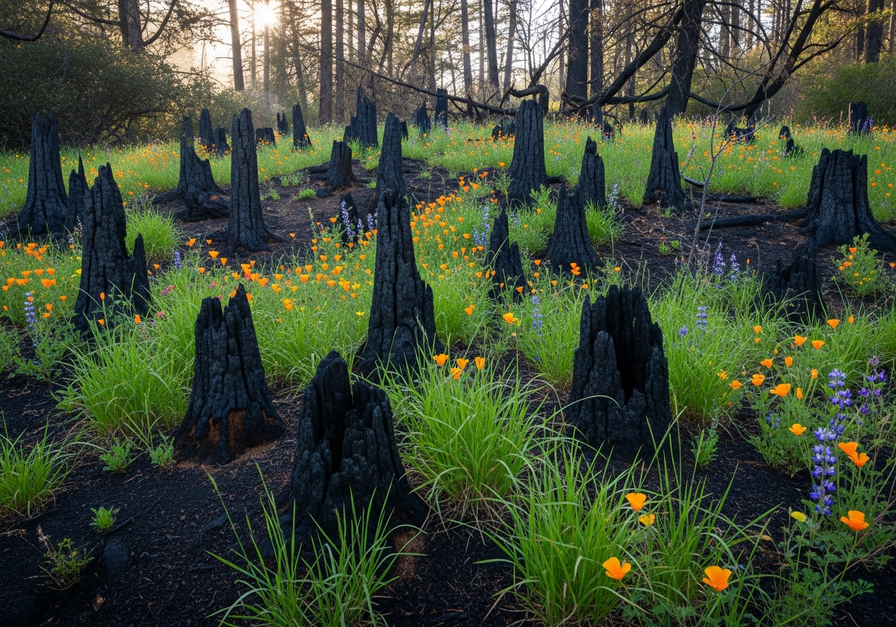
This image illustrates the immediate aftermath of a wildfire where pioneer species begin to colonize, visualizing the early stage of secondary succession described in the article.
2. The Intermediate Stage: Shrubs and Saplings Take Hold
As pioneer species flourish, they gradually alter the environment. Their growth creates shade, making it harder for sun-loving pioneers to compete. This shift paves the way for the next group of species: perennial herbs, shrubs, and fast-growing, shade-intolerant trees like pines or aspens. These species begin to outcompete the pioneers, forming a denser canopy and further modifying the soil and light conditions.
This stage sees an increase in structural complexity, providing more diverse habitats for animals. Insects, small mammals, and various bird species become more prevalent as the vegetation grows taller and denser.
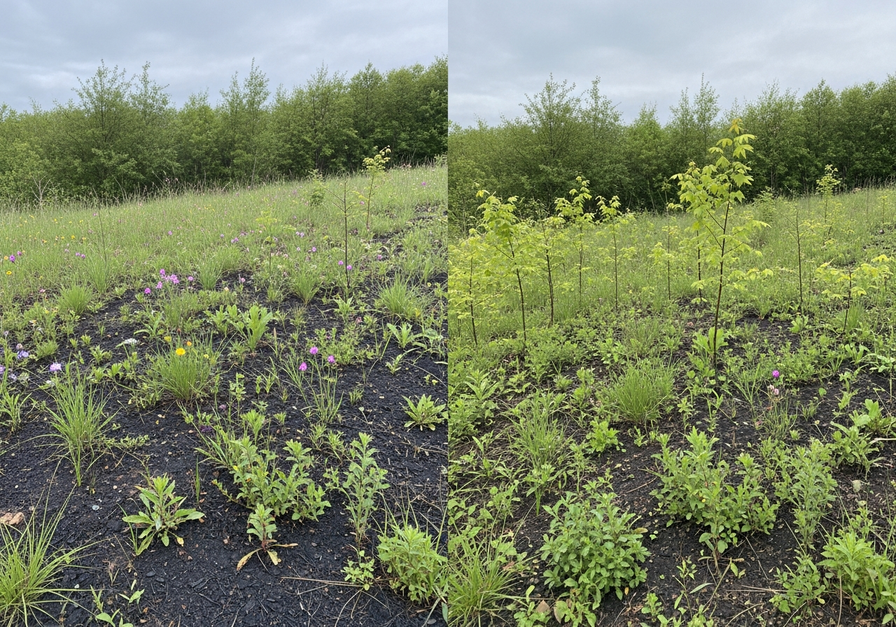
This image highlights the transition from early to intermediate successional stages, visualizing how the ecosystem structure changes over time as described in the article.
3. The Climax Community: A State of Balance
Over many decades, or even centuries, the intermediate species are gradually replaced by longer-lived, shade-tolerant trees, such as oaks, maples, or hemlocks, depending on the region’s climate. This final stage is known as the climax community. It is a relatively stable and mature ecosystem, characterized by a complex food web, high biodiversity, and a balanced energy flow. The species composition remains relatively constant unless another major disturbance occurs.
While often described as stable, a climax community is not static. It continues to experience subtle changes, such as the death of old trees and the growth of new ones, but the overall structure and species composition remain largely consistent.
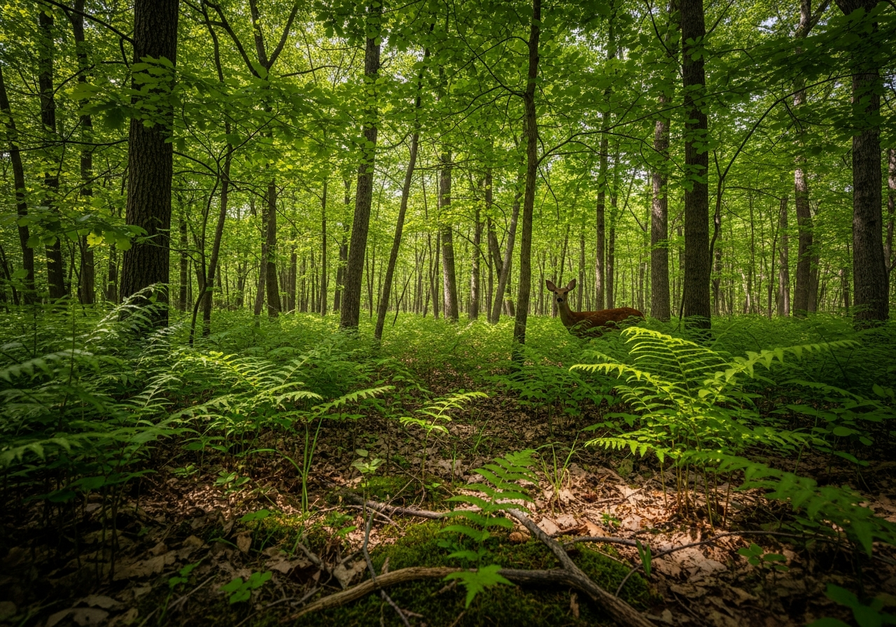
This image depicts the climax community stage of secondary succession, illustrating the mature ecosystem that develops after prolonged recovery, aligning with the article’s description.
Common Triggers: Where Secondary Succession Unfolds
Secondary succession is a widespread phenomenon, occurring in countless ecosystems across the globe. Here are some common disturbances that initiate this remarkable process:
- Wildfires: As seen in the images, fires clear existing vegetation, but often leave the soil and a valuable seed bank intact, leading to rapid regrowth.
- Logging and Deforestation: When forests are harvested, the land is opened up to sunlight, and new growth begins from the remaining soil and seeds.
- Abandoned Farmland: Fields left fallow quickly revert to natural vegetation, moving from annual weeds to perennial grasses, shrubs, and eventually trees.
- Hurricanes and Storms: High winds and flooding can devastate coastal forests or inland areas, creating gaps and clearing large tracts of land for new growth.
- Landslides and Avalanches: These events can strip away vegetation, but often leave a substrate of soil and debris that can be recolonized.
Beyond the Basics: Factors Influencing the Pace and Path
While the general pattern of secondary succession is predictable, the exact species involved and the speed of recovery can vary significantly. Several factors play a critical role in shaping this ecological journey:
- Severity of Disturbance: A mild disturbance, like a small patch of trees falling, will lead to a quicker recovery than a severe event that removes all vegetation and topsoil.
- Climate: Temperature, rainfall, and seasonal patterns dictate which species can thrive and how quickly they grow. Tropical regions often experience faster succession than arid or arctic environments.
- Soil Conditions: The nutrient content, pH, and moisture retention of the soil are crucial. Healthy soil with a rich organic layer and a viable seed bank accelerates recovery.
- Seed Dispersal and Availability: The proximity of intact ecosystems provides a source of seeds and spores that can be carried by wind, water, or animals to the disturbed area.
- Presence of Invasive Species: Non-native species can sometimes colonize disturbed areas rapidly, outcompeting native pioneers and altering the natural successional pathway.
- Herbivory: The presence and activity of grazing animals can influence which plant species dominate at different stages, as they selectively consume certain plants.
The Ecological Significance: Why Succession Matters
Secondary succession is far more than just nature’s way of “cleaning up” after a disturbance. It is a fundamental ecological process with profound importance for the health and resilience of our planet:
- Biodiversity Enhancement: As an ecosystem progresses through successional stages, it often supports a greater diversity of species, creating varied habitats for plants, animals, and microorganisms.
- Ecosystem Services: Recovering ecosystems provide essential services, such as soil stabilization, water purification, carbon sequestration, and oxygen production.
- Nutrient Cycling: Pioneer species help to restore nutrient cycles by drawing nutrients from the soil and atmosphere, making them available for subsequent species.
- Resilience and Adaptation: Succession demonstrates the inherent ability of ecosystems to recover and adapt to change, a critical trait in a world facing increasing environmental pressures.
- Habitat Creation: Different successional stages offer unique habitats, supporting a wider array of wildlife that specialize in particular environments. For example, open fields attract different birds than dense forests.
A Continuous Cycle of Renewal
Secondary succession is a powerful testament to the dynamic and ever-changing nature of our world. It reminds us that even after significant upheaval, life finds a way to persist, adapt, and flourish. Understanding this process is not just an academic exercise; it provides crucial insights for conservation efforts, land management, and our appreciation of the intricate web of life that surrounds us. From the first green shoots pushing through charred earth to the towering trees of a mature forest, secondary succession is a continuous, awe-inspiring cycle of renewal, demonstrating nature’s enduring capacity for rebirth.