Imagine gazing out over a vast landscape, perhaps a sprawling mountain range, a winding river basin, or an entire continent. What you see is not just a collection of individual trees or animals, but a tapestry of life woven across different environments. Ecologists have a special term for the total variety of species found within such a broad region: Gamma diversity. It is a crucial concept for understanding the grand scale of life on Earth and for guiding our efforts to protect it.
Unpacking Biodiversity: The Three Scales
To truly appreciate gamma diversity, it helps to understand its relationship to two other fundamental measures of biodiversity: alpha diversity and beta diversity. Think of these as different lenses through which we can view the incredible richness of life.
Alpha Diversity: The Local View
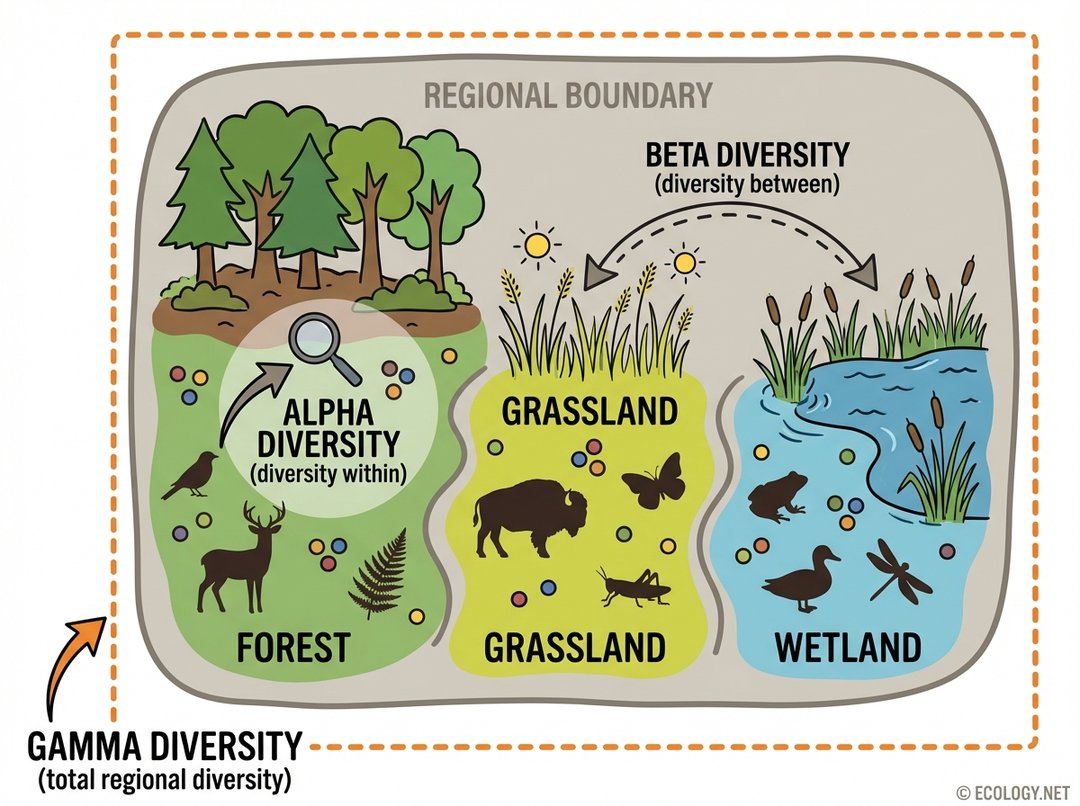
Alpha diversity refers to the species richness within a specific, relatively homogeneous habitat or ecosystem. It is the number of different species you might find in a single forest patch, a particular pond, or a specific section of a coral reef. When you count the types of birds in your backyard or the different wildflowers in a meadow, you are essentially measuring alpha diversity.
- Example: A single hectare of Amazon rainforest might boast over 300 tree species, representing its high alpha diversity.
- Example: A small urban park might have 15 bird species, reflecting its alpha diversity.
Beta Diversity: The Bridge Between Habitats
Beta diversity measures the difference or turnover in species composition between two different habitats or ecosystems within a region. It tells us how unique the species in one habitat are compared to another. High beta diversity means that moving from one habitat to an adjacent one introduces many new species, while low beta diversity suggests similar species compositions across habitats.
- Example: The species found in a mountain forest might be very different from those in an alpine meadow just a short distance away. This difference contributes to high beta diversity.
- Example: Two ponds in the same wetland complex might share many aquatic insect species, indicating lower beta diversity between them.
Gamma Diversity: The Regional Grand Total
Gamma diversity, then, is the total number of species found across a larger geographical region that encompasses multiple ecosystems or habitats. It is the sum of all the alpha diversities within that region, taking into account the beta diversity between them. It provides a comprehensive picture of the biological richness of an entire landscape, watershed, or even a continent.
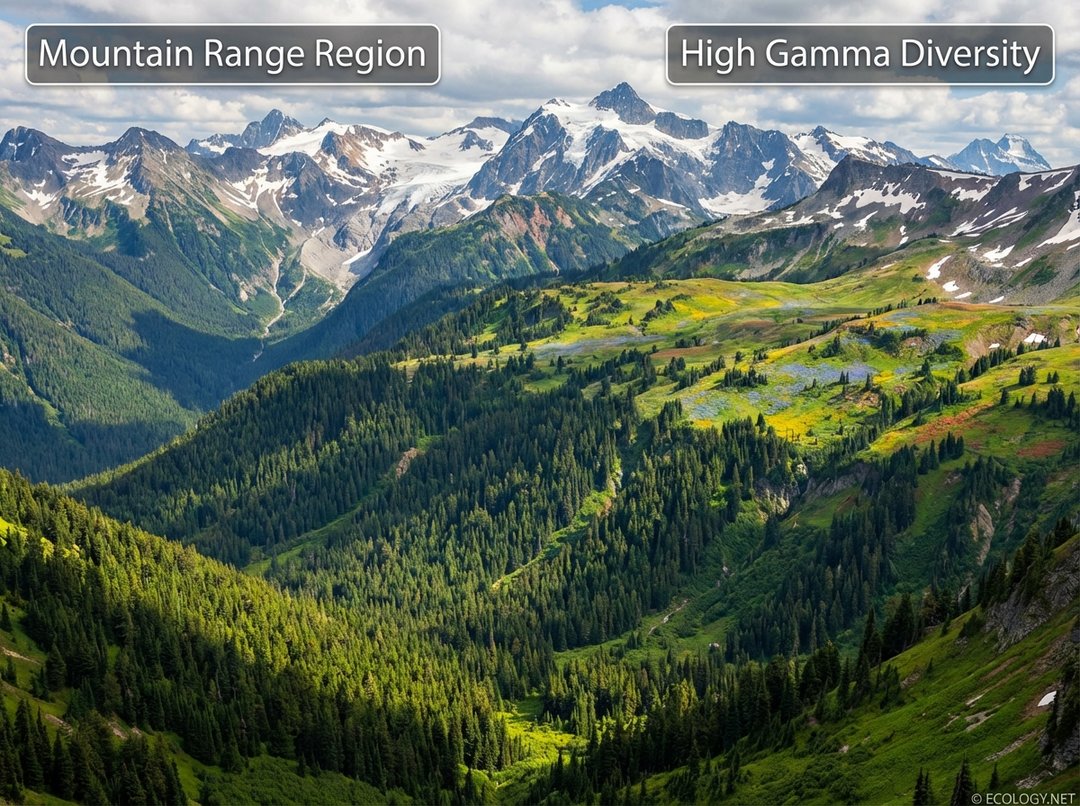
- Example: The total number of bird species found across an entire mountain range, which includes forests, meadows, and rocky peaks, would be its gamma diversity.
- Example: The combined species count of all plants, animals, and microbes in the entire Amazon Basin represents its immense gamma diversity.
Gamma diversity is not just the sum of local species counts; it is a measure that inherently considers the variety of habitats and the unique species each habitat contributes to the broader regional pool.
Why Gamma Diversity is So Important
Understanding gamma diversity is far more than an academic exercise; it is fundamental to effective conservation and ecological management. It offers a holistic perspective that individual habitat studies cannot provide.
- Conservation Planning: By identifying regions with high gamma diversity, conservationists can prioritize areas that harbor a vast array of species and unique ecosystems. Protecting such regions ensures the survival of a greater number of species and ecological processes.
- Ecosystem Resilience: Regions with high gamma diversity tend to be more resilient to environmental changes and disturbances. A wider variety of species means a greater chance that some will adapt or thrive, even if others decline. This diversity provides a natural buffer against challenges like climate change or disease outbreaks.
- Understanding Ecological Patterns: Gamma diversity helps ecologists study large-scale patterns of evolution, species distribution, and the factors that drive biodiversity across vast areas. It allows us to ask questions about why certain regions are biodiversity hotspots while others are less diverse.
- Resource Management: For sustainable use of natural resources, knowing the total biodiversity of a region is crucial. It informs decisions about land use, agriculture, forestry, and fisheries, helping to balance human needs with ecological integrity.
Factors Influencing Gamma Diversity
What makes one region teeming with life and another relatively sparse? Gamma diversity is shaped by a complex interplay of environmental, geographical, and historical factors.
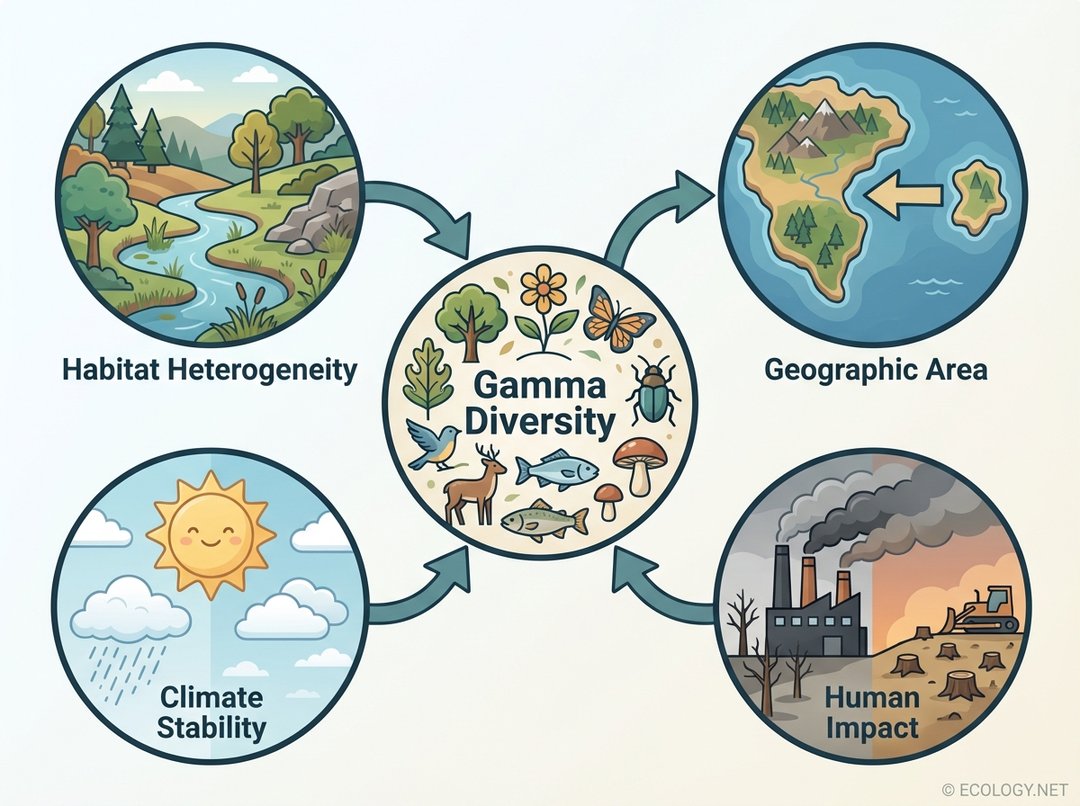
- Habitat Heterogeneity: Regions with a greater variety of habitats, such as mountains, rivers, forests, and grasslands, tend to support higher gamma diversity. Each distinct habitat offers unique niches and resources, allowing different species to thrive.
- Geographic Area: Generally, larger regions can accommodate more species. They often contain a greater variety of habitats and can support larger populations, reducing the risk of local extinctions. This is a fundamental principle in island biogeography and macroecology.
- Climate Stability and Productivity: Regions with stable climates, particularly those with consistent warmth and moisture (like tropical rainforests), tend to have higher gamma diversity. These conditions allow for high primary productivity, supporting a greater abundance and variety of life.
- Evolutionary History and Isolation: The geological history of a region, including its past connections to other landmasses or periods of isolation, plays a significant role. Long periods of stability and isolation can lead to the evolution of unique species (endemism), boosting gamma diversity.
- Human Impact: Unfortunately, human activities are a dominant factor influencing gamma diversity today. Habitat destruction, pollution, climate change, and the introduction of invasive species can drastically reduce regional biodiversity. Conversely, conservation efforts can help maintain or restore it.
Real-World Examples of High Gamma Diversity
To truly grasp gamma diversity, it is helpful to visualize regions where it flourishes.
The Amazon Rainforest
Perhaps the most iconic example, the Amazon Basin spans multiple countries and encompasses an astonishing array of ecosystems, from dense rainforests to flooded savannas and river systems. Its gamma diversity is unparalleled, hosting an estimated 10 percent of the world’s known species, including millions of insects, thousands of plant species, and hundreds of mammals and birds. The sheer scale and variety of habitats within this vast region contribute to its extraordinary biodiversity.
Coral Reefs
While often thought of as individual ecosystems, the collective network of coral reefs across a broad oceanic region, like the Indo-Pacific, represents immense gamma diversity. Each reef patch has its alpha diversity, but the differences in species composition between various reefs, influenced by currents, depth, and local conditions, contribute to a staggering regional total of fish, coral, invertebrate, and microbial species.
Mountain Ranges
Mountain ranges are natural laboratories for gamma diversity. As elevation changes, so do temperature, rainfall, and soil types, creating a mosaic of distinct habitats. From lush foothills to alpine meadows and barren peaks, each zone supports a unique set of species. The cumulative species richness across these varied elevational zones within an entire mountain range exemplifies high gamma diversity.
Measuring and Monitoring Gamma Diversity
Ecologists employ various methods to measure gamma diversity, often relying on extensive surveys and data synthesis. While simply counting the total number of species (species richness) is a primary metric, more sophisticated approaches consider species evenness (how abundant each species is) and phylogenetic diversity (how evolutionarily distinct the species are). Long-term monitoring programs are essential to track changes in gamma diversity over time, helping to identify trends and assess the effectiveness of conservation strategies.
The Imperative of Protecting Gamma Diversity
The health of our planet is inextricably linked to its biodiversity at all scales, and gamma diversity provides the broadest lens for understanding this connection. When we lose species from a region, whether through habitat destruction, climate change, or other human impacts, we diminish not only the local alpha diversity but also the overall gamma diversity. This loss can weaken ecosystem functions, reduce resilience, and ultimately impact human well-being.
Protecting gamma diversity requires a regional, collaborative approach. It involves establishing protected areas, restoring degraded landscapes, promoting sustainable land use practices, and addressing global challenges like climate change. By understanding and valuing the total biological richness of our planet’s diverse regions, we can work towards a future where both nature and humanity can thrive.