The Vital World of Freshwater Ecosystems: Nature’s Lifeblood
Imagine a world without the gurgle of a stream, the serene expanse of a lake, or the rustle of reeds in a marsh. Freshwater ecosystems are the planet’s arteries and veins, circulating life-sustaining water and supporting an astonishing array of biodiversity. These dynamic environments, though covering less than one percent of Earth’s surface, are critical for both ecological health and human well-being. From the smallest microscopic organisms to towering trees along riverbanks, every component plays a vital role in maintaining the delicate balance of these precious habitats.
What Defines a Freshwater Ecosystem?
Freshwater ecosystems are aquatic environments characterized by water with a low salt concentration, typically less than 0.05 percent. This distinguishes them from marine ecosystems, which are salty, and brackish ecosystems, which have intermediate salinity. These systems are incredibly diverse, encompassing a wide range of habitats that can be broadly categorized into three main types:
- Lentic Systems: These are standing or relatively still bodies of water, such as lakes, ponds, and reservoirs. Their water movement is primarily driven by wind, temperature changes, and currents within the water column.
- Lotic Systems: These are flowing water environments, including rivers, streams, and creeks. The continuous, unidirectional flow of water is a defining characteristic, shaping the physical environment and the life within it.
- Wetlands: These are areas where water saturates the soil, either permanently or seasonally. Marshes, swamps, bogs, and fens fall into this category, acting as transitional zones between terrestrial and aquatic environments.
Rivers and Streams: The Dynamic Flow of Life
Rivers and streams are lotic ecosystems, characterized by their constant, unidirectional flow. This continuous movement of water presents unique challenges and opportunities for the organisms that inhabit them. Life in these environments must be adapted to resist being swept away, find food in a moving current, and cope with fluctuating water levels and temperatures.
The physical characteristics of a river change dramatically from its source to its mouth. Headwater streams are often cold, clear, and fast-flowing, with high oxygen levels. As the river widens and slows downstream, it typically becomes warmer, more turbid, and carries more sediment. This gradient creates distinct habitats, each supporting specialized communities of plants and animals.
Fish in rivers often exhibit streamlined bodies to reduce drag, while many invertebrates, such as caddisfly larvae and stonefly nymphs, have flattened bodies or hooks to cling to rocks. Algae and mosses anchor themselves to submerged surfaces, forming the base of the food web.
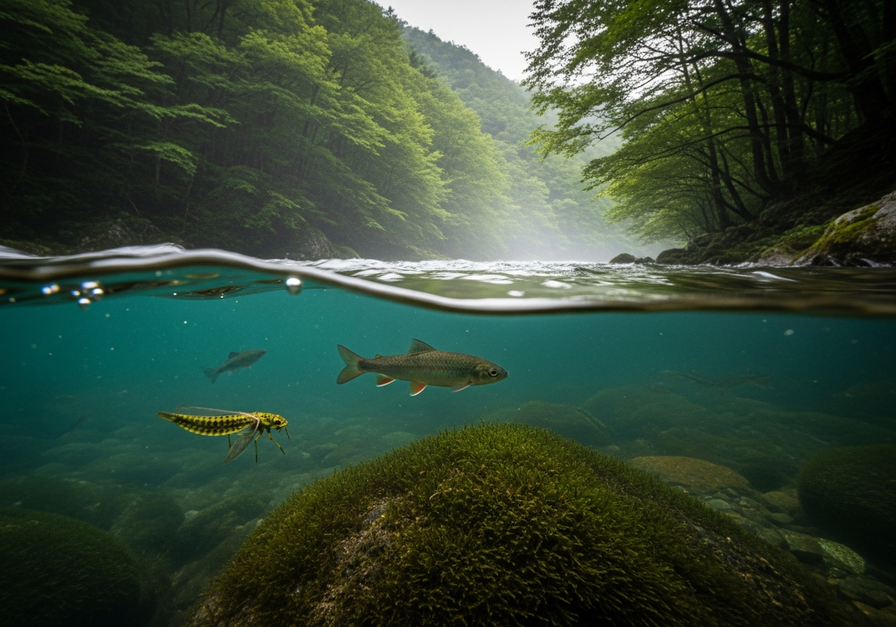
The image above beautifully captures the dynamic environment of rivers and streams, highlighting the adaptations of fish and invertebrates to unidirectional flow. Notice the clarity of the water and the life thriving within it.
Lakes and Ponds: Still Waters, Rich Worlds
Lakes and ponds are lentic ecosystems, characterized by standing water. While they may appear still, they are far from static. Lakes often exhibit thermal stratification, where distinct layers of water form due to temperature differences, particularly in temperate regions. The upper, warmer layer (epilimnion) is separated from the colder, deeper layer (hypolimnion) by a transition zone called the thermocline.
The size, depth, and nutrient content of a lake significantly influence its biodiversity. Oligotrophic lakes are typically deep, clear, and nutrient-poor, supporting fewer but often specialized species. Eutrophic lakes are shallower, nutrient-rich, and often have abundant plant growth and higher biodiversity, though excessive nutrient loading can lead to algal blooms and oxygen depletion.
Life in lakes is diverse, ranging from microscopic plankton floating in the water column to large fish, amphibians, and aquatic plants rooted in the sediment. Different zones within a lake, such as the littoral zone (near shore, with rooted plants), the limnetic zone (open water), and the profundal zone (deep, dark bottom), support unique communities.
Wetlands: Nature’s Sponges and Filters
Wetlands are among the most productive and biologically diverse ecosystems on Earth. They are transitional areas where land is saturated with water, either permanently or seasonally, creating unique soil conditions and supporting specialized vegetation adapted to waterlogged environments. Common types of wetlands include:
- Marshes: Characterized by herbaceous vegetation like grasses, sedges, and cattails. They are often found along the edges of lakes and rivers.
- Swamps: Dominated by woody plants, such as trees and shrubs, that are tolerant of saturated soils. Mangrove swamps are a famous example in coastal areas, while cypress swamps are common inland.
- Bogs: Acidic wetlands fed primarily by rainwater, characterized by peat accumulation and sphagnum moss. They are often nutrient-poor.
- Fens: Similar to bogs but fed by groundwater, making them less acidic and more nutrient-rich, supporting a wider variety of plant life.
Wetlands provide an incredible array of ecosystem services, acting as natural filters, flood regulators, and critical habitats. They are often referred to as “the kidneys of the landscape” due to their ability to purify water.
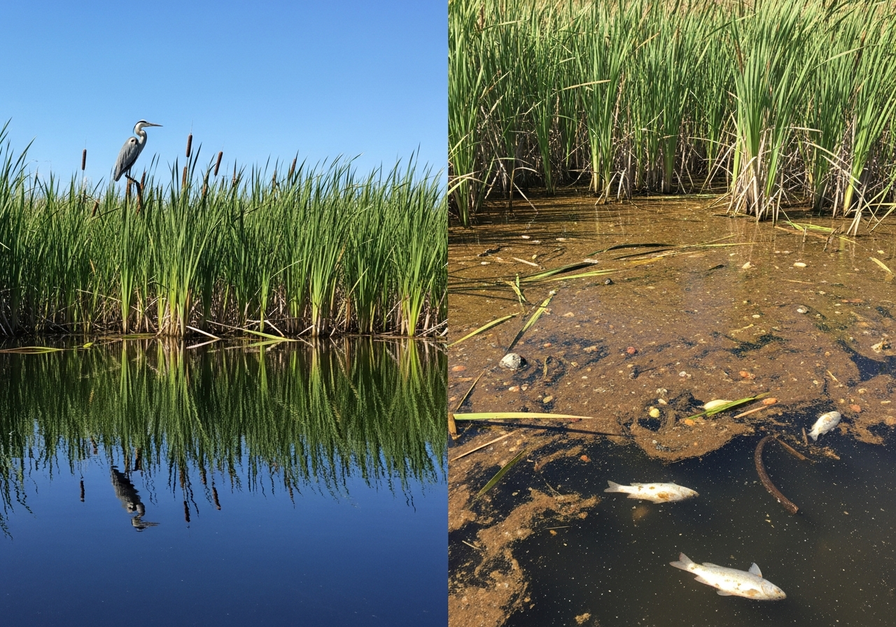
This split-screen image provides a stark visual contrast between a functioning wetland ecosystem and one impacted by human threats, directly supporting the sections on wetlands, ecosystem services, and pollution. The left side shows a healthy marsh, while the right depicts a degraded area.
The Incredible Biodiversity of Freshwater
Despite their limited global area, freshwater ecosystems are hotspots of biodiversity. They are home to a disproportionately high number of species, including:
- Fish: From the smallest minnows to large predatory fish, freshwater systems support thousands of species, many of which are endemic to specific river basins or lakes.
- Invertebrates: Insects (dragonflies, mayflies, caddisflies), crustaceans (crayfish, freshwater shrimp), mollusks (snails, mussels), and worms form the backbone of freshwater food webs.
- Amphibians and Reptiles: Frogs, salamanders, turtles, and some snakes are intimately tied to freshwater habitats for breeding, feeding, and shelter.
- Birds: Waterfowl, wading birds, and raptors rely on freshwater for food, nesting, and migration stopovers.
- Mammals: Beavers, otters, muskrats, and even some species of dolphins and seals inhabit freshwater environments.
- Plants: Algae, submerged macrophytes, emergent plants, and riparian vegetation all contribute to the structure and productivity of these ecosystems.
Many freshwater species have evolved unique adaptations to their specific environments, such as the ability of some fish to migrate long distances for spawning or the specialized respiratory structures of aquatic insects.
Ecosystem Services: Why Freshwater Matters to Us
The benefits that freshwater ecosystems provide to humanity are immense and often undervalued. These “ecosystem services” are essential for our survival and quality of life:
- Water Supply: Freshwater systems are the primary source of drinking water for human populations globally.
- Water Purification: Wetlands and riparian zones act as natural filters, removing pollutants and excess nutrients from water as it flows through them.
- Flood Control: Wetlands and healthy river floodplains absorb and store excess water during heavy rainfall, reducing the impact of floods downstream.
- Drought Mitigation: Lakes and groundwater aquifers store water, providing a buffer during periods of drought.
- Fisheries: Freshwater fish are a crucial food source for millions of people worldwide.
- Recreation and Tourism: Rivers, lakes, and wetlands offer opportunities for fishing, boating, swimming, birdwatching, and other recreational activities, supporting local economies.
- Climate Regulation: Wetlands store vast amounts of carbon in their soils, helping to mitigate climate change.
- Biodiversity Support: As discussed, these ecosystems are vital for countless species, contributing to the overall health and resilience of the planet.
Some species, known as ecosystem engineers, play particularly significant roles in shaping these services. Beavers, for example, construct dams that create new wetland habitats, regulate water flow, and enhance biodiversity.
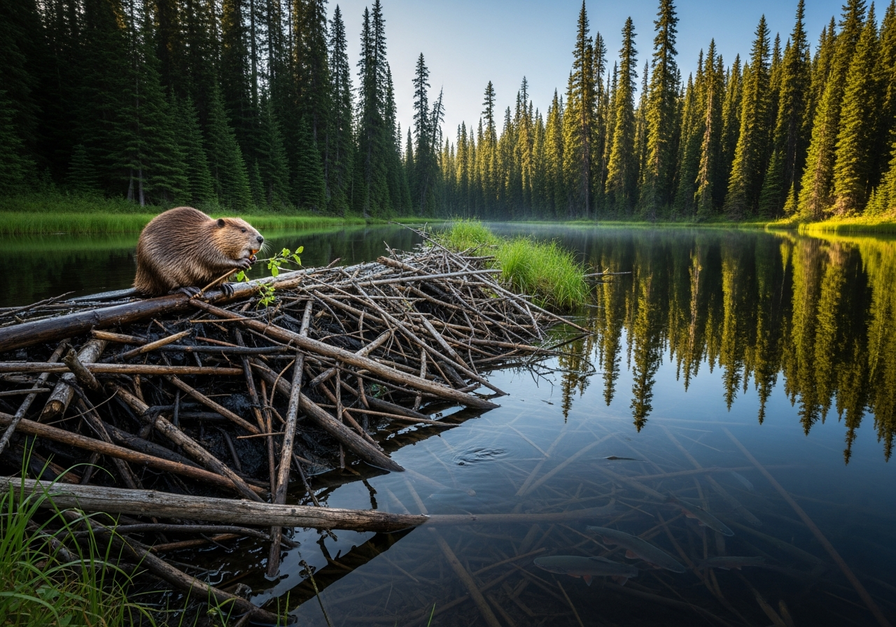
This image showcases the role of mammals such as beavers in shaping freshwater habitats, illustrating ecosystem services like water purification and flood control discussed in the article. Their dams create new ecosystems and regulate water flow.
Threats to Freshwater Ecosystems
Despite their critical importance, freshwater ecosystems are among the most threatened on Earth. Human activities pose numerous challenges:
- Pollution: Runoff from agriculture (pesticides, fertilizers), industrial discharge, untreated sewage, and plastic waste contaminate water, harming aquatic life and making water unsafe for human use.
- Habitat Destruction and Fragmentation: Dam construction, channelization of rivers, wetland drainage for development, and deforestation of riparian zones destroy habitats and disrupt natural processes.
- Over-extraction of Water: Excessive withdrawal of water for agriculture, industry, and urban use can deplete rivers, lower lake levels, and dry up wetlands.
- Climate Change: Altered precipitation patterns, increased temperatures, and more frequent extreme weather events (floods, droughts) directly impact freshwater availability and ecosystem health.
- Invasive Species: Non-native species introduced to freshwater systems can outcompete native species, disrupt food webs, and alter habitats.
These threats often interact, creating complex challenges for conservation efforts. For instance, increased temperatures due to climate change can exacerbate the effects of nutrient pollution, leading to more frequent and severe algal blooms.
Conservation and Our Role
Protecting freshwater ecosystems requires a multifaceted approach involving policy, scientific research, and individual action. Key conservation strategies include:
- Integrated Water Resource Management: Managing water resources holistically across entire river basins, considering all users and ecosystems.
- Pollution Control: Implementing stricter regulations on industrial and agricultural discharges, improving wastewater treatment, and promoting sustainable land use practices.
- Habitat Restoration: Removing obsolete dams, restoring natural river meanders, replanting riparian vegetation, and re-establishing wetland areas.
- Sustainable Water Use: Promoting water conservation in homes, industries, and agriculture, and developing efficient irrigation techniques.
- Protected Areas: Establishing and effectively managing protected areas for critical freshwater habitats.
As individuals, we can contribute by conserving water in our daily lives, properly disposing of waste, supporting sustainable agriculture, and advocating for policies that protect freshwater resources. Understanding the interconnectedness of these systems is the first step toward becoming better stewards of our planet’s most vital resource.
Conclusion
Freshwater ecosystems are far more than just bodies of water; they are vibrant, complex worlds teeming with life and providing indispensable services to all living things. From the smallest stream to the largest lake, each plays a crucial role in the global water cycle and supports a rich tapestry of biodiversity. Recognizing their immense value and understanding the threats they face is paramount. By embracing responsible practices and supporting conservation efforts, we can ensure that these essential habitats continue to thrive, sustaining both nature and humanity for generations to come.