Estuaries: Where Rivers Meet the Sea and Life Flourishes
Imagine a place where two mighty forces of nature, a flowing river and the vast ocean, come together in a dynamic embrace. This magical meeting point is an estuary, a unique and incredibly vital ecosystem often called the “nurseries of the sea.” These transitional zones are not just beautiful landscapes; they are powerhouses of biodiversity, natural filters, and crucial economic engines for human communities worldwide.
What is an Estuary? The Mixing Zone Defined
At its core, an estuary is a partially enclosed coastal body of brackish water with one or more rivers or streams flowing into it, and with a free connection to the open sea. The defining characteristic of an estuary is its unique salinity gradient. Freshwater from rivers, carrying sediments and nutrients, constantly mixes with the salty ocean tides. This creates a dynamic environment where salinity levels can fluctuate dramatically throughout the day, with the tides, and even seasonally.
This constant mixing creates a spectrum of water conditions, from nearly fresh upstream to almost fully marine near the mouth. Organisms living here must possess remarkable adaptations to cope with these ever-changing conditions.
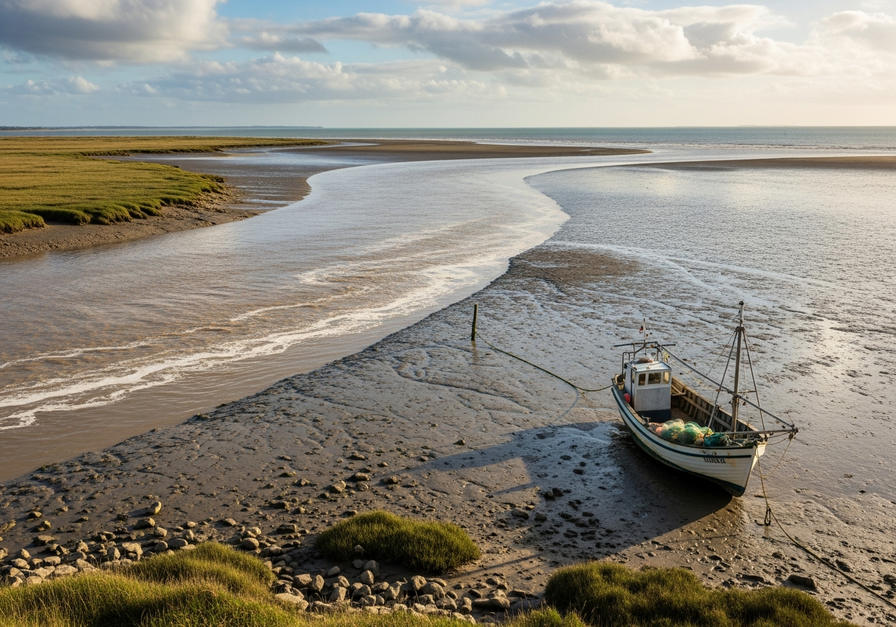
The image above visually demonstrates the estuary’s defining salinity gradient, directly reflecting how freshwater and saltwater mix.
Where Do We Find Estuaries? Types and Global Examples
Estuaries are found on every continent, dotting coastlines from the tropics to the polar regions. While they all share the fundamental characteristic of mixing fresh and saltwater, their geological formation can vary significantly, leading to different types:
- Drowned River Valleys (Coastal Plain Estuaries): These are the most common type, formed when rising sea levels flood existing river valleys. Examples include the Chesapeake Bay in the United States and the Thames Estuary in England.
- Bar-Built Estuaries: These form when a sandbar or barrier island is built up parallel to the coast, partially enclosing a body of water. The Outer Banks of North Carolina, creating estuaries like Pamlico Sound, are a prime example.
- Fjord Estuaries: Created by glacial erosion, fjords are deep, elongated valleys with steep sides that were later flooded by the sea. They are common in high latitudes, such as the fjords of Norway or the Puget Sound in Washington State.
- Tectonic Estuaries: These are formed by the sinking of land due to geological faulting, creating depressions that are then filled by seawater and river runoff. San Francisco Bay is a classic example of a tectonic estuary.
Each type presents unique physical characteristics that influence the specific habitats and species found within them.
The Incredible Ecosystem: Life Thrives Here
Despite the challenging and fluctuating conditions, estuaries are among the most productive ecosystems on Earth, often rivaling tropical rainforests and coral reefs in their biological output. This productivity is fueled by the constant influx of nutrients from both rivers and the ocean, creating a rich food web.
Flora: The Green Foundation
The plant life in estuaries is specially adapted to tolerate varying salinity and water levels. Key estuarine plant communities include:
- Salt Marshes: Dominated by salt tolerant grasses like cordgrass (Spartina species), these wetlands are incredibly productive, providing food and shelter for countless organisms. They are vital in temperate regions.
- Mangrove Forests: In tropical and subtropical regions, mangroves replace salt marshes. These unique trees have specialized root systems that can filter out salt and thrive in waterlogged, anaerobic soils. They are critical habitats and coastal protectors.
- Seagrass Beds: Submerged flowering plants that grow in shallow, clear estuarine waters. Seagrasses provide food for herbivores, stabilize sediments, and offer crucial nursery grounds for many marine species.
Fauna: A Haven for Diverse Life
The abundance of food and shelter makes estuaries a magnet for a vast array of animal life. From microscopic plankton to large predators, the estuarine food web is complex and interconnected.
- Fish: Many commercially important fish species, such as striped bass, salmon, flounder, and herring, spend part of their lives in estuaries, particularly as juveniles.
- Shellfish: Oysters, clams, mussels, and crabs thrive in estuarine mudflats and shallow waters. Oysters, in particular, are ecosystem engineers, filtering water and building reefs that provide habitat.
- Birds: Estuaries are critical stopover points and feeding grounds for migratory birds, including various species of shorebirds, wading birds, and waterfowl. Their rich mudflats are teeming with invertebrates.
- Mammals: Marine mammals like dolphins and manatees may visit estuaries to feed, and terrestrial mammals often utilize the adjacent marshlands.
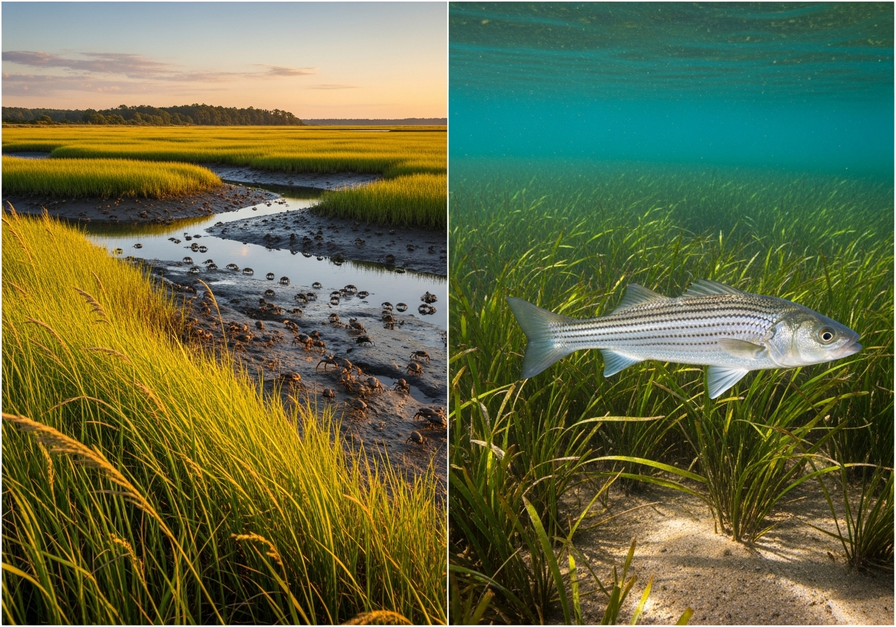
The contrasting halves of this image highlight the diverse habitats and species interactions described in the discussion of estuarine ecology and food webs.
Adaptations to Salinity Fluctuations
Life in an estuary requires remarkable physiological adaptations. Organisms must be able to regulate the salt concentration in their bodies, a process called osmoregulation. Some species are osmoconformers, allowing their internal salinity to match the external environment, while others are osmoregulators, actively maintaining a stable internal salt balance. This ability to cope with change is a hallmark of estuarine inhabitants.
Estuaries as Nurseries
One of the most critical roles of estuaries is their function as nurseries for a vast number of marine species. The sheltered, nutrient rich waters provide ideal conditions for juvenile fish, crustaceans, and mollusks to grow and develop before venturing into the open ocean. The complex root systems of marsh grasses and mangroves, along with seagrass beds, offer protection from predators and abundant food sources, making these areas indispensable for the health of global fisheries.
Ecological Services: Why Estuaries Matter Beyond Biodiversity
The value of estuaries extends far beyond their role as biological hotspots. They provide a suite of invaluable “ecosystem services” that benefit both nature and human societies:
- Water Filtration: Estuarine wetlands, particularly salt marshes and mangrove forests, act as natural filters. They trap sediments, absorb excess nutrients (like nitrogen and phosphorus from agricultural runoff), and even break down pollutants, improving water quality for coastal areas and the ocean.
- Coastal Protection: The dense vegetation of marshes and mangroves helps to stabilize shorelines, preventing erosion. They also act as natural buffers, absorbing the energy of storm surges and tsunamis, thereby protecting inland communities and infrastructure from severe weather events.
- Carbon Sequestration: Estuarine ecosystems, especially salt marshes and mangroves, are highly efficient at sequestering carbon dioxide from the atmosphere and storing it in their soils and biomass. This makes them important allies in mitigating climate change.
- Economic Value: Estuaries support significant commercial and recreational fisheries, providing food and livelihoods. They are also popular destinations for recreation, including boating, fishing, birdwatching, and ecotourism, generating substantial economic activity.
Threats to Estuaries: A Fragile Balance Under Pressure
Despite their immense value, estuaries are among the most threatened ecosystems globally. Their proximity to human populations makes them particularly vulnerable to a range of anthropogenic pressures:
- Pollution: Runoff from agriculture, urban areas, and industrial sites introduces excess nutrients (leading to harmful algal blooms and oxygen depletion), pesticides, heavy metals, and plastic debris into estuarine waters.
- Habitat Loss and Degradation: Coastal development, dredging for navigation, and conversion of wetlands for agriculture or aquaculture lead to the direct destruction of critical estuarine habitats like salt marshes, mangroves, and seagrass beds.
- Climate Change: Rising sea levels threaten to inundate low lying estuarine wetlands, while increased water temperatures and ocean acidification can stress estuarine organisms and alter ecosystem dynamics.
- Overfishing: Intensive fishing pressure can deplete fish stocks that rely on estuaries for part of their life cycle, disrupting the delicate balance of the food web.
- Invasive Species: Non native species introduced through shipping or other human activities can outcompete native species, alter habitats, and disrupt ecosystem functions.
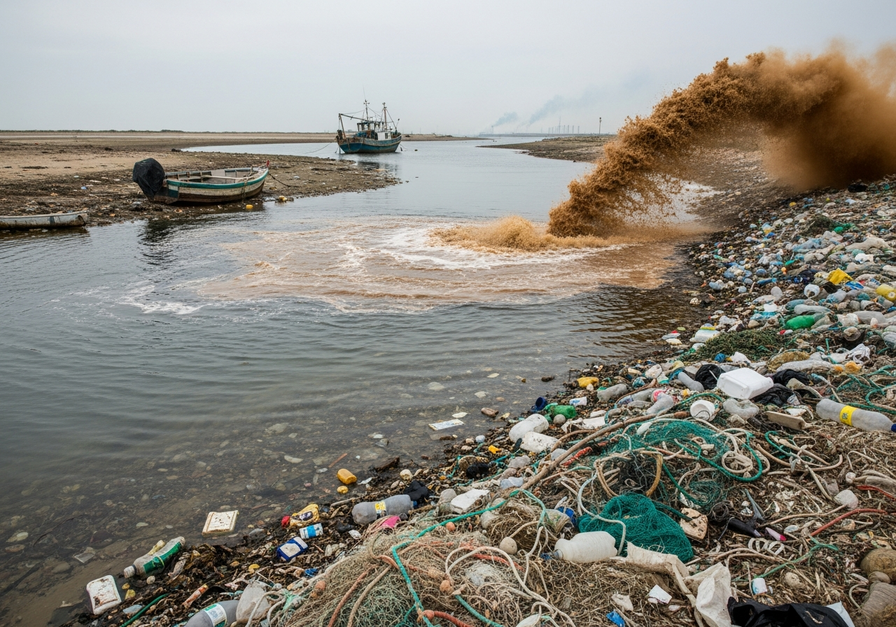
This image brings to life the threats section, showing how human activities compromise estuarine health and biodiversity.
Conservation Efforts: Protecting These Vital Habitats
Recognizing the critical importance of estuaries, numerous conservation efforts are underway worldwide. These initiatives often involve a multi faceted approach:
- Protected Areas: Establishing national parks, wildlife refuges, and marine protected areas that encompass estuarine ecosystems.
- Restoration Projects: Actively restoring degraded habitats by replanting salt marsh grasses or mangroves, removing invasive species, and improving water flow.
- Pollution Control: Implementing stricter regulations on industrial discharges, promoting sustainable agricultural practices, and improving wastewater treatment to reduce nutrient and chemical runoff.
- Sustainable Fisheries Management: Developing and enforcing fishing quotas and regulations to ensure the long term health of fish populations.
- Public Awareness and Education: Engaging local communities and the broader public to foster a deeper understanding and appreciation for estuaries, encouraging responsible behavior and support for conservation.
Conclusion: Guardians of the Coastline
Estuaries are truly remarkable places, dynamic interfaces where the land, river, and sea converge to create some of the most productive and biologically diverse ecosystems on Earth. They are not merely transitional zones but vibrant centers of life, providing essential services that underpin ecological health and human well being. Understanding their intricate workings and the threats they face is the first step toward ensuring their protection. By valuing and safeguarding these guardians of the coastline, we secure a healthier future for countless species, including our own.