Unraveling Climate: Earth’s Enduring Atmospheric Story
The world around us is a tapestry woven with countless threads of natural phenomena. Among the most fundamental, yet often misunderstood, is the concept of climate. Far more than just a daily weather report, climate is the grand narrative of Earth’s atmosphere, dictating everything from the clothes we wear to the crops we grow and the very ecosystems that thrive across our planet. Understanding climate is not merely an academic exercise; it is crucial for comprehending our world, planning for the future, and appreciating the intricate dance of natural forces that shape life itself.
Weather Versus Climate: A Fundamental Distinction
To truly grasp climate, we must first distinguish it from its more immediate cousin: weather. While often used interchangeably, these two terms represent vastly different scales of atmospheric observation.
Weather describes the atmospheric conditions at a specific place and time. It is what you experience when you step outside: the temperature, humidity, precipitation, wind speed, and cloud cover right now, or over the course of a day or week. Weather is inherently short-term, dynamic, and often unpredictable beyond a few days.
Climate, on the other hand, is the long-term average of weather patterns in a particular region. It is the expected range of weather conditions based on decades, even centuries, of data. When we say a desert is hot and dry, or a rainforest is warm and wet, we are describing its climate. Climate tells us what to expect over seasons and years, providing a statistical summary of atmospheric behavior.
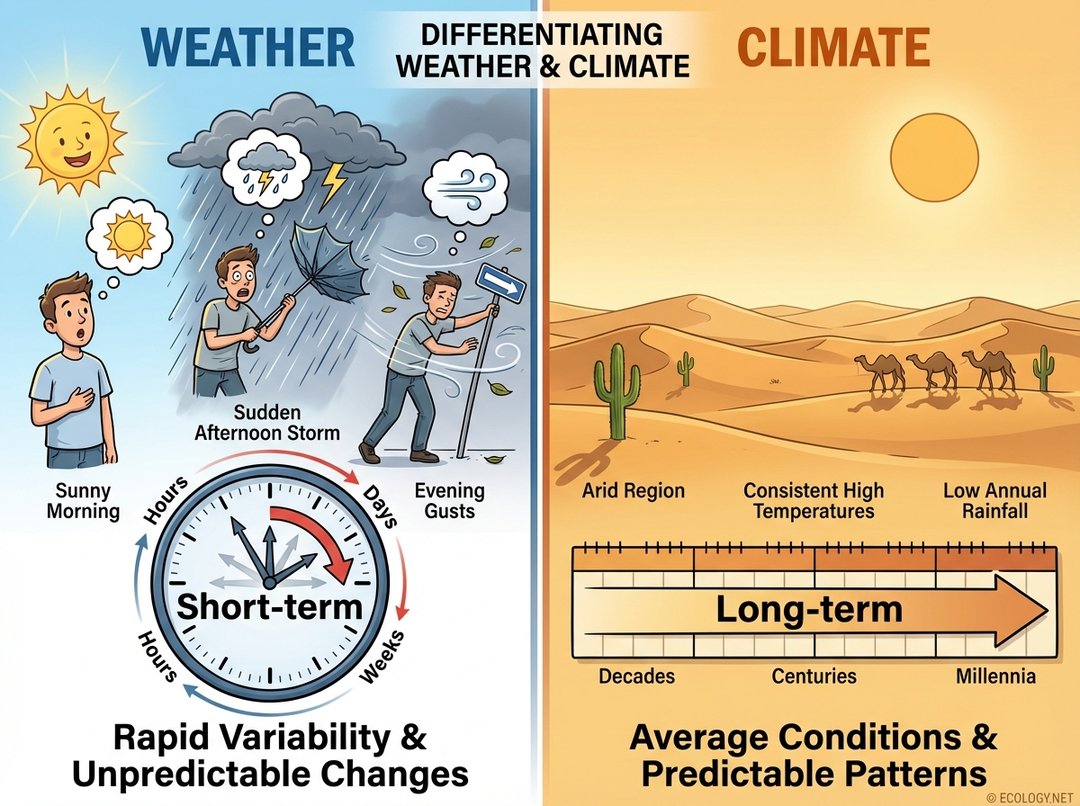
Consider a simple analogy: weather is like your mood on any given day, which can change rapidly from happy to sad, calm to agitated. Climate is your overall personality, a consistent pattern of behavior that defines you over a lifetime, even if individual moods fluctuate.
The Architects of Climate: Key Influences and Mechanisms
Earth’s climate is a complex system, a symphony conducted by numerous interacting factors. These influences range from extraterrestrial forces to geological processes and the very composition of our atmosphere.
Solar Radiation: The Primary Energy Source
The sun is the ultimate driver of Earth’s climate. Solar radiation, primarily in the form of visible light, warms our planet. However, this energy is not distributed evenly. The equator receives more direct sunlight than the poles, leading to a fundamental temperature gradient that drives atmospheric and oceanic circulation.
Atmospheric Composition: Earth’s Insulating Blanket
The gases in our atmosphere play a critical role in regulating Earth’s temperature. Certain gases, known as greenhouse gases, trap some of the heat radiated from Earth’s surface, preventing it from escaping directly into space. This natural greenhouse effect is essential for life, keeping our planet warm enough to support liquid water. Without it, Earth would be a frozen, uninhabitable world. Key greenhouse gases include water vapor, carbon dioxide, methane, and nitrous oxide.
Earth’s Rotation and Tilt: Shaping Global Patterns
The Earth’s rotation creates the Coriolis effect, a force that deflects moving objects, including winds and ocean currents, to the right in the Northern Hemisphere and to the left in the Southern Hemisphere. This effect is crucial in forming large-scale atmospheric circulation patterns, such as the trade winds and jet streams, which in turn influence regional climates. The tilt of Earth’s axis is responsible for the seasons, as different parts of the planet receive more direct sunlight at various times of the year.
Geography: Landforms and Water Bodies
The physical geography of a region profoundly impacts its climate.
- Mountains: Mountain ranges create rain shadows. As moist air rises over mountains, it cools, condenses, and releases precipitation on the windward side. By the time the air descends on the leeward side, it is dry, creating arid conditions.
- Proximity to Water: Large bodies of water, like oceans, have a moderating effect on temperature. Water heats up and cools down more slowly than land. Coastal areas therefore tend to have milder climates with smaller temperature fluctuations compared to inland regions at similar latitudes.
- Land Cover: The type of surface cover, such as forests, deserts, or ice sheets, also influences local climate by affecting how much solar radiation is absorbed or reflected.
Ocean Currents: Global Heat Distribution Systems
The oceans are vast reservoirs of heat, and their currents act as massive conveyor belts, redistributing thermal energy across the globe. These currents are driven by a combination of wind, differences in water density (due to temperature and salinity), and the Coriolis effect.
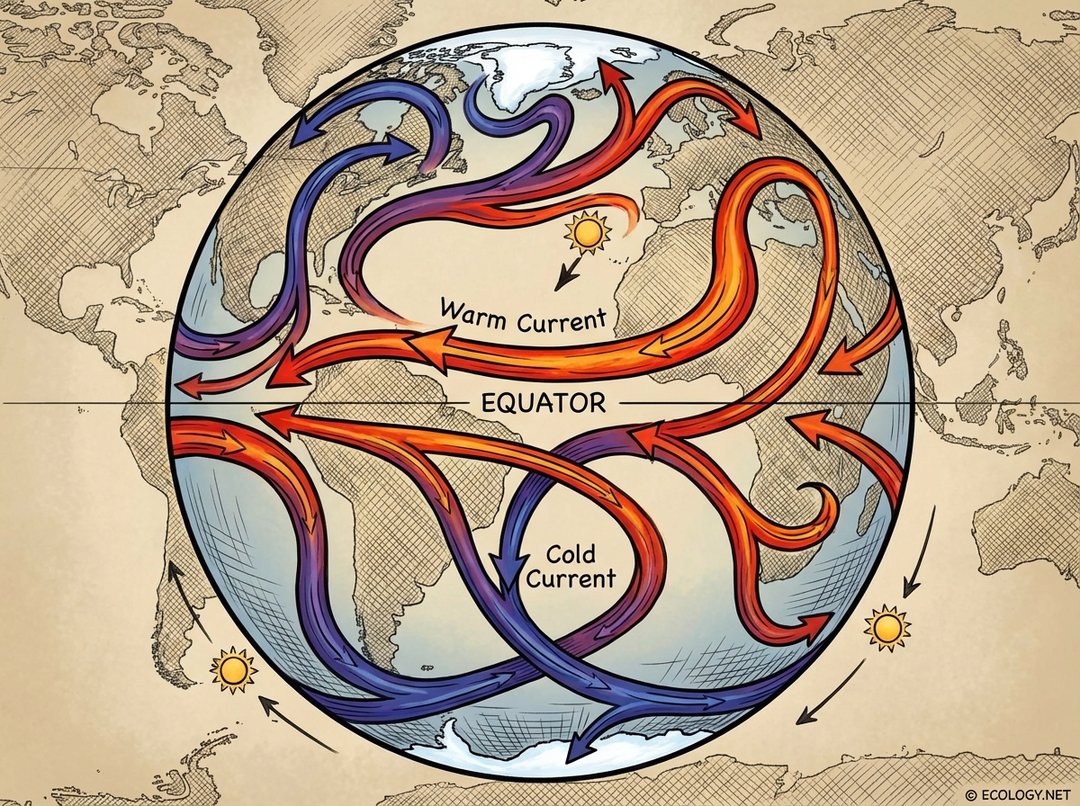
Warm currents, originating near the equator, transport heat towards the poles, while cold currents flow from polar regions towards the equator. For example, the Gulf Stream carries warm water from the tropics across the Atlantic, significantly moderating the climate of Western Europe, making it much milder than other regions at similar latitudes.
Climate Classification: Organizing Earth’s Diverse Climates
To better understand and study the vast array of climates on Earth, scientists have developed classification systems. One of the most widely used is the Köppen climate classification, which categorizes climates based on temperature and precipitation patterns, and their associated vegetation. These classifications help us recognize distinct climate zones that support specific types of ecosystems, known as biomes.
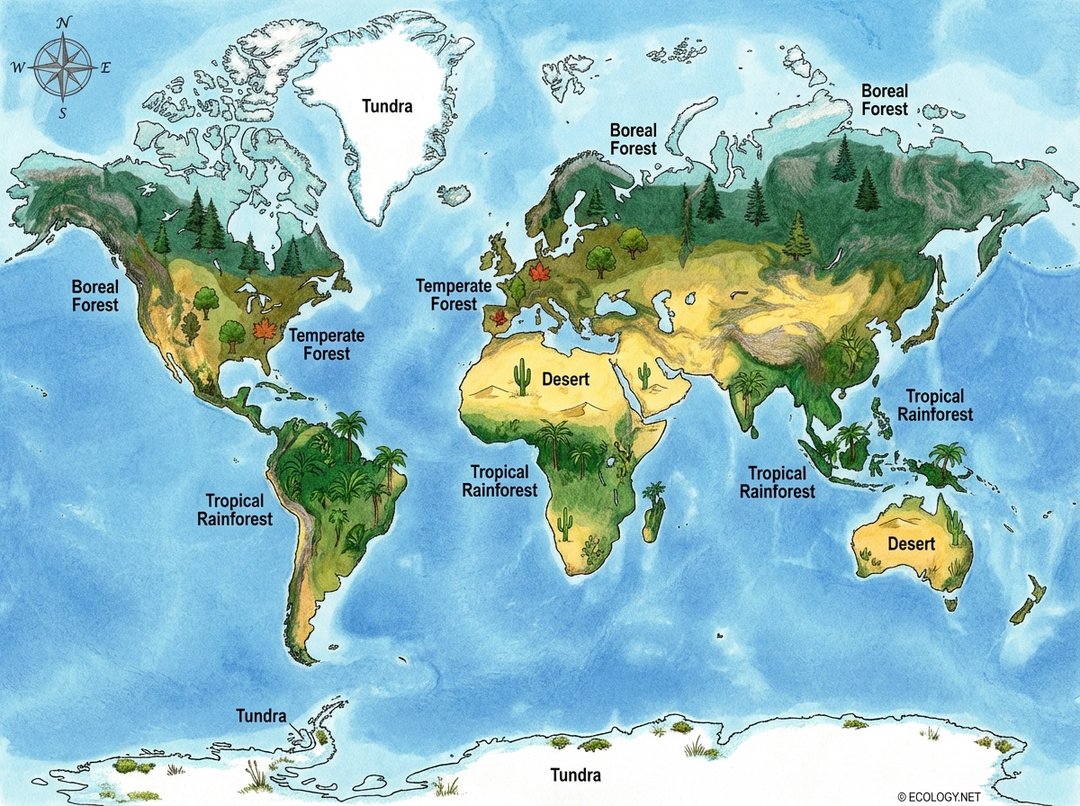
Examples of major climate zones and their corresponding biomes include:
- Tropical Climates: Characterized by high temperatures and abundant rainfall year-round.
- Biome: Tropical Rainforests, teeming with biodiversity.
- Arid and Semi-Arid Climates: Defined by very low precipitation.
- Biome: Deserts and grasslands, home to specialized drought-adapted flora and fauna.
- Temperate Climates: Experience distinct seasons with moderate temperatures and precipitation.
- Biome: Temperate Forests, with deciduous trees that shed leaves in autumn.
- Boreal/Polar Climates: Characterized by long, cold winters and short, cool summers.
- Biome: Boreal Forests (Taiga) dominated by conifers, and Tundra, with permafrost and low-growing vegetation.
Climate Variability and Change: A Dynamic Earth
Climate is not static; it has always varied over Earth’s history. These natural variations can occur over different timescales, from decades to millennia.
- Natural Variability: Phenomena like the El Niño Southern Oscillation (ENSO) are natural cycles that cause significant year-to-year or decade-to-decade shifts in global weather patterns, leading to droughts in some regions and floods in others. Volcanic eruptions can also temporarily cool the planet by injecting aerosols into the atmosphere that reflect sunlight.
- Long-Term Climate Change: Over geological timescales, Earth’s climate has undergone dramatic shifts, including ice ages and periods of extreme warmth. These changes are driven by factors such as variations in Earth’s orbit, continental drift, and major volcanic activity.
- Human Influence: In recent centuries, human activities, particularly the burning of fossil fuels and deforestation, have significantly increased the concentration of greenhouse gases in the atmosphere. This has led to an accelerated warming trend, distinguishing current climate change from natural variability.
Understanding the difference between natural climate variability and long-term climate change, especially that influenced by human activity, is paramount for informed decision-making regarding our planet’s future.
Why Understanding Climate Matters
The study of climate extends far beyond scientific curiosity; it has profound implications for every aspect of human society and the natural world.
- Agriculture and Food Security: Climate dictates what crops can be grown where, influencing global food production and distribution. Changes in rainfall patterns or temperature can lead to crop failures and food shortages.
- Water Resources: The availability of fresh water is directly tied to climate, affecting everything from drinking water supplies to irrigation and hydroelectric power generation.
- Ecosystems and Biodiversity: Each species and ecosystem is adapted to a specific climate. Shifts in climate can disrupt habitats, alter species distributions, and lead to biodiversity loss.
- Infrastructure and Planning: From designing buildings to planning cities and transportation networks, understanding long-term climate patterns is essential for resilient infrastructure.
- Human Health: Climate influences the spread of diseases, the frequency of heatwaves, and the availability of clean air and water, all of which impact public health.
Conclusion: Earth’s Enduring Story
Climate is the enduring atmospheric story of our planet, a complex interplay of solar energy, atmospheric gases, ocean currents, and geographical features. It is the long-term pattern that shapes our world, defines our biomes, and influences every facet of life. By differentiating climate from weather, recognizing its fundamental drivers, and appreciating its dynamic nature, we gain a deeper understanding of Earth’s intricate systems. This knowledge empowers us to make informed decisions, adapt to changes, and strive for a sustainable future on our remarkable planet.