Imagine the Earth as a giant, breathing organism. Just like we inhale and exhale, our planet has processes that absorb and release vital elements. One of the most crucial elements in this planetary breath is carbon. When we talk about the climate and environmental health, understanding where carbon comes from and where it goes is paramount. This brings us to the fundamental concept of a “carbon source”.
Simply put, a carbon source is any process or entity that releases carbon into the atmosphere. This release typically occurs in the form of carbon dioxide (CO2) or methane (CH4), both powerful greenhouse gases. These gases then contribute to the Earth’s natural greenhouse effect, trapping heat and warming the planet. While natural carbon sources have always been part of Earth’s intricate systems, human activities have dramatically amplified these releases, tipping the delicate balance.
The Earth’s Carbon Cycle: A Dynamic Dance
To truly grasp what a carbon source is, we must first appreciate the grand ballet of the carbon cycle. Carbon is constantly moving between the atmosphere, oceans, land, and living organisms. It is a fundamental building block of life, found in everything from the air we breathe to the food we eat and the fossil fuels we burn.
In this cycle, carbon moves through various reservoirs. When carbon is released from one of these reservoirs into the atmosphere, that reservoir acts as a carbon source. Conversely, a carbon sink is any process or entity that absorbs and stores carbon from the atmosphere, such as forests or oceans. For millennia, the Earth maintained a relatively stable balance between these sources and sinks. However, recent human activities have significantly increased the amount of carbon being released, overwhelming the natural capacity of sinks to absorb it all.
Natural Carbon Sources: Earth’s Own Emissions
Long before human civilization, Earth had its own ways of releasing carbon into the atmosphere. These natural processes are an integral part of the planet’s biogeochemical cycles.
- Volcanic Eruptions: Volcanoes release significant amounts of carbon dioxide and other gases into the atmosphere during eruptions. While individual eruptions can be dramatic, their long term contribution to atmospheric carbon is generally smaller than other sources.
- Decomposition: When plants and animals die, their organic matter decomposes. This process, carried out by microbes, releases carbon dioxide and methane back into the atmosphere. This is a continuous and essential part of nutrient cycling in ecosystems.
- Forest Fires: Natural wildfires, often ignited by lightning, release large quantities of stored carbon from trees and vegetation directly into the atmosphere as carbon dioxide and soot.
- Wetlands: These unique ecosystems are significant natural sources of methane. Under anaerobic (oxygen free) conditions, microbes in waterlogged soils break down organic matter, producing methane gas that bubbles up into the atmosphere.
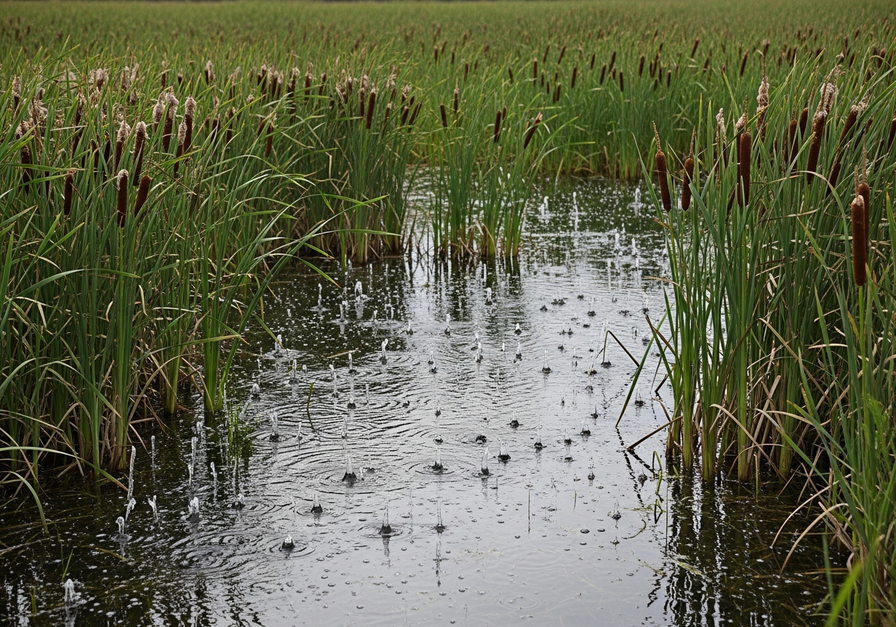
This photo illustrates the article’s explanation of methane as a potent greenhouse gas, showing a natural source (wetlands) that releases methane into the atmosphere.
Anthropogenic Carbon Sources: The Human Impact
While natural sources are part of Earth’s rhythm, it is the carbon released by human activities, known as anthropogenic sources, that has caused the most rapid and concerning changes to our climate. These sources are primarily responsible for the accelerated increase in atmospheric carbon dioxide and other greenhouse gases since the Industrial Revolution.
Burning of Fossil Fuels
The combustion of fossil fuels is by far the largest human caused carbon source. Coal, oil, and natural gas are essentially ancient sunlight stored as carbon over millions of years. When we burn these fuels for energy, we release that stored carbon rapidly into the atmosphere as carbon dioxide.
- Electricity Generation: Power plants, especially those fueled by coal and natural gas, are major emitters.
- Transportation: Cars, trucks, airplanes, and ships rely heavily on gasoline and diesel, releasing CO2 with every mile traveled.
- Industrial Processes: Manufacturing industries use fossil fuels for heat and power, and some processes, like cement production, directly release CO2 as a byproduct.
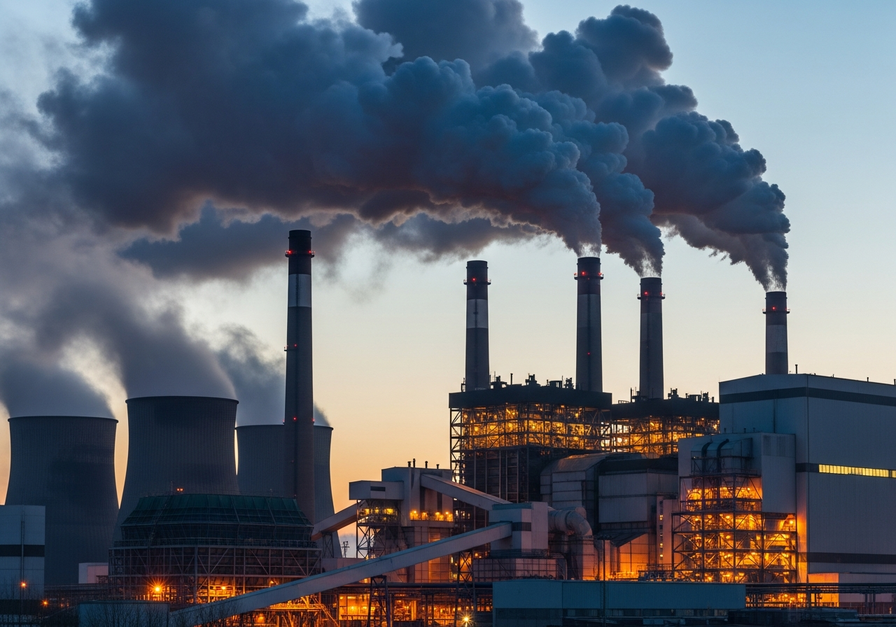
This illustration highlights the article’s key point that burning fossil fuels is the largest human caused carbon source, providing a clear visual example of anthropogenic emissions.
Land Use Change and Deforestation
Forests are powerful carbon sinks, absorbing CO2 from the atmosphere as they grow. When forests are cleared, especially through burning, they transform from sinks into significant carbon sources.
- Deforestation: The clearing of forests for agriculture, logging, or urban development releases the carbon stored in trees and soil. If the trees are burned, the release is immediate and substantial.
- Soil Disturbance: Tilling agricultural land or converting natural ecosystems can release carbon stored in the soil.
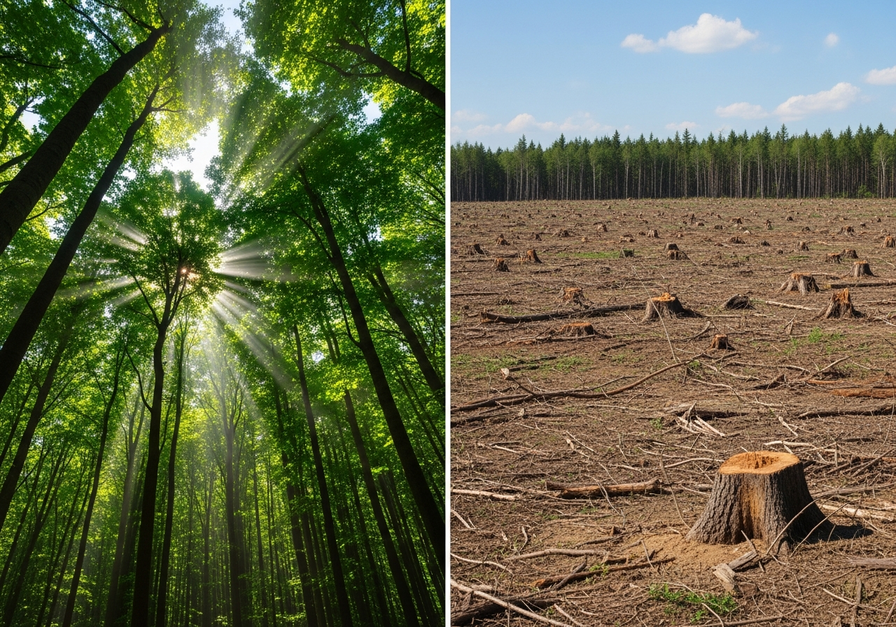
This image visually contrasts a natural carbon sink (forest) with a human caused carbon source (deforestation), underscoring the article’s discussion of how human activities overwhelm natural sinks.
Agriculture
Certain agricultural practices also contribute significantly to greenhouse gas emissions, particularly methane and nitrous oxide (N2O).
- Livestock: Ruminant animals like cattle and sheep produce methane during their digestive process, which is then released into the atmosphere.
- Rice Cultivation: Flooded rice paddies create anaerobic conditions similar to wetlands, leading to methane production.
- Fertilizer Use: Nitrogen based fertilizers can release nitrous oxide, a potent greenhouse gas, into the atmosphere.
Waste Management
Landfills, where organic waste decomposes without oxygen, are another source of methane emissions. As food scraps and other organic materials break down, they produce landfill gas, which is about 50 percent methane.
The Consequences of Increased Carbon Sources
The continuous release of carbon from both natural and, more significantly, anthropogenic sources has profound implications for our planet. The primary concern is the enhancement of the greenhouse effect.
The greenhouse effect is a natural process that warms the Earth’s surface. When the Sun’s energy reaches Earth’s atmosphere, some of it is reflected back to space and the rest is absorbed and re radiated by greenhouse gases. This trapped heat keeps our planet warm enough to sustain life. However, an excess of greenhouse gases intensifies this effect, leading to global warming and climate change.
The consequences of an intensified greenhouse effect include:
- Rising Global Temperatures: Leading to more frequent and intense heatwaves.
- Changes in Weather Patterns: Resulting in more extreme weather events, such as droughts, floods, and severe storms.
- Sea Level Rise: Caused by the thermal expansion of ocean water and the melting of glaciers and ice sheets.
- Ocean Acidification: As oceans absorb excess CO2, their chemistry changes, becoming more acidic and threatening marine life.
- Loss of Biodiversity: Many species struggle to adapt to rapid environmental changes.
Beyond Carbon Dioxide: Methane and Nitrous Oxide
While carbon dioxide is the most abundant greenhouse gas released by human activities, it is important to remember that other gases also act as powerful carbon sources, even if they are present in smaller quantities. Methane (CH4) and nitrous oxide (N2O) are particularly noteworthy.
Methane (CH4):
- Has a much higher global warming potential than CO2 over a 20 year period, though it has a shorter atmospheric lifespan.
- Major anthropogenic sources include livestock farming (enteric fermentation), rice cultivation, landfills, and leaks from natural gas and oil systems.
- Natural sources include wetlands, as previously discussed.
Nitrous Oxide (N2O):
- Is an even more potent greenhouse gas than methane, with a very long atmospheric lifespan.
- Primarily released from agricultural soil management, particularly from the use of synthetic and organic fertilizers.
- Also produced by fossil fuel combustion and industrial processes.
Understanding Feedback Loops
The concept of carbon sources becomes even more complex when considering feedback loops. These are processes where an initial change triggers further changes that either amplify (positive feedback) or dampen (negative feedback) the original effect.
An example of a positive feedback loop involving carbon sources is the thawing of permafrost. Permafrost, permanently frozen ground found in Arctic regions, stores vast amounts of organic carbon. As global temperatures rise, permafrost thaws, and the previously frozen organic matter decomposes, releasing large quantities of methane and carbon dioxide into the atmosphere. This further contributes to warming, which in turn causes more permafrost to thaw, creating a self perpetuating cycle of emissions.
Quantifying Carbon Emissions: The Role of Carbon Footprints
To manage and mitigate carbon sources, scientists and policymakers rely on quantifying emissions. This involves measuring the amount of greenhouse gases released by various activities, industries, or even individuals. The term “carbon footprint” refers to the total amount of greenhouse gases, primarily carbon dioxide, emitted directly and indirectly by an individual, organization, event, or product.
Understanding carbon footprints helps identify the largest sources of emissions and guides efforts to reduce them. For instance, a country’s carbon footprint might highlight the dominance of its energy sector, while an individual’s footprint might point to transportation or dietary choices as key contributors.
Conclusion: Balancing the Carbon Equation
The concept of a carbon source is central to understanding our planet’s climate challenges. While natural processes have always released carbon, it is the dramatic increase in anthropogenic emissions that has disrupted the Earth’s delicate carbon balance. From the smoke stacks of power plants to the clearing of ancient forests and even the digestive processes of livestock, human activities have transformed many aspects of our world into significant carbon sources.
Recognizing these sources is the first step towards addressing climate change. By shifting away from fossil fuels, protecting and restoring natural carbon sinks, adopting sustainable agricultural practices, and improving waste management, humanity can work towards rebalancing the carbon equation. The future of our planet depends on our collective ability to understand, reduce, and ultimately manage the carbon we release into the atmosphere.